

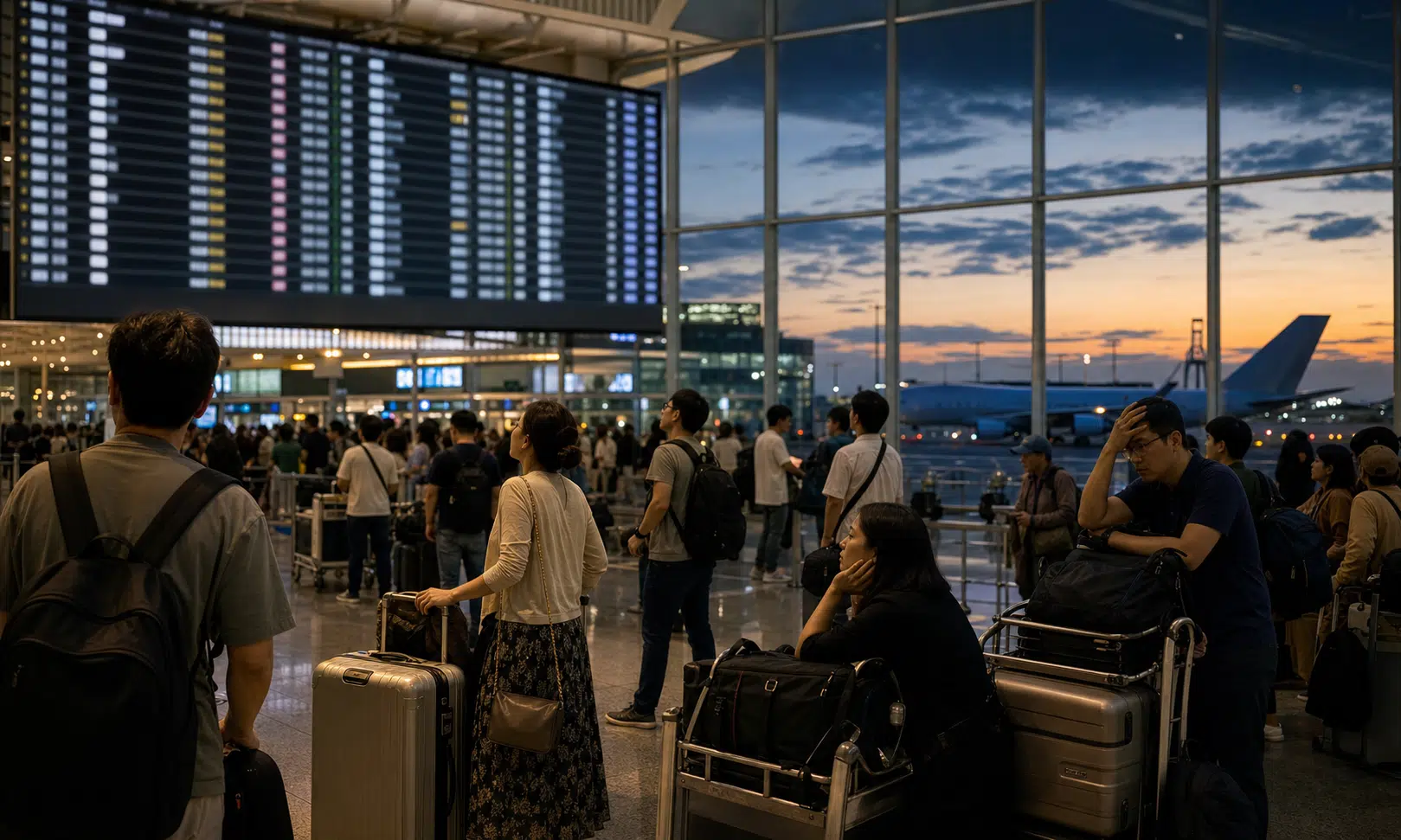

Higher airfares and jet fuel costs are adding another layer of pressure to Asia’s travel recovery, especially in economies where tourism supports hotels, airlines, local transport, restaurants, guides, and small businesses.
The source article links these pressures to wider geopolitical and energy-market uncertainty, including disruption connected to the Iran war. That connection has not been independently verified here, so it should be treated carefully: the safer point is that higher aviation costs and route uncertainty can make long-haul travel more expensive, reduce traveler confidence, and leave tourism-dependent markets more exposed.
Singapore, Japan, Taiwan, India, Thailand, Vietnam, the Philippines, Cambodia, Nepal, and other destinations are all presented as part of the same regional problem. The details vary by country, but the underlying concern is consistent. When flights become more expensive, visitors may shorten trips, delay bookings, choose destinations closer to home, or reduce discretionary spending after arrival.
For tourism businesses, that can mean a recovery that looks strong on paper but remains fragile on the ground. A hotel may still have guests, but fewer peak-season bookings. A tour operator may still receive inquiries, but see more hesitation before payment. A restaurant or driver in a destination city may feel the difference between a full itinerary and a visitor who cuts one day from a trip.
A Cost Problem Across the Travel Chain
Airfare is often the first cost a traveler sees, but it is not the only one affected when aviation expenses rise. Jet fuel is one of the major costs airlines have to manage, and fare increases or fuel surcharges can make long-haul routes feel less affordable to leisure travelers.
The source article describes a broader chain reaction across tourism. That chain reaction should not be overstated as a confirmed regional collapse, but the business logic is clear. Higher ticket prices can reduce demand. Lower demand can affect flight frequency, tour bookings, hotel occupancy, event travel, and spending by visitors once they arrive.
For destinations that rely heavily on overseas visitors, the impact is sharper. Long-haul travelers usually spend more time and money in-market than short-break visitors. If those travelers delay trips or choose closer alternatives, the loss is not limited to airlines. It can reach resort workers, guides, airport transfer companies, shopping districts, food businesses, cultural attractions, and independent operators.
That is why the issue is being framed as more than an airline problem. Tourism-dependent economies need reliable connectivity, stable pricing, and traveler confidence. When any of those weakens, the effect can show up in employment, local income, and public revenue.
Singapore: Connectivity Matters as Much as Arrivals
Singapore is exposed to airfare and fuel-cost pressure in a particular way because its travel economy depends heavily on connectivity. The city-state is not only a destination; it is also a major aviation hub for passengers moving between Asia, Europe, North America, and other regions.
The source article claims that Changi Airport saw a contraction in transit passenger volumes and that hotel occupancy and MICE bookings softened in 2026. Those specific claims have not been independently verified here, so they should not be repeated as settled facts. A cautious reading is that Singapore would be vulnerable if carriers reduce capacity, reroute flights, or face higher operating costs on long international sectors.
For Singapore’s hospitality, retail, and events sectors, even a modest change in flight patterns can matter. Fewer transit options may reduce stopover traffic. Higher fares may make some conferences and incentive trips harder to justify. Corporate travel budgets are often more flexible than leisure demand, but they are also closely watched when costs rise.
The practical challenge for Singapore is therefore twofold: keeping inbound demand attractive while preserving the air links that support its hub role. Promotional campaigns can help, but they do not fully offset the cost structure faced by airlines and passengers.
Japan: Strong Appeal, More Price-Sensitive Travelers
Japan remains one of Asia’s best-known tourism draws, with major destinations such as Tokyo, Kyoto, Osaka, Hokkaido, and regional cultural areas attracting international interest. The source article says Japan entered 2026 expecting a strong rebound from Europe and North America, but that specific forecast has not been verified here.
What can be stated more safely is that Japan’s recovery depends not only on visitor interest but also on affordability and access. If long-haul airfares climb, some travelers may shorten itineraries, postpone travel, or combine Japan with fewer regional stops. Others may shift to destinations that are cheaper to reach.
Japan’s tourism economy includes large hotels and airlines, but it also includes many smaller businesses: inns, restaurants, rail and bus services, guides, museums, local shops, and cultural attractions. Rural destinations can be especially sensitive because inbound visitors may represent a higher-value share of local spending.
The source article refers to promotional pricing, extended-stay incentives, and carrier partnerships as possible responses. Those measures should be understood as plausible industry tools rather than verified national programs in this rewrite. They point to the kind of response tourism markets often consider when price becomes a barrier: add value, encourage longer stays, and reduce friction around planning.
Taiwan: Competing for Regional and Long-Haul Visitors
Taiwan’s tourism position is shaped by both regional travel and longer-haul visitors. When fares rise, short-haul markets can become more important because the total ticket cost may be easier for travelers to absorb.
The source article says Taiwan has seen a notable slowdown in inbound visitor growth and that European travelers have been deterred by higher airfare and longer flight durations. Those specific performance claims are not independently verified here. A cautious version is that Taiwan, like other island and aviation-dependent destinations, could face pressure if travelers become more selective about trip length and total cost.
Competition also matters. Travelers considering East Asia often compare Taiwan with Japan, South Korea, Hong Kong, Singapore, Thailand, Vietnam, and other destinations. When flights are expensive, the decision may come down to perceived value: how many days the traveler can afford, how easy the trip is to plan, and whether the destination feels worth the higher transport cost.
The source article describes Southeast Asian markets as a potential target for Taiwan because shorter regional routes may be less exposed to long-haul airfare pressure. That is a reasonable strategic direction, but it should be treated as a reported approach rather than a confirmed outcome.
India: Domestic Travel Can Cushion, Not Replace, Long-Haul Demand
India has an advantage that many smaller tourism economies do not: a large domestic travel base. Domestic travelers can support airlines, hotels, restaurants, heritage sites, religious tourism, business travel, and regional leisure routes even when international demand becomes less predictable.
That does not make India immune to higher aviation costs. International routes, especially those involving long-haul travel from Europe and the Americas, may still face pressure if fares rise or routes become less efficient. The source article also notes that Indian carriers can face higher operating costs when jet fuel prices climb.
The source specifically mentions Goa, Rajasthan, and Kerala as destinations that had been counting on foreign guests. Rather than presenting cancellations or booking shifts as verified facts, the safer point is that these destinations have meaningful exposure to international tourism. Beach stays, heritage circuits, and wellness travel often depend on visitors who plan longer trips and spend across several local businesses.
If long-haul visitors become more cautious, India’s domestic market may soften the impact but not fully replace the spending profile of overseas travelers. That distinction matters for hotels, guides, boutique operators, and destination businesses built around foreign demand.
Thailand: A Tourism-Heavy Economy Feels Price Pressure Quickly
Thailand is one of the clearest examples of why airfare matters beyond the airline industry. Tourism supports a wide network of businesses in Bangkok, Phuket, Chiang Mai, island destinations, beach towns, food districts, transport services, and local tour operations.
The source article states that Thailand’s visitor growth from Europe and the Middle East softened more than expected and that income losses were reported in major tourism hubs. Those specific claims have not been independently verified here. The safer reading is that Thailand is highly sensitive to changes in international travel costs because a large share of its tourism economy depends on overseas visitors.
For travelers, Thailand may still be affordable once they arrive, but the flight can be the barrier. A higher ticket price can reduce the length of stay or leave less money for hotels, tours, dining, domestic transfers, and experiences. That is especially important for smaller operators that rely on steady visitor spending rather than large group contracts.
The source article says Thailand has looked toward regional markets, including China and Southeast Asia, where shorter travel distances may reduce airfare pressure. That strategy can help, but it may not perfectly replace long-haul visitors if spending patterns, length of stay, or seasonal behavior differ.
Vietnam: Demand May Remain, Margins May Tighten
Vietnam’s tourism appeal is broad, covering major cities, coastal destinations, food travel, cultural routes, and natural attractions such as Ha Long Bay. The source article describes Vietnam’s rebound as promising before higher air and fuel costs complicated the outlook. That broad framing is plausible, but specific claims about reduced bookings and smaller operators scaling back have not been verified here.
A careful way to understand Vietnam’s position is to separate demand from profitability. Travelers may still want to visit, but airlines and tourism businesses can face higher costs. If those costs are passed on to customers, bookings may become more price-sensitive. If businesses absorb the costs, margins can narrow.
Domestic travel also matters. Higher local airfares can affect trips within Vietnam, especially when travelers need flights between regions. For tourism companies, that can make package pricing harder, particularly for itineraries that depend on multiple domestic legs.
The source article mentions fuel hedging, tax concessions, and incentive schemes as possible policy or industry responses. Those should be treated as examples of the kinds of tools stakeholders may consider, not as verified measures with confirmed results.
The Philippines: Island Tourism Depends on Affordable Air Links
The Philippines faces a structural challenge that is different from mainland destinations. Its tourism economy depends heavily on air travel, both for international arrivals and for movement between islands.
The source article claims that airlines serving the Philippines added fuel surcharges and that many international tourists shortened stays or shifted budgets to closer destinations. Those details have not been independently verified here. The broader and safer point is that an archipelagic tourism market is especially exposed when airfare rises because travelers often need more than one flight to complete a trip.
International visitors support large resorts, but they also support small businesses in island communities: dive shops, boat operators, guesthouses, restaurants, drivers, guides, market vendors, and activity providers. If visitors reduce nights or skip secondary destinations, the effect can be uneven. Major gateways may still see traffic while smaller islands feel the pressure sooner.
The source article describes domestic tourism and regional marketing as partial offsets. That is a reasonable direction, though domestic travel cannot always replace the revenue profile of long-haul international visitors.
Cambodia and Nepal: Smaller Tourism Economies Have Less Room to Absorb Shocks
Cambodia and Nepal are presented in the source article as examples of smaller economies where tourism income is especially important. The article claims sharp declines at Angkor Wat and lower bookings across Nepal’s trekking and cultural tourism sectors, but those specific figures and conditions have not been independently verified here.
The safer editorial point is that smaller tourism economies can be more vulnerable to airfare shocks because they have less room to spread the impact. When visitor numbers soften, the losses can reach workers and businesses quickly. Local guides, drivers, lodge owners, restaurants, handicraft sellers, and small hotels often depend on seasonal flows of international travelers.
In Cambodia, iconic heritage tourism depends on visitors making the trip and staying long enough to spend beyond the main attraction. In Nepal, trekking and adventure travel depend on international travelers committing to longer, higher-cost itineraries. If total trip costs rise, travelers may delay those plans or choose shorter regional alternatives.
Visa facilitation, destination marketing, and tour-operator partnerships can help, but they cannot fully remove the pressure created by expensive air access.
Regional Coordination Can Help, But It Has Limits
The source article repeatedly describes urgent coordination among Singapore, Japan, Taiwan, India, Thailand, Vietnam, the Philippines, and other Asian countries. That regional coordination has not been independently verified here in the specific form described, so it should not be presented as a confirmed formal initiative.
What can be said carefully is that the problems identified in the article are shared across the region. Airlines, tourism boards, hotel groups, airport operators, and governments all have an interest in keeping Asia accessible and competitively priced. Their responses may include route support, joint promotions, market diversification, event campaigns, destination packaging, or efforts to reassure travelers.
The limits are just as important. Tourism bodies can promote value, but they do not control global fuel prices. Governments can improve policy conditions, but they cannot guarantee airline economics on every route. Airlines can adjust schedules, but they must still cover costs.
That means the likely response is not a single fix. It is a set of smaller measures designed to keep travel moving: protect key routes, target nearer source markets, encourage longer stays, support smaller tourism businesses, and make the overall trip feel worth the higher transport cost.
The Practical Outlook for Asia’s Travel Recovery
Asia’s tourism recovery remains tied to a simple traveler calculation: cost, confidence, and value. If flights are too expensive or uncertain, even attractive destinations can lose bookings. If travelers still believe the trip is worth the money, they may continue to travel but spend differently.
For tourism-dependent economies, the risk is not only fewer arrivals. It is shorter stays, lower daily spending, weaker demand outside major cities, and pressure on small businesses that cannot easily absorb higher costs. That is why airfare and jet fuel concerns matter to hotels, guides, restaurants, transport providers, event organizers, and local communities.
The source article’s strongest useful point is that Asia’s travel recovery should not be judged only by demand. Many travelers still want to visit Singapore, Japan, Taiwan, India, Thailand, Vietnam, the Philippines, Cambodia, Nepal, and the wider region. The harder question is whether airlines, destinations, and tourism businesses can keep the trip affordable enough for that demand to turn into bookings.
Until fuel-cost pressure and route uncertainty ease, the recovery is likely to remain uneven. Destinations with strong regional access, flexible pricing, and clear value may be better positioned. Places that depend heavily on long-haul visitors may need more time and more targeted support before tourism income feels stable again.