

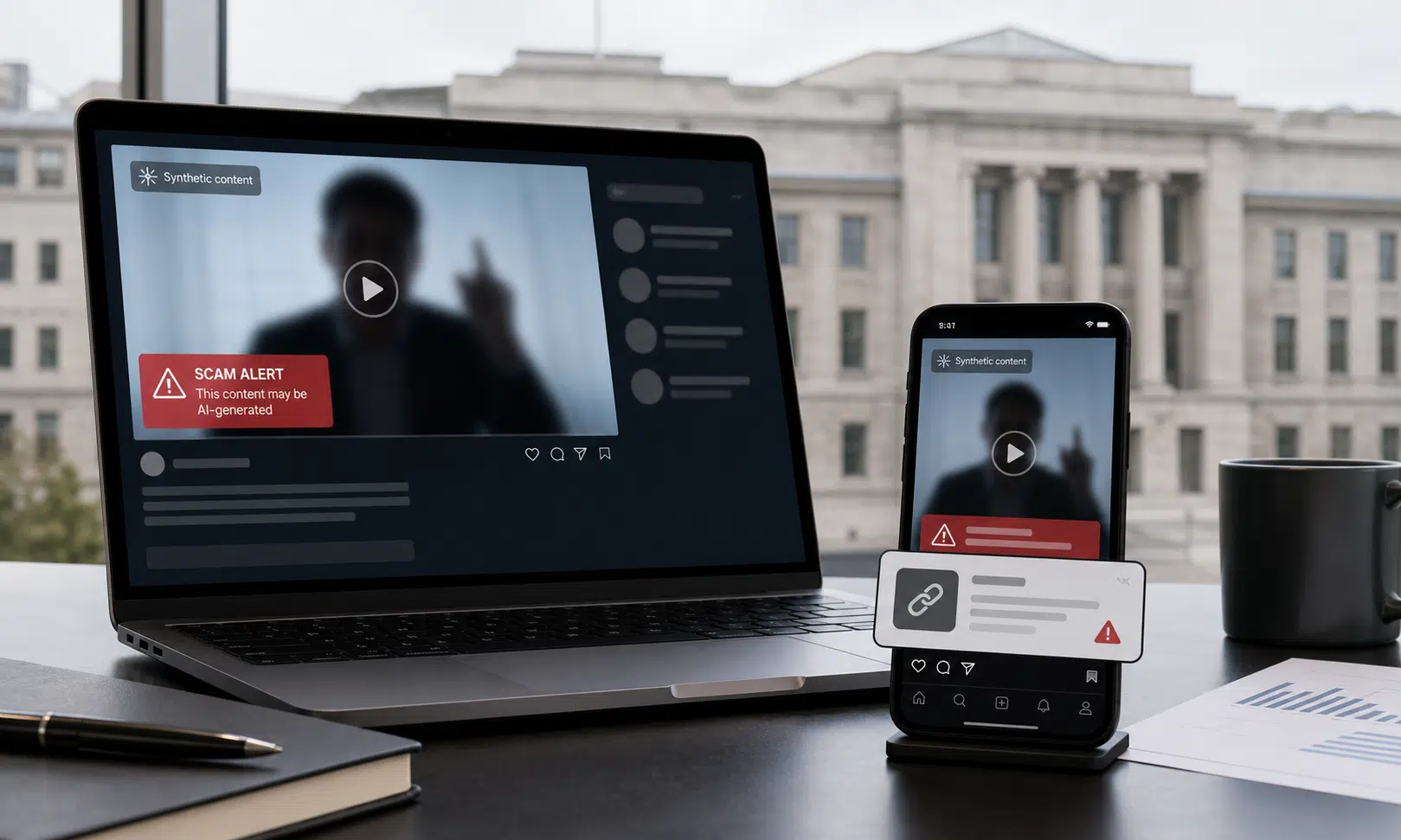

The Bank of England has warned people to be alert to AI-generated scam content after deepfake-style videos circulated online showing Nigel Farage and Andrew Bailey in a fabricated clash on the set of BBC One’s Question Time.
The clips, shared on X, appeared to show the Reform UK leader and the Bank of England governor fighting while people dressed as police officers intervened. One version also appeared to depict Farage holding a gun. The footage was presented as artificial, and the report does not independently verify the origin of the clips or who made them.
What the Bank is warning about
Andrew Bailey said, according to the report, that AI-generated material involving central banks was spreading and urged people to stay vigilant. The article also attributes to Bailey a warning that fake adverts impersonating the Bank of England and other central banks are increasing, although those claims are not independently verified here.
The practical concern is clear enough: a realistic-looking video, advert or post can borrow the authority of a public figure or institution and use it to steer people toward a scam. That risk matters most when the content is attached to financial claims, investment offers, account warnings or requests to act quickly.
How the Farage-Bailey clips fit the wider problem
Farage responded on X on Monday, saying users may have seen bizarre AI videos and adding that although he and Bailey disagree on the economy, he would not take things that far. The report says the Bank raised concerns with Reform UK and social media platforms.
The article also frames the incident as part of a broader pattern of AI impersonation scams, but that wider trend is treated here as reported context rather than a verified measurement. Public figures such as personal finance commentators have previously been linked in reporting to fraudulent online posts, and the source says Martin Lewis has warned about a “wild west” of AI-powered scams. That specific history is not independently verified in this rewrite.
For readers, the useful test is not whether a clip looks polished. It is whether the post asks you to trust a famous face, a central bank logo or a news-style format instead of giving verifiable details through official channels.
Checks before trusting a financial post
- Be suspicious of any video or advert that uses a public figure to promote an investment, giveaway or urgent financial action.
- Check the official website or verified account of the institution being named before clicking through.
- Look for pressure tactics, unusual links, poor account history or comments that appear automated.
- Report suspected impersonation or scam adverts through the platform’s reporting tools.
The UK’s Online Safety Act is described in the source article as containing duties for platforms to tackle fraudulent advertising, with those duties not yet in force until next year. That legal detail is not independently verified here, so the immediate takeaway is practical rather than regulatory: users should not assume a platform has already screened every financial advert or viral video.
The report says X was approached for comment and notes that the platform bars deceptive impersonation. It also refers to separate controversy around xAI’s Grok tool and Ofcom scrutiny; because that material is not necessary to assess the Bank warning, it has been left out of the main account.
The safest reading of the episode is narrow but important: deepfake-style content can make a false scene look plausible enough to spread, and when that same technique is used in financial advertising, it can become a direct scam risk.