


Carbon’s plan for a large solar module manufacturing site in Fos-sur-Mer, France, has been abandoned, removing one of the more visible projects tied to Europe’s push for domestic photovoltaic production.
For buyers, developers, EPCs, and investors, the practical issue is not only that one factory will not be built. The larger question is whether Europe can give enough policy certainty for new solar manufacturing capacity to reach bankable scale.
The project was originally presented as a major French industrial bet: a vertically integrated photovoltaic manufacturing chain with planned annual capacity of 5 GW and an estimated investment of about €1.5 billion. It was meant to support production from solar cells through finished modules, rather than merely assembling imported components.
Carbon’s founders have said the decision followed a lack of predictable market conditions for European-made solar products. Some details around investor discussions and possible industrial alternatives have not been independently verified, so they should be treated as the company’s account rather than as a confirmed full record of negotiations.
What Carbon Planned To Build
The Fos-sur-Mer project was designed around scale. Carbon argued that a factory of significant industrial size was needed to compete on cost with global manufacturers, especially in a market where module prices are strongly influenced by Asian supply chains.
The planned site was in the Bouches-du-Rhône department of southern France. French authorities had designated the photovoltaic panel factory as a Project of Major National Interest, a status that reflected the project’s strategic relevance for industrial policy and energy transition planning.
That designation did not, by itself, solve the project’s commercial problem. A domestic factory can receive administrative support and still struggle if customers, lenders, and equity backers do not see a reliable route to orders at prices that cover European production costs.
For solar buyers, this distinction matters. A project can be politically important without becoming a dependable supply option. Procurement teams should separate announced manufacturing capacity from capacity that is financed, built, certified, producing at volume, and supported by clear offtake demand.
Why The Project Became Hard To Finance
Carbon’s stated argument is that the European regulatory framework did not provide the level of demand protection needed to support the ramp-up phase of a large manufacturing plant. According to the founders, investors wanted clearer guarantees that European-made products would have a defined market.
The company pointed to the Net-Zero Industry Act, adopted in 2024, as part of the problem. Carbon’s position is that the law focuses on supply-chain diversification rather than giving direct preference to European-made solar products. That interpretation reflects the company’s view and should be read in that context.
The founders also raised concerns about the Industry Acceleration Act presented in March 2026. Their argument is that the definition of “Made in Europe” could extend to countries with free trade agreements with the European Union, potentially including markets such as Turkey, Vietnam, and India, while delaying a stronger European preference until 2030. That claim has been reported as Carbon’s interpretation and has not been fully independently established here.
In short, the company said it could not point investors to a firm European market with clear timing, scope, and rules. Whether every policy detail is interpreted the same way by other industry participants, the commercial signal is clear enough: large manufacturing projects need more than ambition. They need buyers who are able, or required, to value domestic origin enough to support higher early-stage costs.

Fluke Solar Site Survey Irradiance Meter
For buyers checking supplier claims against real project conditions, an irradiance meter can help document sunlight, module temperature, tilt, and orientation during site checks. It is most useful alongside formal supplier documentation, certifications, and contract reviews.
As an Amazon Associate I earn from qualifying purchases.
What This Means For Solar Buyers
The collapse of the Fos-sur-Mer plan does not mean European solar manufacturing is finished. It does, however, make near-term procurement planning more cautious. Buyers who were hoping for additional European cell and module capacity may need to treat domestic supply as scarcer, more conditional, and more exposed to policy changes.
That affects several purchasing decisions:
- Origin strategy: Buyers seeking European-made modules may face fewer near-term options and should verify the exact manufacturing steps performed in Europe.
- Price assumptions: European production may continue to carry a premium unless regulation, public procurement, or customer demand creates stronger support for local content.
- Bankability reviews: Developers should distinguish between planned factories and operating suppliers with audited production, certifications, and balance-sheet support.
- Contract risk: Long-term supply agreements tied to future European capacity need clear remedies if factories are delayed, resized, or cancelled.
A buyer comparing module suppliers should now ask more direct questions about supply-chain depth. A module assembled in Europe from imported cells carries a different risk profile from a module made from European cells, wafers, and upstream inputs. The source of the cell can matter for policy eligibility, traceability, carbon accounting, and public tender scoring.
Buyer Checklist: Questions To Ask Suppliers
| Decision area | Question to ask | Why it matters |
|---|---|---|
| Manufacturing origin | Which steps are performed in Europe? | Assembly, cell production, and upstream manufacturing can have different policy and traceability value. |
| Capacity status | Is the factory operating, financed, or still planned? | Announced capacity is not the same as bankable supply. |
| Policy exposure | Does the product qualify under current tender or local-content rules? | Rules may change, and eligibility should be documented before procurement decisions are locked. |
| Pricing durability | Can the supplier hold pricing through the delivery window? | New factories may face ramp-up costs, yield issues, and financing pressure. |
| Substitution rights | What happens if the named production source changes? | Origin-sensitive buyers need approval rights before a supplier changes plants or component sources. |
The Longi Partnership Question
Before the project was abandoned, Carbon reportedly explored ways to adapt the plan, including a smaller module assembly facility using imported Chinese cells and possible industrial partnerships, including discussions involving Longi. Those details should be handled cautiously because the full status and terms of any talks have not been independently verified here.
Even so, the reported direction illustrates a common pressure point. European solar manufacturers often need to choose between deep domestic integration, which is strategically attractive but capital intensive, and partial assembly models, which may be faster and cheaper but offer less supply-chain sovereignty.
For buyers, neither model is automatically better. The right choice depends on the project’s requirements. A commercial rooftop owner focused mainly on price and warranty may evaluate the tradeoff differently from a public-sector buyer with local-content expectations or a utility-scale developer trying to reduce geopolitical exposure.
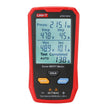
UNI-T UT673PV Solar Panel Tester
A solar panel tester can help procurement or maintenance teams spot-check module output during acceptance checks or troubleshooting. Use it as a practical screening tool, not as a substitute for certified lab testing or contractual origin documentation.
As an Amazon Associate I earn from qualifying purchases.
How To Read The Signal
The abandoned Carbon project is a warning about timing. Europe wants more control over clean-energy supply chains, but policy design, investor confidence, and procurement behavior have to line up before multi-billion-euro manufacturing projects can move from announcement to production.
For solar customers, the useful response is not to avoid European suppliers. It is to verify them more carefully. Ask whether capacity is already online. Ask where cells are made. Ask how origin claims are documented. Ask what happens if policy eligibility changes before delivery.
Carbon’s Fos-sur-Mer plan was meant to be a flagship project for French and European solar manufacturing. Its collapse leaves a gap, but it also clarifies the buying environment: domestic manufacturing claims need evidence, policy-dependent premiums need a business case, and long-term module sourcing should be built around suppliers that can prove both production capability and commercial staying power.