


Installing solar panels has become one way for some U.S. farms to manage electricity bills, add income and keep working land financially viable. For farmers facing high input costs and thin margins, that can make solar less of a climate talking point and more of a business decision.
The question now is whether federal support for some farm solar projects will become harder to get.
The House-passed Farm Bill 2.0 includes language that would limit USDA financial assistance for certain ground-mounted solar projects on prime, unique, statewide or locally important farmland. Smaller projects would have exceptions, but the bill would add new conditions around acreage, local approval, farmland protection planning and solar supply chains.
For farmers looking at solar as a way to reduce operating costs, the result is a more complicated planning environment. Roof-mounted systems, small farm-scale arrays and agrivoltaics projects may not all be treated the same, and the difference could matter when a project depends on federal help.
Why Solar Has Become a Farm Finance Tool
Farm solar is often discussed as a renewable-energy issue, but many producers approach it through a simpler lens: cash flow.
Electricity is a recurring cost. Dairy farms, livestock operations, irrigated farms, cold-storage facilities and rural businesses can all face power bills that rise with usage and local rates. A solar array can reduce those bills if it is sized and financed correctly. In some cases, a project can also create lease income, grazing income or grid-sale revenue.
The Rural Energy for America Program, better known as REAP, has been one of the main federal tools for farmers and rural small businesses considering renewable energy or efficiency upgrades. The program can support eligible projects through grants and loan guarantees, which can make the difference between a project that pencils out and one that sits on a wish list.
That support is especially important for smaller farms. Even after state incentives, a farm-scale solar system can still require a large upfront investment. Without federal assistance, some farmers may be left choosing between carrying more debt, delaying the project or walking away from it.

Fluke 323 True RMS Clamp Meter
A clamp meter can help document electrical loads before a farm solar estimate or energy-efficiency review. Use it as a planning tool alongside a qualified electrician or solar installer, especially around service panels and larger farm equipment.
As an Amazon Associate I earn from qualifying purchases.
What The House Bill Would Change
The solar language in the House farm bill focuses on USDA-backed financial assistance for ground-mounted solar energy systems that convert covered farmland for solar production. It does not simply ban all farm solar, but it would create stricter limits around which projects can receive federal support.
The provision matters because many farm solar projects are not large utility developments. Some are built to offset on-farm energy use. Others are designed as agrivoltaics, where agricultural production continues alongside solar generation. Critics of the provision worry that these smaller or dual-use projects could be swept into a broader fight over farmland loss.
| Project issue | How the House bill treats it | Why farmers may care |
|---|---|---|
| Ground-mounted solar on covered farmland | USDA assistance would be limited if the project converts certain farmland for solar energy production. | Projects that need REAP or other USDA support could face new eligibility barriers. |
| Projects under 5 acres | The bill includes an exception for projects converting less than 5 acres. | Very small arrays may have a clearer path, depending on project details. |
| Projects under 50 acres | Some projects under 50 acres may qualify if most of the energy is used on-farm and local approval is secured. | Local politics and county or municipal approval could become decisive. |
| Farmland protection | Projects receiving local approval would need a farmland conservation protection plan. | This could help protect soil, but it also adds planning and compliance work. |
| Solar components | USDA assistance would be restricted for projects using solar components produced, manufactured or assembled in certain foreign countries of concern. | Supply-chain rules could narrow equipment choices and raise project costs. |
The component language could be especially important because global solar manufacturing remains heavily concentrated outside the United States. If farmers must use a narrower pool of qualifying equipment to receive federal support, some projects could become more expensive or harder to source.
The Farmland Conflict Behind The Policy
The pressure behind the bill is not imaginary. In many rural communities, residents have watched solar developers offer landowners more money than another farmer could pay to lease or buy the same acreage. Large utility-scale projects can remove significant land from crop or livestock production, at least for the life of the project.
That has created political backlash. For farm communities already worried about consolidation, development pressure and the loss of working land, solar can look like another force competing with agriculture.
But the policy challenge is separating different kinds of solar. A large project built primarily to sell electricity to a utility is not the same thing as a farm installing panels to reduce its own power bill. An array over gravel is not the same thing as a pasture where sheep continue grazing under panels. A rooftop system on a barn is different again.
That distinction is why the House language has drawn concern from farm and clean-energy advocates. Their argument is not that farmland loss should be ignored. It is that a broad restriction on USDA support could make it harder for farmers to use solar as a survival tool while doing little to address other ways farmland is converted, including housing, warehouses, data centers and commercial sprawl.
Where Agrivoltaics Fit In
Agrivoltaics is the shared use of land for solar generation and agricultural production. The setup can vary. Some projects are designed around sheep grazing. Others may support hay, forage, pollinator habitat, vegetables or specialty crops, depending on panel height, spacing, soil conditions and farm management.
For farmers, the appeal is that the land does not have to become a single-purpose energy site. A working field or pasture may also become an energy asset. That can create another revenue stream while keeping some agricultural use in place.
The complication is definitional. If a solar project changes how farmland is used but does not end agricultural production, should it count as a conversion? The House bill calls for a study of solar on farmland, including shared solar energy and agricultural production. That could help set clearer standards over time, but it would not necessarily solve near-term funding uncertainty for farmers trying to plan projects now.
A clearer federal definition of agrivoltaics could be useful. Farmers, lenders, developers and local officials need to know what counts as genuine dual-use agriculture and what is simply a solar project with a small agricultural add-on. Without that clarity, local approval fights can become inconsistent and project planning becomes riskier.
What Farmers Should Watch Before Planning A Solar Project
For a farmer or rural business owner thinking about solar, the practical takeaway is that the policy details now matter as much as the engineering estimate.
A project that looked feasible under one incentive structure may need a second look if USDA grant funding is paused, delayed or subject to new rules. A system that depends on imported components may need supply-chain review. A ground-mounted system on productive farmland may require a local approval strategy before the financing is even settled.
Farmers weighing solar should pay close attention to several questions:
- Is the project roof-mounted, ground-mounted or designed as agrivoltaics?
- How many acres would the project convert or occupy?
- Would most of the electricity be used by the farm, or sold into the grid?
- Does the site include prime, unique, statewide or locally important farmland?
- Would county or municipal approval be required?
- Can the installer document where key solar components are produced, manufactured or assembled?
- Is the project viable without a REAP grant, or does the financing depend on it?
These are not abstract questions. They affect payback period, loan risk, equipment selection and whether an application is worth the time and expense.
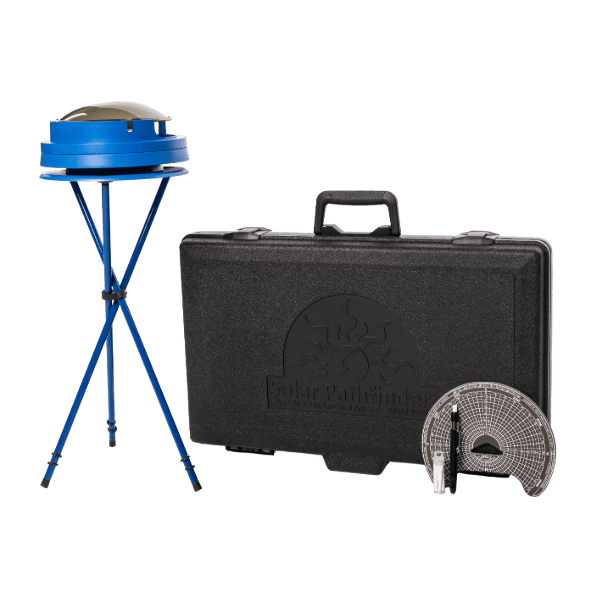
Solar Pathfinder Site Assessment Tool
A solar site assessment tool can help identify shading issues before a farmer commits to quotes, grant applications or local approval work. It is most useful when comparing barn roofs, equipment yards and possible ground-mounted locations.
As an Amazon Associate I earn from qualifying purchases.
The Senate Is The Next Test
The House bill is not the final word. The Senate is expected to work through its own farm bill process, and the solar language could change. Farm groups, clean-energy advocates and farmland protection organizations are likely to keep pushing for revisions that distinguish between utility-scale conversion and farm-scale energy projects.
Some parts of the House approach may survive because they answer real concerns. Farmland conservation planning, decommissioning expectations and clearer review of solar development on high-value agricultural land can all have a role. The harder question is whether the final language protects farmland without blocking farmers from tools that help them stay in business.
For producers, the safest approach is to treat solar as both an energy project and a policy-sensitive investment. The economics still may work, especially for farms with high power bills or suitable roofs. But ground-mounted and agrivoltaic projects now require closer review of federal funding rules, local land-use politics and equipment sourcing.
Solar has helped some farms cut costs and diversify income. The next version of the farm bill will help decide how easy it remains for farmers to use that option when margins are tight.