

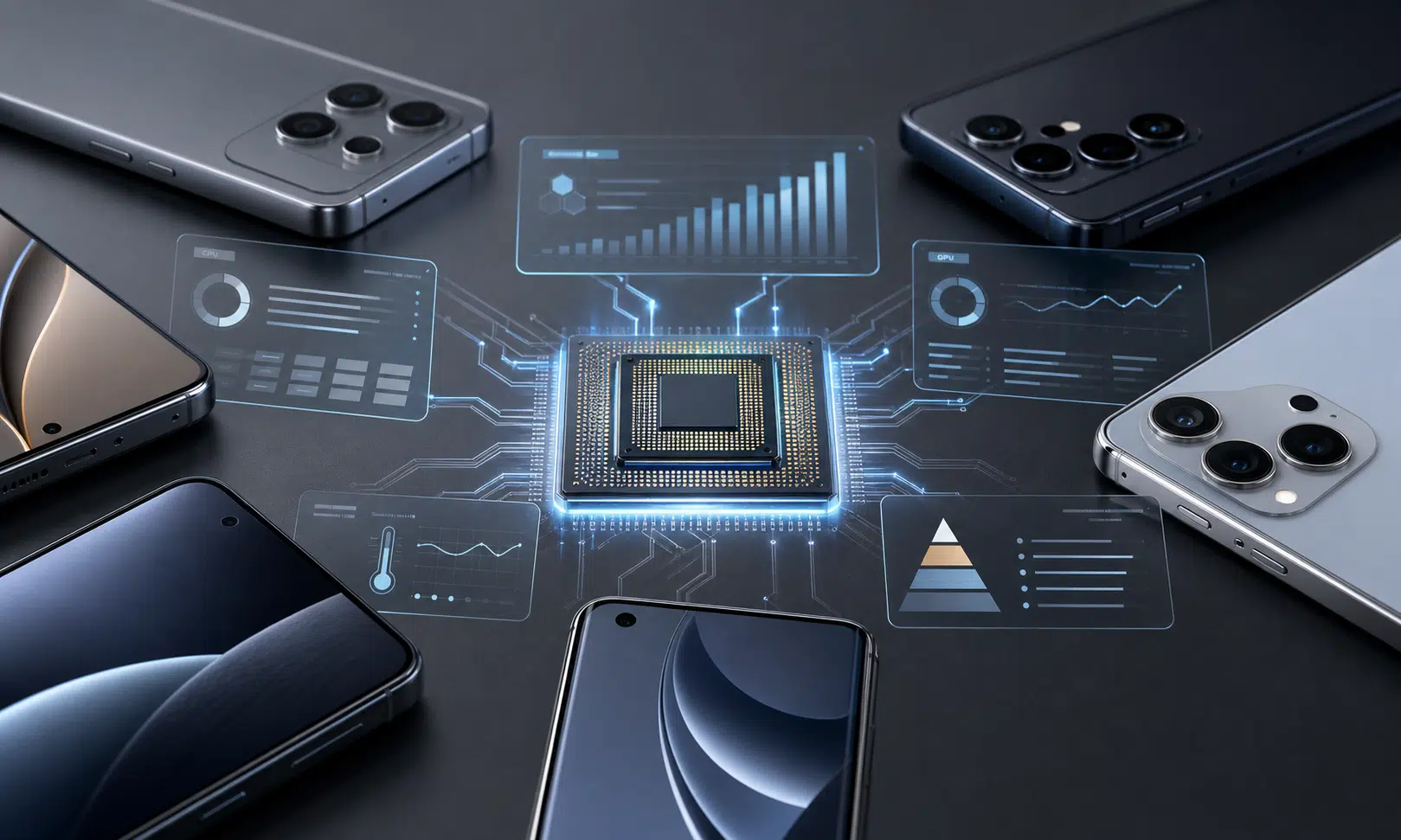

The latest high-end smartphone chips are close enough that a simple ranking does not tell the whole story. In the benchmark comparison described by the source material, the fastest mobile chipsets ranked near the top include current flagship silicon from Qualcomm, MediaTek, Samsung and Apple. Those results should be read as a benchmark-led snapshot rather than an independently verified lab standard.
That distinction matters for buyers. A chip can post excellent numbers and still feel ordinary in a poorly cooled phone. Another chip can sit lower on a chart and still be perfectly quick for messaging, browsing, streaming, photography and casual gaming. Raw performance is useful, but it is only one part of the phone-buying decision.
How this chipset comparison should be read
The source comparison focuses on three familiar performance tests: GeekBench single-core, GeekBench multi-core and 3DMark Wild Life Extreme. It presents the results as CPU and GPU performance rather than as a full review of each phone. That means the comparison does not attempt to judge camera processing, modem quality, AI features, battery life, software support or manufacturer claims.
The source also describes a relative baseline system, where one selected chip can be treated as 100% and the others are compared against it. Since those chart mechanics and the underlying review database have not been independently verified here, the safest way to use the rankings is as directional guidance. They are most useful for spotting tiers: flagship, near-flagship, midrange and entry-level.
For buyers, that is often enough. You rarely need to know whether one premium chip is a few percentage points ahead of another. You are more likely to care whether a phone sits in the top performance class, offers strong gaming value, or cuts too far into entry-level hardware.
The headline takeaway: flagship chips are tightly grouped
The source argues that the flagship race has compressed at the top. It places Snapdragon 8 Elite Gen 5, Dimensity 9500, Exynos 2600 and Apple A19 Pro in a broadly similar ultra-high-end tier, while noting differences between them. Because those exact placements are source-reported rather than independently verified here, they should not be treated as a universal ranking across every phone.
Still, the buyer implication is practical: once you are shopping among top-tier phones, the chip brand alone is less useful than the complete device. Cooling, battery capacity, software tuning, storage speed and price can matter as much as the silicon. A gaming phone with aggressive cooling may sustain performance better than a thin flagship using a similar chip. A mainstream premium phone may feel smoother because its software and display tuning are better balanced.
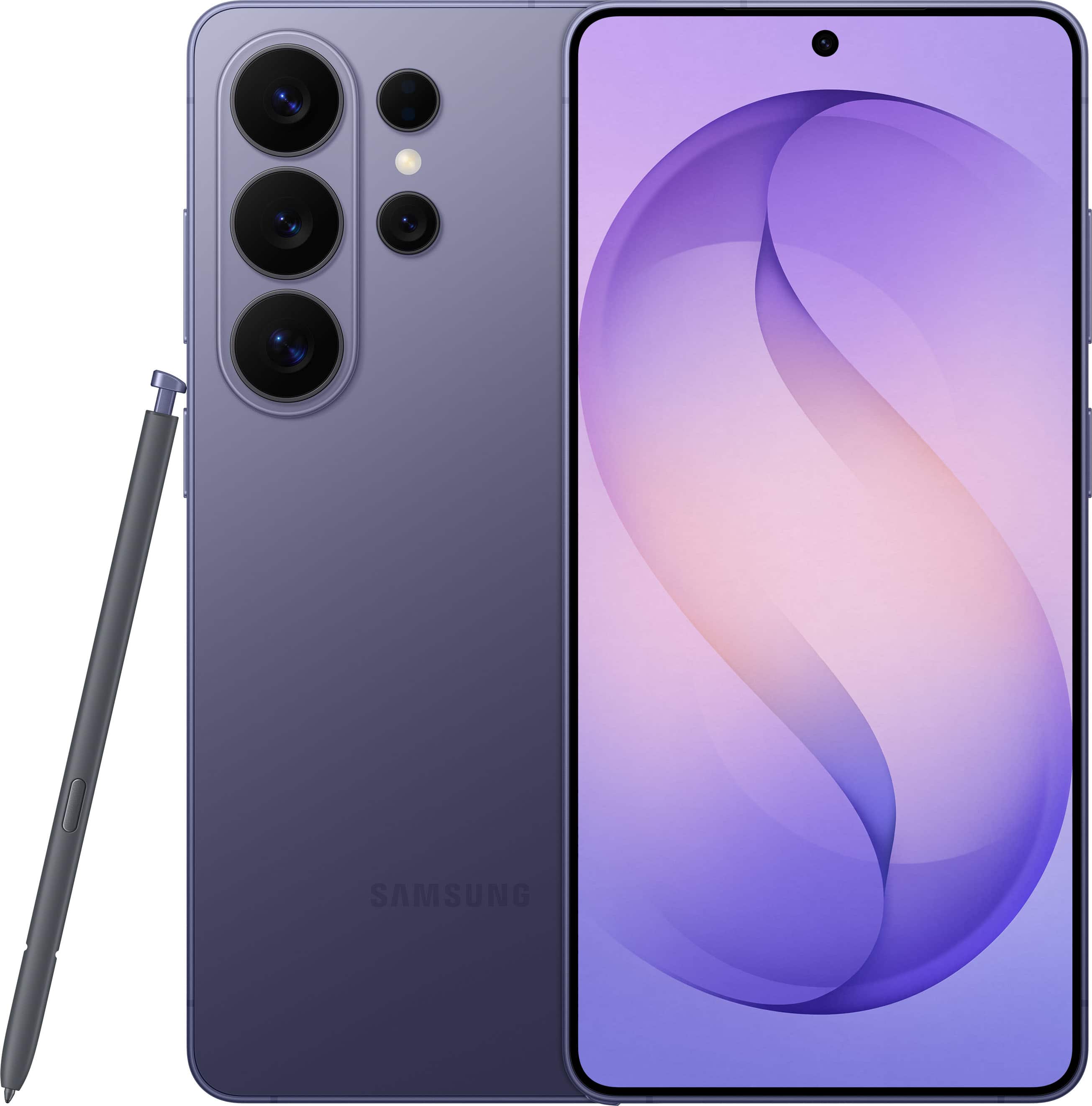
Samsung Galaxy S26 Ultra
The Galaxy S26 Ultra is a sensible reference point for shoppers who want a premium Android phone built around a top-tier Snapdragon chipset. It is most relevant if gaming headroom, long-term performance and a large high-refresh display matter more than keeping the price low.
As an Amazon Associate I earn from qualifying purchases.
CPU versus GPU: the difference buyers should care about
The source separates CPU results from GPU results, which is the right way to think about phone performance. Single-core CPU scores tend to reflect short, responsive tasks: opening apps, moving through the interface and handling quick bursts of work. Multi-core scores matter more for heavier tasks that can use several cores at once.
GPU results are especially relevant for gaming, high-refresh visuals and graphics-heavy workloads. The source claims the biggest performance spread appears in graphics rather than CPU results. That specific scale has not been independently verified here, but the broader buying lesson is sound: if you play demanding games, GPU performance and thermal design deserve more attention than headline CPU numbers.
| Benchmark area | What it suggests | Buyer relevance |
|---|---|---|
| Single-core CPU | Short bursts of processor speed | Interface feel, app launches and everyday responsiveness |
| Multi-core CPU | Performance across several cores | Heavy apps, editing, multitasking and sustained workloads |
| GPU | Graphics performance | Gaming, high-end visuals and graphics-heavy apps |
Apple, Qualcomm, MediaTek, Exynos and Tensor: where each seems to stand
The source describes Apple as especially strong in single-core performance, with the A19 Pro presented as the leading chip in that specific area. Since the claim is not independently verified here, it is better read as a source-reported benchmark observation. For buyers comparing iPhones with Android flagships, the useful point is that Apple continues to be positioned around responsiveness and burst performance rather than only broad multi-core or GPU rankings.
Qualcomm is described as particularly strong when CPU and GPU performance are considered together. The source says an overclocked Snapdragon 8 Elite Gen 5 variant leads its multi-core and GPU charts, with the larger advantage appearing in graphics. Treat that as chart-specific rather than universal, because individual phone cooling can change sustained results.
MediaTek receives one of the more buyer-relevant notes in the source. The Dimensity 9500 is presented as competitive near the top, while chips such as the Dimensity 8400 are described as bringing strong graphics performance into more affordable phones. The exact ranking has not been independently verified here, but the value argument is important: midrange and upper-midrange phones can sometimes deliver more performance than their prices suggest.
Samsung Exynos is described as being back in flagship territory with the Exynos 2600. That is a source-reported position, not a blanket recommendation for every Exynos phone. Buyers should still look at the specific model, region, cooling system and battery behavior before assuming parity with a Snapdragon version.
Google Tensor is treated differently. The source says Tensor G5 has respectable CPU results but trails the leading flagship chips in GPU performance. That fits the broader buyer question around Pixel phones: many people buy them for software, camera behavior and Google features rather than benchmark leadership. If gaming performance is the priority, Tensor should be compared carefully against Snapdragon, Dimensity and Apple alternatives.
Midrange phones may be the smarter performance buy
The most useful part of the source comparison is not the fight for first place. It is the gap between upper-midrange chips and the cheapest modern smartphone silicon. The source suggests that midrange chips have improved faster than the lowest-end options, creating a meaningful difference in everyday headroom.
That matters if you are buying a phone to keep for several years. A very cheap device may run the same apps today, but it has less room for future software updates, heavier apps and newer games. Spending slightly more on a stronger midrange chip can make the phone feel useful for longer, especially if it also includes enough RAM and storage.

Samsung Galaxy A56 5G
The Galaxy A56 5G is a practical option for readers who want a modern midrange phone with enough everyday performance headroom, a large AMOLED display and longer software support. It is better suited to general use than to buyers chasing the highest gaming benchmark scores.
As an Amazon Associate I earn from qualifying purchases.
Verdict: use chipset rankings as a filter, not a final answer
Benchmark rankings are helpful when they keep you from comparing phones blindly. They can show whether a device is truly flagship-class, whether a midrange phone punches above its price, or whether an entry-level model may feel limited sooner than expected.
They should not be the only buying tool. A phone with a top chip can disappoint if it throttles, ships with slow storage, has poor battery life or costs much more than comparable alternatives. A phone with a lower-ranked chip can still be the better purchase if its software, camera, display, battery and price line up with what you actually need.
For most buyers, the practical rule is simple: choose a flagship chip if you want maximum gaming headroom or plan to keep the phone for a long time; look closely at upper-midrange chips if value matters; avoid the lowest tier unless price is the overriding concern.