

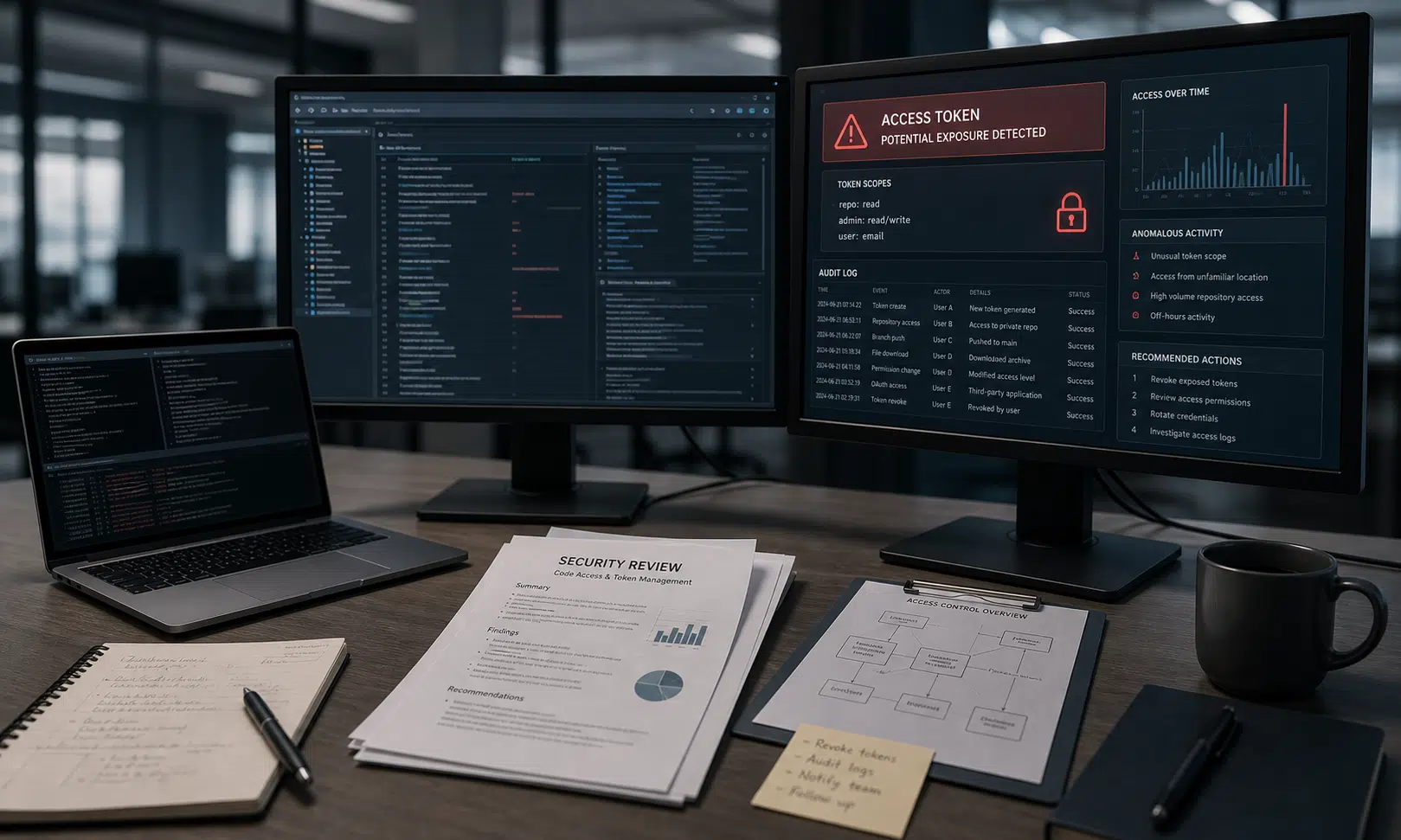

Grafana Labs says it was targeted by hackers who accessed its code environment and then tried to pressure the company into paying to keep that material from being released.
The company, best known for its open-source observability and dashboard software, described the incident in public social media posts. According to Grafana Labs, the intrusion involved a stolen token credential connected to its GitHub environment. The company said that environment is used for source code, and that its current assessment does not point to access to customer records or financial data.
Because the details have not been independently verified, buyers and security teams should treat the company’s statements as the clearest available account rather than a complete forensic record. Grafana has also indicated that its investigation is continuing, but a firm public timeline for final findings has not been confirmed.
What Grafana Labs Says Happened
Grafana Labs said the attacker used a stolen token credential to reach part of its GitHub environment. In practical terms, that means the incident appears to have centered on developer infrastructure rather than the production systems where customer data would typically live.
The company has said the token did not provide access to customer records or financial data. That distinction matters for customers evaluating risk: a source-code exposure can still be serious, but it is different from a breach involving customer files, billing information, or regulated personal data.
A firm timeline for every remediation step has not been publicly confirmed. Grafana has said it took action after identifying the issue, and security teams evaluating the incident should watch for a fuller post-incident report before treating the matter as closed.
The most important operational question is not only whether code was viewed or copied. It is whether the credential had permissions broad enough to expose private repositories, secrets, build pipelines, dependency workflows, or internal automation. Those details were not fully available from the public account.
Why Source Code Exposure Still Matters
Grafana’s public identity is closely tied to open-source software. Much of what users know as Grafana can already be downloaded, reviewed, modified, and run by anyone. That makes this incident different from a case where attackers obtain a completely private commercial codebase.
Still, open source does not make every code-related compromise harmless. Companies often maintain private repositories, unreleased work, internal tooling, deployment scripts, security automation, test data, or configuration patterns around public software. If an attacker reaches the wrong part of a developer environment, the risk can extend beyond the visible application code.
For buyers, the practical concern is whether the incident could affect the integrity of software they run, the security of updates they receive, or the confidentiality of their own data. Based on Grafana Labs’ public account, customer and financial records were not involved. But teams that rely heavily on Grafana should still follow the company’s updates and review their own exposure.
Useful internal checks include:
- Confirming whether Grafana Cloud, self-hosted Grafana, or related plugins are used in production.
- Reviewing whether any internal Grafana tokens, service accounts, or data source credentials need rotation.
- Checking whether Grafana instances have access to sensitive monitoring, logging, or infrastructure data.
- Watching for any security advisories, patched releases, or recommended configuration changes from Grafana Labs.

YubiKey 5C NFC Security Key
Hardware security keys can help teams reduce the risk of account takeover for GitHub, cloud consoles, password managers, and other developer systems. Choose a USB-C or USB-A model that matches the devices your team actually uses.
As an Amazon Associate I earn from qualifying purchases.
The Ransom Decision
Grafana Labs said the attacker attempted to pressure the company for payment in exchange for not releasing the codebase. The company’s public posture is that it would not pay.
That position lines up with long-standing law enforcement guidance against paying extortion demands. The reasoning is straightforward: payment does not guarantee that stolen material will be deleted, kept private, or withheld from resale. It can also reward the same criminal market that creates pressure on future victims.
For customers, however, the important part is less symbolic than practical. A refusal to pay can be the right security and policy decision, but it does not eliminate the need for clear technical follow-through. Customers will want to know what was accessed, how long the access lasted, whether any private code or secrets were exposed, and what controls have changed since.
How This Compares With Data-Theft Incidents
Grafana’s situation is meaningfully different from a breach where attackers claim to hold staff, student, patient, or customer records. In those cases, the immediate harm can include identity theft, regulatory reporting duties, notification requirements, and direct risk to affected individuals.
Here, Grafana Labs has said the incident did not involve customer records or financial data. That lowers the apparent privacy impact, assuming the company’s assessment holds. The remaining concern is supply-chain and software-trust risk: whether attackers could learn enough from the code environment to discover weaknesses, target users, or abuse development workflows.
That distinction matters for procurement teams. A breach involving personal data may trigger legal, compliance, and vendor-risk workflows immediately. A developer-environment compromise may instead require a more technical review of software assurance, access controls, signing practices, secrets management, and vulnerability response.
What Buyers and Security Teams Should Watch Next
Grafana Labs has said its investigation is ongoing. Until a fuller report is available, customers should avoid overreacting, but they should not ignore the incident either.
Security teams should look for concrete answers in any follow-up statement:
- Which repositories or GitHub organizations were accessible through the stolen token.
- Whether any private repositories, internal tools, or unreleased code were viewed or copied.
- Whether secrets, credentials, signing keys, build artifacts, or automation tokens were exposed.
- Whether the attacker had read-only access or any ability to modify code or workflows.
- What token controls, monitoring, and repository protections have changed since the incident.
For organizations using Grafana in sensitive environments, the near-term response should be measured. Review Grafana’s role in your infrastructure, confirm whether it connects to high-value systems, and rotate local credentials if your own deployment practices make that prudent. There is no public basis in the provided account to claim that customer data was taken, but there is enough information to justify a focused vendor-risk review.
The Bottom Line
Grafana Labs says the incident involved a stolen token used to access its GitHub environment, followed by an extortion attempt tied to the possible release of code. The company says customer records and financial data were not accessed.
That makes this a developer-infrastructure security incident rather than, based on the company’s current public account, a customer-data breach. The risk is still real: code environments can reveal sensitive engineering details, and token theft remains one of the most common ways attackers move through modern software organizations.
For buyers, the right response is to separate immediate exposure from longer-term trust questions. If Grafana’s account holds, customers may not face a direct data-compromise event. But they should still expect clear follow-up on repository access, credential handling, and the controls Grafana Labs is putting in place to reduce the chance of a repeat incident.