

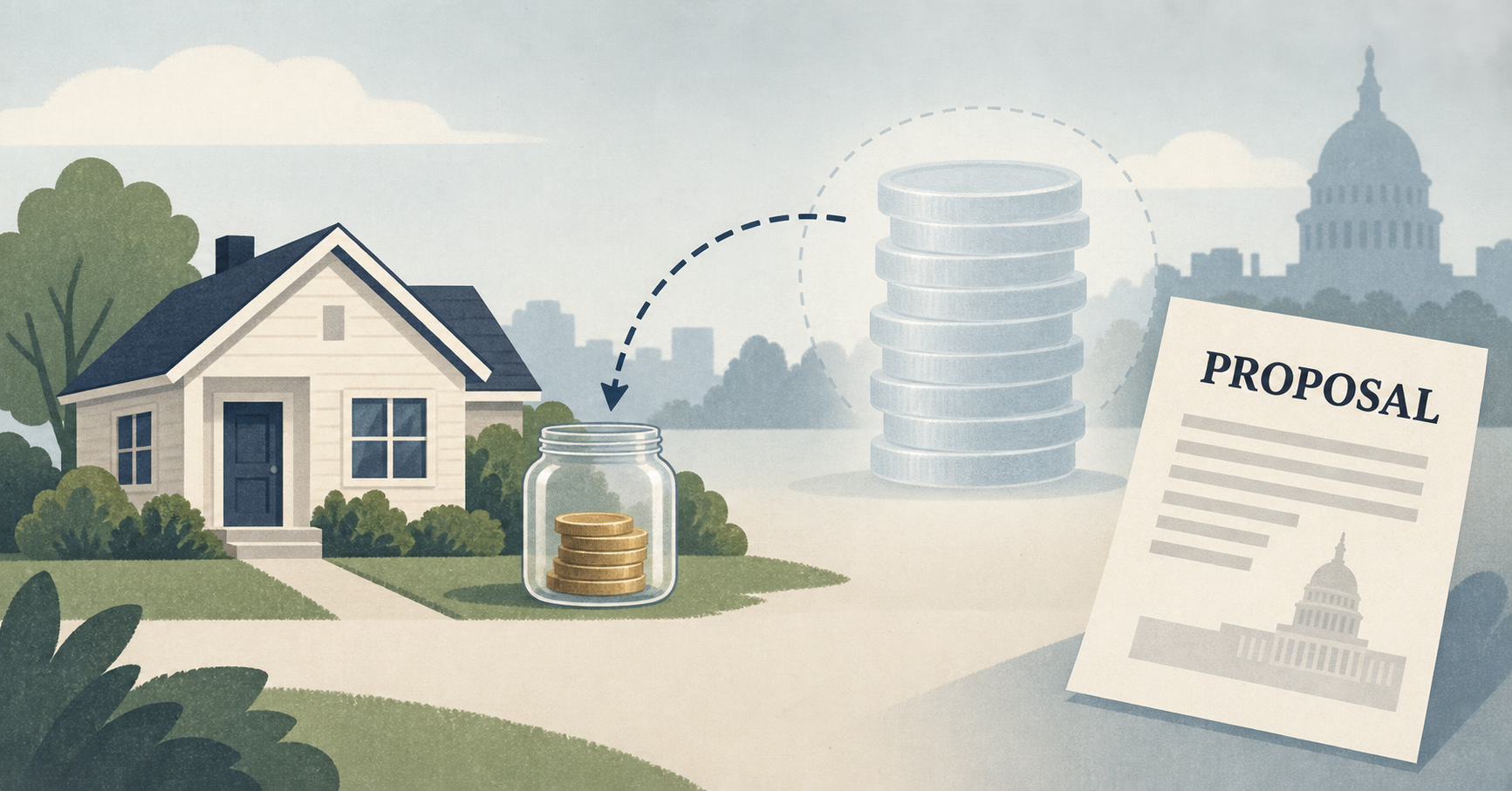

First-time homebuyers could receive up to $50,000 in federal down payment assistance under the Homeownership Promise Act, a proposal from Oregon Sens. Jeff Merkley and Ron Wyden. The proposed accounts would match each dollar an eligible buyer saves with $5 from the government.
That could turn $10,000 in personal savings into $60,000 toward a home. Access to that money would depend on the proposal becoming law and the program being implemented. For buyers weighing a purchase, the distinction matters: a potential federal contribution cannot yet be treated as part of an available down payment.
How the proposed savings match would work
The Homeownership Promise Accounts would operate through participating Community Development Financial Institutions. Federal matching money would become available at the closing of an eligible home purchase.
The proposal would cap combined personal, employer and nonprofit contributions at $10,000, with a separate $50,000 ceiling on the federal match. Employers and nonprofits could help fund an account, but only the buyer’s personal contributions would qualify for the five-to-one match. Employer and nonprofit contributions would count toward the same $10,000 limit.
Eligibility would also come with restrictions:
- The home would need to serve as the buyer’s principal residence.
- The purchase price, excluding closing costs, could not exceed the area’s median single-family home price, subject to HUD adjustments.
- Buyers would need to complete HUD-approved housing counseling.
The proposal would allow emergency withdrawals of personal contributions. Merkley’s program summary calls for restoring the full contribution balance before a matching grant could be disbursed.
Those conditions would make the proposed assistance more specific than the headline dollar amount suggests. The full match would require $10,000 in qualifying personal savings and a purchase that meets the program’s rules.
A larger down payment has limits
A larger down payment could help buyers clear a substantial financial hurdle. It would not, by itself, increase the number of affordable properties available in their area.
That creates a potential trade-off. If additional purchasing power brings more buyers into competition for the same limited supply, some of the assistance could be absorbed by higher sale prices. The size of that effect would depend on market conditions; it is a risk, rather than an established outcome of a program that has yet to operate.
Congressional approval is another unresolved step. The proposal’s matching formula describes how assistance could work, without establishing when buyers might be able to use it.
Fall could offer more room to negotiate
For buyers already able to finance a purchase, seasonal conditions may provide a more immediate opening. Realtor.com identifies September 27 through October 3 as the most favorable national buying week in its 2026 analysis.
Its historical patterns suggest active listings could be 31.9% higher than at the start of the year. Listing prices could sit about 3.5% below their seasonal peak, equivalent to roughly $14,000 on a median-priced home. Those estimates describe a possible market pattern; they do not promise a discount on an individual property.
The timing also varies locally. Realtor.com places New York and Milwaukee’s windows on September 6–12, while Miami and Tampa Bay’s fall on November 29–December 5.
Mortgage rates are excluded from the seasonal scoring because they do not follow the same calendar patterns. That limits what a favorable buying week can tell a household about affordability: a lower asking price can still come with a monthly payment beyond its budget.
The affordability gap goes beyond the down payment
The National Association of Realtors recorded a 2% monthly decline in existing-home sales in August 2026, with sales down 1.2% from a year earlier. Its 2025 buyer profile put first-time buyers at a record-low 21% of purchases and their median age at 40.
LendingTree’s June 2026 affordability analysis estimated that fewer than four in ten households that did not own a home could afford a typical starter home under its assumptions.
The proposed federal match targets the savings hurdle within that broader problem. It could help eligible buyers assemble a larger down payment, while home prices, available inventory and mortgage payments would continue to shape what they could afford. Until the assistance is enacted and accessible, buyers would still need to base a purchase on funds they can actually use.