


Chipotle Mexican Grill didn’t win by playing the fast-food game better. It won by refusing to play most of it at all—no drive-throughs, no franchises, no breakfast rush, and very little in traditional advertising. Even the menu barely budges. In an industry built on convenience and constant novelty, that should’ve been a handicap.
Instead, it became the point. Chipotle’s bet was that speed didn’t have to mean shortcuts—and that customers would notice the difference.
Amazon Pick: A classic on scaling hospitality
Setting the Table by Danny Meyer is one of the best reads on building a service-driven brand—useful context for anyone studying fast-casual and restaurant growth.
Shop on AmazonWhat makes the story even stranger is that for roughly eight years, Chipotle grew under the wing of the ultimate fast-food machine: McDonald’s. The burger giant’s investment helped the burrito chain scale from a tiny footprint to hundreds of locations, while giving Chipotle a close-up view of the world’s most optimized supply chain. For McDonald’s, it looked like a savvy growth play. In hindsight, it’s remembered as a rare miss—an early stake in the “fast casual” future that it didn’t hang onto.
The anti-McDonald’s playbook that somehow worked
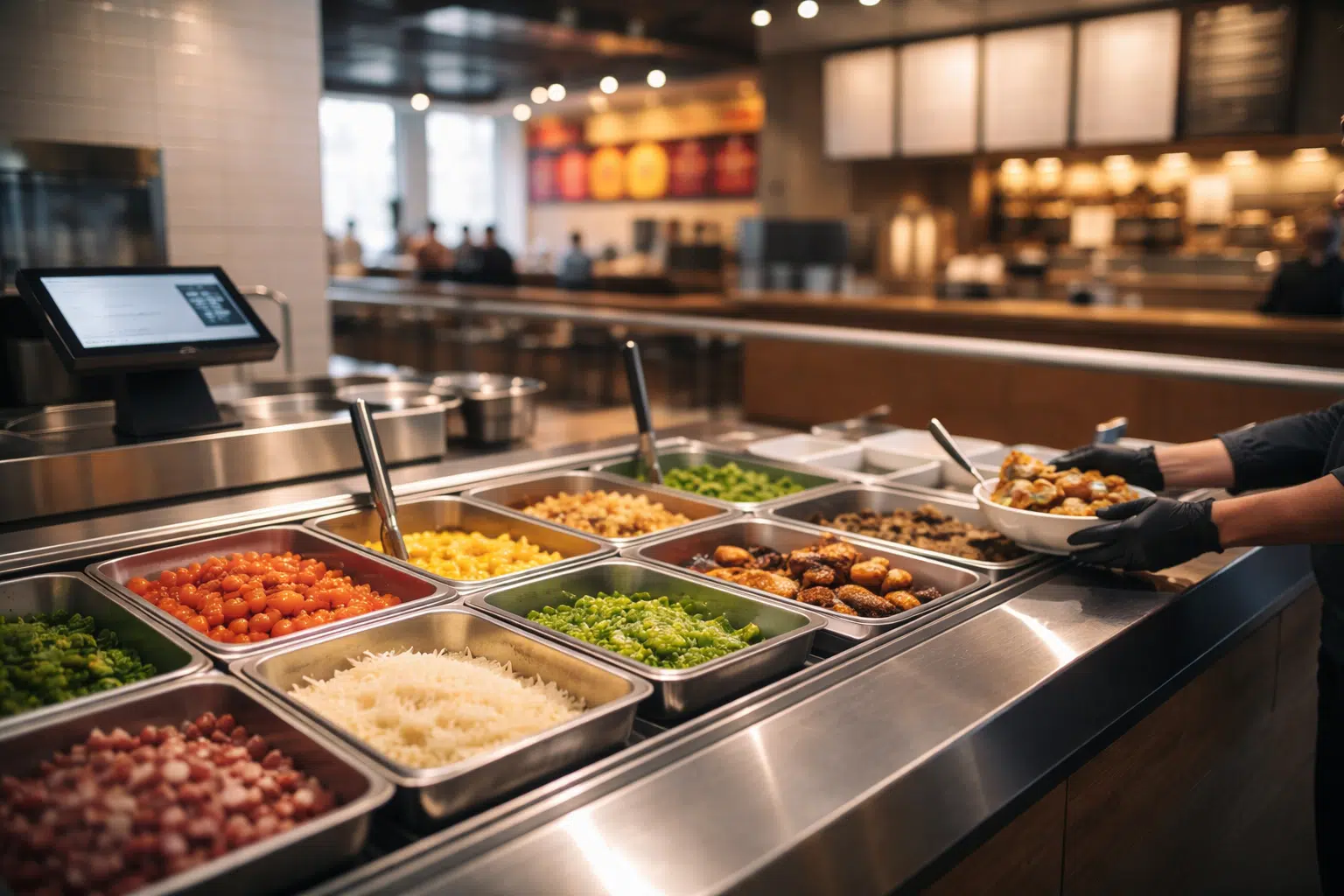
By restaurant-industry standards, Chipotle’s operating philosophy often reads like a list of “don’ts.” The company built a reputation for spending more on ingredients than many peers would tolerate. It leaned hard into fresh prep. It avoided the sprawling menu creep that defines so many large chains. And it designed its restaurants around a simple throughput idea: move customers through an assembly line quickly without making the food feel mass-produced.
That combination—higher-quality inputs, tight focus, and operational speed—helped define what “fast casual” meant to a lot of consumers in the 2000s and 2010s. You could get something customized and relatively fresh, quickly, at a price point that wasn’t cheap-fast-food but also wasn’t sit-down dining.
A founder who didn’t set out to build a burrito empire
The origin story isn’t “corporate mastermind builds category.” It’s more like: classically trained cook tries to finance a different dream.
Founder Steve Ells came up through serious kitchens, including in San Francisco, where he fell for the city’s Mission-style burritos—big, foil-wrapped, built-to-order, and designed for speed. When he returned to Colorado, he saw a gap: the format could scale, and the product didn’t have to be mediocre just because it was fast.
Early Chipotle locations were scrappy. The concept was unfamiliar in some markets. The operations were still being invented in real time. But the model—line service, limited menu, high throughput—worked, and the economics began to speak for themselves.
The money problem: growth needs fuel
Even with strong unit economics, growth costs money: leases, buildouts, hiring, training, supply. Chipotle’s early expansion relied heavily on the founder’s family and a small circle of supportive investors. But the company eventually needed deeper pockets to go from “promising regional chain” to “national contender.”
That’s where McDonald’s entered the picture.
The McDonald’s era: a growth accelerator with built-in tension
McDonald’s began investing in Chipotle in 1998, when the burrito chain had roughly 13 stores. Over the next several years, Chipotle expanded dramatically—approaching 500 locations by 2006. McDonald’s total investment is often described as roughly $340 million by the time Chipotle went public, a meaningful bet even for a company of McDonald’s size.
What did Chipotle get out of the relationship?
- Capital to expand faster than it could have through small private checks
- Operational and financial discipline that comes with a major corporate partner
- Supply-chain exposure, including how large systems think about consistency, distribution, and cost control
- Real-estate and construction expertise, crucial when you’re scaling dozens (then hundreds) of builds
But the partnership also highlighted a cultural clash.
McDonald’s is built around replicability at massive scale: drive-through efficiency, heavy marketing, prime real estate, and a system designed to serve a standardized product everywhere. Chipotle was trying to prove the opposite: that a simpler menu, fresh prep, and a more “restaurant-like” experience could scale without turning into the thing it was reacting against.
The two companies could cooperate, but they weren’t pulling toward the same end state.
Why McDonald’s let go
By the mid-2000s, Chipotle was growing fast, but it was still small compared to McDonald’s core business. Partner brands created distractions—both for franchisees and for corporate leadership—and the strategic logic of holding Chipotle changed as McDonald’s refocused on its main brand.
The split culminated around Chipotle’s 2006 IPO and McDonald’s eventual exit from its Chipotle stake. Chipotle gained full independence. McDonald’s got a return—but not the kind of generational win it might have had if it stayed along for the ride.
Burrito boom meets burger anxiety
By early 2015, the contrast was hard to miss. Chipotle was being framed as a “fast-food future” case study, with a valuation around $22 billion at the time—an extraordinary figure for a chain that refused many fast-food conventions.
McDonald’s, meanwhile, was publicly wrestling with shifting consumer tastes and slowing momentum. In late January 2015, it announced CEO Don Thompson would step down effective March 1, with Steve Easterbrook set to take over—a leadership reset during a moment when “better fast food” was pulling attention and dollars away from legacy players.
Chipotle didn’t succeed because McDonald’s failed. But McDonald’s struggles made Chipotle’s rise feel like a verdict on the direction the category was headed.
“Food with integrity” as strategy, not slogan
Chipotle’s most powerful marketing move wasn’t a flashy campaign—it was positioning. The company steadily leaned into ingredient sourcing, animal welfare narratives, and the idea that fast food didn’t have to feel disposable.
That approach came with real costs. Higher ingredient standards can compress margins unless you manage pricing, throughput, and labor exceptionally well. Chipotle’s bet was that customers would pay slightly more for something that felt meaningfully better—and that the operational model could protect profitability.
For years, it worked.
What the model proved
Chipotle’s bigger lesson isn’t “burritos beat burgers.” It’s that the assembly-line format can be applied to almost any cuisine—if you get three things right:
- A tight menu that scales operationally
- A fast, intuitive service line that still allows customization
- Quality cues that make the experience feel like an upgrade, not a compromise
That’s why an entire generation of brands tried to become “the Chipotle of” pizza, salads, Mediterranean, bowls, you name it. Some stuck. Many didn’t. But Chipotle helped reset the expectation that fast could still feel crafted.
The irony that won’t go away
McDonald’s helped Chipotle become big enough to prove its thesis. But the thesis itself ran counter to so much of what made McDonald’s dominant.
It’s one of the most interesting “what if” stories in modern American business: the moment a legacy giant glimpsed the next wave early—and still couldn’t quite bring it into the core.