


Chipotle’s story is often told as an accidental success story: a small Denver burrito shop that grew into one of the best-known names in fast-casual dining. The broad outline is familiar, even if some of the details are best treated carefully rather than repeated as settled fact.
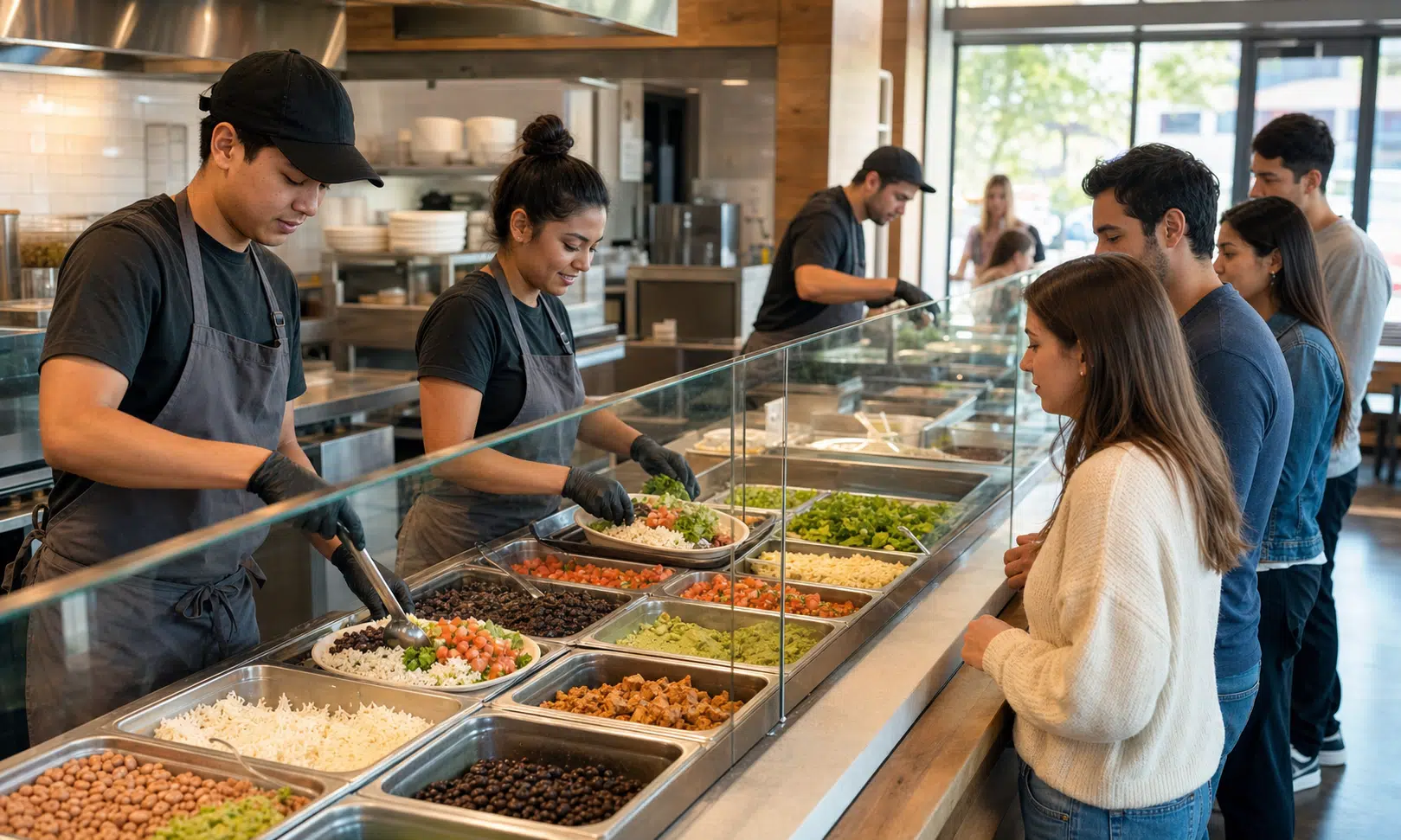
The useful lesson is not that Chipotle found one magic trick. It is that the brand built a clear operating idea and stayed close to it: a short menu, visible preparation, customizable orders, and a service model designed to feel faster than a sit-down restaurant but more intentional than conventional fast food.
For customers, that formula made the decision simple. They did not have to study a long menu. They picked a format, chose ingredients, and watched the meal come together. For operators and competitors, the lesson was more complicated: simplicity can look easy from the outside while demanding tight systems behind the counter.
The Fast-Casual Formula
Chipotle helped popularize a style of restaurant built around a narrow set of choices rather than a sprawling menu. Burritos, bowls, tacos, and salads gave customers enough flexibility without forcing the kitchen to support dozens of unrelated items.
That matters because menu discipline affects almost everything else: training, ingredient prep, speed of service, supply planning, and consistency across locations. A smaller menu can still feel broad when customers are allowed to combine ingredients in different ways.
| Decision Area | Chipotle-Style Approach | Buyer or Operator Tradeoff |
|---|---|---|
| Menu | Limited core formats with customizable ingredients | Easier ordering, but less variety for customers who want many categories |
| Service | Fast line assembly with visible preparation | Speed and transparency depend on staff execution |
| Brand | Freshness, sourcing, and made-to-order positioning | Higher expectations when something goes wrong |
| Growth | Repeatable restaurant format | Scaling can strain quality control and training |
The model also gave customers a sense of control. A person choosing lunch could make the meal feel lighter, heavier, simpler, or more indulgent without leaving the same ordering system. That is one reason the format became so influential across the restaurant industry.
Why Simple Does Not Mean Easy
A short menu can be a strength, but it removes hiding places. If a restaurant sells a focused set of items, the ingredients, line speed, portioning, and staff interactions have to carry more of the customer experience.
The source material frames Chipotle’s growth as a test of whether the same promise could work beyond one market. That is a fair way to look at the business challenge. A concept can be popular in one neighborhood and still struggle when it becomes a national chain. Expansion requires capital, training systems, real estate discipline, supply reliability, and a culture that can survive distance from the founder.
Chipotle’s rise also shows why brand positioning creates obligations. When a company asks customers to believe in freshness, ingredient quality, or better sourcing, operational failures carry extra weight. Food safety issues, even when described cautiously, are not just short-term public relations problems for a restaurant brand. They test whether customers still trust the system behind the counter.
The Recovery Lesson
The source article points to a difficult period tied to food safety concerns and then to changes in process, marketing, and customer trust. The safest takeaway is not to treat recovery as automatic. Restaurant customers can be loyal, but they also have easy alternatives.
For a brand like Chipotle, recovery depends on visible correction and repeated good experiences. A coupon or advertising campaign may bring someone back once. Consistency is what decides whether that visit becomes normal again.
Digital ordering and delivery also changed the way customers interact with restaurants like Chipotle. The source presents those moves as important to the company’s later position. The practical point is that convenience became part of the product. A burrito bowl ordered ahead for pickup is not the same experience as standing in line, but it competes for the same lunch decision.
What Buyers and Operators Can Take From It
For customers comparing fast-casual options, Chipotle’s appeal rests on a few clear criteria: speed, customization, ingredient preference, portion expectations, and convenience. It is not the right choice for every meal, but the buying decision is easy to understand.
- Choose it when you want a familiar customizable meal without a long ordering process.
- Compare it against other fast-casual restaurants on ingredient preferences, price, convenience, and consistency at your local store.
- For operators, study the system more than the burrito. The repeatable format is the real business lesson.
Chipotle’s larger lesson is that a simple idea can scale when the operations support it. The risk is that the same simplicity raises expectations. Customers notice when the line slows down, when ingredients feel inconsistent, or when the brand promise no longer matches the visit.
That is the useful way to read Chipotle’s story: not as a flawless rise, and not as a generic business fable, but as a case study in focus. The company built a recognizable restaurant experience around a limited set of choices, then had to keep proving that the model could hold up as it grew.