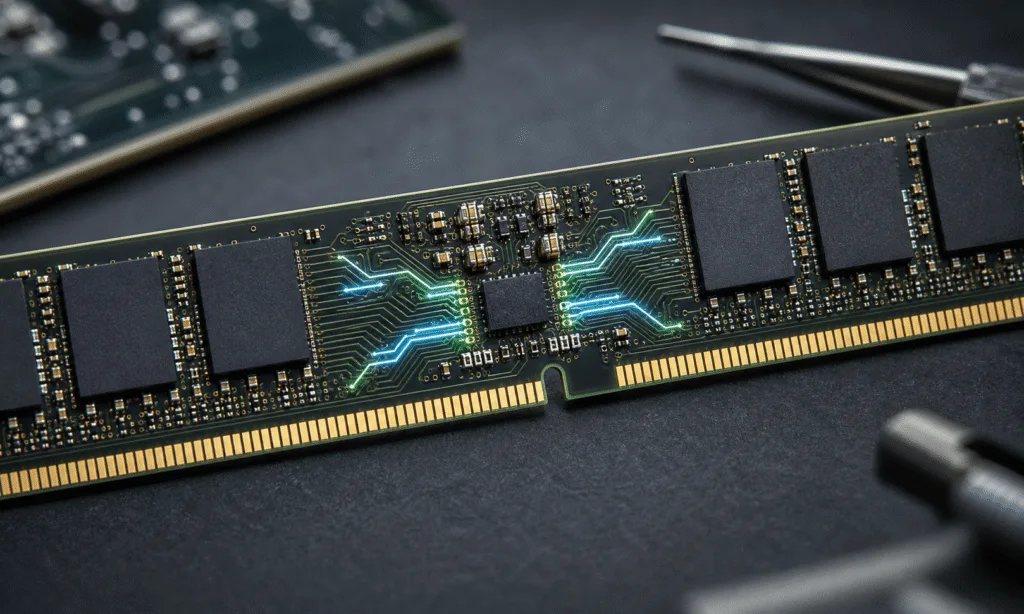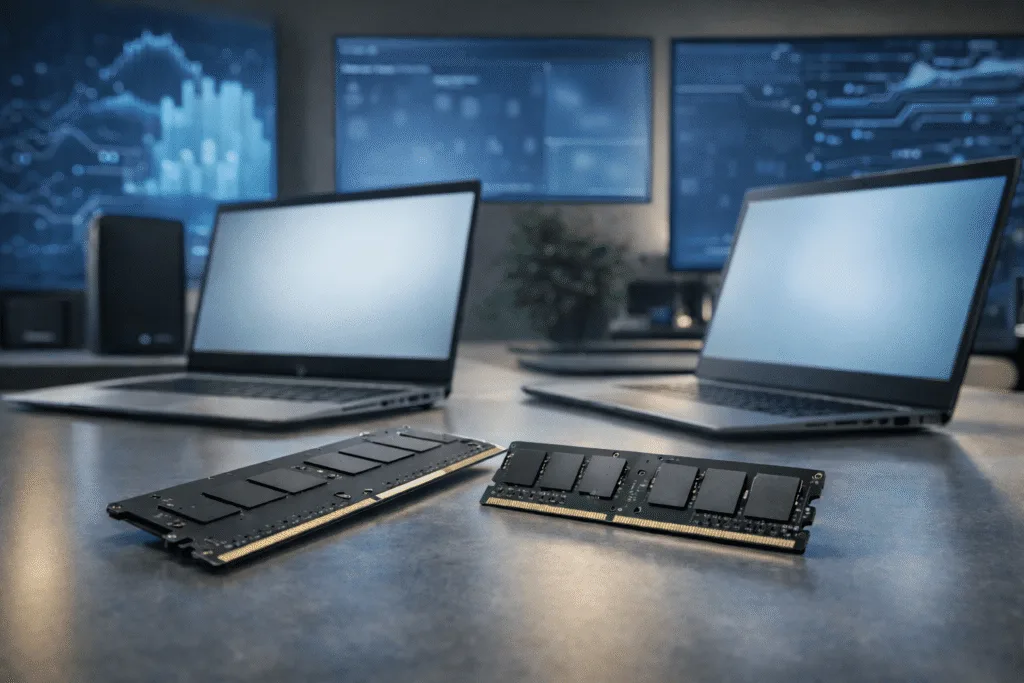
HP Inc. says memory now accounts for 35% of the materials cost of building a PC, up from about 15%–18% in the previous quarter. The company expects memory’s share of those costs to rise through the year.
In its fiscal 2026 first-quarter results released February 24, HP maintained its annual earnings guidance but said results were likely to be closer to the low end. CFO Karen Parkhill cited increasing memory costs as a challenge for the company.
Supply agreements and pricing changes
On HP’s first-quarter earnings call, interim CEO Bruce Broussard said the company had secured long-term supply agreements for the year, qualified new suppliers and built “strategic inventory positions” for key platforms. He said HP had also halved the time required to qualify new materials, allowing faster changes to product configurations.
HP says its measures also include expanding lower-cost sourcing, reducing logistics costs through end-to-end planning and using internal AI initiatives to support those processes. The company said it was adjusting product configurations and demand to match available supply, while taking targeted pricing actions with sales partners and direct customers to offset remaining cost increases.
Broussard also said HP did not expect developments following the Supreme Court’s tariff ruling to negatively affect the company. A presidential proclamation imposed a temporary 10% import surcharge under Section 122 of the Trade Act of 1974, effective February 24, 2026, for 150 days. The proclamation included exemptions for certain electronics and other products.
PC revenue rises as printing declines
HP reported Personal Systems revenue of $10.3 billion, up 11% year over year, with a 5.0% operating margin. Total PC unit sales increased 12%, including a 14% rise in consumer units and an 11% increase in commercial units.
HP says AI PCs account for about 35% of the PCs it sells. Ketan Patel, president of Personal Systems, cited Windows 11 adoption and AI PC demand as sales drivers. He also said more software developers were building applications that use AI locally on PCs.
Printing revenue fell 2% to $4.2 billion, with an operating margin of 18.3%. Overall revenue increased 6.9% to $14.4 billion. Non-GAAP diluted earnings were $0.81 per share, at the top of HP’s previous guidance range, while GAAP diluted earnings were $0.58 per share.
HP maintained its fiscal 2026 guidance of $2.90–$3.20 per share in non-GAAP diluted earnings and $2.47–$2.77 in GAAP diluted earnings. The company said it expected earnings and free cash flow to be at the lower end of its annual guidance ranges.
HP shares were reported at $17.15 in after-hours trading, compared with an opening price of $18.33 earlier that day.