


A federal judge in California has dismissed xAI’s trade-secrets lawsuit against OpenAI—for now—after finding the complaint didn’t plead enough facts tying OpenAI itself to any alleged theft.
U.S. District Judge Rita F. Lin granted OpenAI’s motion to dismiss with leave to amend, meaning xAI can try again if it can add specific, plausible allegations of wrongdoing by OpenAI (not just former employees). The ruling was issued on Feb. 24, 2026.

Elon Musk (Walter Isaacson)
A reported biography that traces Musk’s career across Tesla, SpaceX, X, and his broader role in Silicon Valley’s recent tech battles.
Check Price on AmazonxAI originally filed the case on Sept. 24, 2025, accusing OpenAI of running a “coordinated, unfair, and unlawful campaign” to obtain proprietary technology via targeted recruiting and employee moves.
The complaint claimed OpenAI “by hook or by crook” induced eight former xAI engineers to misappropriate xAI’s source code, training methods, and data center deployment strategies—allegations tied to the employees’ activity around the time they were allegedly contacted by OpenAI recruiter Tifa Chen.
But Judge Lin said the problem is straightforward: the complaint spends most of its time describing what former employees allegedly did, without alleging enough facts that OpenAI directed, knew of, or used any stolen trade secrets. As the judge put it, xAI did not allege facts showing OpenAI induced theft or that any former xAI employees used stolen secrets once employed at OpenAI.
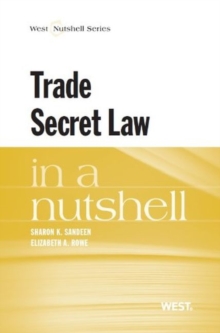
Trade Secret Law in a Nutshell (Sandeen & Rowe)
A compact overview of U.S. trade secret law, including core concepts, enforcement basics, and how courts analyze misappropriation claims.
Check Price on AmazonLin also set a deadline: xAI has until March 17 to file an amended complaint, and it can’t add new claims or parties without the court’s permission.
The order underscores an early-stage reality in trade secret litigation: to reach discovery, a plaintiff must plead facts that, if true, show the defendant committed the wrongful act—not just that misconduct may have occurred somewhere in the orbit of hiring.
OpenAI celebrated the dismissal publicly, saying it “welcomed” the decision and calling the lawsuit “baseless” and “another front in Mr. Musk’s ongoing campaign of harassment.”
Legal analyst Ishita Sharma, managing partner at Fathom Legal, told Decrypt the ruling reinforces the high bar for corporate trade-secret liability when employee movement is involved—arguing that “mere poaching” isn’t enough without concrete links tying the employer to inducement or misuse.
The case is the latest flare-up in a widening Musk vs. OpenAI conflict that now spans multiple disputes. If xAI refiles, it will need to narrow its claims to specific conduct and connect OpenAI—rather than just former employees—to alleged misappropriation.
Related reading on CliffMar.Tech: OpenAI’s recent product and business moves, including GPT-5.2’s rollout, OpenAI’s revenue leadership hire, and its advertising tests inside ChatGPT, show why competition—and litigation—around AI talent and IP is only intensifying.