


Linux 7.2’s RISC-V update is not a flashy platform reset. It is the kind of kernel work that matters most when a board is already in developers’ hands: better default configuration, lower startup overhead, and a round of fixes aimed at making the architecture easier to live with.
The headline change is default Eswin SoC support in the RISC-V kernel configuration. That matters for boards such as the SiFive HiFive Premier P550, which uses an Eswin SoC and sits in the small but important category of RISC-V hardware intended for real software development rather than only architecture experimentation.
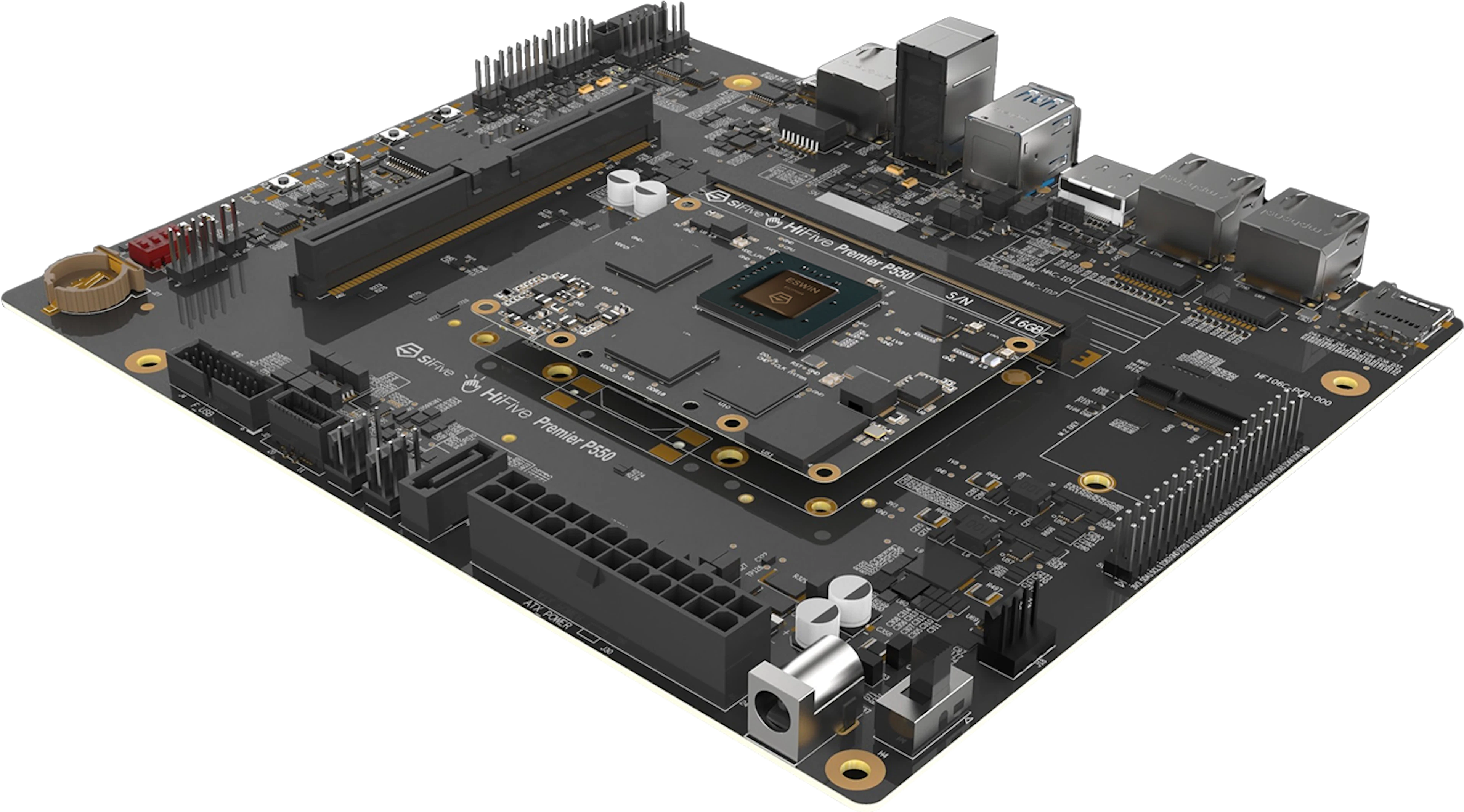
SiFive HiFive Premier P550 Development Board
The SiFive HiFive Premier P550 is a RISC-V development board built around an Eswin SoC, making it a relevant option for developers evaluating the Linux kernel support discussed here. Check board availability, memory configuration, firmware support, and distribution notes before buying.
As an Amazon Associate I earn from qualifying purchases.
Why Default Eswin Support Matters
Default kernel configuration changes can sound minor, but they shape the out-of-box experience for developers, distributions, and anyone building generic RISC-V images. When a common board needs extra configuration work before a standard kernel build is useful, that adds friction for testing and deployment.
By enabling Eswin SoC support in the RISC-V defconfig, Linux 7.2 should make default RISC-V kernel builds more useful for hardware built around those chips. The change is especially relevant to users working with the SiFive HiFive Premier P550, because support in the default configuration reduces the gap between a generic kernel build and a bootable, useful system for that class of board.
This is not the same as saying every hardware feature on every Eswin-based board is automatically handled. Board enablement in Linux tends to move in layers: SoC support, device-tree coverage, drivers, firmware behavior, and distribution packaging all have to line up. Still, getting the default RISC-V kernel configuration pointed at popular development hardware is a practical step for the ecosystem.
Lower Startup Overhead Through ftrace Work
The other notable RISC-V change is aimed at kernel startup overhead. Linux 7.2’s RISC-V work enables HAVE_BUILDTIME_MCOUNT_SORT, which allows the __mcount_loc section to be sorted at link time. The practical result is reduced overhead during the ftrace initialization path.
That is a developer-facing optimization rather than a headline benchmark feature. ftrace is part of the kernel’s tracing infrastructure, and startup-path improvements tend to matter most to people building, booting, testing, and instrumenting kernels repeatedly. For RISC-V, those incremental efficiency fixes are part of the architecture’s transition from interesting alternative to more routine Linux target.
The update also includes code cleanups, a fix for a potential memory leak in cacheinfo code, and other smaller fixes. None of those individually changes the buying calculus for a RISC-V board, but together they point in the right direction: less special handling, fewer rough edges, and better alignment with the rest of the Linux kernel.
Who This Update Is For
For most desktop Linux users, this is background infrastructure work. It will not change the experience of running Linux on x86 hardware, and it is not a reason by itself to move to RISC-V.
For RISC-V developers, board vendors, distribution maintainers, and buyers evaluating development boards, the update is more meaningful. The Eswin default configuration work should make supported boards easier to target with standard kernel builds, while the ftrace startup optimization helps chip away at architecture-specific overhead.
A practical read looks like this:
- Best fit: developers using or evaluating Eswin-based RISC-V boards, especially systems in the same class as the SiFive HiFive Premier P550.
- Main benefit: less kernel configuration friction and lower startup overhead in the tracing initialization path.
- What it does not prove: broad performance gains across applications or complete support for every board feature.
- Buyer takeaway: RISC-V hardware is still a platform decision, but default kernel support is one of the signals that a board is becoming easier to work with.
The Bottom Line
Linux 7.2’s RISC-V changes are small in the way kernel work is often small: targeted, technical, and useful mainly because they remove friction. Default Eswin SoC support helps make popular RISC-V development boards a more natural fit for standard kernel builds, while the ftrace-related startup work reduces one bit of overhead in the boot path.
For buyers, this is not a broad endorsement of every RISC-V board or a reason to treat the platform as a drop-in replacement for mainstream x86 or Arm systems. It is a more specific signal. If your work depends on RISC-V development hardware, especially Eswin-based boards, Linux 7.2 should make that environment a little less awkward and a little more production-minded.