


Elon Musk’s lawsuit accusing OpenAI, Sam Altman, Greg Brockman, and Microsoft of wrongdoing over OpenAI’s shift away from its original nonprofit structure has ended, for now, with a jury finding that Musk waited too long to bring the case.
The nine-person jury unanimously concluded that the claims were untimely, according to trial reporting. The decision meant Altman, Brockman, OpenAI, and Microsoft were not held liable on the claims Musk brought in this phase of the case.
That distinction matters. The verdict, as described in reports from the courtroom, turned on timing rather than a full endorsement of either side’s broader story about OpenAI’s evolution. Musk has already said he plans to appeal, arguing publicly that the judge and jury did not rule on what he views as the central merits of the dispute.
For most readers, this is not just a personality-driven tech fight. It is also a useful case study in how quickly AI companies can change, how difficult it can be to unwind early governance commitments years later, and what enterprise buyers should examine before committing deeply to a strategic AI platform.
The Short Version
Musk helped fund OpenAI in its early nonprofit period and later argued that the organization’s move toward a for-profit structure betrayed the original charitable mission. His complaint centered on the idea that OpenAI’s restructuring enriched executives and commercial partners while undermining the nonprofit purpose he said he supported.
The jury’s reported finding focused on when Musk knew, or should have known, enough to sue. Trial reporting said the jury concluded Musk was aware of OpenAI’s restructuring plans by 2021, which put his 2024 lawsuit outside the relevant three-year limitations window.
Judge Yvonne Gonzalez Rogers accepted the jury’s decision, according to reports. Microsoft also welcomed the outcome, saying in a statement that the timeline had long been clear and that it remained committed to its work with OpenAI.
Some courtroom color reported elsewhere, including descriptions of lawyers’ expressions and reactions, has not been independently verified and is not necessary to understand the ruling. What matters for buyers is the legal result: the claims failed because of timing, not because every disputed fact about OpenAI’s restructuring was publicly resolved.
What The Jury Decided
The central issue at trial was not whether OpenAI is the same organization it was at launch. It plainly is not. OpenAI began as a nonprofit research organization and later created a capped-profit structure as it sought the capital and computing power needed to build frontier AI systems.
Musk’s argument was that the transition undercut the nonprofit mission he had supported financially. He said he donated tens of millions of dollars to help start OpenAI and later felt misled by the direction the organization took. The exact framing of his original expectations and OpenAI’s obligations was contested.
The jury did not need to resolve every philosophical or governance question raised by that history. Instead, it found that Musk missed the deadline for bringing the claims. In practical terms, that allowed the defendants to avoid liability without requiring the jury to deliver a broad public judgment on whether OpenAI’s current structure is good policy, bad policy, or faithful to its founding ideals.
That is why Musk’s response has focused on appeal. He has argued that the case was dismissed on a timing issue and that the underlying allegations remain important. Whether an appeals court agrees is a separate question, and no firm outcome can be assumed at this stage.
Why This Matters Beyond Musk And Altman
The case is easy to treat as another clash between famous technology executives, but the underlying issue is more durable: AI companies are changing shape while customers, investors, regulators, and partners are still trying to understand what they are buying into.
OpenAI’s structure has been unusual from the start. It has involved a nonprofit parent, a commercial operating model, major strategic investment, and high-profile partnerships. For companies buying AI tools, that kind of structure can be acceptable, but it should not be invisible.
A buyer choosing an AI platform is not only buying model access. It is also taking a dependency on the vendor’s governance, funding model, data practices, product roadmap, cloud relationships, and ability to keep serving customers under legal and regulatory pressure.
The Musk verdict reduces one specific litigation overhang, at least unless an appeal changes the picture. It does not eliminate the broader need for diligence around AI vendors, especially when a business plans to embed a vendor’s models into core workflows.
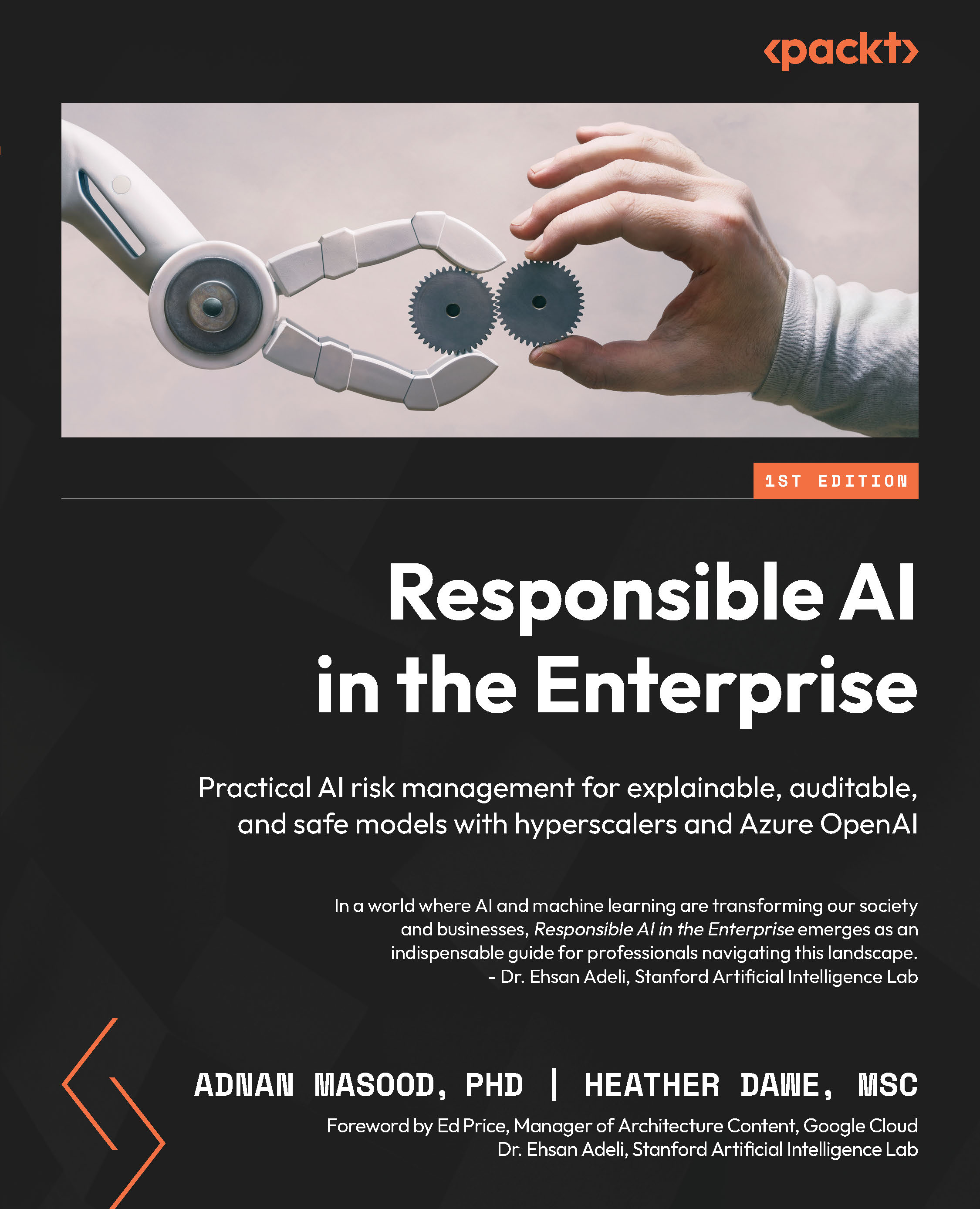
Responsible AI in the Enterprise
This practical guide is useful for teams turning AI governance from policy language into operating controls. It is especially relevant for readers evaluating model transparency, auditability, and cloud AI deployment risk.
As an Amazon Associate I earn from qualifying purchases.
Buyer Verdict: Treat The Legal Win As Helpful, Not Decisive
For enterprise buyers, the practical takeaway is measured. The verdict is helpful for OpenAI and Microsoft because it removes, for now, a major liability threat from this lawsuit. It also reinforces Microsoft’s public position that its partnership with OpenAI remains active and strategically important.
But buyers should not treat the outcome as a blanket answer to every governance concern. A statute-of-limitations win is not the same thing as a clean audit of an AI company’s mission, incentives, or future obligations. It answers a legal timing question. It does not tell procurement teams whether a model provider’s roadmap, pricing, safety posture, or contract terms fit their own risk tolerance.
That makes the decision most relevant for buyers already comparing OpenAI-backed services with other AI platforms. It can reduce concern about an immediate courtroom defeat disrupting the OpenAI-Microsoft relationship. It should not replace normal vendor review.
Who Should Care Most
This ruling is most relevant to organizations that are already making platform-level AI decisions, not teams casually testing chatbots.
- Enterprise software buyers evaluating Microsoft Copilot, Azure OpenAI Service, ChatGPT Enterprise, or related OpenAI-backed services.
- Legal and procurement teams reviewing long-term AI vendor commitments.
- Founders and investors studying how nonprofit-origin AI labs evolve into commercial businesses.
- Compliance teams that need to explain vendor concentration and third-party AI risk to leadership.
For smaller teams, the immediate operational effect may be limited. The tools still work, the products remain available, and the lawsuit’s timing outcome does not change day-to-day model behavior. The value is in the signal it gives about legal uncertainty around major AI suppliers.
Decision Checklist For AI Customers
The case highlights a common mistake in AI procurement: focusing only on model quality while leaving governance and vendor stability for later. That is backwards for any system that will touch customer data, regulated workflows, internal knowledge, or business-critical automation.
| Buyer question | Why it matters after this verdict |
|---|---|
| Who controls the AI service you are buying? | OpenAI-linked services may involve OpenAI, Microsoft, or both, depending on the product and contract path. |
| What happens if the vendor changes structure or strategy? | The lawsuit shows how disputes can arise years after early commitments and public positioning. |
| Are contract protections specific enough? | Buyers need clear terms around data use, retention, indemnity, uptime, model changes, and termination. |
| Is there a migration plan? | A legal win reduces one risk, but it does not remove platform dependency. |
| Does leadership understand the vendor’s incentives? | AI providers may balance research goals, investor expectations, cloud partnerships, and customer commitments. |
None of these questions require a company to avoid OpenAI or Microsoft. They require buyers to be explicit about what they are accepting. A strong AI vendor can still be a risky fit if the buyer has no exit path, no data controls, or no internal owner for model governance.
What The Verdict Does Not Prove
The ruling should not be stretched further than the record supports. It does not prove that every criticism of OpenAI’s restructuring is wrong. It does not prove that Musk’s broader concerns about nonprofit governance are right. It does not settle the policy debate over whether frontier AI labs should be nonprofit, for-profit, public-benefit corporations, government-regulated utilities, or something else entirely.
It also does not end scrutiny of OpenAI. The company remains one of the most watched organizations in technology, and its relationship with Microsoft continues to attract attention from competitors, regulators, customers, and policymakers.
For OpenAI and Microsoft, the verdict is still a meaningful win. Litigation can create uncertainty even when products are strong. Removing or narrowing that uncertainty helps the companies maintain confidence with customers that are already cautious about committing to large-scale AI deployments.
For Musk, the loss narrows the path. An appeal could challenge how the timing issue was handled, but appeals are slower and more constrained than a fresh trial narrative. Until an appellate court says otherwise, the immediate legal result favors OpenAI, Altman, Brockman, and Microsoft.
How To Read Musk’s Planned Appeal
Musk said publicly that he intends to take the case to the Ninth Circuit. His stated position is that the decision turned on a calendar issue rather than the substance of his allegations.
That argument may resonate with supporters who believe the central question is whether OpenAI departed from its founding mission. But appeals courts generally do not retry an entire case from scratch. They review legal issues, jury instructions, evidentiary rulings, and other procedural questions under specific standards.
For buyers, that means the appeal is worth monitoring, but it should not freeze every AI decision. A company choosing a vendor today should separate two questions: whether pending litigation could materially disrupt the service, and whether the service meets the company’s own technical, legal, and operational requirements.
The first question may look less severe after the verdict. The second still needs real diligence.

Mastering Third-Party Risk
This handbook fits readers building a structured process for reviewing critical AI vendors and other third parties. It can help procurement, security, and compliance teams standardize the questions they ask before committing to a platform.
As an Amazon Associate I earn from qualifying purchases.
The Practical Bottom Line
The jury’s decision gives OpenAI, Altman, Brockman, and Microsoft a significant courtroom victory. It also gives enterprise buyers a clearer, though not complete, view of one major legal risk around the OpenAI ecosystem.
The safest reading is narrow: Musk’s claims failed because the jury found they were brought too late. That helps stabilize the commercial picture around OpenAI-linked products, but it does not answer every governance concern raised by the company’s unusual history.
For organizations comparing AI platforms, the verdict should move one item on the risk register, not close the file. The right response is to keep evaluating model performance, data handling, contractual protections, vendor concentration, and exit options with the same discipline used for any other strategic technology supplier.
The courtroom fight may continue on appeal. The buying decision still belongs to customers, and the best customers will treat legal headlines as one input rather than the whole case.

A Manual of Style for Contract Drafting
Clear contract language matters when AI services touch customer data, retention rules, uptime commitments, model changes, and termination rights. This reference is best suited for legal, procurement, or business teams that regularly review vendor agreements.
As an Amazon Associate I earn from qualifying purchases.