

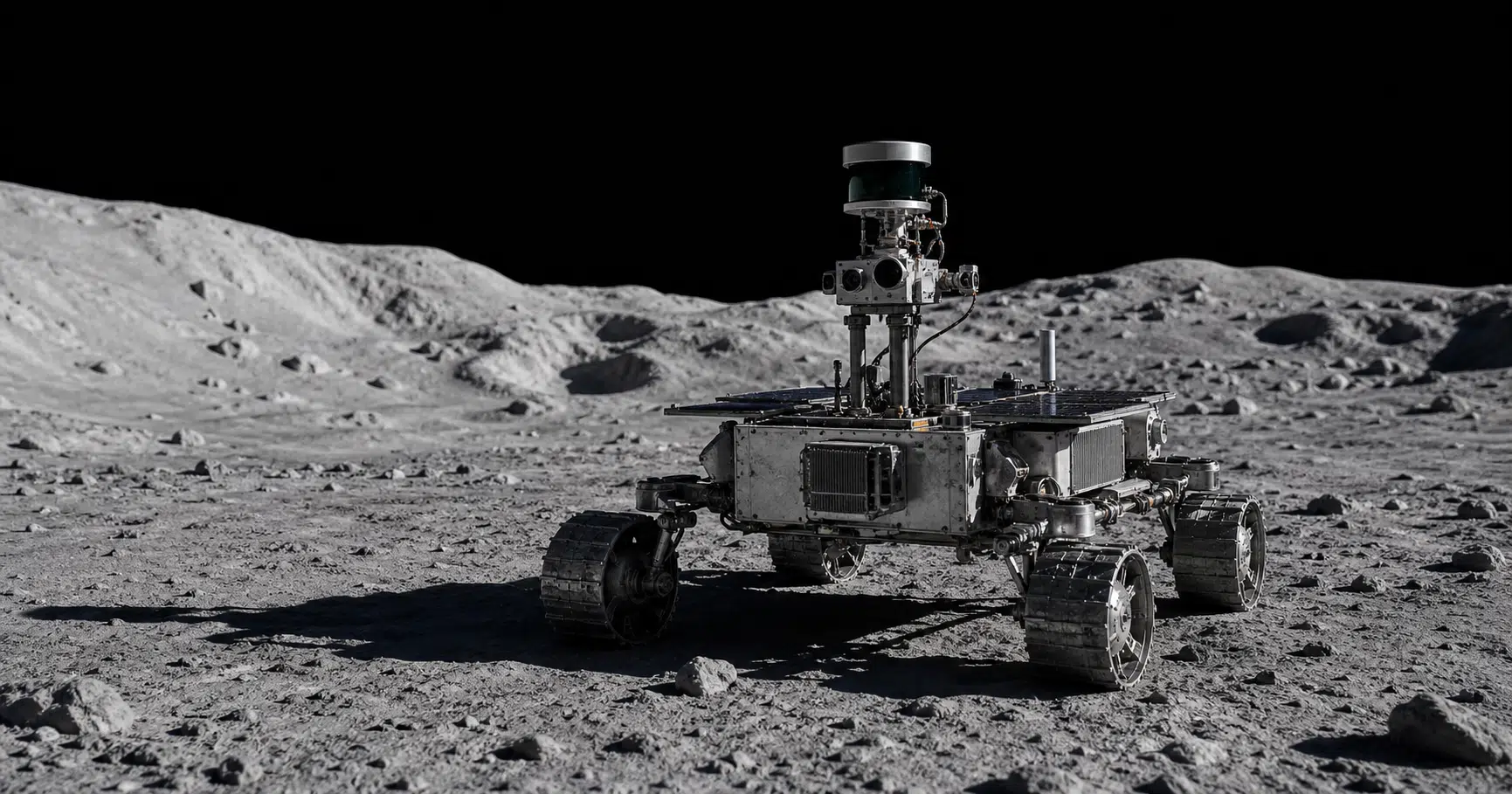

Nvidia’s compact Jetson computing platform could eventually find itself operating on the moon, where Lunar Outpost is evaluating the hardware for a planned robotic rover. The company is comparing Jetson with its established flight computer as it considers how GPU-powered systems might support navigation in demanding lunar environments.
The proposed system would process data from the rover’s lidar equipment, helping the vehicle interpret its surroundings without waiting for every decision to be made on Earth. Lunar Outpost CEO Justin Cyrus has characterized the work as an evaluation rather than a finished deployment, with engineers weighing Jetson’s capabilities against hardware with more spaceflight experience.
If the project moves forward, it could put one of Nvidia’s embedded GPU platforms on the lunar surface. Any claim that it would be the first such system remains unconfirmed, however, and the mission does not yet have a firmly established public launch timeline.
Why Jetson could be useful on a moon rover
Jetson occupies a different corner of Nvidia’s business from the powerful processors used to train large AI models. It is designed as a compact, energy-conscious platform that can run AI and sensor-processing workloads close to where data is collected. That makes it a potential fit for robots, drones and other machines that must respond quickly without a constant connection to a remote data center.
For a lunar rover, local processing could help turn lidar readings and other sensor data into navigation decisions. Communication delays and limited bandwidth make direct control from Earth less practical for every movement, particularly when a vehicle is traveling through craters or other terrain that is difficult to observe from orbit.
Lunar Outpost’s existing autonomy software combines deterministic controls with AI-based processing. Deterministic software follows predefined rules, while the AI component can help interpret more complicated or unfamiliar conditions. Cyrus said the company is exploring where that additional layer can improve the rover without abandoning the predictable systems already used for critical operations.
The difficult part is proving that commercial embedded hardware can function reliably beyond Earth. A computer on the lunar surface must contend with radiation, severe temperature changes across lunar day-and-night cycles and tight limits on available power. Surviving the long, cold lunar night is an especially demanding engineering problem for a system expected to remain operational for an extended period.
Jetson’s appeal lies in the possibility of performing more processing within those constraints. If the hardware passes testing and ultimately flies, it could allow a rover to analyze its environment and respond more quickly. That remains a goal rather than a demonstrated capability on the moon.
Commercial missions are creating a test bed for lunar computing
The project sits within a wider effort to use privately built landers and rovers for lunar exploration. NASA has been working with commercial space companies to transport scientific instruments to the surface as part of its broader plans for future human activity on the moon. Those instruments can investigate terrain, local conditions and resources such as water while also testing the machinery needed for longer missions.
Lunar Outpost says one of its planned rovers is associated with a lander from Intuitive Machines. The rover is intended to carry sensors into locations that are difficult to study from orbit, although its exact flight schedule has not been firmly confirmed. Another proposed mission would examine Reiner Gamma, an area known for an unusual magnetic feature, but that mission’s timing also remains unsettled.
The missions have been expected to use SpaceX Falcon 9 rockets. Launch schedules in the space industry frequently shift, and there is no confirmed basis for treating a particular end-of-year target as fixed.
Nvidia has also outlined work with Firefly Aerospace that would place Jetson hardware on a satellite orbiting the moon. The proposed system would process imagery locally, potentially helping researchers map the lunar surface and monitor robotic activity below. As with the rover effort, a firm operational timeline has not been publicly established.
Together, the projects illustrate why edge computing is becoming more relevant to space missions. Sending every raw image or sensor reading back to Earth consumes bandwidth and introduces delays. Processing some of that information onboard can reduce the amount of data that must be transmitted and let a spacecraft react without waiting for instructions.
Autonomous robots are part of a larger lunar plan
Lunar Outpost sees smaller autonomous rovers as an early step toward a more permanent human presence beyond Earth. Robots could survey landing areas, move equipment and prepare infrastructure before astronauts arrive. They could also continue working when crews are absent, provided their computers, batteries and mechanical systems can tolerate the environment.
Cyrus has described that future as a combination of conventional control software and physical AI. The objective is not to hand every decision to an AI model, but to use machine learning where it can add useful perception or flexibility while retaining established controls for predictable tasks.
The company is also developing Pegasus, a substantially larger rover concept intended to transport astronauts. That vehicle depends on a rocket from Blue Origin, and its prospective schedule remains uncertain following an anomaly involving the planned launch system. Lunar Outpost has indicated that preparations are progressing, but it cannot determine the rocket provider’s recovery timeline.
That dependency highlights a broader constraint facing ambitious lunar projects. More capable computers and autonomous machines can expand what is possible on the surface, but they still need landers and sufficiently powerful rockets to get there. For Nvidia and Lunar Outpost, the immediate challenge is therefore less about declaring that GPUs have arrived on the moon and more about proving that the technology can survive the trip, operate within strict power limits and deliver a meaningful advantage once it lands.