

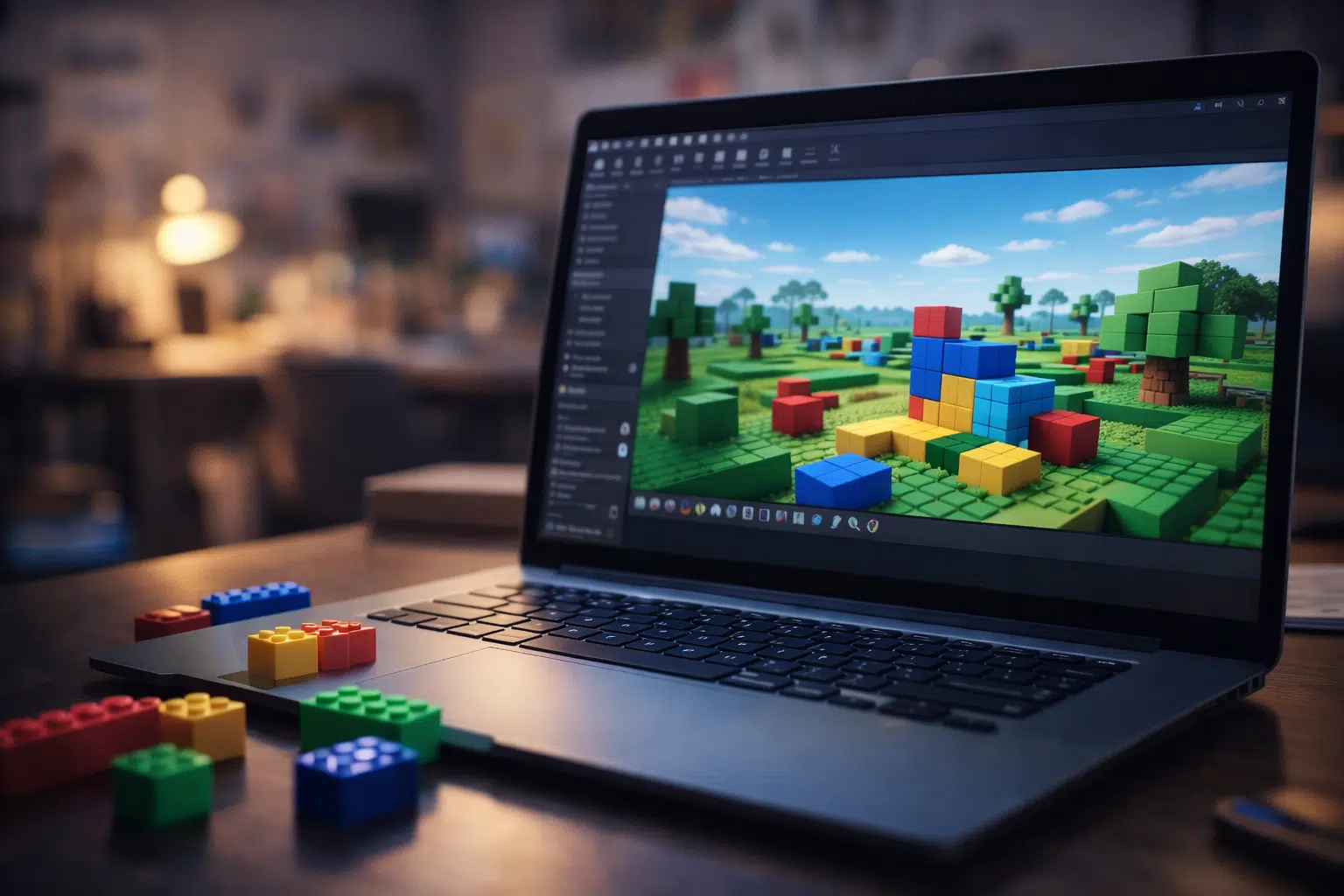

In the early 2000s, long before Roblox was a public company or a household name for kids and parents, David Baszucki and Erik Cassel were building something that didn’t fit neatly into any tech category. It wasn’t a traditional video game. It wasn’t a toy. And it definitely didn’t look like the glossy, high-budget worlds that dominated gaming at the time.
It started in 2004 as an early concept called DynaBlocks—a rough, blocky playground for experimenting with physics and building. The name didn’t last. The idea did.
By 2005, the project became Roblox, and on September 1, 2006, it officially launched to the public—quietly, without the kind of hype you’d expect for a platform that would later attract tens of millions of people a day.
The bet: user-created games, not a single hit title
Roblox’s core wager was simple and risky: give players the tools to create, and a community will fill the platform with experiences faster than any single studio could.
From the start, creation wasn’t a side feature—it was the product. Roblox wasn’t trying to ship one blockbuster game. It was trying to become the place where thousands (and eventually millions) of games could exist at once, built by its users.
That vision took time to click. Early growth was real, but gradual. The platform needed creators before it could attract players at scale—and it needed players to motivate creators. Like most network-effect businesses, it had to crawl before it could run.
A real business emerges
As Roblox matured, it started layering in the systems that turn “a fun platform” into a durable business: monetization, subscriptions, and an economy that rewarded creators for making things people actually wanted to play.
One notable milestone came in 2007 with the introduction of Builders Club, a subscription that helped Roblox start converting engagement into recurring revenue—an early sign it was thinking beyond hobbyist experimentation.
Mobile changed the trajectory
Roblox didn’t wait until the late 2010s to go mobile. It arrived on iOS in 2012 and Android in 2014, opening the door to far more casual play sessions and a broader global audience.
That shift helped set up the next growth phase: Roblox started to feel less like a niche creative sandbox and more like a mainstream platform. As phones and tablets became default gaming devices for younger audiences, Roblox benefitted.
Scale brings problems you can’t ignore
With growth came the hard parts: infrastructure strain, reliability issues, and the long-running challenge that defines any large platform built for kids—safety and moderation.
Roblox has repeatedly faced criticism about child safety, content enforcement, and whether the creator economy is fair. Over time, the company has expanded its moderation efforts, added safety tooling, and continued to refine how creators earn money—moves that are necessary, but never truly “finished” at Roblox’s scale.
The pandemic era, by the numbers
By 2020, Roblox’s momentum was unmistakable. In company reporting, Roblox said it had more than 18 million experiences on the platform, and it reported 31.1 million average daily active users for the nine months ended September 30, 2020.
Around the same period, Roblox also cited a striking adoption statistic: it said it was being played by about a third of Americans under 16—a measure of how thoroughly it had embedded itself into youth culture.
Going public—and still chasing the bigger ambition
Roblox went public in March 2021 via a direct listing, and at points traded around a $45 billion valuation range depending on the day’s moves and how the market calculated it.
But the company’s pitch didn’t stop at “games.” Roblox has consistently framed itself as a platform for shared, social experiences—an argument that it’s building not just entertainment, but a broader digital ecosystem where creation, community, and commerce overlap.
Lessons founders can steal from Roblox
1) Build the platform, not just the product
Roblox didn’t win by making one perfect game. It won by enabling millions of imperfect ones—and letting the best rise.
2) Network effects take time
A creator platform needs a flywheel: creators attract players, players motivate creators, and the loop compounds. That doesn’t happen overnight.
3) Distribution shifts can unlock scale
Mobile wasn’t a gimmick—it was a doorway to broader usage patterns and a much larger audience.
4) Moderation is part of the business model
If you build for kids at scale, safety isn’t a feature. It’s the cost of staying viable.
5) Constraints can fuel creativity
Roblox’s blocky aesthetic and simple building blocks became a strength. The limitations pushed creators to invent within the boundaries—and that kept the platform approachable.