

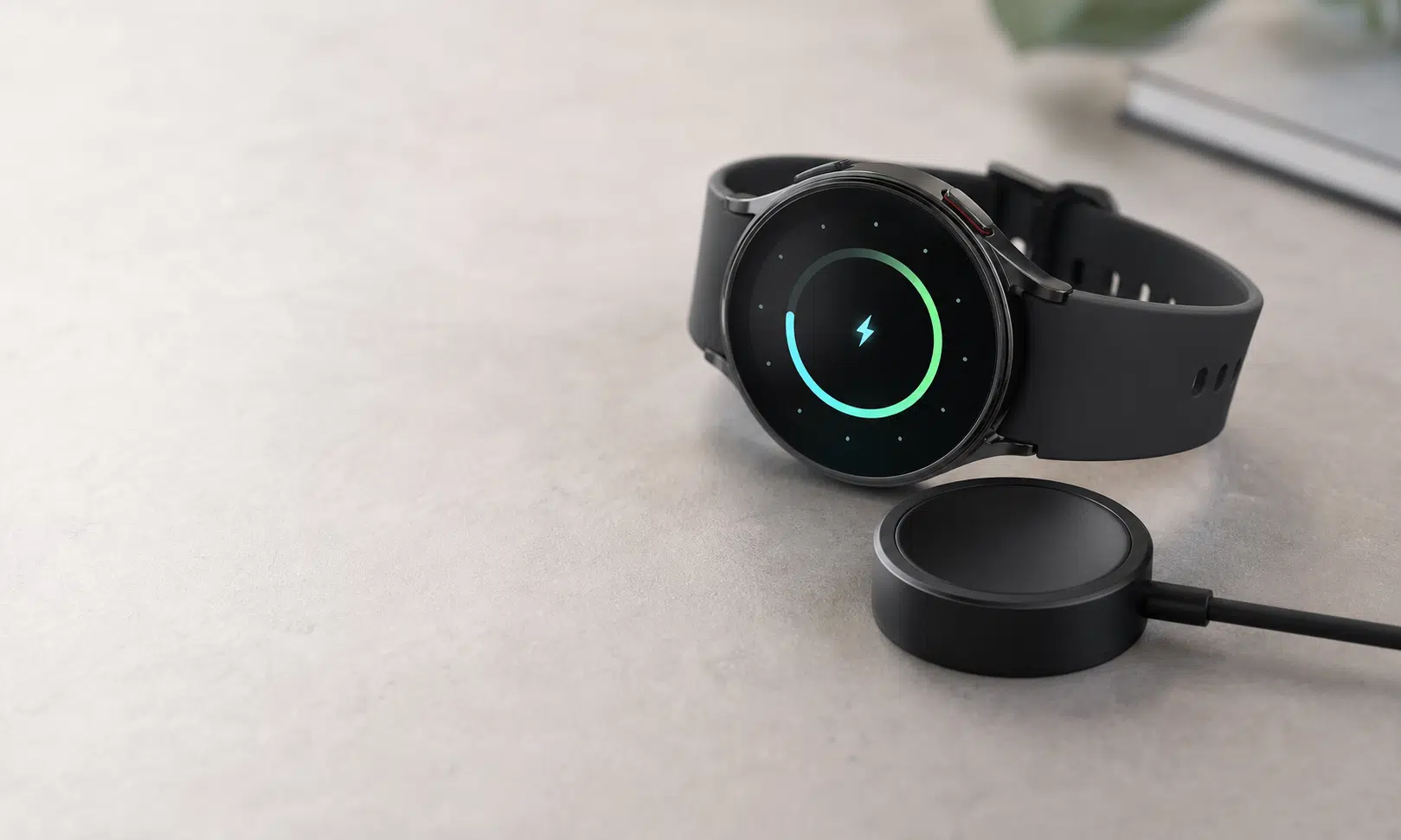

Samsung’s next Galaxy Watch lineup is starting to take shape through reports and certification chatter, but buyers should treat the latest charging-speed details as early guidance rather than settled product information.
The key claim is simple: two Samsung smartwatch model codes, SM-L3550 and SM-L7150, are said to have appeared in a certification database with support for 10W charging. The report links those model codes to the expected Galaxy Watch9 and Galaxy Watch Ultra 2, but that naming has not been independently verified and Samsung has not publicly confirmed the final retail names in the source material.
That distinction matters. Charging speed is one of the details that can affect daily ownership, especially for people who wear a smartwatch overnight for sleep tracking and then need a quick top-up before leaving home. But a certification listing, on its own, does not tell the full story. Battery size, chip efficiency, software behavior, health tracking features, display power use, and charging curve all matter more than the headline wattage alone.
What the Reported Certification Suggests
The source points to two Samsung smartwatch model numbers and says both are listed with 10W charging support. If that information is accurate, it would suggest Samsung is not making charging speed the obvious headline upgrade for these two models.
| Reported model code | Suggested product name | Reported charging support | Confidence to treat as final |
|---|---|---|---|
| SM-L3550 | Galaxy Watch9, according to the report | 10W | Low until Samsung confirms it |
| SM-L7150 | Galaxy Watch Ultra 2, according to the report | 10W | Low until Samsung confirms it |
For buyers, the practical reading is cautious: do not assume faster charging is coming just because new watch names are being discussed. The report may be useful as a signal, but it should not be treated as a confirmed specification sheet.
What Samsung Has Not Confirmed
The source says Samsung is expected to introduce more than one Galaxy Watch model alongside its next folding phones, with a rumored event timing mentioned elsewhere in the original material. That timing has not been independently verified here, and Samsung has not confirmed the full lineup, model count, final names, or detailed hardware specifications in the provided source.
The same caution applies to the possible Galaxy Watch9 Classic. The original report suggests Samsung might also introduce a Classic model, but there is no firm confirmation in the source material. It would be reasonable to watch for one if Samsung continues its familiar lineup approach, but it would not be reasonable to write it off or count on it before official details are available.
That leaves several important buyer questions unanswered:
- Whether the next Galaxy Watch models will charge meaningfully faster in real use.
- Whether battery endurance improves even if charging wattage stays the same.
- Which models will be sold in each region.
- Whether the Ultra-style model gets meaningful hardware changes beyond software and health features.
- Whether a Classic model returns with the design traits buyers expect from that line.
Why 10W Charging Is Only Part of the Story
A smartwatch can list the same charging wattage as an older model and still feel better day to day if battery life improves. The reverse is also true: a higher charging number does not guarantee a better experience if the watch drains quickly or charges slowly near the top of the battery.
For a buyer comparing Samsung watches, the charging number should sit behind more practical questions. Do you wear the watch for sleep tracking? Do you rely on always-on display? Do you use LTE? Do you track long workouts? Do you travel often enough that charging convenience becomes a daily annoyance?
Those use cases matter because they define whether charging speed is a small detail or a deal-breaker. A casual user who charges every evening may barely notice. A runner, traveler, or sleep-tracking user may care a lot more about how quickly the watch can recover 30 or 40 percent of battery before the next part of the day.

Samsung Galaxy Watch8
Samsung Galaxy Watch8 is the most relevant current-model alternative for readers who need a Samsung smartwatch now instead of waiting for unconfirmed Watch9 details. Compare confirmed battery, size, connectivity, and health features against the rumored model before choosing.
As an Amazon Associate I earn from qualifying purchases.
Buyer Takeaways Before Waiting for Watch9
If you are shopping for a Samsung smartwatch, the reported 10W figure should not be the only reason to wait. It is a useful detail to monitor, but it does not yet prove that the Galaxy Watch9 or the expected Ultra successor will deliver a major charging upgrade.
A buyer who already owns a recent Galaxy Watch should wait for confirmed specifications, especially battery capacity, health features, processor details, and real charging tests. The source does not provide enough verified detail to say whether the next models will be a worthwhile upgrade.
A buyer using an older smartwatch may still have a stronger reason to wait, but mainly because Samsung has already been discussing new Galaxy Watch health features through its Samsung Health app update. The original material mentions that Samsung has introduced next-generation Watch-related health features in that context, but it does not provide a full hardware breakdown for the upcoming watches.
For buyers choosing between a standard Galaxy Watch and an Ultra-style model, the likely decision remains familiar: size, durability, battery expectations, and price will probably matter more than a single reported charging figure. The source does not support a final recommendation between the rumored models yet.
Verdict: Wait for Confirmed Specs, Not Just Model Codes
The reported 10W charging support is worth noting, but it is not enough to judge Samsung’s next smartwatch lineup. The model-code links to Galaxy Watch9 and Galaxy Watch Ultra 2 remain unconfirmed in the source material, and Samsung has not provided the full hardware picture needed for a confident buying recommendation.
For now, the careful buyer stance is to wait for official specs and independent battery testing. If the next Galaxy Watches keep similar charging numbers, Samsung will need to make the case elsewhere: longer endurance, better health tracking, improved performance, or a more compelling model lineup.