

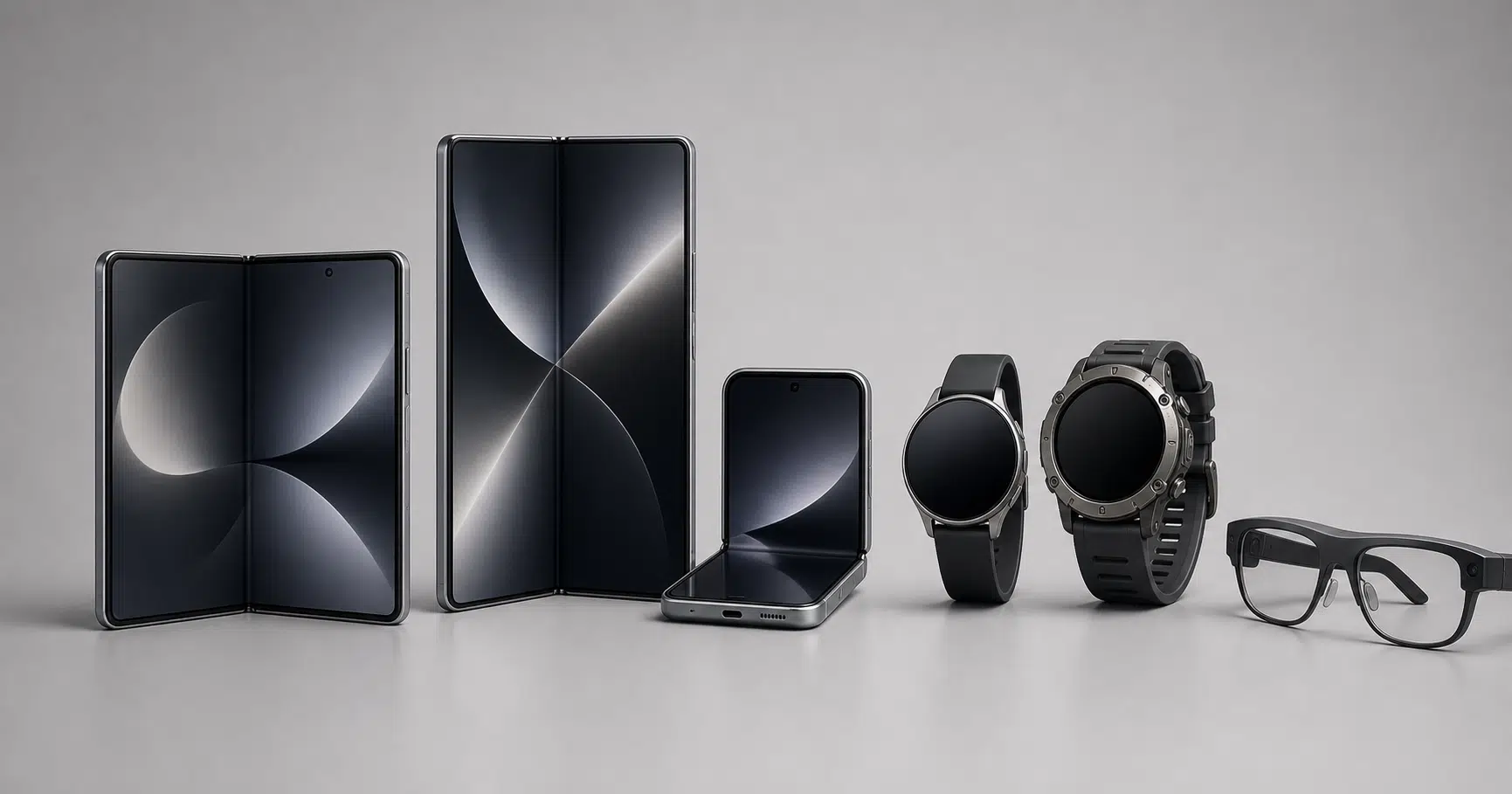

Samsung Unpacked 2026 delivered an unusually broad Galaxy lineup: two book-style foldables, a compact flip phone, two smartwatches and a closer look at Samsung’s intelligent eyewear. More products do not automatically make the buying decision easier, but the divisions between these devices are clearer than they initially appear.
The Galaxy Z Fold 8 is the unconventional entertainment-focused option. Its shorter, wider shape distinguishes it from the familiar tall-phone proportions of the Galaxy Z Fold 8 Ultra, which is positioned as the premium productivity and camera model. The Galaxy Z Flip 8 remains the portable choice for people who want a full-size phone that folds into a smaller footprint.
On the wrist, the Galaxy Watch 9 is the sensible everyday model, while the Galaxy Watch Ultra 2 uses its larger battery, brighter screen and diving credentials to justify its more demanding design. The smart glasses are potentially the most consequential addition to Samsung’s ecosystem, but they also remain the hardest product to evaluate without final pricing and broader real-world testing.
This is a buying assessment based on the announced hardware and capabilities. Camera consistency, battery endurance, hinge durability, comfort and AI reliability will still require extended use before any of these products can receive a definitive long-term verdict.
The short version: who each device is for
| Device | Defining hardware | Best suited to | Main tradeoff |
|---|---|---|---|
| Galaxy Z Fold 8 | 7.6-inch inner display, wide 5.5-inch cover screen, 201g weight | Video, gaming, reading and buyers who want an unusual compact Fold design | Smaller screens and a less versatile camera system than the Ultra |
| Galaxy Z Fold 8 Ultra | 8-inch inner display, 200MP camera, 5,000mAh battery | Multitasking, content creation and buyers seeking Samsung’s most capable foldable | Heavier than the Fold 8 and likely the costliest phone in the range |
| Galaxy Z Flip 8 | 6.9-inch inner display, 4.1-inch FlexWindow, 180g weight | Portability, cover-screen interactions and hands-free photography | No telephoto camera and slower charging than the Fold models |
| Galaxy Watch 9 | 40mm and 44mm sizes, 3,000-nit display | Everyday activity, sleep and wellness tracking | Less rugged and less specialized than the Ultra |
| Galaxy Watch Ultra 2 | 800mAh battery, 5,000-nit display, diving support | Trail running, diving and long outdoor workouts | Large 47mm case and specialist features many buyers will not need |
| Samsung intelligent eyewear | Camera, Gemini assistance and up to nine hours of claimed battery life | Hands-free assistance, translation, navigation and note capture | Pricing, final availability and real-world privacy behavior remain open questions |
The most important split is not between expensive and inexpensive hardware. It is between devices designed for genuinely different habits. Buyers should start with the form factor they would use every day, then consider cameras, battery capacity and software features. A larger specification is not inherently better if it makes the device less comfortable or adds features that go unused.
Galaxy Z Fold 8: the wide, compact Fold
The Galaxy Z Fold 8 is the more experimental of Samsung’s two book-style foldables. When closed, its 81.9-by-123.9mm footprint is shorter and wider than a conventional smartphone. It measures 9.7mm thick while folded and 4.5mm when open. At 201g, Samsung lists it as the lightest Galaxy Z Fold it has produced.
That weight matters because large foldables can become tiring during extended one-handed use. The Fold 8 is only slightly heavier than many conventional flagship phones, even though it opens into a tablet-like device. Its unusual dimensions may make it easier to carry, but the width will be the more important comfort test. Buyers with smaller hands should try the phone before committing rather than assuming the lower weight solves every ergonomic issue.
The 5.5-inch cover display has a 10:16 aspect ratio and a 120Hz adaptive refresh rate. It is meant for quick messages, social feeds and short interactions. Opening the phone reveals a 7.6-inch, 120Hz display with an approximately 4:3 aspect ratio. That shape favors video, games and side-by-side content, while rotating the device produces a page-like orientation for reading.
This approach gives the Fold 8 a distinct purpose. It is not simply a regular phone that becomes larger. The compact exterior and squarer internal canvas make it closer to a pocket entertainment device. The compromise is that people who regularly type long messages or navigate dense applications on the cover screen may prefer the taller, more conventional display on the Ultra.
Samsung’s Flex Titanium display structure combines a titanium-alloy film with an enhanced titanium plate. The company says the construction improves display support and reduces crease visibility while allowing a thinner design. That is promising, but crease quality should be treated as a physical characteristic to inspect in person. Visibility can change with viewing angle and lighting, while long-term durability cannot be inferred from a launch demonstration.
The main display reaches a claimed peak brightness of 3,000 nits and includes a low-reflection finish. Peak-brightness figures describe performance under particular conditions rather than constant whole-screen output, but the combination should help with outdoor visibility and reflections.
The rear camera system consists of a 50MP wide camera and a 50MP ultrawide. A 10MP camera sits on the cover display, with another 10MP camera available on the main screen. There is no dedicated telephoto lens, making the Fold 8 less flexible for distant subjects than the Ultra. Samsung includes Dual Recording and a My FanCam feature that can track a selected subject and reframe footage, but software cropping is not a substitute for an optical telephoto camera.
Inside is the Snapdragon 8 Elite Gen 5 for Galaxy, paired with 12GB of memory on the 256GB and 512GB models. A 1TB configuration raises memory to 16GB. Regional configurations may differ, so storage-conscious buyers should confirm what is offered locally before ordering.
The typical battery capacity increases to 4,800mAh. Wired charging reaches 45W with a compatible adapter, and Samsung’s laboratory estimate puts a 30-minute charge at up to 63 percent under controlled conditions. The adapter is sold separately, and actual charging speed will vary with temperature, background activity and the cable used. There is also 20W wireless charging and Wireless PowerShare.
The Fold 8 is therefore the better fit for someone who values low weight, an entertainment-friendly inner display and a distinctive compact shape more than a maximum-size screen or flagship camera array. It is also the Fold model that most needs an in-person handling test because its proportions depart from the normal smartphone template.
Galaxy Z Fold 8 Ultra: the no-compromise option on paper
The Galaxy Z Fold 8 Ultra follows the more familiar large-foldable formula. Its 6.5-inch cover display has a tall, conventional shape and a 1Hz-to-120Hz adaptive refresh rate. Inside is an 8-inch display with the same adaptive refresh range. Both screens should feel more natural for traditional phone and tablet workflows than the compact Fold 8’s wider exterior.
At 8.9mm thick when closed and 4.1mm when open, the Ultra is exceptionally thin for a book-style foldable. It weighs 215g, only 14g more than the smaller Fold 8. Those numbers make the Ultra appealing for productivity buyers who previously avoided large foldables because of their bulk. They do not eliminate the need to evaluate balance, grip and hinge comfort, particularly during long one-handed sessions.
The camera system is the clearest hardware upgrade. The rear array combines a 200MP main camera, a 50MP ultrawide and a 10MP telephoto with 3x optical zoom. The two screen-facing cameras are both 10MP. The 50MP ultrawide should be useful for landscapes, interiors and macro shots, while the telephoto gives the Ultra greater compositional flexibility than either of Samsung’s other foldables.
Samsung also supports 8K recording through its APV codec and includes Cine LUT color controls. These are specialist features rather than automatic reasons to upgrade. Recording resolution alone does not guarantee better video, and APV footage will be most useful to creators prepared to incorporate it into a compatible editing workflow. For ordinary clips, stabilization, focus behavior, audio and low-light quality will matter more.
The Snapdragon 8 Elite Gen 5 for Galaxy is paired with the same memory tiers as the standard Fold 8: 12GB with 256GB or 512GB of storage, and 16GB with 1TB. That parity means buyers are not paying for a uniquely faster processor. The Ultra premium goes toward the larger displays, expanded camera system, larger battery, thinner unfolded body and additional productivity headroom.
Battery capacity reaches 5,000mAh, addressing one of the persistent constraints of Samsung’s earlier large foldables. The Ultra also supports 45W wired charging through a dual-path charging architecture. Samsung estimates that it can reach as much as 67 percent after 30 minutes with the appropriate 45W adapter and 3A USB-C cable under laboratory conditions. Wireless charging reaches 20W.
A larger graphite cooling structure is intended to move heat away from the processor during sustained workloads. That could matter for gaming, video editing and extended multitasking, although thermal performance must be measured under repeatable conditions before drawing conclusions.
The 3,000-nit display and low-reflection finish strengthen the Ultra’s case as the work-and-media model. The larger canvas is better suited to documents, multitasking and editing, while the conventional cover screen should reduce the number of times users need to unfold the phone for routine tasks.
The Ultra is the most convincing option for someone intending to replace both a conventional flagship and a small tablet. It is harder to justify for a buyer who mainly wants to watch videos or experiment with a foldable design. The standard Fold 8 offers much of the same processing hardware at a lower weight, while the Flip 8 supplies the folding novelty in a more portable format.
Galaxy Z Flip 8: portability is still the main attraction
The Galaxy Z Flip 8 is the simplest device in the lineup to understand. Opened, it behaves like a conventional 6.9-inch smartphone. Closed, it measures 75.4 by 85.7mm and is 13.1mm thick, making it easier to fit into a small pocket or bag. It weighs 180g and measures 6.1mm thick when unfolded.
Its 6.9-inch Dynamic AMOLED display uses an adaptive 1Hz-to-120Hz refresh rate. The 4.1-inch FlexWindow can operate at 60Hz or 120Hz and provides access to notifications, widgets, supported apps and personalized information from Now Brief. The buying question is whether the cover screen can handle enough routine tasks to reduce how often the phone must be opened. That depends as much on application support as display size.
Samsung is expanding the FlexWindow beyond simple notifications. Gallery browsing, messaging and selected automated actions can run on the cover display, while Gemini Intelligence can be activated from the side key or by voice. These functions could make the Flip 8 faster for short interactions, but buyers should verify that the applications they rely on are fully supported. A large cover screen is less valuable if important workflows still require unfolding the device.
The rear camera array combines a 50MP main camera with a 12MP ultrawide. A 10MP selfie camera sits inside, although the Flip design also allows the higher-quality rear cameras to be used for selfies with the FlexWindow serving as a preview.
Flex Mode supports hands-free shooting at different angles. Camcorder Grip and Zoom Rocker provide controls intended for steadier one-handed video, while Super Steady includes a horizontal-lock option. Dual Recording can capture the person behind the camera and the subject at the same time. These features exploit the folding hardware rather than treating the hinge as a cosmetic novelty, making photography one of the stronger reasons to choose the Flip.
The phone uses Samsung’s Exynos 2600 processor with 12GB of memory and either 256GB or 512GB of storage. Its typical battery capacity is 4,300mAh. Despite an inaccurate early specification circulating around the device, wired charging is rated at 25W, not 45W. Samsung estimates a charge of up to 55 percent in roughly 30 minutes with a compatible 25W adapter under controlled conditions. Wireless charging reaches 15W.
That slower charging is a meaningful distinction if the phone will be used heavily for photography, navigation or mobile data. The capacity is respectable for a flip phone, but endurance still needs testing across the main display, cover display and cellular connections.
The Flip 8 is offered in 256GB and 512GB configurations, with Graphite, Cream and Pink among the listed colors and Mint designated as an online-exclusive option in participating markets. Color availability can vary by region and retailer.
Choose the Flip 8 if compact storage, cover-screen convenience and flexible camera positioning matter more than tablet-style multitasking. Do not choose it simply because it is the smallest foldable. Its camera reach, charging speed and unfolded-screen crease remain tradeoffs against a conventional flagship.
Fold 8, Fold 8 Ultra or Flip 8?
| Specification | Galaxy Z Fold 8 | Galaxy Z Fold 8 Ultra | Galaxy Z Flip 8 |
|---|---|---|---|
| Main display | 7.6 inches, 1–120Hz | 8 inches, 1–120Hz | 6.9 inches, 1–120Hz |
| Cover display | 5.5 inches, 1–120Hz | 6.5 inches, 1–120Hz | 4.1 inches, 60/120Hz |
| Folded thickness | 9.7mm | 8.9mm | 13.1mm |
| Weight | 201g | 215g | 180g |
| Rear cameras | 50MP wide, 50MP ultrawide | 200MP wide, 50MP ultrawide, 10MP 3x telephoto | 50MP wide, 12MP ultrawide |
| Processor | Snapdragon 8 Elite Gen 5 for Galaxy | Snapdragon 8 Elite Gen 5 for Galaxy | Exynos 2600 |
| Typical battery | 4,800mAh | 5,000mAh | 4,300mAh |
| Maximum wired charging | 45W | 45W | 25W |
| Water resistance | IP48 | IP48 | IP48 |
The Fold 8 and Fold 8 Ultra share a processor, software generation, IP48 rating and broad storage structure. Their differences are physical and photographic. The standard Fold prioritizes low weight and an unusual media-friendly shape. The Ultra prioritizes workspace, camera versatility and battery capacity.
The Flip 8 belongs in a separate decision category. It is not a smaller substitute for the Fold models because it does not provide a tablet-size workspace. Its value comes from becoming more compact when closed and using the hinge for hands-free camera positions.
All three phones carry an IP48 rating. That provides laboratory-tested freshwater resistance and limited protection against larger solid particles, but it does not make the devices beach-proof or immune to fine dust. Foldable hinges and internal displays still call for more careful handling than a typical slab phone.
Flex Titanium and the crease question
The display crease has always been one of the most visible compromises of a foldable phone. Samsung’s answer for this generation is Flex Titanium, a structure incorporating a titanium-alloy film and an enhanced titanium plate. It is designed to support the flexible display, absorb pressure and reduce the crease’s visibility.
That engineering change is more important than a cosmetic redesign, but it should not be translated into a claim that the crease has disappeared. A crease can feel different under a finger than it appears in a bright showroom, and reflections can make it more or less obvious depending on the angle. Repeated folding, heat and long-term wear also cannot be judged from new hardware.
Prospective buyers should open a display unit, view a light background from several angles and drag a finger across the center of the screen. The goal is not to find a perfectly flat panel; it is to decide whether the remaining crease interrupts reading, drawing, games or video enough to matter personally.
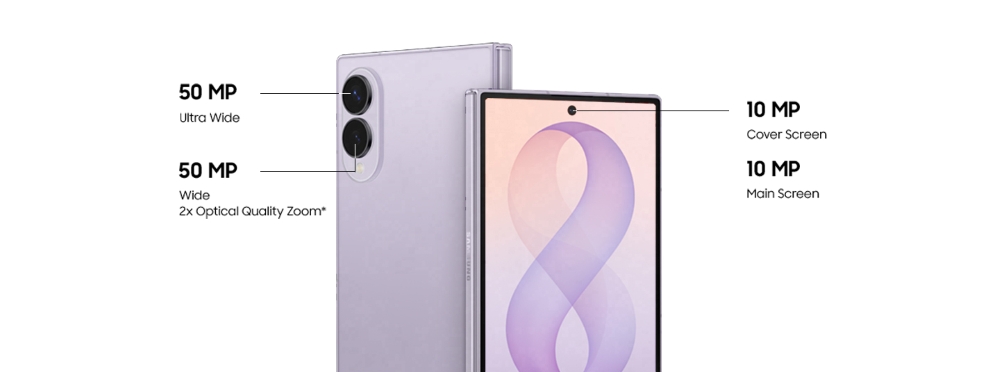
Samsung Galaxy Z Fold8
Consider the Fold8 for its lighter body and media-friendly inner display. Check the cover-screen proportions and available storage configurations before choosing.
As an Amazon Associate I earn from qualifying purchases.
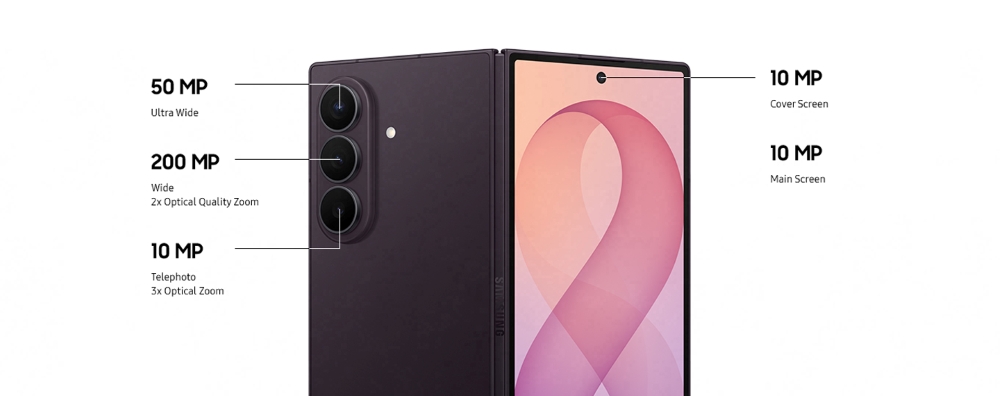
Samsung Galaxy Z Fold8 Ultra
The Fold8 Ultra is the productivity-focused choice, with larger displays, a telephoto camera and a bigger battery. Its 215-gram body is less portable than the standard Fold8.
As an Amazon Associate I earn from qualifying purchases.
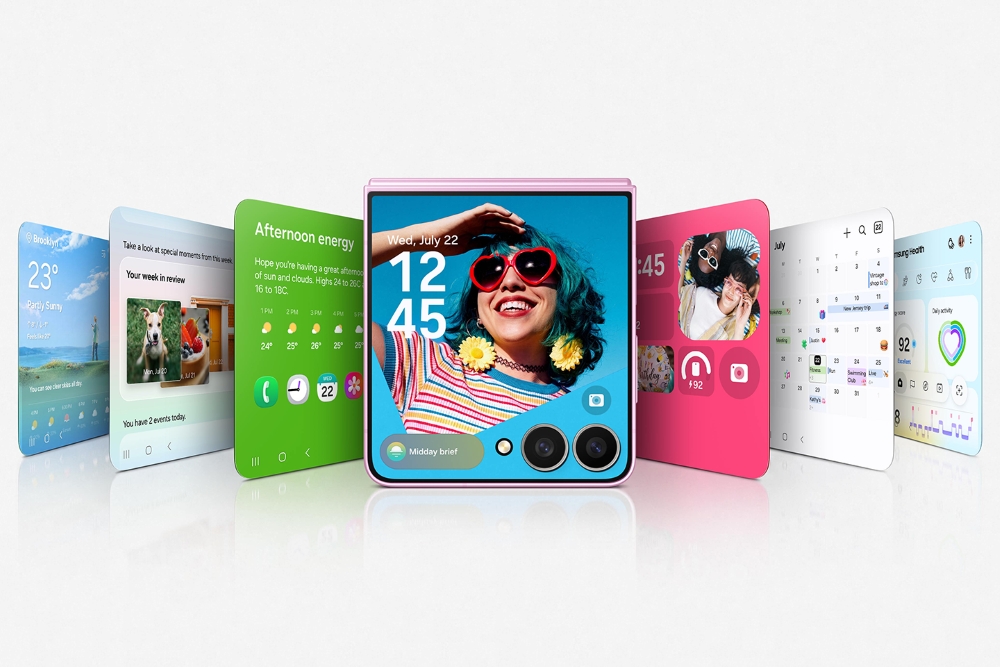
Samsung Galaxy Z Flip8
Choose the Flip8 when pocketability, cover-screen interactions and hands-free camera positioning matter most. It does not provide the tablet-size workspace of either Fold model.
As an Amazon Associate I earn from qualifying purchases.
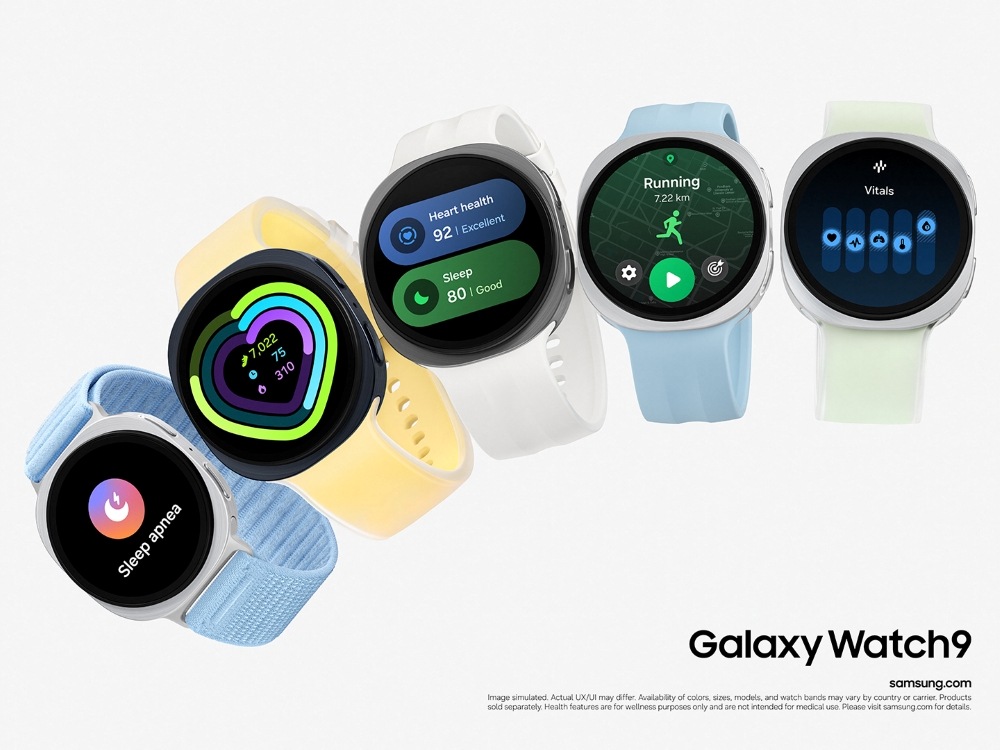
Samsung Galaxy Watch9
The Watch9 is the practical option for routine workouts, sleep tracking and daily wellness. Compare the 40mm and 44mm versions for wrist fit and battery capacity.
As an Amazon Associate I earn from qualifying purchases.
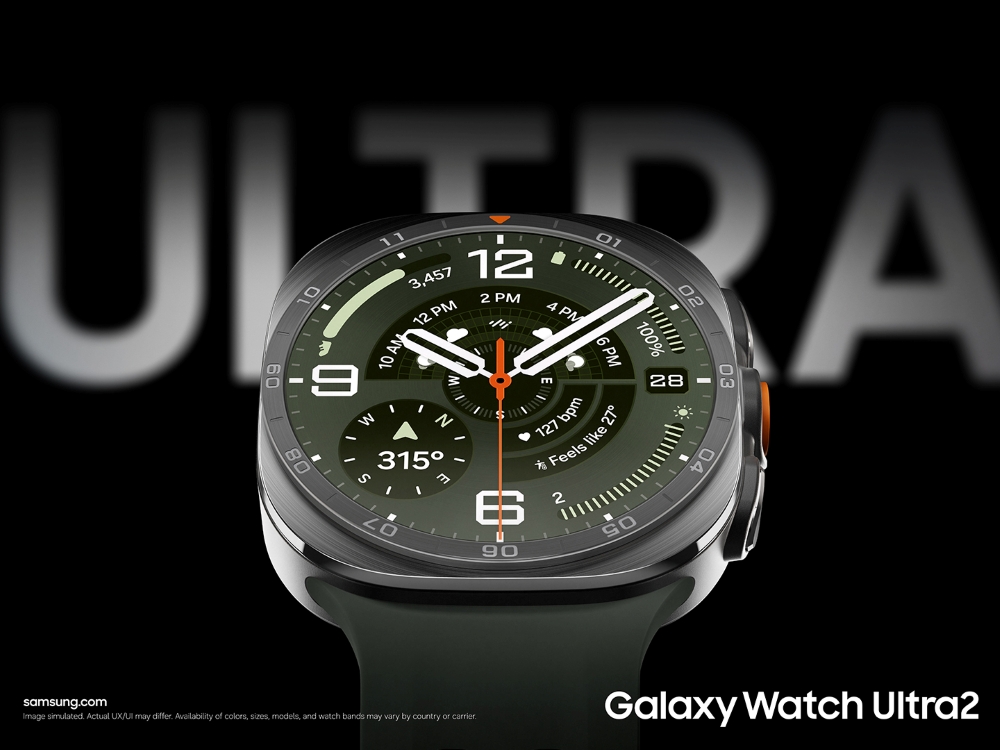
Samsung Galaxy Watch Ultra2
The Watch Ultra2 suits recurring trail, diving and long-workout use with its larger battery and brighter display. Its 47mm case should be tried for comfort before purchase.
As an Amazon Associate I earn from qualifying purchases.
The new phones are also designed to lie flat when open. That is valuable for table use and stylus-free interactions, but a stable hinge and consistent display tension will be more important over time than the first impression of thinness.
Galaxy AI is spreading across the shape of the hardware
Samsung is positioning Galaxy AI as connective tissue across its phones, watches and eyewear. The foldables receive Now Brief for personalized information, Now Nudge for contextual next steps and Gemini Intelligence for actions spanning supported applications. The Fold models can display conversations and suggested actions side by side, while the Flip places a subset of those functions on the FlexWindow.
Gemini Notebook is designed to collect notes, files, recordings and images in one workspace, then turn that material into summaries or other formats. Drag-and-drop support in split view should make this more natural on the Fold 8 Ultra’s large display than on a conventional phone.
The practical limitation is application support. Samsung says automation can work across more than 40 apps and services, but functionality may vary by language, account, region and application version. Buyers should evaluate the specific tasks they want to automate rather than treating agentic AI as a single universal feature.
There is also a difference between assistance and authority. Features that suggest calendar entries, restaurants or travel steps can save taps, but consequential actions should remain visible and require confirmation. One UI 9 includes an AI Assistant Activity dashboard for reviewing automated actions, alongside controls for on-device personalization and cloud processing.
AI should not decide between the three foldables. The Fold 8’s proportions, the Ultra’s camera system and the Flip 8’s portability will affect every interaction. AI features are more likely to change through software updates and can depend on external services, while the phone’s physical shape cannot be upgraded later.
Galaxy Watch Ultra 2: built for demanding outdoor use
The Galaxy Watch Ultra 2 is Samsung’s specialist wearable. It comes in a 47mm titanium case measuring 10.7mm thick and weighing 61.5g without the band. Samsung has reduced the body’s thickness by 12 percent compared with the preceding Ultra and made the redesigned bands lighter, but this remains a large watch. Anyone planning to wear it for sleep tracking should check whether the case feels comfortable against the wrist overnight.
Its headline specification is an 800mAh battery, 35 percent more capacity than Samsung’s previous Ultra model. The 1.52-inch display reaches a claimed peak of 5,000 nits, and sapphire crystal protects the panel. These upgrades target long outdoor sessions where navigation, exercise tracking and strong sunlight can consume power or make a dim display difficult to read.
The watch uses Qualcomm’s Snapdragon Wear Elite platform, with 2GB of memory and 64GB of storage. Connectivity includes dual-frequency GPS, Wi-Fi, NFC, Bluetooth 6.0 and optional LTE configurations. Dual-frequency GPS should be particularly relevant around buildings, cliffs or dense tree cover, although route accuracy still needs comparison testing.
Trail Run displays elevation, climbing progress and cumulative ascent and descent data. Hydration guidance estimates fluid needs from sweat loss relative to body weight during supported activities. These are coaching tools rather than guarantees: environmental conditions, personal physiology and sensor fit can all affect the estimate.
Diving is the feature that separates the Ultra 2 most clearly from a normal Galaxy Watch. The device carries 10ATM water resistance, an IP69K rating and EN13319 certification for relevant depth- and time-measuring instruments. It can record depth, dive time and water temperature after the function is activated.
An additional diving application developed with Mares is expected to provide ascent and descent rates and safety information. Availability is planned separately, so serious divers should verify that the required application and functions are released in their region before buying the watch specifically for them.
IP69K alone should not be interpreted as blanket permission to dive with any electronic device. The Ultra 2’s broader combination of ratings and certification is what supports its underwater role. Water resistance can also decline with wear, and Samsung advises rinsing the watch with fresh water after seawater exposure.
The Ultra 2 is best for people who will repeatedly use its trail, diving, navigation or extended-workout features. The brighter display and larger battery are attractive in isolation, but they may not offset the 47mm case for an everyday user whose activities are limited to walking, gym sessions and sleep tracking.
Galaxy Watch 9: the practical everyday model
The Galaxy Watch 9 comes in 40mm and 44mm sizes. The smaller version measures 8.6mm thick, weighs 31.5g and uses a 1.34-inch display. The 44mm model is also 8.6mm thick, weighs 34g and increases the display to 1.47 inches. Both use sapphire crystal and reach a claimed 3,000 nits of peak brightness.
Battery capacity depends on size. The 40mm Watch 9 has a 390mAh cell, while the 44mm model increases that to 445mAh. That distinction matters more than a single generalized battery estimate. The larger model has extra capacity but also powers a larger display; real endurance will depend on LTE, GPS, screen settings, workout duration and sleep tracking.
Like the Ultra, the Watch 9 uses the Snapdragon Wear Elite platform and has 2GB of memory. Storage drops to 32GB, which should still be sufficient for applications and offline media for most users. It supports dual-frequency GPS, Bluetooth 6.0, NFC and Wi-Fi, with LTE availability depending on the model and market.
The aluminum case is lighter and less imposing than the Ultra’s titanium body. Its 5ATM and IP68 ratings suit ordinary workouts and everyday water exposure, but it is not the model for professional diving. This is an important example of choosing for actual use: a smaller watch worn consistently can collect more useful wellness data than a rugged watch that spends nights on a charger or bedside table.
What the new health features actually do
Samsung Health organizes information around activity, mindfulness, nutrition, sleep and vitals. Vitals establishes a personal nighttime baseline from measurements such as heart rate, heart-rate variability, respiratory rate, skin temperature and blood-oxygen saturation. It can then highlight significant deviations from that baseline.
Heart Health Score combines activity, sleep, body-composition and stress trends into a cardiovascular-wellness score. It should not be confused with a clinical blood-pressure measurement, and it is not a basis for adjusting medication. Anyone concerned about blood pressure, sleep apnea or another medical condition should use approved medical equipment and consult a qualified clinician.
The Sleep Apnea feature analyzes breathing disruptions during sleep where the function has received the necessary regulatory clearance. Availability and setup requirements can vary by country, paired phone and account. It is intended to surface useful information, not replace a diagnosis or sleep study.
Daily Cardio Load estimates training volume and recovery needs, while Fitness Index uses body-composition information and workout history to help set goals. Hearing features can warn about potentially unsafe noise exposure. These tools are most valuable as trends collected consistently over time; an isolated score should not be overinterpreted.
| Specification | Galaxy Watch 9 | Galaxy Watch Ultra 2 |
|---|---|---|
| Case sizes | 40mm or 44mm | 47mm |
| Case material | Aluminum | Titanium |
| Peak display brightness | 3,000 nits | 5,000 nits |
| Battery | 390mAh or 445mAh | 800mAh |
| Storage | 32GB | 64GB |
| Water and durability ratings | 5ATM, IP68, MIL-STD-810H | 10ATM, IP69K, MIL-STD-810H, EN13319 |
| Best use | Daily wellness and general fitness | Trail running, diving and extended outdoor training |
For most Android users, the Watch 9 is the more balanced choice. The Ultra 2 earns its place only when the larger battery, extreme brightness and specialist sports modes address a recurring need. Neither watch is designed for iPhone users, and buyers should confirm phone compatibility and regional health-feature support before purchasing.
Samsung’s smart glasses are promising but unfinished as a buying decision
Samsung’s intelligent eyewear is being developed with Google, Gentle Monster and Warby Parker. The Gentle Monster design uses a slim black frame with a straight upper rim and rounded lower edges. The Warby Parker version has a brown frame with a subtly upswept brow line. That design partnership matters because smart glasses have to function as clothing as much as electronics; comfort and appearance determine whether people will actually wear them.
Inside is Qualcomm’s Snapdragon AR1 Gen 1 platform, a built-in camera and access to Gemini through Android XR. Samsung claims up to nine hours of battery life on one charge, while the case can provide as many as seven additional full charges. Those figures will vary with camera use, network conditions, voice interactions and connected features.
The planned functions include summarizing messages, reading information aloud, live translation, navigation assistance and contextual questions about the wearer’s surroundings. The camera can capture a whiteboard or meeting material and organize relevant information in Samsung Notes. Live visual sharing can transmit the wearer’s point of view during a call.
Some gestures depend on a connected Galaxy Watch 9, while other functions may require a compatible Galaxy phone, supported application, network connection or user permission. That makes the glasses less of a standalone computer and more of a hands-free extension of the wider Galaxy ecosystem.
Samsung plans initial eyewear collections for select markets in the fall, but final regional availability, pricing, prescription-lens handling and the complete application list remain important unknowns. Those details could materially change the value proposition.
Privacy will be equally important. A camera worn at eye level creates different social expectations from a phone that must be visibly raised. Samsung has discussed controls and safeguards, but buyers will need to see how clearly the glasses signal recording, how captured material is stored and which tasks are processed on a paired device or in the cloud.
The nine-hour claim is encouraging, and the charging case could make multi-day travel practical. Comfort is harder to reduce to a specification. Frame weight, heat, pressure around the ears and nose, prescription compatibility and balance will decide whether these glasses can remain on a wearer’s face throughout the day.
For that reason, the glasses are the product to watch rather than preorder blindly. They could become a natural interface for navigation, translation and quick note capture, especially for existing Galaxy users. Until pricing and independent endurance testing arrive, however, they remain a preview of Samsung’s ecosystem strategy rather than an easy recommendation.
What buyers should verify before ordering
The specification sheets establish clear differences, but several purchasing questions remain personal or region-dependent. Before choosing a device, check the following:
- Foldable ergonomics: Hold the Fold 8 and Fold 8 Ultra closed, type on their cover screens and compare how their width affects one-handed use.
- Crease tolerance: Inspect the inner display under bright light and from an angle rather than relying on a straight-on promotional image.
- Camera priorities: Choose the Fold 8 Ultra if a telephoto camera and higher-resolution main sensor are essential. Do not assume processing can recreate optical reach.
- Storage needs: Confirm local memory and storage configurations, particularly if recording large video files or keeping the phone for several years.
- Charging equipment: The maximum wired rates require compatible adapters and cables that may be sold separately.
- Watch fit: Wear the watch long enough to judge wrist pressure, especially if overnight sleep tracking is important.
- Health-feature availability: Regulatory approval, phone compatibility and regional support can determine whether a specific health function is usable.
- Smart-glasses dependencies: Confirm the paired phone, watch, application and network requirements for the features you actually want.
Pricing will ultimately influence every comparison. The Fold 8 Ultra has the best hardware specification, but value depends on the premium over the regular Fold 8. The Watch Ultra 2 has stronger outdoor credentials, but those additions are wasted if the Watch 9 already covers the buyer’s routine. A product earns its price through regularly used capabilities, not the length of its feature list.
Early verdict
Samsung’s 2026 Galaxy lineup is most convincing when viewed as a set of specialized choices rather than a ladder of increasingly expensive products. The Galaxy Z Fold 8 is the boldest form-factor experiment, trading a conventional cover screen for lower weight and a media-friendly inner canvas. The Fold 8 Ultra is the hardware leader, combining a more familiar exterior with the largest screen, strongest camera array and biggest foldable battery. The Flip 8 remains the lifestyle-oriented model, with portability and flexible photography as its clearest advantages.
The same logic applies to the watches. The Galaxy Watch 9 should satisfy most people seeking continuous wellness and fitness tracking. The Watch Ultra 2 is for buyers who can name the outdoor or diving features they intend to use. Its battery and screen are impressive, but its size is part of the purchase—not a minor footnote.
The smart glasses offer the clearest glimpse of where Samsung wants the Galaxy ecosystem to go. They bring Gemini, visual context and hands-free assistance into a wearable shape designed with established eyewear brands. They also carry the most unanswered questions.
None of these devices can be declared the universal winner from specifications alone. The strongest early recommendation is to choose by physical format first: compact Flip, wide Fold, productivity Ultra, everyday Watch or outdoor Watch. Once that decision is made, the remaining specifications become much easier to weigh.