


SpaceX is being linked to a major compute agreement with Reflection AI, an open-source artificial intelligence startup that is trying to compete in a market where access to advanced chips has become one of the hardest problems to solve.
The reported SpaceX Reflection AI compute deal would give Reflection access to Nvidia GB300 chips through Elon Musk’s Colossus infrastructure. The value being discussed is as much as $6.3 billion over the life of the agreement, though the full commercial terms have not been independently verified.
That uncertainty matters. The reported structure includes large monthly payments, a multi-year term, and termination rights, but a firm public timeline has not been confirmed. What is clearer is the strategic direction: AI labs need more compute, and companies that control large clusters of high-end Nvidia hardware are increasingly positioned as power brokers in the next phase of the AI market.
Why the reported deal matters
Reflection AI is not a typical enterprise software buyer. The startup is focused on open-source AI models, a category that has become more attractive to governments, large companies, and developers that want more control over how models are inspected, customized, deployed, and governed.
That makes a large compute arrangement meaningful even before every term is publicly nailed down. Building competitive AI systems requires enormous training and inference capacity. For frontier-model companies, chip access is not just an operating expense; it can determine how quickly a lab can train new systems, serve customers, and keep up with rivals.
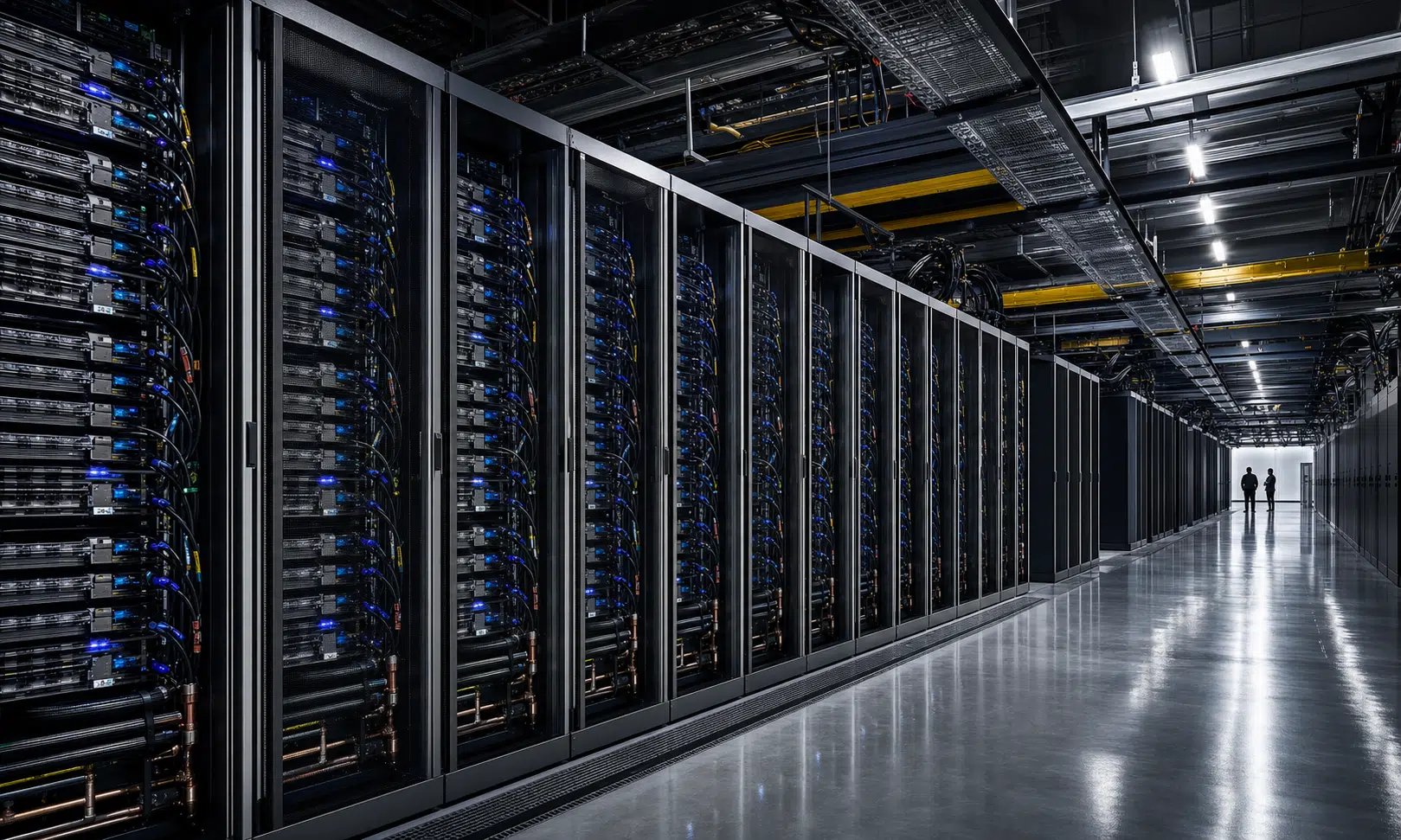
The reported agreement would also be another signal that SpaceX’s Colossus build-out is being treated as more than internal infrastructure. Colossus was built in part to support Musk’s AI ambitions, including Grok, but the reported Reflection arrangement points to a broader commercial path: selling compute capacity to outside AI companies that need scarce GPUs.
The key point for buyers and enterprise AI teams is not simply that one more AI startup may be renting chips. It is that the market for serious AI infrastructure is becoming more fragmented. Companies are no longer looking only at the major cloud providers. They are also watching specialized data-center operators, AI labs with excess capacity, and infrastructure groups tied to much larger technology ecosystems.
The terms remain partly unconfirmed
The reported deal centers on Nvidia GB300 systems, which are designed for high-end AI workloads. Reflection would receive compute capacity from SpaceX’s Colossus infrastructure, while SpaceX would receive substantial recurring payments if the agreement runs its full term.
Some reported details should be treated carefully. A firm start date, the exact monthly payment schedule, and the full termination structure have not been publicly confirmed. The reported headline value of about $6.3 billion depends on the agreement continuing through the end of its term.
That distinction is important because large AI infrastructure agreements often mix fixed commitments, capacity milestones, optionality, and exit rights. A headline value can describe the maximum size of a contract without guaranteeing that every dollar will be paid.
| Reported element | What it means | Confidence to state as fact |
|---|---|---|
| SpaceX and Reflection AI compute arrangement | Reflection would use Colossus compute capacity | Should be described cautiously |
| Up to $6.3 billion value | Potential total if the agreement runs through its full term | Conditional, not guaranteed |
| Nvidia GB300 access | High-end AI chips would support training and model workloads | Reported, not independently verified |
| Multi-year payments | The structure would make SpaceX a major compute supplier | Timeline not publicly confirmed |
Open-source AI is part of the pitch
Reflection’s broader argument is that open models can give customers more flexibility than closed systems. That pitch has gained attention as enterprises and governments weigh how much of their AI stack should depend on providers that control model access, updates, pricing, and deployment rules.
The company has described its work around the idea of American open intelligence. It has not released a public frontier open-source model, so the compute agreement should not be read as proof that Reflection has already caught up with larger AI labs. It is better understood as a bet on the infrastructure needed to try.
For enterprise buyers, that distinction is practical. Open-source AI can offer inspection, customization, and deployment flexibility, but those advantages do not remove the need for expensive hardware. Training and serving capable models still requires deep compute budgets, engineering talent, and reliable infrastructure partners.
SpaceX’s AI infrastructure ambitions are getting harder to ignore
SpaceX is best known for rockets, Starlink, and satellite infrastructure, but the reported Reflection agreement would add to the perception that the company is also becoming a serious player in AI compute.
That is a different business from launching satellites or selling connectivity. Compute services depend on data-center operations, energy access, networking, chip supply, customer contracts, and uptime expectations. If SpaceX is selling capacity from Colossus to outside AI companies, it is stepping into a market already being contested by cloud providers and specialized AI infrastructure companies.
The commercial logic is straightforward. Demand for advanced GPUs remains high, and AI companies often need more capacity than they can quickly secure from traditional cloud channels. A large compute cluster can become a valuable asset if its owner can package that capacity into contracts with well-funded AI customers.
The risk is also straightforward. AI infrastructure is capital intensive, and the market is moving quickly. Chip generations change, model architectures shift, and customers may want flexibility rather than long-term fixed commitments. A large headline agreement can be strategically important without eliminating those execution risks.
What AI buyers should take from it
For companies evaluating AI vendors, the reported SpaceX-Reflection arrangement is a reminder to look past model demos and ask harder infrastructure questions. Model access, deployment control, and compute availability are now part of the same purchasing conversation.
A buyer comparing open-source and closed-model vendors should ask whether the provider can support the workloads it is promising, whether the deployment model fits internal security requirements, and whether the vendor’s compute supply depends on a single partner or a more resilient mix of infrastructure.
- Does the vendor have committed compute capacity for training and inference?
- Can customers run or customize models in the environments they require?
- Are pricing and capacity commitments tied to a long-term infrastructure contract?
- What happens if the compute provider changes terms or capacity becomes constrained?
Those questions are especially relevant for open-source AI vendors. Openness can reduce some forms of lock-in, but it does not automatically solve the compute bottleneck. If Reflection is securing a large block of Nvidia capacity through SpaceX, the move would fit the broader pattern across the AI industry: control over chips is becoming as important as model design.
The bottom line
The reported SpaceX Reflection AI compute deal is best read as a sign of where the AI market is heading, not as a fully settled public record of every contract term. The headline number is large, the infrastructure involved is strategically important, and the open-source angle gives the arrangement a sharper enterprise story.
But the most important takeaway is simpler: compute is becoming the scarce resource around which AI companies are reorganizing. If SpaceX can turn Colossus into a commercial platform for outside AI labs, it could give the company another role in the AI economy beyond Musk’s own chatbot ambitions. If Reflection can use that capacity to build competitive open models, it could strengthen the case that open-source AI remains a serious alternative to closed frontier systems.
For now, the reported agreement puts both companies in the same frame: one trying to monetize a massive AI infrastructure build-out, the other trying to prove that open-source AI can compete when it has access to enough hardware.