

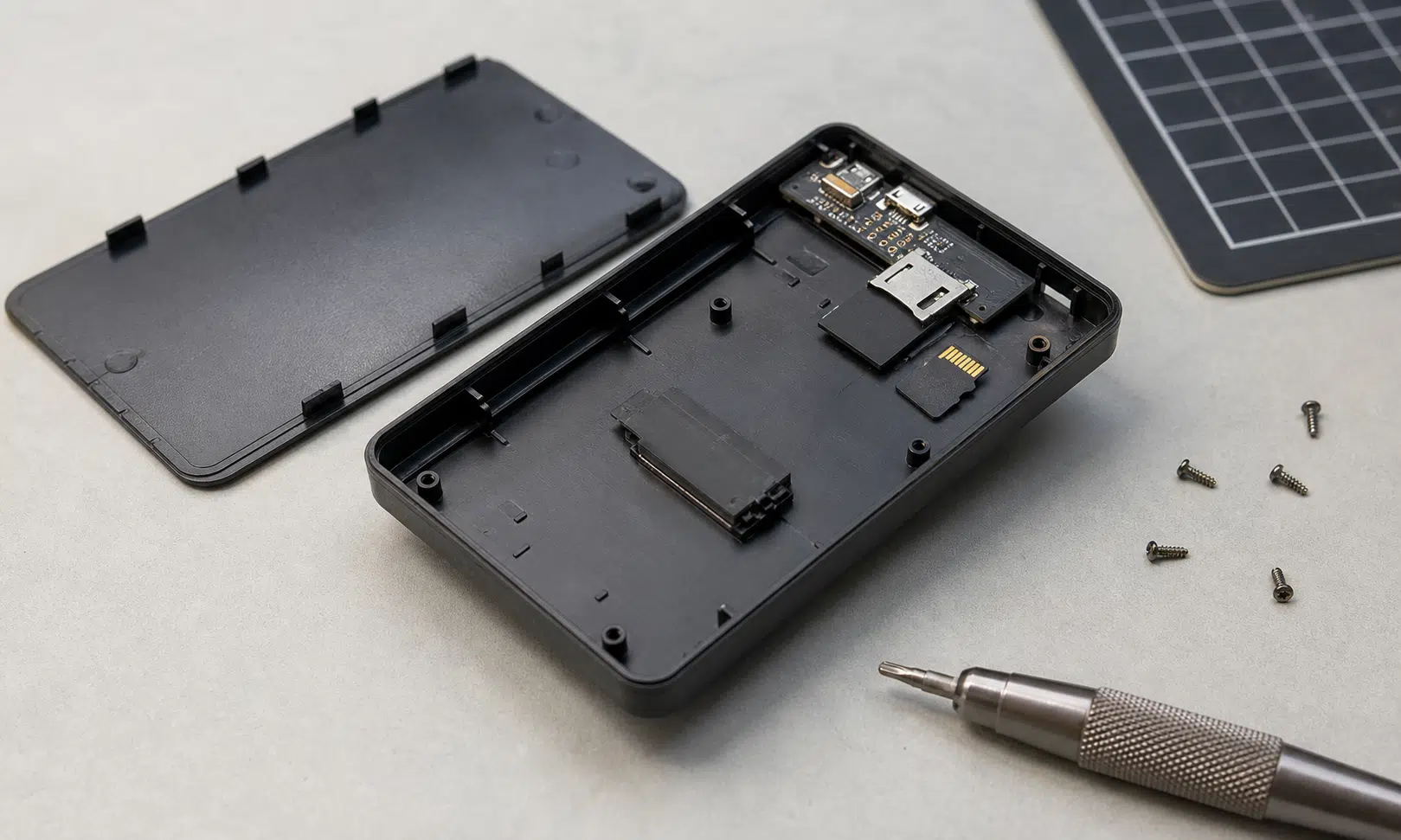

A Reddit user says a $20 “4TB external HDD” bought from Temu turned out to be something very different from the listing: a small microSD card reader fixed inside a plastic drive enclosure. The post, shared in r/pcmasterrace, framed the purchase as a gamble rather than a serious attempt to buy dependable storage, and that is the right way to read it.
A real 4TB portable hard drive or external SSD normally costs far more than $20, even before brand, speed, warranty, and build quality enter the discussion. When a storage product claims several terabytes of capacity at a price that barely covers a cheap accessory, the listing is not just suspicious. It is the product warning label.
What the Buyer Says Was Inside
According to the Reddit post, the buyer opened the plastic enclosure and did not find the expected 2.5-inch drive mechanism. Instead, the reported internals were a microSD card reader attached inside the case, with a generic memory card doing the actual work. That specific claim has not been independently verified, but the photos and description match a familiar pattern seen in fake-capacity storage scams.
The user also said Temu refunded the order unusually easily. That detail should be treated as part of the buyer’s account rather than a confirmed statement about how the marketplace handles every case. Still, the incident is useful because it shows how little effort some counterfeit storage products put into hiding the trick once the enclosure is opened.

WD Elements 4TB Portable External Hard Drive
Readers who actually need several terabytes of portable storage should look at established-brand drives with normal retail pricing and warranty support. A real 4TB portable HDD is better suited for backups and large file storage than an unknown marketplace listing.
Why Fake Capacity Drives Are Dangerous
The bigger risk is not that a fake drive is cheaply made. It is that it may appear to work long enough for someone to trust it with files. Some counterfeit flash drives and external storage products are configured to report more capacity than they can actually store. A computer may show a large volume, but once the real memory fills up, new data can overwrite old data or become unreadable.
That is why plugging in a suspicious drive and seeing a big number in the operating system is not proof. Testing tools such as H2testw, F3, or similar full-write verification utilities are commonly used to write data across the advertised capacity and then read it back. Filling the drive manually can reveal the same problem, but dedicated tools make the failure easier to spot before important files are involved.
The claimed 4TB capacity is also a practical red flag in this kind of design. High-capacity microSD cards exist, but legitimate cards at multi-terabyte capacities are not bargain-bin parts. If an external drive is advertised as several terabytes and costs less than many small memory cards, the economics do not make sense.
How to Avoid Buying One
For buyers, the safest rule is simple: do not use ultra-cheap marketplace storage for anything important. That includes backups, work files, photos, system images, game libraries, or transfer drives for irreplaceable data. If curiosity wins and you buy one anyway, treat it as untrusted hardware until it passes a full capacity test.
Weight, build quality, and listing language can offer clues, but they are not enough. Some fake drives look convincing, and some even perform well enough in short tests to avoid immediate suspicion. Check the seller, compare prices against known retail drives, look for a real warranty, and be skeptical of listings that rely on huge capacity claims with vague branding.

Samsung T7 Shield 2TB Portable SSD
A portable SSD from a known brand is a better fit for readers who move work files, photos, or game libraries and want faster transfers than a hard drive. It still should be bought from a reputable seller and tested before storing irreplaceable data.
The Temu story is not surprising, but it is a useful reminder. Cheap cables, cases, adapters, and low-risk accessories can be worth a marketplace gamble. Storage is different. A fake drive does not just waste the purchase price; it can quietly destroy the data someone thought they had saved.