

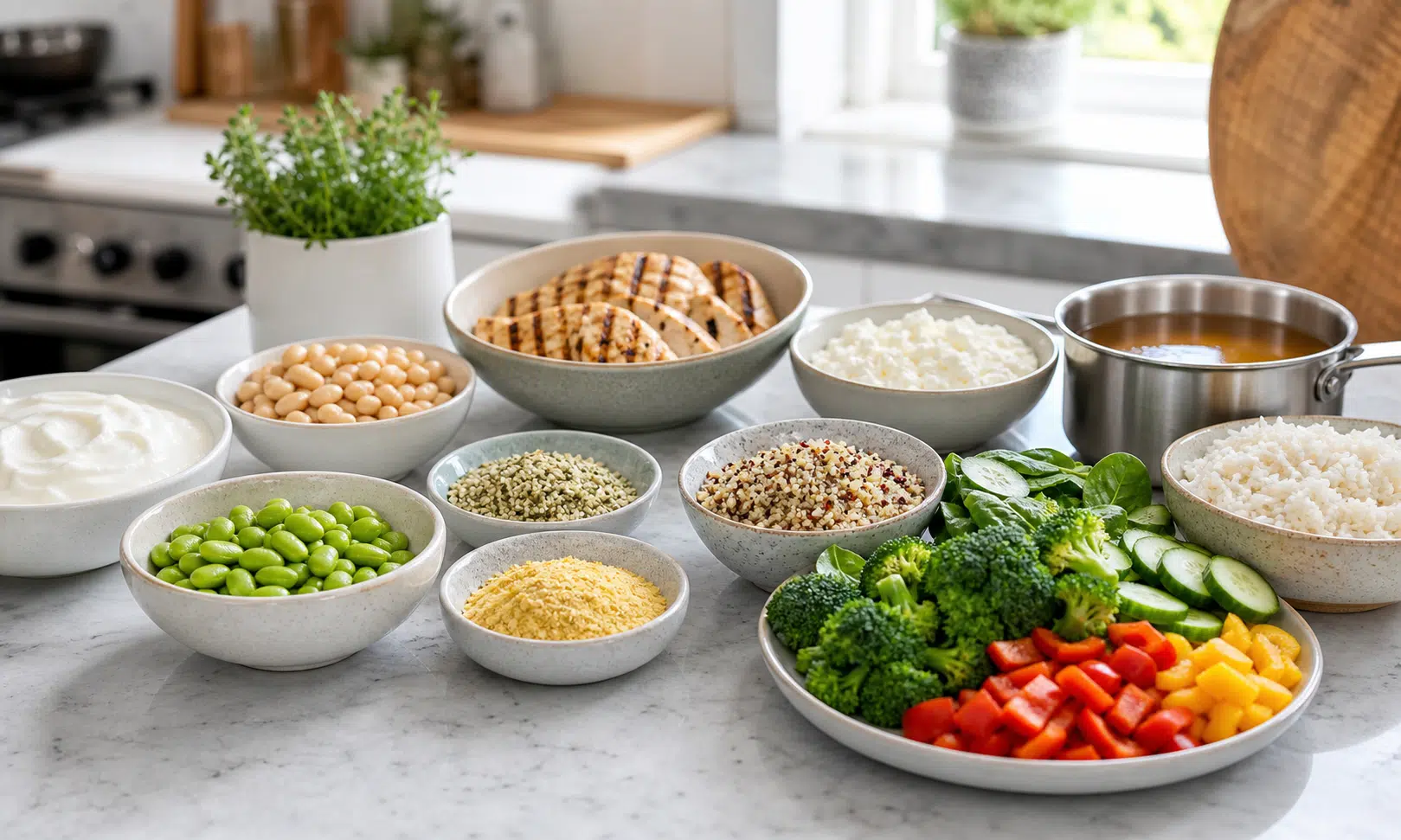

If you are trying to add more protein to meals, you do not have to start with powders, shakes, or specialty supplements. Whole-food options can often fit more naturally into the meals you already cook, especially when the goal is to make breakfast, lunch, or dinner a little more filling without changing the entire dish.
The easiest approach is usually additive: stir something into a bowl, swap the liquid you cook with, sprinkle a protein-rich topping over a salad, or choose a more protein-forward base. The exact amount of protein will depend on the food, serving size, and preparation, so treat the numbers below as useful estimates rather than fixed guarantees.
1. Use Bone Broth Where It Makes Sense
Bone broth can be a simple way to make soups, grains, and savory dishes a little more protein-focused. Its protein content varies widely depending on how it is made, what bones or ingredients are used, and how long it cooks. Some preparations may contain only a small amount per cup, while others can be more substantial.
The most practical use is as a cooking liquid. Try using broth instead of water when making rice, quinoa, lentils, soup, or a quick pan sauce. You can also sip a cup alongside a meal if it fits your taste and routine.
There are also non-meat broths that may add flavor and some nutrition, including legume-based broths, miso broth, marine algae broth, or broths built around nutritional yeast. Those options are especially useful if you want a savory base but do not eat meat.
2. Choose Lean Animal Proteins for Quick Meals
Lean animal proteins remain one of the most straightforward ways to increase the protein in a meal. Chicken, turkey, and lean cuts of beef can be folded into dishes that are already built for add-ins, such as wraps, quesadillas, grain bowls, toast toppings, and salads.
This does not require a separate recipe every time. A little cooked chicken can turn a vegetable bowl into lunch. Turkey can make a wrap more filling. Sliced beef can work in a rice bowl with vegetables and sauce. The point is to use protein as part of the meal rather than treating it as an extra project.
For easier weeknights, cook a plain batch once and season portions differently later. One container can become taco-style filling, a salad topping, or a quick addition to noodles or rice.
3. Add Edamame, Seeds, or Nutritional Yeast
For plant-based meals, small toppings can do real work. Edamame, nutritional yeast, pumpkin seeds, sunflower seeds, and hemp seeds are easy to add without changing the structure of a dish.
- Scatter edamame over rice bowls, noodle bowls, or salads.
- Add pumpkin or sunflower seeds to roasted vegetables, soups, or grain bowls.
- Use hemp seeds on yogurt, oatmeal, toast, or salads.
- Sprinkle nutritional yeast into savory oats, pasta, popcorn, or dressings.
These add-ins are useful because they bring texture as well as protein. Seeds add crunch, edamame adds bite, and nutritional yeast gives a savory flavor that can make simple vegetables or grains feel more complete.
4. Mix in Cheese, Especially Cottage Cheese
Cheese can be another easy protein add-in, though the amount varies by type and serving size. Cottage cheese is especially flexible because it works in both savory and mildly sweet meals.
For savory dishes, stir cottage cheese into pasta, add it to a rice-and-vegetable bowl, spread it on toast, or use it as a creamy base for a quick sauce. If the texture is not your favorite, blending it can make it smoother and easier to fold into dressings or dips.
Other cheeses can help too, but they are best used with the rest of the meal in mind. A little shredded cheese may make eggs, beans, or vegetables more satisfying, while a higher-protein cheese can give a snack plate more staying power.
5. Pair Rice With Beans
Rice has some protein, but it is not usually treated as a protein-rich food on its own. Pairing it with beans makes the bowl more substantial and adds fiber at the same time.
A rice-and-bean bowl is also practical because it is easy to customize. Start with rice, add black beans, pinto beans, chickpeas, lentils, or another bean you like, then build from there with vegetables, salsa, herbs, yogurt sauce, broth-cooked grains, or seeds.
The source material estimates that a half cup of beans can provide roughly seven to nine grams of protein, though the exact number depends on the type of bean and serving size. Beans also bring fiber, which is one reason they can make a simple bowl feel more complete.
6. Use Greek Yogurt Beyond Breakfast
Greek yogurt is one of the more versatile protein-rich foods because it can move between sweet and savory meals. A seven-ounce serving is commonly cited as a meaningful protein source, though the exact amount depends on the brand and fat level.
For breakfast, it can be mixed into overnight oats, layered with fruit, or used as the base for a bowl with seeds. For lunch or dinner, it can become a sauce, dressing, or topping. Stir it with herbs, lemon, garlic, or spices and use it with roasted vegetables, grains, wraps, or bowls.
Greek yogurt can also replace some mayonnaise, sour cream, or cream-based ingredients in certain recipes. That swap will not work everywhere, but it is useful in dressings, dips, and quick sauces where tang and creaminess are welcome.
A Simple Way to Think About Protein Add-Ins
The most useful protein upgrades are the ones you will actually repeat. If a food requires too much prep or does not fit the way you eat, it is unlikely to become part of your routine.
A practical starting point is to choose one protein add-in for each type of meal you already make:
- For bowls: beans, edamame, chicken, turkey, seeds, or Greek yogurt sauce.
- For soups and grains: broth, beans, lentils, or lean meat.
- For toast and wraps: cottage cheese, turkey, chicken, or seeds.
- For snacks: Greek yogurt, edamame, cottage cheese, or seed toppings.
You do not need every meal to look the same. A few repeatable add-ins can make familiar dishes more protein-focused while keeping them easy to cook and enjoyable to eat.