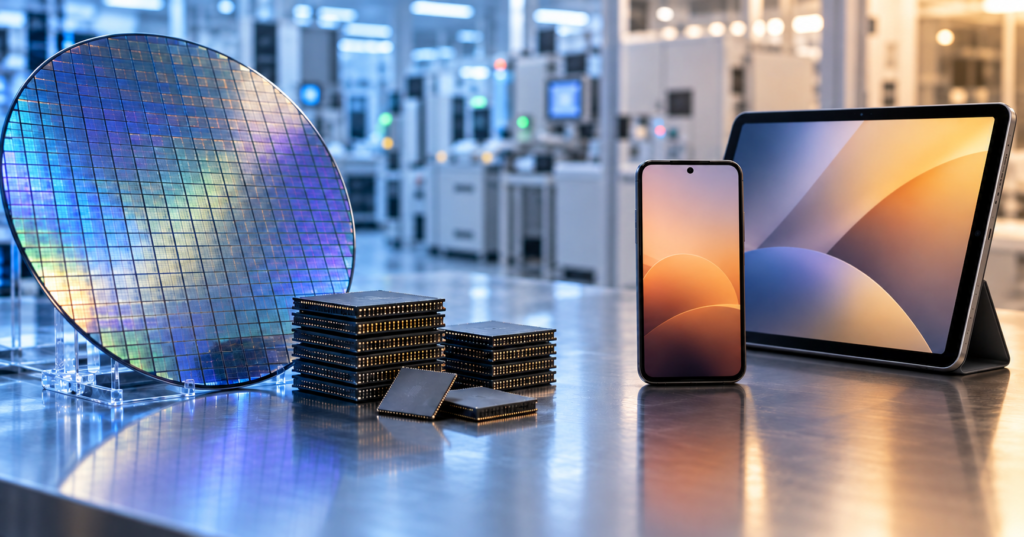
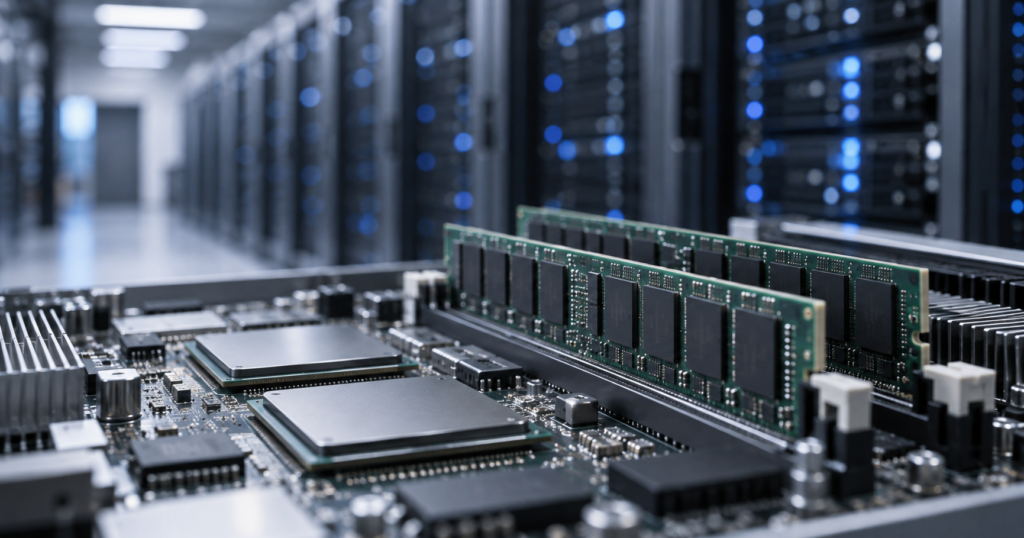
The cost of AI is no longer just a problem for cloud companies, chipmakers and investors. It is starting to look like a consumer electronics problem, too.
The latest round of tech earnings points to a simple pressure building inside the industry: companies are spending heavily to build AI infrastructure, and that spending is competing for some of the same components used in phones, laptops, tablets, game consoles and smart devices. Memory chips are the clearest example. Demand from data centers appears to be tightening supply, while manufacturers and device makers are warning that higher component costs may last longer than buyers would like.
For consumers, the likely result is not one dramatic overnight price shock. It is more likely to show up as a series of smaller, practical changes: higher starting prices, fewer cheap configurations, more expensive memory upgrades, thinner discounts and longer waits for some models.
AI Spending Is Pulling More Hardware Into Data Centers
Google, Microsoft, Amazon and Meta all reported strong recent results, but the more important signal for buyers was how much money they expect to keep spending on infrastructure. Microsoft, Google and Meta all raised capital spending expectations, while Amazon was already operating at a level where its infrastructure spending was extremely high.
That spending is not abstract. It means land, buildings, power equipment, networking gear, servers, processors and memory. AI systems need huge amounts of high-performance hardware to train and run models, and cloud companies are racing to add capacity before demand outruns what they can sell.
Investors have rewarded some of that spending when it is tied clearly to cloud revenue. Microsoft and Google, for example, can make a direct case that AI infrastructure feeds their cloud businesses. Meta has a harder story to tell because its main business is advertising, even though it says AI is improving parts of that business. That difference matters on Wall Street, but it matters less to shoppers. Either way, the hardware has to come from somewhere.
Memory is one of the tightest areas. Microsoft has said higher prices for memory and other components are adding substantially to its spending plans. Meta has also pointed to higher component pricing, including memory, as one reason its infrastructure budget is rising. Those are company statements, not a complete independent audit of the global supply chain, but they line up with the broader warning coming from memory suppliers and device makers.
Why Memory Prices Matter to Everyday Buyers
Memory chips are not limited to AI servers. They are in the phone in your pocket, the laptop on your desk, the tablet your family shares, the console under the TV and the smart devices scattered around the house.
When AI data centers absorb more high-end memory supply, the effect can spill into the wider market. Manufacturers may prioritize higher-margin server memory. Buyers of consumer-grade parts may face tighter availability. Device makers then have to decide whether to absorb the extra cost, redesign products, reduce margins or raise prices.
That does not mean every device will immediately become unaffordable. Big companies often hedge, negotiate long-term supply deals and use existing inventory to soften short-term pressure. Apple, for example, has said memory costs are becoming a bigger issue for its business, while also indicating that stockpiled inventory helped cushion the impact for a time. The company has not laid out a simple public formula saying exactly how those costs will affect future iPhone, Mac or iPad prices.
Still, the direction is worth watching. A phone with more RAM costs more to build. A laptop with a larger solid-state drive costs more to build. A low-cost PC becomes harder to sell profitably if basic components rise faster than the price shoppers are willing to pay.

Crucial 32GB DDR4 Laptop RAM Kit
If your laptop supports replaceable SODIMM memory, upgrading RAM can extend its useful life. Confirm your exact laptop model and memory type before buying, since many newer thin laptops have soldered RAM.
As an Amazon Associate I earn from qualifying purchases.
For buyers, the practical takeaway is to look harder at memory and storage when comparing devices. A base-model laptop may still have an attractive headline price, but the configuration most people actually need could be noticeably more expensive.
- If you keep a laptop for five years or more, paying for enough RAM up front may matter more than chasing the cheapest base model.
- If a phone has no expandable storage, the jump from one storage tier to the next deserves closer scrutiny.
- If you mainly browse, stream and write documents, a refurbished or previous-generation machine may offer better value than a new low-end model.
- If you edit video, play games or run local AI tools, memory pressure is harder to avoid because your workload genuinely needs more capable hardware.
Chipmakers Are Benefiting From the Shortage
The companies that make memory chips are in a stronger position than most electronics buyers. Samsung and SK Hynix, two of the biggest names in memory, have both reported sharp gains tied to AI demand. Samsung has warned that customer demand is running ahead of available supply, and that the gap could remain a problem into 2027.
That warning matters because new chip capacity cannot be created quickly. Semiconductor plants are expensive, complex and slow to bring online. Even when companies decide to expand, the useful supply arrives years later, not next quarter.
This is one reason the AI boom can affect consumer products even when consumers are not buying AI services directly. A cloud company ordering memory for data centers may be competing indirectly with the supply chain behind a student laptop, a work PC or a midrange phone.
Texas Instruments offers another version of the same story. The company is known to many Americans for school calculators, but it also makes chips used in power management, battery systems, smart devices and industrial electronics. As data center demand becomes more attractive, suppliers may shift attention toward higher-margin business. That does not remove consumer components from the market altogether, but it can make the supply picture less friendly for low-cost electronics.
What This Means Before You Upgrade
The buyer question is not whether AI is good or bad in the abstract. It is whether you should change how you shop.
For many people, the answer is yes, but only in practical ways. If your current phone or laptop is working well, panic-buying rarely makes sense. If you already planned to replace a device this year, waiting for unusually deep discounts may be less reliable than it was during periods of oversupply.
The most exposed buyers are people who need inexpensive machines: students, families buying multiple devices, small businesses replacing office laptops and anyone trying to stay near the bottom of a product line. Those buyers are more sensitive to small price increases, and they are also more likely to be hurt if manufacturers cut corners on entry-level specifications.

iFixit Essential Electronics Toolkit
A compact electronics toolkit is useful for simple laptop, phone and small-device maintenance. It fits the repair-first advice without pushing readers toward replacing hardware unnecessarily.
As an Amazon Associate I earn from qualifying purchases.
A sensible buying checklist looks different in this environment:
- Check the RAM first, especially on laptops where it cannot be upgraded later.
- Compare the real price of the configuration you need, not only the advertised starting price.
- Look at previous-generation models while reputable stock is still available.
- Consider repair if your current device only needs a battery, storage replacement or basic service.
- Watch for price increases on accessories and components, not just finished devices.
The most important thing is to avoid buying a machine that is cheap only because it is under-equipped. A laptop with too little memory can feel old quickly. A phone with too little storage can become frustrating before the hardware itself wears out. If component prices keep rising, the cheapest version of a product may be the least economical over time.
AI’s Other Costs Are Becoming More Visible
The same week that tech companies were explaining their infrastructure spending, AI’s political and labor costs were also on display.
The Pentagon announced agreements with seven AI companies for work involving classified military environments. The companies included SpaceX, OpenAI, Google, Nvidia, Reflection, Microsoft and Amazon Web Services. The Defense Department described the effort as a way to improve data analysis and decision-making inside military operations. The agreement language around lawful use has already drawn attention because AI companies are under pressure to define where military and surveillance applications should stop.
Workers at Google DeepMind in the UK also pushed for union recognition, with some employees connecting their organizing effort to concerns about military work and surveillance uses of AI. The worker action is not only an internal Google matter. It reflects a larger conflict inside the AI industry: the same systems being marketed as productivity tools are also being pulled into defense, policing and intelligence work.
In the UK, live facial recognition has become another pressure point. Police use of the technology has expanded in some settings, while civil liberties groups and wrongly identified people have raised concerns about oversight, accuracy and redress. The technology can be presented as a security tool, but its real-world impact depends on how it is deployed, who is scanned and how mistakes are handled.
The Bottom Line for Consumers
AI is often sold to the public as software: a chatbot, a search feature, a writing assistant or a photo tool. The earnings reports tell a harder-edged story. AI also means warehouses full of servers, massive power needs and intense competition for advanced chips.
That competition is now close enough to the consumer electronics market that buyers should pay attention. Memory costs may not explain every future price increase, and companies may choose different ways to handle the pressure. Some will raise prices. Some will protect premium products and trim value at the low end. Some will lean harder on trade-in deals, financing and subscriptions to make higher prices feel less immediate.
The practical move is to buy with a longer view. Choose enough memory and storage for the life of the device. Compare refurbished and previous-generation options. Repair good hardware when the numbers make sense. And be skeptical of cheap base models that look affordable only until you price the version you actually need.

Samsung T7 Shield Portable SSD
A portable SSD can help readers move large files, back up devices and reduce pressure on limited internal storage. It is most useful when the current device still performs well but storage is the main constraint.
As an Amazon Associate I earn from qualifying purchases.
AI may still make software faster and more capable. But for shoppers, one of its first everyday effects could be much simpler: the next phone, laptop or tablet may cost more than expected.