

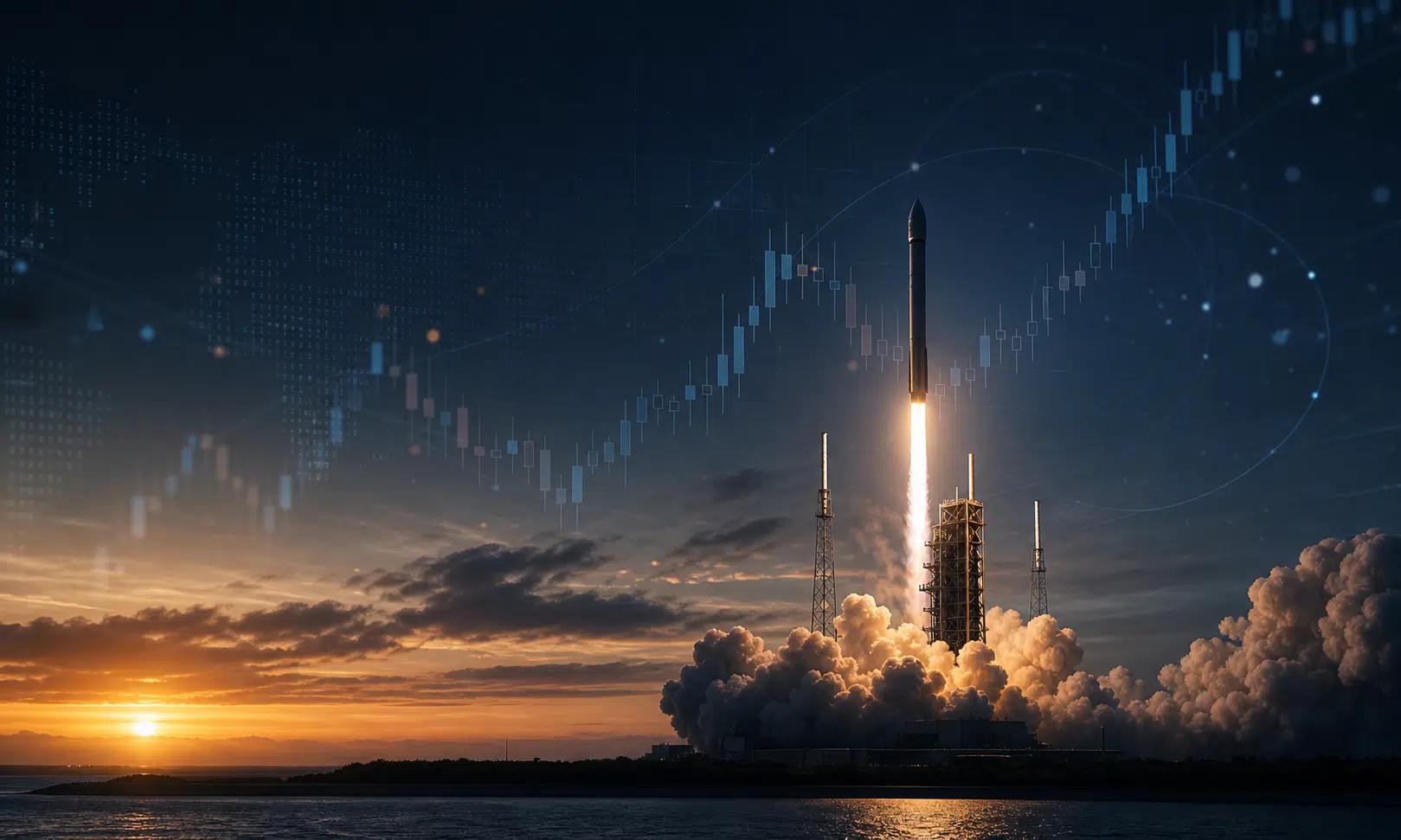

SpaceX has moved closer to selling shares to the public for the first time, setting up what could become one of the most watched IPOs in market history.
The company, formally known as Space Exploration Technologies Corp., plans to list Class A common stock under the ticker symbol SPCX. The offering would give public-market investors direct exposure to a business built around rocket launches, Starlink satellite internet, government contracts, artificial intelligence infrastructure and, after recent corporate moves, consumer products tied to X and Grok.
For investors, the appeal is obvious. SpaceX is one of the few private technology companies with a global brand, deep government relationships and a lead in reusable rockets and satellite broadband. The filing also gives the market a fuller look at a company that has often been valued more on ambition than public financial detail.
But this is not a simple growth-stock story. SpaceX is seeking a public-market debut at a very high valuation while reporting substantial losses, heavy capital spending and a governance structure that keeps Elon Musk firmly in control. That means the decision is less about whether SpaceX is an important company and more about whether SPCX would be a suitable stock at the price investors are asked to pay.
What SpaceX Is Selling Investors
SpaceX is not coming to market as a single-product company. Its pitch is built around several large, expensive and very different businesses.
The core business remains launch services. SpaceX sends satellites, cargo, equipment and astronauts into orbit for commercial customers and government agencies. Its reusable rocket program has helped lower launch costs and turned the company into a dominant provider for many missions.
Starlink is the more consumer-facing part of the company. The satellite internet service has grown quickly, especially among rural households, mobile users, businesses and governments that need connectivity in places where cable or fiber service is limited. The filing says Starlink had 10.3 million subscribers, up sharply from 5 million a year earlier. That growth gives SpaceX a recurring-revenue story that traditional launch companies do not have.
SpaceX is also leaning into artificial intelligence. The company acquired xAI earlier this year, and Musk has said he wants SpaceX to house his broader AI products. That gives the IPO a wider technology angle, but it also makes the business harder to evaluate. Investors are not just buying rockets and broadband. They are buying a combined company with exposure to AI infrastructure, consumer subscriptions, social media products and regulatory risk tied to AI tools.
The filing says SpaceX generated $18.6 billion in revenue in 2025, up 33% from a year earlier. It also reported a large net loss for the first quarter of 2026. That combination matters: revenue is growing, but the company is still spending heavily to build the systems it says will support future growth.
SpaceX IPO Snapshot
| Investor question | What the filing indicates | Why it matters |
|---|---|---|
| Expected ticker | SPCX | Investors will need to distinguish the new stock from ETFs or similarly named products. |
| Exchange | Nasdaq | A major exchange listing could make the shares widely available through mainstream brokerages. |
| 2025 revenue | $18.6 billion | Shows meaningful scale, not just speculative technology development. |
| Revenue growth | 33% year over year | Suggests strong demand, though growth quality depends on margins and capital needs. |
| Starlink subscribers | 10.3 million | Gives SpaceX a large recurring customer base. |
| Musk voting control | About 85% | Public shareholders may have limited influence over strategy or leadership. |
| Major IPO banks | Goldman Sachs, Morgan Stanley and others | The offering is large enough to require a broad underwriting syndicate. |
Who The SpaceX IPO May Fit
The cleanest buyer case is for investors who want long-term exposure to space infrastructure and are comfortable with a founder-controlled company. SpaceX has a rare position in a difficult market. Rockets, launch cadence, satellite deployment and government relationships create barriers that most competitors cannot quickly copy.
SPCX may appeal to investors who believe the company can turn Starlink into a durable cash generator. Broadband revenue is easier to model than moonshot projects because subscribers, pricing and churn can be tracked over time. If Starlink keeps expanding internationally while managing costs, it could become the financial engine that supports the company’s more expensive ambitions.
The IPO may also attract investors who want exposure to Musk-led companies but do not want to buy Tesla. SpaceX has different end markets, a different competitive position and a larger mix of government and enterprise revenue. That does not remove Musk-related risk, but it makes the investment case distinct from the electric-vehicle market.
The stock may be a poor fit for investors who need near-term earnings visibility, dividend income or conventional corporate governance. SpaceX is still in a capital-intensive buildout phase. Its largest ambitions require long timelines, large engineering budgets and tolerance for failure. Even if the company succeeds operationally, the stock could disappoint if the IPO valuation already prices in too much future success.
Key Tradeoffs For Retail Investors
Retail investors may be able to access the IPO or early trading through major platforms. The source material names Schwab, Fidelity, Robinhood, SoFi and E*Trade as platforms SpaceX expects to involve for everyday investors.
That access is useful, but it should not be confused with a guarantee of value. Large, heavily promoted IPOs can trade sharply in either direction after listing. Retail allocation can also be limited, and the price available to ordinary investors may differ from the economics available to early private investors or institutional buyers.
Before deciding whether SPCX belongs in a portfolio, investors should separate three questions:
- Is SpaceX a strong business?
- Is the IPO valuation reasonable?
- Is the stock appropriate for the investor’s risk tolerance and time horizon?
Those are different decisions. A company can be important and still be overpriced. A stock can be exciting and still be too volatile for a portfolio built around stability. A founder can have a strong operating record and still create governance concerns for public shareholders.
Reasons Some Investors May Want Exposure
- SpaceX has a leading position in reusable launch services.
- Starlink gives the company a fast-growing subscription business.
- Government contracts with agencies such as NASA and the Defense Department may provide durable demand.
- The company operates in markets with high technical barriers to entry.
- The IPO could become a major public-market event, increasing liquidity and analyst coverage.
Reasons To Be Careful
- The company is reporting large losses while continuing to spend heavily.
- Starlink average revenue per user may face pressure as international and lower-priced plans grow.
- Rocket development and launch operations carry safety, regulatory and execution risks.
- xAI and Grok add AI-related legal, reputational and product risks.
- Musk is expected to retain voting control, limiting the power of outside shareholders.
Starlink Is The Most Practical Part Of The Story
For many investors, Starlink is the easiest part of SpaceX to understand. It sells internet access. Customers pay recurring fees. The addressable market includes rural homes, ships, aircraft, emergency services, governments, remote businesses and regions with weak terrestrial broadband.
The subscriber growth is significant. Moving from 5 million to 10.3 million subscribers in a year shows strong demand. The challenge is whether that growth becomes more profitable as the network scales. The filing indicates SpaceX is making less money per user on average as it adds subscribers outside North America and introduces lower-priced plans.
That tradeoff is common in global subscription businesses. Expansion can increase total revenue while lowering average revenue per user. The key question is whether lower pricing is offset by scale, equipment costs, launch efficiencies and better network utilization.
For buyer-decision purposes, Starlink is the section of the filing investors should read closely. It may be the bridge between SpaceX’s capital-heavy ambitions and the steady cash flow public markets usually want to see.
The Musk Control Question
SpaceX’s governance structure may be one of the most important parts of the IPO. The filing says Musk will remain CEO, chairman and chief technology officer, with about 85% voting control after the IPO.
That structure gives investors continuity. The company has been closely identified with Musk from the beginning, and many buyers will see his control as part of the investment thesis. Founder control can allow a company to pursue long-term projects without bending to short-term market pressure.
It also limits shareholder influence. If investors disagree with capital allocation, AI strategy, executive conduct, compensation, political exposure or the timing of major projects, they may have little practical ability to force change. Public shareholders would be buying economic exposure more than governance power.
That is not unusual among some technology companies, but the degree matters. At SpaceX’s expected scale, this governance model would apply to one of the most valuable companies in the public market.
AI Makes The IPO Bigger And Harder To Value
The xAI piece adds both upside and uncertainty. SpaceX’s filing describes AI ambitions that go beyond a rocket company or satellite internet provider. Musk has said he wants SpaceX to take charge of his AI products, including Grok and related infrastructure.
That could expand SpaceX’s market opportunity. AI infrastructure requires enormous compute capacity, data centers, power planning and capital. If SpaceX can sell capacity or services to major AI customers, the business could become larger than a traditional aerospace company.
But it also complicates the stock. AI valuations have been high, competition is intense and regulation is still developing. The filing notes that Grok is facing investigations and inquiries tied to nonconsensual sexualized deepfakes. Those matters could create liability, sanctions, reputational damage or added compliance costs.
Investors should treat AI exposure as a separate risk bucket, not just an extra growth story. SpaceX may be combining several ambitious businesses under one ticker, and each one has a different cost structure, regulatory profile and competitive set.
How SpaceX Compares With Other Investor Choices
SpaceX will likely be compared with Tesla because of Musk, but the investment case is not the same. Tesla is tied to electric vehicles, energy products, autonomous driving claims and manufacturing margins. SpaceX is tied to launch services, broadband, government contracts, satellites and now AI infrastructure.
It will also be compared with defense and aerospace companies, though SpaceX looks very different from traditional contractors. Older aerospace firms tend to have slower growth, more predictable government revenue and more established public-company governance. SpaceX offers more upside, but also more uncertainty.
Finally, investors may compare SPCX with AI and cloud infrastructure companies. That comparison could become more relevant if xAI and data center capacity become central to the company’s valuation. Still, SpaceX’s capital needs and operational risks are not the same as a software company’s.
| Comparison group | Why investors compare it | Main difference |
|---|---|---|
| Tesla | Same controlling executive and a large retail-investor following | Different markets, revenue drivers and operating risks |
| Aerospace and defense firms | Government contracts, launch services and national-security relevance | SpaceX has higher growth ambitions and more founder control |
| Telecom and broadband providers | Starlink sells internet access to households, businesses and governments | Satellite broadband has different infrastructure costs and global expansion challenges |
| AI infrastructure companies | xAI and data center capacity add AI exposure | AI is only one part of a much broader and more capital-intensive company |
Verdict: A Landmark IPO, But Not An Automatic Buy
SpaceX’s IPO gives investors something rare: a chance to buy into a company with major positions in rockets, satellite broadband, government space services and AI infrastructure. That mix could make SPCX one of the most important new listings in years.
The buyer case is strongest for long-term investors who can tolerate volatility, understand founder-control risk and believe Starlink can become a durable cash-flow engine. SpaceX has real revenue, real customers and a lead in markets that are difficult to enter.
The cautious case is just as clear. The company is expensive, complex and still losing money. Its ambitions require enormous capital. Its governance structure gives public shareholders limited control. Its AI exposure adds legal and regulatory questions that are separate from the space business.
For retail investors, the practical approach is to avoid treating the IPO as a once-in-a-lifetime pressure event. The better question is whether SPCX fits a portfolio at the available price after considering valuation, losses, voting control and the long timeline required for SpaceX’s biggest plans to pay off.