


SpaceX is reportedly moving faster toward what could become the most closely watched initial public offering in years, with a possible Nasdaq debut now aimed for mid-June.
The rocket, satellite and Starlink operator founded by Elon Musk is planning to price its IPO as early as June 11 and begin trading as soon as June 12, according to people familiar with the process. The company is expected to use the ticker SPCX if the listing goes ahead on that timetable.
For investors, the headline is not just that SpaceX may finally reach the public market. It is the speed of the process, the possible size of the raise and the strategic value of a Nasdaq listing at a time when large new public companies are being courted more aggressively by exchanges and index providers.
The reported offering is still not the same thing as a completed IPO. Until a public prospectus is available and the final terms are set, investors are dealing with a moving target. But the reported calendar is now specific enough that anyone considering the stock should start thinking less about the excitement of the debut and more about the basic question: what would have to be true for SpaceX to be worth buying at the IPO price?
Reported SpaceX IPO Timeline
SpaceX had previously been expected to move toward a late-June offering, around the time of Musk’s birthday. The newer plan reportedly pulls that schedule forward by roughly two weeks.
The company is now said to be preparing to make its prospectus public as early as May 20, launch its roadshow on June 4, price the shares as early as June 11 and begin trading on June 12. A faster-than-expected review of IPO paperwork by the Securities and Exchange Commission was described as one reason the timeline moved up.
| Reported step | Possible timing | Why it matters |
|---|---|---|
| Prospectus made public | As early as May 20 | Investors would finally see audited financials, risk factors and business details. |
| Roadshow launch | Targeted for June 4 | Management would begin marketing the deal to institutional investors. |
| IPO pricing | As early as June 11 | The final share price and valuation would be set. |
| Market debut | As early as June 12 | Public trading could begin under the expected SPCX ticker. |
The ticker itself has already drawn attention. SPCX had previously been used by a SPAC-focused exchange-traded fund from Tuttle Capital Management before that fund changed its ticker to SPCK in April. That switch sparked speculation that the symbol was being cleared for SpaceX.
A ticker change is not a reason to buy a stock. It does, however, show how closely traders have been watching for clues around the offering. SpaceX is not a typical venture-backed company coming public after a few years of losses and projections. It is a mature private giant with a dominant launch business, a massive satellite internet network and a public profile tied closely to Musk.
That profile will likely create intense demand. It also raises the risk that early trading becomes more about scarcity, index speculation and brand recognition than a careful reading of the financials.
Why Nasdaq Matters
SpaceX has reportedly chosen Nasdaq as its listing venue. That choice is not cosmetic.
Nasdaq has been rolling out faster entry rules designed to allow newly listed large-cap companies to enter the Nasdaq-100 more quickly than under older seasoning requirements. Other index providers have made similar moves as exchanges compete to attract large private companies that could immediately become market benchmarks.
For a company the size of SpaceX, index eligibility can matter because it may create future demand from funds that track or benchmark against major indexes. If a newly public stock is added to a large index, passive funds and many active managers may need to buy it, regardless of whether they would have chosen it on valuation alone.
That does not guarantee a rising share price. Index-related demand can be anticipated well before inclusion, and traders often try to price it in early. But it does help explain why SpaceX would care about venue selection and why Nasdaq would want the listing.
The broader backdrop also matters. U.S. exchanges have been trying to revive the IPO pipeline after years of concern about the shrinking number of publicly listed companies. A SpaceX offering would be a marquee win: a huge technology-adjacent listing with global recognition, institutional appeal and a retail investor audience that already follows Musk closely.
The Valuation Question
The numbers being discussed are extraordinary. SpaceX is reportedly likely to target a raise of about $75 billion at a valuation near $1.75 trillion.
If those figures hold, the offering would rank as the largest stock market flotation ever. It would also put SpaceX near the top tier of global public companies from its first day of trading, before ordinary investors have had much chance to study the business in public-company detail.
That is the central tension for buyers. SpaceX is not coming to market as an overlooked small-cap. It may arrive priced as one of the world’s most valuable companies.
The reported $1.75 trillion target would also represent a large step up from earlier reported valuation marks connected to SpaceX and Musk’s artificial intelligence interests. Reports have described prior valuation work around a combined SpaceX and xAI structure, but investors should treat any pre-prospectus valuation references cautiously until the filing lays out the actual corporate structure, ownership and financial statements.
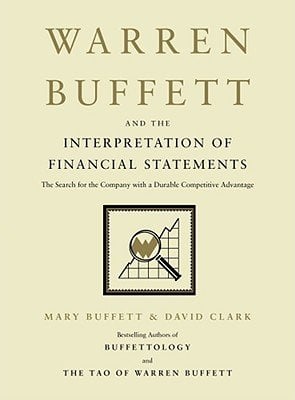
Warren Buffett and the Interpretation of Financial Statements
A financial-statement guide can help readers focus on margins, debt, cash flow and capital spending instead of headline IPO excitement. This book is most useful for readers who want a plain-language framework before reviewing a prospectus.
As an Amazon Associate I earn from qualifying purchases.
What Investors Need From The Prospectus
The public prospectus is the document that should decide whether the IPO is investable, not the launch date or the ticker.
For a buyer-aware review of this deal, the most important sections will be the financial statements, segment disclosures, customer concentration, government contract exposure, capital spending, debt and risk factors. SpaceX operates in businesses that can look very different from one another: launch services, satellite manufacturing, Starlink subscriptions, government work and future projects that may require enormous investment before producing reliable cash flow.
Investors should look for several practical answers:
- How much revenue comes from Starlink compared with launch services and government contracts?
- Is SpaceX generating free cash flow, or is growth still consuming large amounts of capital?
- How profitable is Starlink after satellite deployment, user equipment costs and network maintenance?
- How dependent is the company on NASA, defense contracts or other government customers?
- What risks does the company disclose around Starship, launch failures, spectrum rights and regulatory approvals?
- How much control will Musk and insiders retain after the offering?
- Will public shareholders receive ordinary voting power or a limited-governance share class?
Those questions matter more than whether the company is exciting. SpaceX can be a remarkable business and still be a difficult stock if the IPO valuation assumes years of flawless execution.
Possible Advantages For IPO Buyers
The bullish case is easy to understand.
SpaceX has changed the economics of launch services, built a large satellite internet business through Starlink and become deeply embedded in U.S. space infrastructure. Its reusable rocket program gives it a competitive position that few companies can match. Its launch cadence, brand recognition and government relationships could make it one of the rare newly public companies with both scale and a long runway.
A successful public listing could also give SpaceX more financial flexibility. Raising tens of billions of dollars would provide capital for Starship, Starlink expansion, satellite manufacturing, launch infrastructure and other projects tied to Musk’s long-term space ambitions.
For investors who have wanted direct exposure to SpaceX, the IPO would create the first broad public-market path. Until now, most exposure has been indirect, through private funds, secondary transactions, or public companies with only partial connections to the space economy.
There is also the potential for index-driven demand if SpaceX qualifies for fast entry into major benchmarks. That possibility could support near-term interest, especially from institutions that need exposure quickly.
The Risks Are Not Small
The bear case starts with valuation.
At a reported valuation near $1.75 trillion, SpaceX would need to justify a price normally reserved for the largest and most profitable companies in the market. Public investors will need to compare the IPO price not with older private marks, but with expected revenue growth, margins, cash generation and capital needs.
SpaceX also carries operating risks that are unusual for a company of that size. Rocket launches are technically complex. Failures can be expensive, visible and politically sensitive. Starlink depends on satellite deployment, network reliability, spectrum rights, user demand and international regulatory approvals. Future projects may require large spending long before the market can measure returns.
Musk is another factor investors cannot ignore. His leadership has helped build SpaceX into a dominant private company, but public investors will also consider key-person risk, governance, divided attention across companies and the volatility that can come with Musk-linked stocks.
There is also IPO structure risk. If insiders sell a meaningful amount, if the float is small, or if voting control remains heavily concentrated, ordinary investors may face a stock that trades with high volatility while offering limited influence.
Investor Verdict: Who The SpaceX IPO Is For
The SpaceX IPO, if it proceeds on the reported schedule, is best suited for investors who can tolerate volatility, read the prospectus carefully and separate the business from the first-day trading frenzy.
It may appeal to long-term growth investors who want direct exposure to commercial space, satellite broadband and launch infrastructure, provided the financials support the valuation. It may also attract institutions that expect SpaceX to become a major index constituent and want to build a position early.
It is less appropriate for buyers who are chasing the ticker because it is associated with Musk or because the deal is expected to be large. A record-setting IPO can still disappoint if the opening valuation is too rich or if the market prices in years of growth before public investors get a margin of safety.
| Investor type | Fit | Reason |
|---|---|---|
| Long-term growth investor | Potentially suitable | SpaceX may offer rare exposure to scaled commercial space and satellite internet. |
| Short-term trader | High risk | Early trading could be volatile and driven by allocation, hype and index speculation. |
| Income investor | Poor fit | The IPO case is growth-oriented, not dividend-oriented. |
| Valuation-sensitive buyer | Wait for filings | The reported valuation is high enough that financial details are essential. |
| Musk-focused retail investor | Use caution | Brand enthusiasm is not a substitute for understanding share structure and risk factors. |
What To Watch Next
The next major event is the public prospectus. That filing should move the story from rumor and reported timing into hard investment analysis.
Investors should watch whether the company confirms the SPCX ticker, how many shares it plans to sell, what valuation range is proposed, how much of the offering is primary capital for the company versus secondary sales by existing holders, and how much voting control remains with insiders.
The roadshow, reportedly targeted for June 4, will also matter. Strong institutional demand could push pricing toward the top of the range or above it. Weak demand could force changes to size or valuation. Either outcome would say something about how large investors view the balance between SpaceX’s growth story and its expected price.
The reported lead bookrunners include Morgan Stanley, Bank of America, Citigroup, JPMorgan and Goldman Sachs, with additional banks in smaller roles across institutional, retail and international channels. That banking lineup points to an offering designed for a very broad investor base.
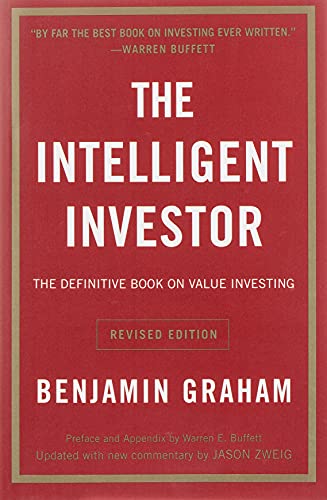
The Intelligent Investor
For readers tempted by a high-profile IPO, Graham’s margin-of-safety approach is a useful counterweight to brand enthusiasm. It is better suited to long-term investors than short-term traders.
As an Amazon Associate I earn from qualifying purchases.
Bottom Line
SpaceX appears to be moving toward a much faster public-market debut than previously expected, with a possible Nasdaq listing as early as June 12 under the SPCX ticker.
The company may be one of the most important IPOs ever, but the investment decision should still come down to ordinary discipline: price, financials, governance, growth assumptions and risk. The public filing will matter more than the launch-day excitement.
For now, the practical stance is simple. Treat the reported dates as a calendar to watch, not a buy signal. The SpaceX IPO may deserve serious attention, but it has not yet earned a blank check from public investors.