

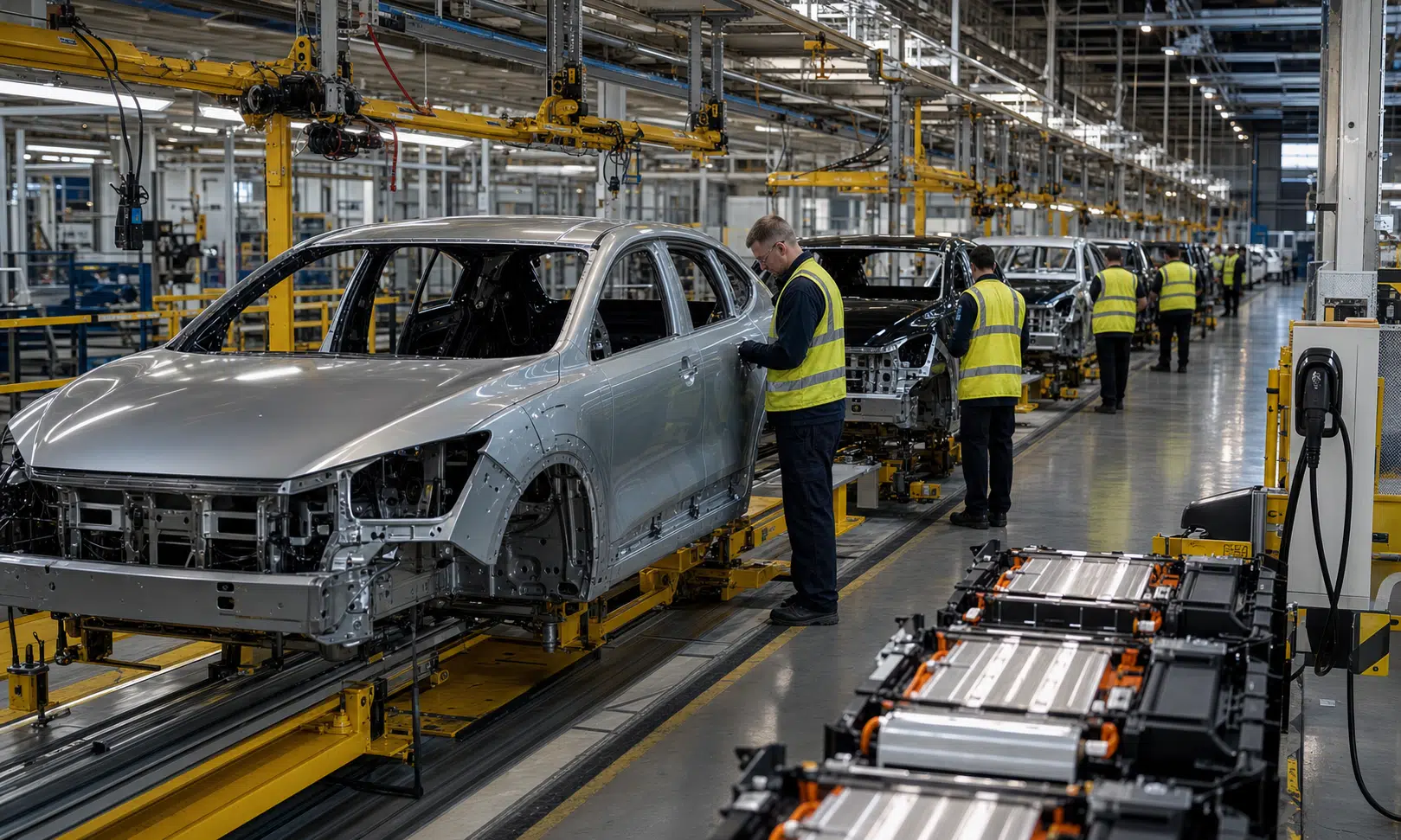

Nissan and Chery are exploring a deal that could see vehicles from the Chinese manufacturer built at Nissan’s Sunderland plant, a move that would mark a notable shift for the UK car industry if it is completed.
The Japanese carmaker has said it has signed a non-binding memorandum of understanding with Chery International UK to study contract manufacturing at the site. The discussions remain preliminary, so this is not yet a final production contract. But the proposal points to a practical answer to two pressures facing the market: spare factory capacity in Britain and the rapid rise of Chinese car brands in UK showrooms.
Under the outline being discussed, Nissan would look at producing Chery International UK passenger vehicles at Sunderland. The companies have indicated that production could begin in the 2027 financial year if the plan moves from study stage to a firm agreement. Until then, the key terms, model line-up and production volumes remain open.
For Nissan, the attraction is clear enough. Sunderland is the UK’s largest car factory and a central part of Britain’s automotive supply chain, but it has been operating below its historical peak. For Chery, local assembly would give its UK operation a manufacturing foothold at a time when its brands are becoming far more visible to British buyers.
What the Sunderland proposal would involve
The discussions centre on contract manufacturing rather than a sale of the Sunderland plant. Nissan would continue to own the factory, while studying whether it can build passenger cars for Chery International UK on one of the site’s production lines.
That distinction matters. Contract manufacturing would let Chery expand its UK presence without having to build a factory from scratch. It would also let Nissan make use of capacity at a plant that already has an experienced workforce, established supplier links and decades of high-volume production behind it.
The Sunderland factory currently builds key Nissan models, including the Qashqai, Juke and Leaf. Nissan has recently reorganised production at the site, and the proposed Chery work is being considered against that backdrop. The company has also been carrying out a wider global restructuring, making any plan that supports factory utilisation especially important for workers and suppliers in the North East.
A completed deal could support job security at a plant employing thousands of people. Union reaction has been positive, with the proposal being framed as good news for Sunderland workers and for the UK industry at a time when carmakers are dealing with weak demand, electrification costs and growing competition from China.
Still, buyers and industry watchers should treat the timetable carefully. The agreement is non-binding, and neither company has publicly confirmed the final commercial terms. It is also not yet clear which Chery, Omoda or Jaecoo models would be assembled in Sunderland, or whether the work would focus on hybrid, plug-in hybrid or fully electric vehicles.

Home EV Charger
If you are moving to a plug-in hybrid or electric car, a dedicated home charger can make daily charging easier than relying on a standard socket. Check compatibility with your vehicle, home supply and installer requirements before buying.
As an Amazon Associate I earn from qualifying purchases.
Why Chery wants a stronger UK base
Chery has been expanding in Britain through its own nameplate and through the Omoda and Jaecoo brands. Those cars have arrived as UK buyers show more interest in lower-cost electrified models, especially crossovers and family SUVs with long equipment lists.
The Jaecoo 7 has become one of the clearest examples of that push. It has drawn attention as a value-led SUV, including in plug-in hybrid form, and has helped make Chinese-built cars more visible on British roads. For buyers comparing mainstream family SUVs, the appeal is not complicated: high specification, sharp pricing and an expanding dealer presence.
Local production would add another layer to that pitch. A Chery vehicle built in Sunderland could be positioned differently from one imported from China, especially for customers who care about UK jobs, local supply chains or future parts availability. It could also help Chery respond to any future trade friction affecting imported Chinese vehicles, though the companies have not presented the Sunderland talks in those terms.
The proposal also fits a wider European pattern. Traditional carmakers are no longer only trying to defend themselves from Chinese rivals; some are exploring partnerships that turn Chinese demand and product planning into factory work for European plants. That approach can be uncomfortable for legacy brands, but it may be more realistic than leaving underused factories idle.
For Chery, Britain offers a competitive market with a strong appetite for SUVs and electrified cars. The company has also shown signs of deeper UK commitment beyond retail sales, including activity around research and development. Manufacturing at Sunderland would make that commitment more concrete.
What it means for car buyers
This is not a retail offer and it does not change what buyers can order today. Anyone considering an Omoda, Jaecoo, Chery or Nissan model should treat the Sunderland plan as industry context rather than a reason to delay a purchase.
The buyer-relevant question is longer term. If Chery vehicles are eventually built in the UK, shoppers may see changes in availability, lead times, model positioning or aftersales confidence. Local assembly can also help a new brand look less temporary in a crowded market, which matters when buyers are weighing resale values, warranty support and dealer coverage.
The tradeoff is that none of those benefits is guaranteed yet. A non-binding agreement does not confirm production volumes, model names, pricing or launch dates. It simply shows that Nissan and Chery see enough mutual interest to study the project seriously.
For now, the practical takeaways are:
- Nissan and Chery are studying a Sunderland manufacturing partnership, but no final contract has been announced.
- The proposal could bring Chery International UK passenger vehicle production to the plant from the 2027 financial year.
- The Sunderland factory would remain a Nissan-owned site under the outline being discussed.
- The companies have not confirmed which models or powertrains would be built there.
- For buyers, the news is most relevant as a sign that Chinese brands are becoming more established in the UK market.

Front and Rear Dash Cam
A front and rear dash cam can be a useful accessory when taking delivery of a new car, especially for everyday commuting and parking. Look for clear night recording, reliable storage support and a tidy fitting option.
As an Amazon Associate I earn from qualifying purchases.
The bigger industry signal
The possible Nissan-Chery deal says as much about the direction of the car industry as it does about one factory. Chinese manufacturers are no longer just exporting into Europe from a distance. They are looking for ways to become part of local manufacturing networks, while established carmakers are looking for ways to fill capacity and protect skilled jobs.
Sunderland gives that shift a symbolic weight. The plant has long been one of the UK industry’s most important manufacturing sites. If Chinese-branded cars eventually roll off its lines, it would underline how far the competitive balance has moved since Chinese brands first tried to break into Europe.
There are still important blanks. Nissan and Chery have not disclosed the financial structure of the proposed arrangement. They have not said whether Sunderland-built vehicles would be sold only in the UK or potentially exported. They have also not confirmed whether the cars would be hybrids, plug-in hybrids or electric models.
That leaves the deal in a careful middle ground: significant enough to matter, but too early to treat as settled. For workers, it offers the possibility of extra production at a major plant. For Chery, it could provide UK manufacturing credibility. For buyers, it is another sign that the next wave of mainstream cars may come from brands that are Chinese-owned, locally assembled, or both.