

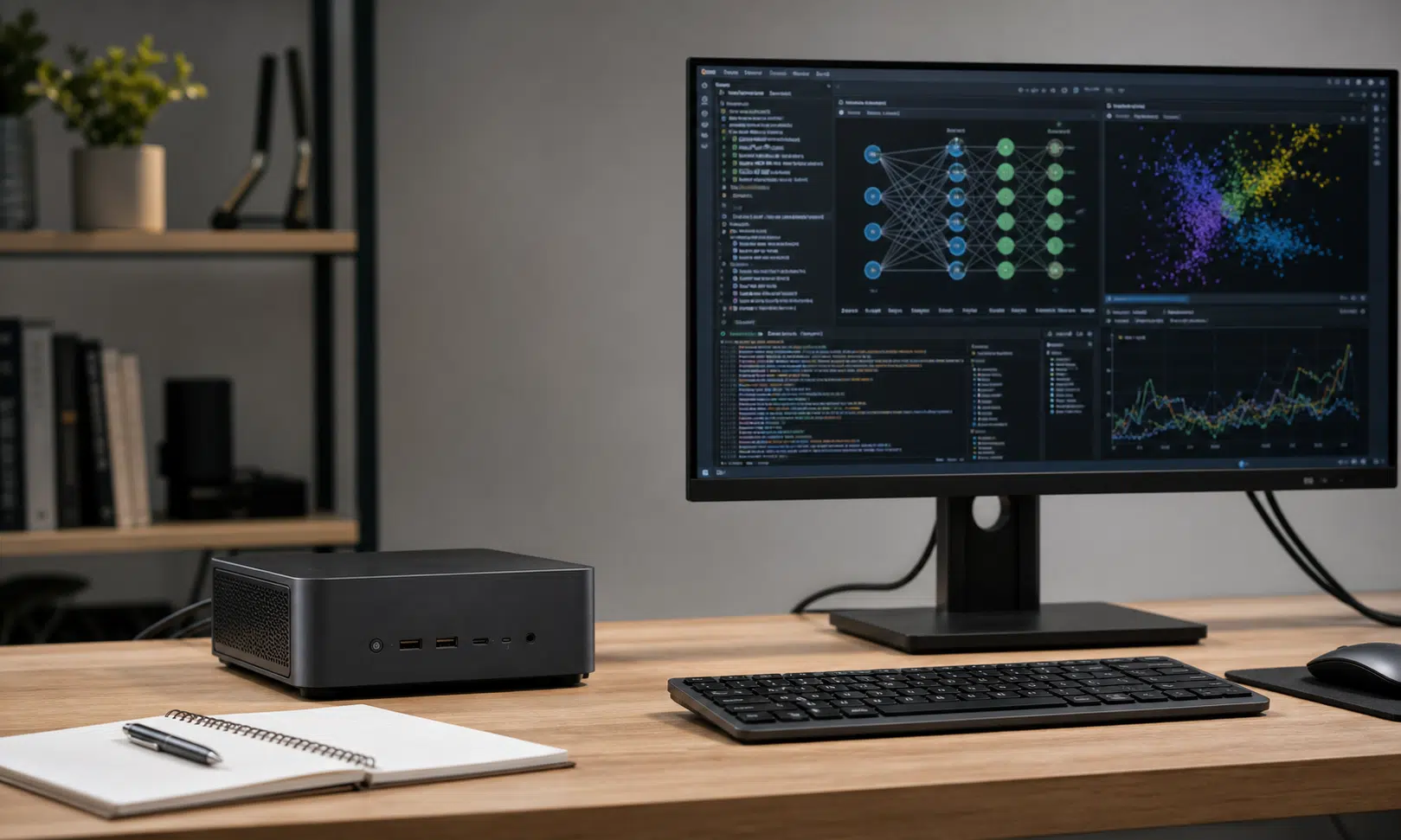

AMD’s Ryzen AI Halo AI PC is being positioned as a compact local-AI workstation for developers, creators, and small teams that want more memory than a typical mini PC without moving straight to a larger desktop or cloud-heavy workflow.
The pitch, as described in the source material, centers on a $3,999 configuration with a Ryzen AI MAX+ 395-class processor, 128 GB of memory, compact dimensions, and local model performance aimed at buyers who might otherwise look at NVIDIA’s DGX Spark or Apple’s Mac mini with an M4 Pro-class chip. Several of the most important claims around availability, comparative performance, model size support, power-cost math, and future configurations have not been independently verified here, so they should be treated as vendor or listing claims rather than settled buying facts.
That distinction matters. A machine like this is not an impulse purchase. At roughly workstation pricing, the useful question is not whether the hardware sounds impressive on paper. It is whether the configuration, software support, memory pool, and local-AI economics match a real workload closely enough to justify the upfront cost.

GMKtec EVO-X2 Ryzen AI Max+ 395 Mini PC
A Ryzen AI Max+ 395 mini PC is the most relevant hardware to compare against the source-described Ryzen AI Halo system. Confirm memory configuration, storage, ports, seller support, and software compatibility before buying.
As an Amazon Associate I earn from qualifying purchases.
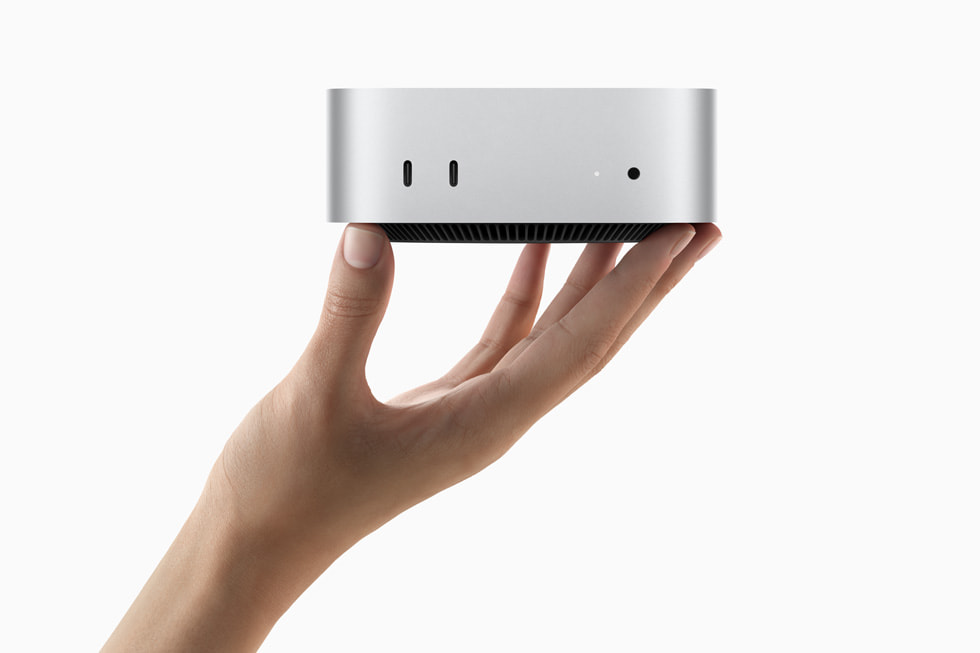
Apple Mac mini M4 Pro
The Mac mini with M4 Pro is a compact alternative for buyers who value macOS, Thunderbolt connectivity, and a polished general desktop workflow. It is not a direct substitute for a 128 GB local-AI box, so compare memory limits and model support carefully.
As an Amazon Associate I earn from qualifying purchases.
What The Ryzen AI Halo System Is Trying To Be
The Ryzen AI Halo AI PC is framed as a small-form-factor machine built around AMD’s Strix Halo platform, with the source describing a Ryzen AI MAX+ 395 configuration. The claimed specification set includes 16 Zen 5 CPU cores, 32 threads, Radeon 8060S integrated graphics with 40 RDNA 3.5 compute units, an XDNA 2 NPU rated at 50 TOPS, and a configurable power envelope of up to 120W.
Because those exact system-level details have not been independently confirmed in this rewrite, buyers should read them as the configuration described by the original report rather than a universal specification for every Ryzen AI Halo system. OEM choices, firmware limits, thermals, memory allocation, and storage configuration can all change the final experience.
The main reason this type of PC is interesting is memory. The source describes a 128 GB LPDDR5X-8000 configuration paired with 2 TB of PCIe Gen4 storage. For local AI work, system memory can be more important than a single peak benchmark number, especially when users are trying to run larger quantized language models or image-generation workflows without depending entirely on hosted services.
Claimed Specs At A Glance
| Area | Source-described configuration | Buyer note |
|---|---|---|
| Processor | Ryzen AI MAX+ 395-class SoC | Treat as listing-specific until confirmed by the seller or OEM. |
| CPU | 16 cores, 32 threads, Zen 5 | Useful for development, multitasking, and CPU-side model work. |
| Graphics | Radeon 8060S integrated GPU with 40 RDNA 3.5 compute units | Local AI performance depends heavily on software support and memory behavior. |
| NPU | 50 TOPS XDNA 2 NPU | TOPS ratings do not automatically translate into faster LLM inference. |
| Memory | 128 GB LPDDR5X-8000 | The most important practical feature for larger local models. |
| Storage | 2 TB PCIe Gen4x4 SSD | Model libraries can consume storage quickly. |
| Connectivity | USB-C, Wi-Fi 7, Bluetooth 5.4, 10 Gbps Ethernet, HDMI 2.1b | Confirm port count and display support on the exact SKU before purchase. |
| Price | $3,999 in the source report | Verify live pricing before making a purchase decision. |
On paper, the system is aimed at users who need a denser local-AI box than a mainstream mini PC. The source also describes a chassis measuring 5.9 inches by 5.9 inches by 1.7 inches, which would put it in a compact class if the retail unit matches that description. Still, size alone should not drive the buying decision. Sustained performance in a small enclosure depends on cooling, fan behavior, power limits, and firmware tuning.
Software Support Is The Real Test
The source says the Ryzen AI Halo system is intended to work with AMD’s ROCm software stack and developer tools such as LM Studio, ComfyUI, and VS Code. It also mentions optimization targets including GPT-OSS, FLUX.2, and SDXL. Those are meaningful claims for the target buyer, but they should be checked against the exact software versions a buyer plans to use.
For local AI systems, hardware specifications are only half the story. A faster processor or larger memory pool does not help much if the model loader, inference backend, driver package, or framework path does not support the workload cleanly. Buyers should look for answers to a few practical questions before treating the Ryzen AI Halo PC as a cloud replacement:
- Does the intended model run through a supported AMD path without manual workarounds?
- Can the machine keep the model in memory at the desired quantization level?
- Does performance remain stable during long inference or image-generation sessions?
- Are the needed tools supported on the buyer’s preferred operating system?
- Is the seller providing validated drivers, firmware, and recovery images?
The source positions wider OS support as one advantage over NVIDIA’s DGX Spark, but that comparison has not been independently verified here. For developers, wider OS support is valuable only if the toolchain they actually use is stable on the system. Anyone buying for production work should verify the full stack, not just the marketing line.
How It Compares With DGX Spark And Mac Mini-Class Systems
The original article frames the Ryzen AI Halo AI PC against two different kinds of alternatives: NVIDIA’s DGX Spark and Apple’s Mac mini with M4 Pro-class hardware. That is a useful comparison only if buyers separate the workloads.
DGX Spark is aimed at NVIDIA’s AI ecosystem, where CUDA support, NVIDIA tooling, and developer familiarity are major reasons to pay more. The source states that DGX Spark was priced at $4,679 and that the AMD system’s claimed $3,999 price undercuts it by $679. Since pricing and availability can change, that gap should be verified at the time of purchase.
The Apple comparison is different. A Mac mini-class system can be a strong general-purpose development and creative machine, but the source claims the Ryzen AI Halo configuration offers a higher memory ceiling and support for larger local models. Those claims have not been independently verified here, so the safer conclusion is narrower: if local model size is the deciding factor, buyers should compare memory capacity, supported model backends, and real inference results instead of relying on platform reputation.
| Buyer priority | Ryzen AI Halo angle | DGX Spark angle | Mac mini-class angle |
|---|---|---|---|
| Local LLM memory headroom | Source-described 128 GB configuration is the main draw. | Depends on NVIDIA’s exact configuration and intended stack. | Memory limits may matter for larger local models. |
| AI software ecosystem | Depends on ROCm and application support. | Strong fit for CUDA-focused workflows. | Strong general software polish, but workload-specific AI support varies. |
| Price sensitivity | Source describes a $3,999 starting point. | Source describes a higher $4,679 price. | Configuration-dependent; not always a direct AI-workstation substitute. |
| General desktop use | Likely capable, but the purchase case is local AI. | More specialized. | Often a strong everyday workstation choice. |
The Break-Even Claim Needs Careful Reading
One of the more aggressive parts of the source article is the idea that the Ryzen AI Halo system can pay for itself by shifting work away from cloud AI services. AMD is described as arguing that not every agent or workflow needs a frontier model and that some recurring AI work can be moved to local hardware.
That argument is plausible in some cases, but the specific savings claims in the source should not be treated as guaranteed. The article describes an example where a $3,999 system, plus an estimated monthly electricity cost based on sustained 150W draw, is compared with roughly $750 per month in cloud AI spending. It also describes a six-month break-even scenario and a three-year comparison against more than $25,000 in cloud costs. Those numbers have not been independently verified here.
For buyers, the safer way to evaluate the claim is to build a workload-specific cost model:
- Estimate how many tokens, images, or batch jobs are actually run each month.
- Separate tasks that require frontier hosted models from tasks that can use smaller local models.
- Measure acceptable local throughput, not just peak tokens per second.
- Include electricity, downtime, software setup, storage, and administrative time.
- Compare the result with the actual cloud services already being used.
The Ryzen AI Halo system makes the most sense where the buyer has repeated local workloads, data-control reasons to avoid cloud submission, or enough experimentation volume to justify dedicated hardware. It is a weaker fit for users who only need occasional AI output, rely on the latest hosted models, or do not want to maintain a local software stack.
Who Should Consider It
The best-fit buyer is not the average PC user. A $3,999 local-AI system is easier to justify for developers, researchers, technical creators, and small teams that already know which models they want to run and why local execution matters.
A Ryzen AI Halo AI PC may be worth considering if the following are true:
- You want to run local LLMs, image models, or AI development tools regularly.
- You need more memory than typical mini PCs provide.
- You are comfortable checking ROCm, driver, and application compatibility before buying.
- You can use local models for enough work to reduce paid cloud usage.
- You value a compact machine over a larger custom desktop build.
It is harder to recommend as a blind preorder or casual upgrade. The most important claims around model-size support, comparative speed, total cost savings, and future roadmap details remain the areas that need confirmation. A buyer who needs CUDA-first tooling may still prefer an NVIDIA-based system. A buyer who mainly wants a polished general-purpose desktop may be better served by a mainstream workstation or Mac configuration. A buyer who wants maximum performance per dollar may also want to compare other Ryzen AI MAX mini PCs before treating this specific box as the default choice.
Future Configuration Claims
The source also mentions a later Ryzen AI MAX+ 495-based variant, described as a Gorgon Halo upgrade with 192 GB of memory and support for 300B-plus models. That timeline and configuration have not been independently confirmed here, so it should not drive a near-term purchase decision unless the seller or AMD provides clear public details.
For anyone who can wait, the practical move is to compare confirmed retail units once specifications, software images, thermals, and third-party testing are available. Local AI hardware is moving quickly, and a future memory increase could matter more than a small price difference for users targeting larger models.
Verdict: Interesting Hardware, But Verify The Workload First
The Ryzen AI Halo AI PC is an interesting buyer proposition because it combines a compact footprint, a high-memory configuration, and AMD’s local-AI ambitions at a price that is presented as lower than NVIDIA’s DGX Spark. The source-described $3,999 configuration could be compelling for users who want a dedicated local AI box and can make use of 128 GB of memory.
The cautious view is also the more useful one. The strongest claims in the source are still claims: availability, exact retail configuration, comparative AI performance, break-even timing, cloud savings, and the future higher-memory model should all be verified before purchase. Buyers should treat the system less like a simple mini PC and more like a specialized workstation: start with the models, software stack, operating system, and monthly workload, then decide whether the hardware fits.
For the right developer or small team, the Ryzen AI Halo AI PC could reduce cloud dependence and make local AI experimentation easier. For everyone else, the smart move is to wait for confirmed retail specifications, independent benchmarks, and clearer software support before spending workstation money on a compact AI machine.