


The Ryzen 7 5800X3D and Core i7-14700K sit in a strange but useful comparison. One is AMD’s AM4-era gaming specialist, built around a huge slab of 3D V-Cache. The other is Intel’s newer hybrid Core i7, with far more cores, higher clocks, DDR5 support, PCIe 5.0, integrated graphics, and a much more aggressive power profile.
That makes this less of a simple old-versus-new matchup and more of a platform decision. If you already own an AM4 board and DDR4 memory, the 5800X3D can still look unusually attractive. If you are building a broader-use desktop from scratch and can absorb the cost of a stronger Intel platform, the Core i7-14700K has a much higher ceiling.
The short version: the Core i7-14700K is the better all-around processor, especially for productivity and for gaming when paired with DDR5. The Ryzen 7 5800X3D remains the more efficient, cooler-running, and often more sensible DDR4 gaming upgrade.
Specs: Intel has the much newer platform
On paper, this comparison is not especially close. The Ryzen 7 5800X3D is an 8-core, 16-thread Zen 3 processor for the AM4 socket. Its defining feature is 96MB of L3 cache, made possible by AMD’s first-generation 3D V-Cache design. It supports DDR4 memory, PCIe 4.0, and does not include integrated graphics.
The Core i7-14700K is a different kind of chip. It uses Intel’s Raptor Lake Refresh design with 8 performance cores and 12 efficiency cores, giving it 20 total cores and 28 threads. It supports both DDR4 and DDR5 depending on the motherboard, includes Intel UHD Graphics 770, and offers PCIe 5.0 support for newer platform configurations.
| CPU | Cores / Threads | Memory support | Platform | Integrated graphics | Overclocking |
|---|---|---|---|---|---|
| AMD Ryzen 7 5800X3D | 8 / 16 | DDR4-3200 | AM4 | No | Core multiplier locked |
| Intel Core i7-14700K | 20 / 28 | DDR4-3200 or DDR5-5600 | LGA 1700 | UHD Graphics 770 | Unlocked on supported boards |
For feature support alone, Intel has the clear advantage. The Core i7-14700K has more cores, more threads, higher boost clocks, integrated graphics, a newer I/O story, and conventional overclocking support. It is also more flexible because builders can choose DDR4 or DDR5, although that choice has major performance and cost implications.
The Ryzen 7 5800X3D is narrower by design. It was built to make games run faster on AM4 by leaning on cache rather than brute-force clocks or a large core count. That still matters, especially in CPU-limited games, but it does not make the chip feel modern in every category.
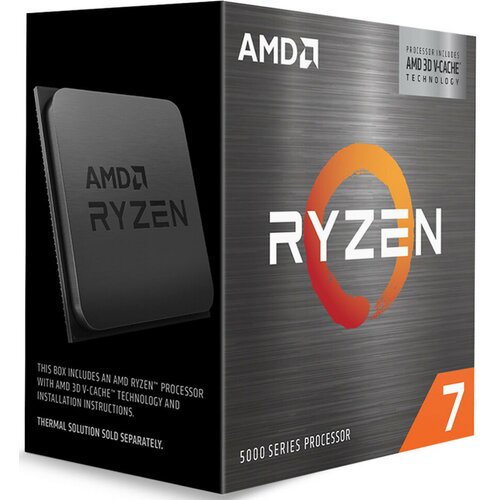
AMD Ryzen 7 5800X3D Desktop Processor
The Ryzen 7 5800X3D is the relevant choice for readers keeping an AM4 motherboard and DDR4 memory. It makes the most sense as a focused gaming upgrade rather than a new-platform productivity build.
As an Amazon Associate I earn from qualifying purchases.
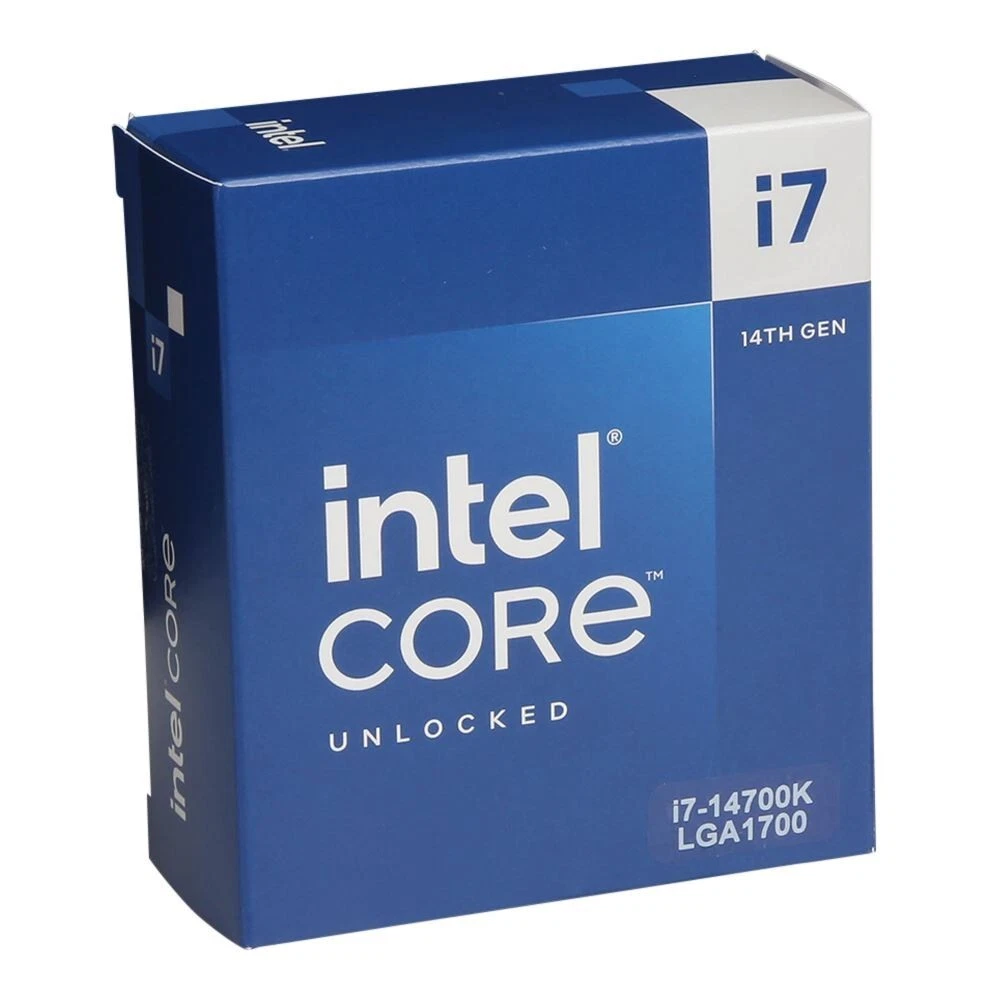
Intel Core i7-14700K Desktop Processor
The Core i7-14700K is the better fit for readers building a faster all-around desktop. It is especially relevant when paired with DDR5 memory and adequate cooling.
As an Amazon Associate I earn from qualifying purchases.
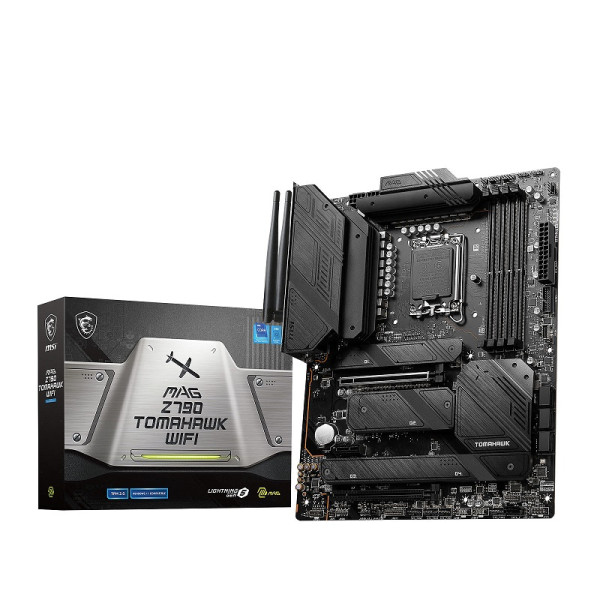
MSI MAG Z790 Tomahawk WiFi DDR5 Motherboard
A Z790 DDR5 board is the natural pairing for readers who want the Core i7-14700K to perform at its best. This type of board also supports the overclocking and higher-power behavior discussed in the article.
As an Amazon Associate I earn from qualifying purchases.
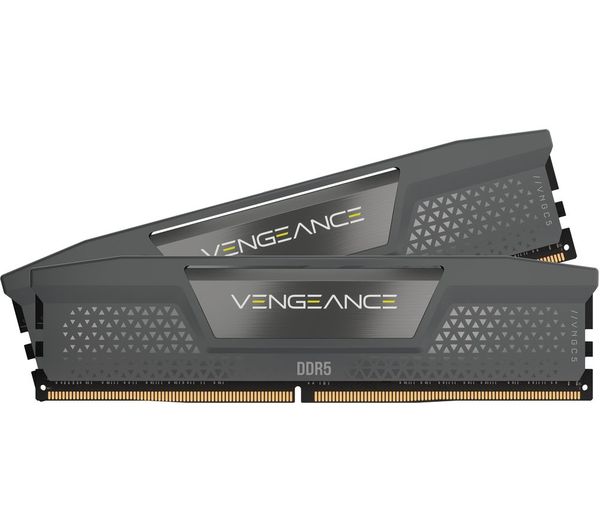
Corsair Vengeance 32GB DDR5-6000 Memory Kit
DDR5 memory is central to the article’s Intel recommendation because the 14700K’s gaming lead depends heavily on the platform around it. A 32GB DDR5 kit is a practical baseline for a modern gaming and productivity build.
As an Amazon Associate I earn from qualifying purchases.
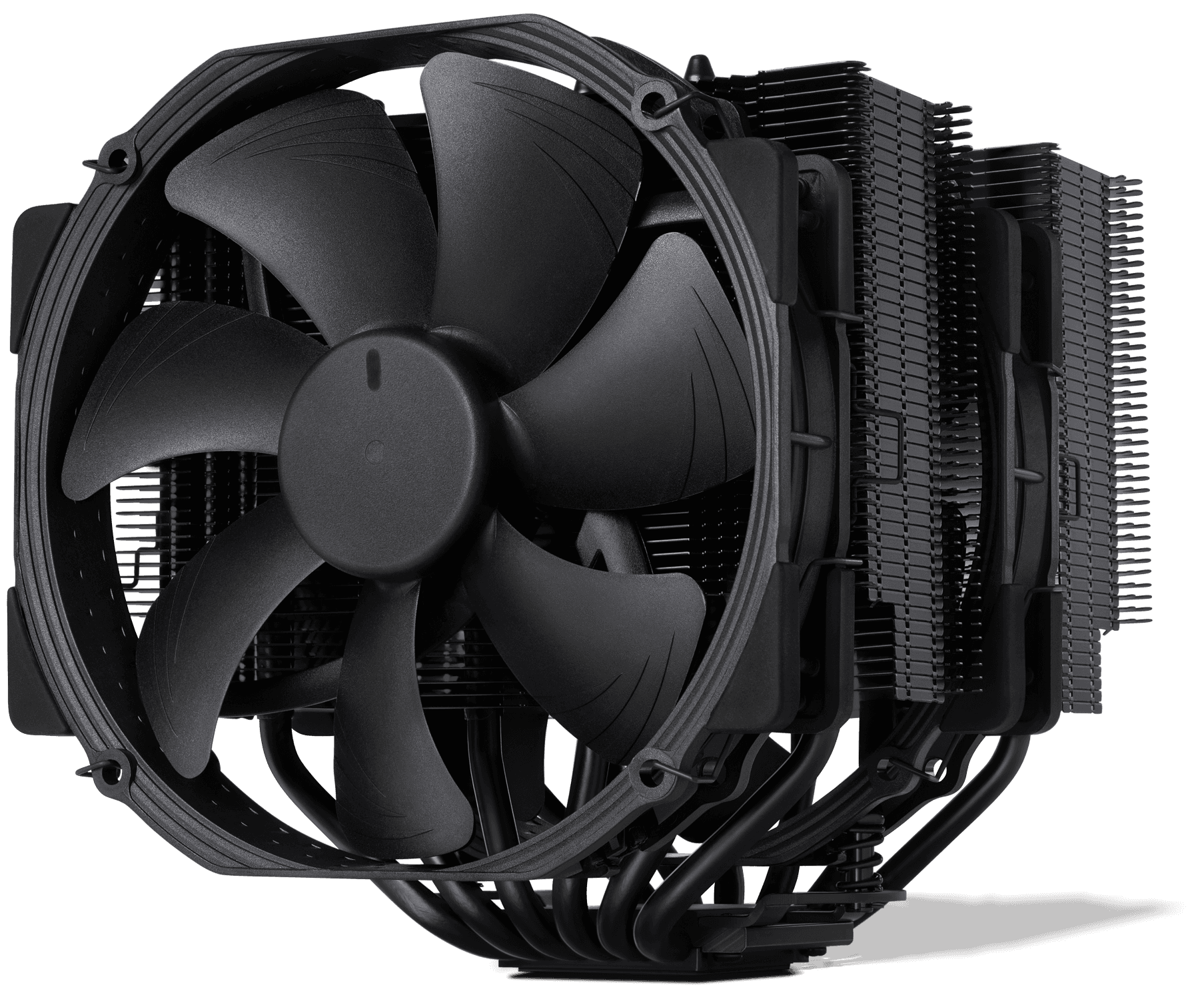
Noctua NH-D15 chromax.black CPU Cooler
A large dual-tower air cooler is a sensible match for readers considering the Core i7-14700K. It is also compatible with many AM4 and LGA 1700 builds, though case and memory clearance should be checked.
As an Amazon Associate I earn from qualifying purchases.
Gaming: DDR5 changes the entire fight
Gaming is the reason the Ryzen 7 5800X3D still belongs in this conversation. Its 3D V-Cache can help keep game data closer to the CPU cores, which is exactly why it became such a popular late-stage AM4 upgrade. In the right titles, it can still punch well above what its age and core count suggest.
But the Core i7-14700K is not just a newer CPU; it is also a chip that benefits heavily from DDR5 in gaming. In a 16-game 1080p test set designed to expose CPU differences, the DDR5-equipped Core i7-14700K averaged 166.7 FPS, while the Ryzen 7 5800X3D averaged 145.6 FPS. That puts Intel ahead by about 14.5 percent in average frame rates.
The gap was larger in 1 percent lows. The Core i7-14700K with DDR5 averaged 114 FPS in 1 percent lows, compared with 95 FPS for the 5800X3D. That is a roughly 20 percent advantage for Intel in the metric that often tracks how smooth a game feels when frame pacing gets difficult.
The comparison looks very different when the Core i7-14700K is paired with DDR4. In that setup, Intel’s advantage essentially disappears. The Ryzen 7 5800X3D edges ahead by about 1 percent in average frame rate, while the Core i7-14700K keeps only a very small lead in 1 percent lows.
That split is the most important gaming takeaway. The Core i7-14700K is the faster gaming chip when it gets DDR5. When it is forced into a DDR4 build, the 5800X3D becomes much harder to beat and may be the more rational choice for a gaming-first system.
| Gaming setup | Average FPS | 1% lows | What it means |
|---|---|---|---|
| Core i7-14700K with DDR5 | 166.7 FPS | 114 FPS | Best overall gaming result |
| Ryzen 7 5800X3D with DDR4 | 145.6 FPS | 95 FPS | Strong DDR4 gaming value |
| Core i7-14700K with DDR4 | Slightly behind 5800X3D on average | Slightly ahead in 1% lows | Performance depends heavily on the game |
Individual games also swing around more than a simple average suggests. The DDR5 Core i7-14700K posts large wins in titles such as 007 First Light, Crimson Desert, Cyberpunk 2077, Flight Simulator 24, Spider-Man 2, Starfield, The Last of Us Part One, Baldur’s Gate 3, and Counter-Strike 2.
The Ryzen 7 5800X3D has its own bright spots. With the Intel chip running DDR4, AMD leads in Baldur’s Gate 3, Crimson Desert, and Cyberpunk 2077. The 5800X3D also beats both Intel configurations in some cache-friendly cases, including F1 2024 and Final Fantasy XIV, and it performs especially well against the DDR4 Intel setup in Minecraft RT.
For buyers, that means the game library matters. If you mostly play titles that love cache, the 5800X3D can still feel surprisingly high-end. If you want the strongest average result across a broad library, the Core i7-14700K with DDR5 is the better performer.
Gaming power and thermals: AMD is much easier to live with
Raw frame rates are only part of the story. The Ryzen 7 5800X3D is dramatically more efficient in games.
During gaming tests, the 5800X3D averaged 77.5 watts. The Core i7-14700K averaged 132.4 watts with DDR5 and 155.1 watts with DDR4. Temperatures followed the same pattern: 59°C for the 5800X3D, 62°C for the DDR5 Core i7-14700K, and 80°C for the DDR4 Core i7-14700K.
That is a meaningful difference for real systems. Lower power draw usually means less heat dumped into the case, less fan noise, and less pressure to buy a high-end cooler. It also makes the 5800X3D a cleaner drop-in upgrade for many existing AM4 gaming PCs.
In FPS-per-watt terms, AMD’s advantage is clear. The 5800X3D produced 1.88 FPS per watt, compared with 1.26 for the Core i7-14700K with DDR5 and 0.93 for the same Intel chip with DDR4. Intel may win the top gaming-performance number, but AMD is far more efficient while doing its work.
Productivity: the Core i7-14700K runs away with it
The Ryzen 7 5800X3D was never designed to be a workstation bargain. It has eight Zen 3 cores, and its cache advantage does not magically turn it into a rendering or encoding monster. The Core i7-14700K, by contrast, has 20 total cores and 28 threads, and that advantage shows up immediately in multi-threaded work.
Across a multi-threaded productivity ranking, the Core i7-14700K with DDR5 scored 492 points, compared with 227 points for the Ryzen 7 5800X3D. That is a 116.7 percent lead for Intel. Even with DDR4, the 14700K still held a roughly 105 percent advantage.
The same pattern appears in specific workloads. In Cinebench 2024 multi-core, the DDR5 Core i7-14700K was 126.6 percent faster than the 5800X3D, while the DDR4 configuration still held a 107 percent lead. In POV-Ray, Intel’s lead was about 137 percent with DDR5 and 135 percent with DDR4.
Blender also favors Intel heavily. The Core i7-14700K led the Ryzen 7 5800X3D by more than 116 percent in Junkshop, Monster, and Classroom tests, with DDR4 and DDR5 results sitting close together. In HandBrake x265 10-bit encoding, the DDR5 14700K led by 90.5 percent, while the DDR4 version led by 82 percent. In x264, the DDR5 Intel setup was 105 percent faster, while the DDR4 setup held a 63 percent advantage.
Single-threaded work also favors Intel. In a single-threaded performance geomean, the Core i7-14700K was 36.6 percent faster than the Ryzen 7 5800X3D. DDR4 versus DDR5 did not materially change that single-threaded result.
This is the least ambiguous part of the comparison. If your PC does frequent rendering, compiling, encoding, decompression, or heavy multitasking, the Core i7-14700K is the better CPU by a wide margin. The 5800X3D is still useful for normal desktop work, but buying it for productivity would miss the point of the chip.
Overclocking: Intel is the only real option
The Ryzen 7 5800X3D does not support traditional core overclocking. Its core multiplier is locked, which limits the kind of manual tuning enthusiasts often expect from higher-end desktop CPUs. Memory and fabric tuning remain possible, but that is not the same as pushing the CPU cores in the usual way.
The Core i7-14700K is an unlocked K-series chip, so it is the obvious pick for overclockers. With the right Z-series motherboard, strong cooling, and careful voltage control, it gives builders access to the conventional Intel tuning playbook: multiplier adjustments, voltage changes, power-limit tuning, and memory tuning.
That does not mean overclocking the 14700K is effortless. The chip already runs with a much higher power envelope than the Ryzen part, and extra voltage can turn heat into the limiting factor quickly. A serious overclocked build needs a capable motherboard, strong VRMs, good case airflow, and a high-end cooler.
Still, this category belongs to Intel. The 5800X3D can be tuned around the edges, but the 14700K is the enthusiast chip.
Power consumption: AMD wins the efficiency fight
The Core i7-14700K’s productivity performance comes with a major power cost. The Ryzen 7 5800X3D has a 105W TDP and 142W PPT, while the Core i7-14700K has a 125W processor base power and can climb far higher under turbo behavior depending on motherboard settings.
In idle testing, the 5800X3D consumed 5 watts, while the 14700K consumed 27 watts. During active idle, such as video playback, the Core i7-14700K used 28 watts with DDR5 and 39 watts with DDR4, while the 5800X3D used 9 watts.
Under heavier all-core workloads, the gap becomes much larger. In a y-cruncher multi-threaded AVX power test, the Ryzen 7 5800X3D consumed 119 watts. The Core i7-14700K reached 335 watts with DDR5 and 307 watts with DDR4. Linpack, Cinebench, Blender, and encoding workloads showed the same basic shape: Intel is much faster, but it burns much more power to get there.
That tradeoff is not automatically bad. If a 14700K finishes a heavy task far faster, its higher instantaneous power draw may be acceptable for users who care about throughput. But for quieter systems, smaller cases, lower cooler budgets, or long gaming sessions, the 5800X3D’s efficiency is a real advantage.
In gaming, the efficiency gap is even easier to appreciate because the 5800X3D stays competitive while using far less power. It is not the fastest chip in the comparison, but it is the more elegant one from a heat and power standpoint.
Platform costs: DDR4 keeps the 5800X3D relevant
The most practical reason to consider the Ryzen 7 5800X3D is not that it beats Intel everywhere. It does not. The reason is that it can make an existing AM4 system feel meaningfully faster in games without forcing a full platform rebuild.
If you already have a compatible AM4 motherboard and DDR4 memory, the 5800X3D can be a focused upgrade. You may need a BIOS update, and you should check motherboard support before buying, but the basic value proposition is straightforward: keep the board, keep the RAM, upgrade the CPU, and get strong gaming performance with low power draw.
For a new build, the calculation gets harder. AM4 is mature and affordable, but it is not the forward-looking platform in AMD’s lineup. A buyer starting from zero should weigh the 5800X3D against newer platforms rather than treating it as the default gaming answer.
The Core i7-14700K also has two very different cost profiles. Pair it with DDR5 and a capable Z790 motherboard, and it becomes the strongest version of itself. Pair it with DDR4, and it can reuse cheaper memory, but the gaming results become much less impressive against the 5800X3D.
Cooling should be part of the budget, too. The Ryzen 7 5800X3D needs an aftermarket cooler, but it is not especially difficult to cool compared with the Intel chip. The Core i7-14700K benefits from a much stronger cooling setup, especially if you intend to run aggressive power limits or overclock.
| Buyer scenario | Better fit | Why |
|---|---|---|
| Existing AM4 gaming PC with DDR4 | Ryzen 7 5800X3D | Strong gaming uplift without a full platform swap |
| New gaming build with DDR5 budget | Core i7-14700K | Higher average gaming performance and stronger platform features |
| Gaming plus heavy productivity | Core i7-14700K | Much faster in multi-threaded and single-threaded productivity tests |
| Quiet, efficient gaming system | Ryzen 7 5800X3D | Lower gaming power draw and lower temperatures |
| Manual CPU overclocking | Core i7-14700K | Unlocked multiplier and wider tuning options |
Verdict: Intel wins overall, but AMD wins the obvious AM4 upgrade path
The Core i7-14700K is the better all-around CPU. It is faster in gaming when paired with DDR5, dramatically faster in productivity, richer in platform features, and open to conventional overclocking. If the goal is to build a high-performance desktop that handles games and serious work, Intel’s chip is the stronger pick.
The Ryzen 7 5800X3D still has a very specific job, and it does that job well. It is a strong gaming CPU for DDR4 systems, especially for people already sitting on an AM4 motherboard. It runs cooler, uses much less power, and can keep pace surprisingly well when the Intel chip is limited to DDR4.
The real decision comes down to what you are buying around the CPU. If you are keeping DDR4 and trying to extend the life of an AM4 gaming rig, the Ryzen 7 5800X3D is the cleaner and often smarter move. If you are willing to buy into a stronger Intel platform with DDR5 and adequate cooling, the Core i7-14700K is the more capable processor.
For gaming-only buyers, the 5800X3D remains a sharp upgrade when the rest of the AM4 system is already in place. For mixed workloads, content creation, compiling, rendering, and heavy multitasking, the Core i7-14700K wins decisively.
Overall winner: Intel Core i7-14700K. Practical DDR4 upgrade pick: AMD Ryzen 7 5800X3D.