

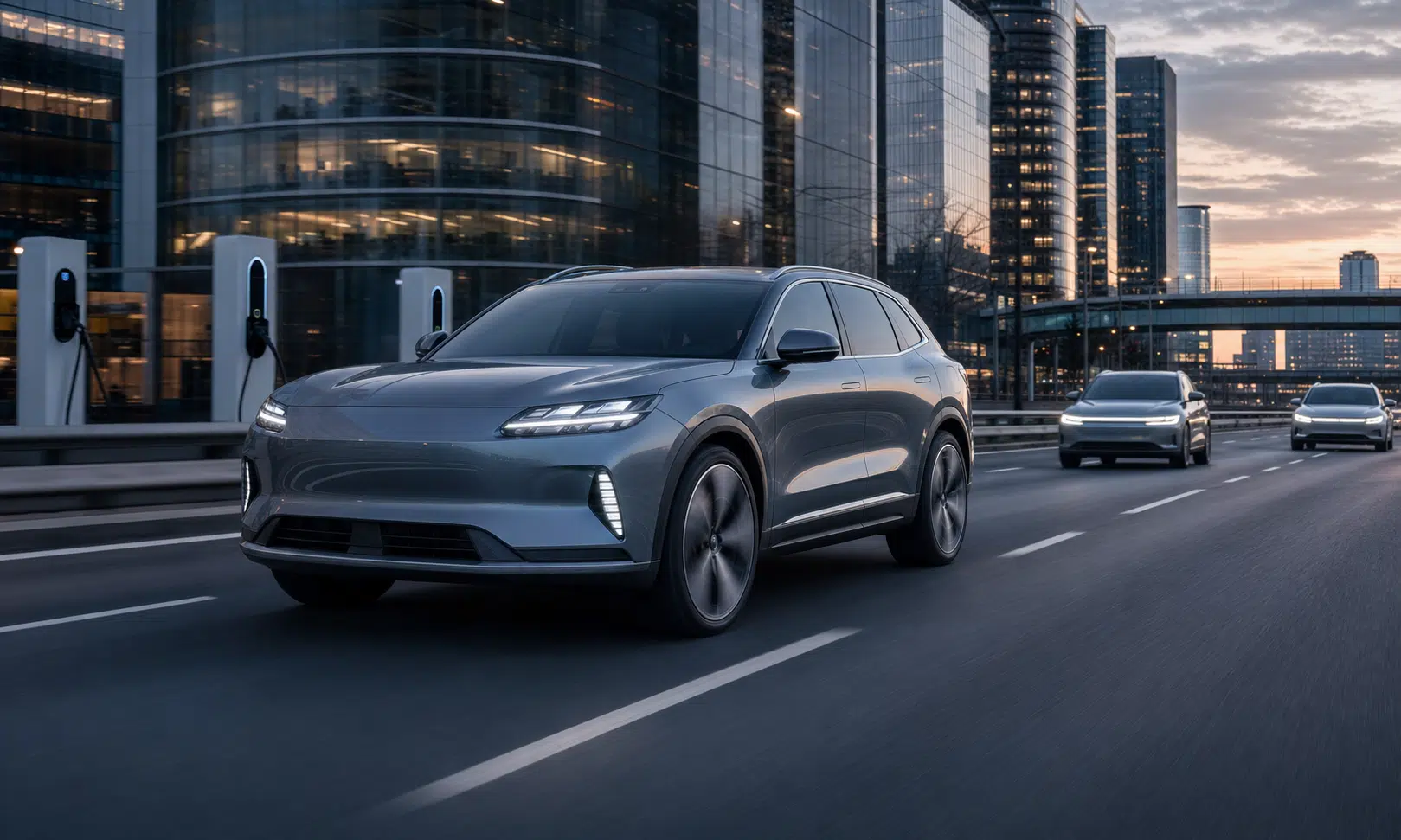

BMW’s Neue Klasse iX3 is carrying more than the usual weight of a new electric SUV. For BMW, it is the first major proof point for a platform meant to push the brand deeper into electrification and software-defined cars. For Europe’s premium auto industry, it is also a visible test of whether established luxury brands can keep their edge as Chinese EV makers move faster, price aggressively, and improve with every product cycle.
The stakes are unusually high because the contest is no longer only about battery range or badge value. Premium EV buyers are comparing software, charging speed, cabin technology, driver-assist systems, efficiency, resale value, and the basic feel of the car. BMW has strengths in several of those areas, particularly brand trust, chassis tuning, and European customer familiarity. But those advantages are being tested by Chinese manufacturers that have become harder to dismiss.
The iX3 is expected to be the first production model from BMW’s Neue Klasse push, with the upcoming i3 sedan set to follow. BMW has framed the program as a major reset for the company’s electric and digital architecture rather than a single model launch. That makes the iX3 important even for buyers who are not shopping for a midsize electric SUV: the technology inside it is meant to spread across BMW’s broader lineup over time.
A Platform Reset, Not Just Another Electric SUV
The Neue Klasse name carries history inside BMW, but this version is about the company’s next technical base. The iX3 is expected to bring together a new electric drive system, updated battery packaging, an 800-volt electrical architecture, and a more centralized computing setup. In plain terms, BMW is trying to reduce complexity while making the car quicker to charge, more efficient, and easier to update.
One of the central pieces is BMW’s so-called Heart of Joy controller. The company describes it as a core computing unit that coordinates functions that used to be handled by more separate systems, including drivetrain behavior, braking, energy recuperation, and stability control. The goal is not just cleaner electronics architecture; it is a more tightly integrated driving experience.
That matters because BMW’s strongest argument in the premium EV market is not simply that it can build an electric car. Plenty of companies can do that now. BMW’s argument is that it can make an EV that still feels like a BMW while giving buyers the modern interface, efficiency, and charging performance they expect from a next-generation vehicle.
The company’s Gen6 electric drive technology is also expected to use cylindrical battery cells and improved packaging. BMW has said this new generation should improve efficiency and charging performance, though real-world testing will matter more than headline claims. EV range figures have always needed context, especially at higher motorway speeds, in cold weather, or under heavy load.
China’s Premium EV Push Is Getting Harder to Ignore
BMW is not launching the Neue Klasse iX3 into a quiet market. It is entering a European EV segment where Chinese brands are no longer distant curiosities. XPeng, Zeekr, NIO, BYD, and other China-backed or China-based brands are pushing into Europe with feature-rich electric models, long-range claims, fast-charging promises, and prices designed to pressure established rivals.
For many European buyers, those names are still less familiar than BMW, Mercedes-Benz, Audi, Porsche, Volvo, Lexus, Hyundai’s Genesis brand, or Tesla. That gap in recognition remains a real advantage for traditional premium automakers. A luxury car purchase still depends heavily on trust, dealer support, perceived quality, and resale value.
But the gap is narrowing. Chinese manufacturers have shown they can iterate quickly, respond to software trends, and move new products into market with unusual speed. Their challenge in Europe is not only to build competitive vehicles, but to persuade buyers that the ownership experience, reliability, service network, and long-term value can match the established premium brands.
That is where BMW still has room to defend itself. European buyers often value predictable controls, refined ride-and-handling balance, and cabins that feel familiar without being dated. A car can have a giant screen and impressive acceleration and still fall short if the interface is awkward, the driver-assist behavior feels rough, or the physical controls are too sparse for daily use.
The pressure is still real. Chinese EV makers do not need to take the entire premium market to change its economics. Even modest share gains can squeeze margins, force price reactions, and make legacy automakers spend more aggressively on software, batteries, and platform development.
The Competitive Set Is Crowded
The iX3’s most direct rivals will include the usual premium and near-premium electric SUVs and crossovers. Audi, Mercedes-Benz, Porsche, Volvo, Polestar, Lexus, Genesis, and Tesla all have models that overlap with parts of the iX3’s expected territory. The Tesla Model Y remains a particularly important benchmark because of its scale, charging ecosystem, and pricing flexibility.
Chinese challengers add another layer. Models such as the XPeng G9, Zeekr 7X, NIO EL8, and BYD Tang show how wide the competitive field has become. They may not all target the same buyer in the same way, but together they point to the broader problem for European automakers: premium EV competition is now global, software-heavy, and more price-sensitive than traditional luxury segments used to be.
| BMW iX3 pressure point | Why it matters |
|---|---|
| Charging and efficiency | Premium EV buyers expect long-distance usability, not just strong brochure numbers. |
| Software integration | Chinese brands often move quickly on digital features, while legacy brands must simplify older architectures. |
| Driving feel | BMW can still use handling, braking feel, and ride balance as a premium differentiator. |
| Brand and resale value | Established trust may help BMW hold customers even as newer rivals undercut on price. |
BMW’s Advantage Is Real, But Not Permanent
BMW’s position is stronger than many legacy automakers because it already sells a meaningful number of electrified vehicles in Europe and has kept its premium identity intact during the transition. The brand has not had to choose between being a traditional luxury automaker and an EV company; it has been trying to be both.
That balance is difficult to maintain. In China, European premium brands have faced tougher local competition from companies that understand domestic software expectations, move quickly, and often price with more urgency. Europe is a different market, but the same pattern could appear there if Chinese brands build confidence and distribution over time.
The iX3 therefore has to do several jobs at once. It must be efficient enough to compete on the numbers. It must charge quickly enough to feel modern. It must offer a cabin and interface that feel advanced without alienating buyers who still want familiar controls. And it must preserve the driving character that gives BMW a reason to charge premium prices in the first place.
The risk for BMW is not that the iX3 fails because one Chinese rival beats it on a single specification. The bigger risk is that the premium EV market becomes a constant comparison spreadsheet, where range, charging speed, screen size, driver-assist capability, and monthly payments start to matter more than heritage. BMW needs the Neue Klasse cars to make the brand feel technically current, not merely prestigious.
Europe’s Automakers Face a Broader Software Problem
The iX3 also reflects a larger industry shift. European automakers are trying to fund EV platforms, battery work, software teams, and driver-assist development while still supporting combustion-engine lineups. That split is expensive and strategically awkward. It gives newer EV-focused rivals a cleaner path, even if those rivals face their own challenges with profitability, service, and brand trust.
Regulation will also shape the contest. European policy can support domestic manufacturing and slow some competitive pressure, but it can also add cost or complexity for automakers already trying to move faster. The region’s car industry is still one of its most important industrial pillars, which makes the arrival of stronger Chinese EV competition a political issue as much as a product issue.
For buyers, the near-term result is likely to be more choice and sharper competition. For BMW, Mercedes-Benz, Audi, Porsche, and other premium brands, it means the old formula needs updating. A respected badge, a refined cabin, and a well-tuned chassis still matter. They just no longer close the argument by themselves.
The Neue Klasse iX3 is BMW’s answer to that new reality. It does not need to defeat every rival on every metric to succeed. It does need to prove that a legacy premium automaker can move into the next phase of EV development without losing the qualities that made its cars desirable in the first place.