

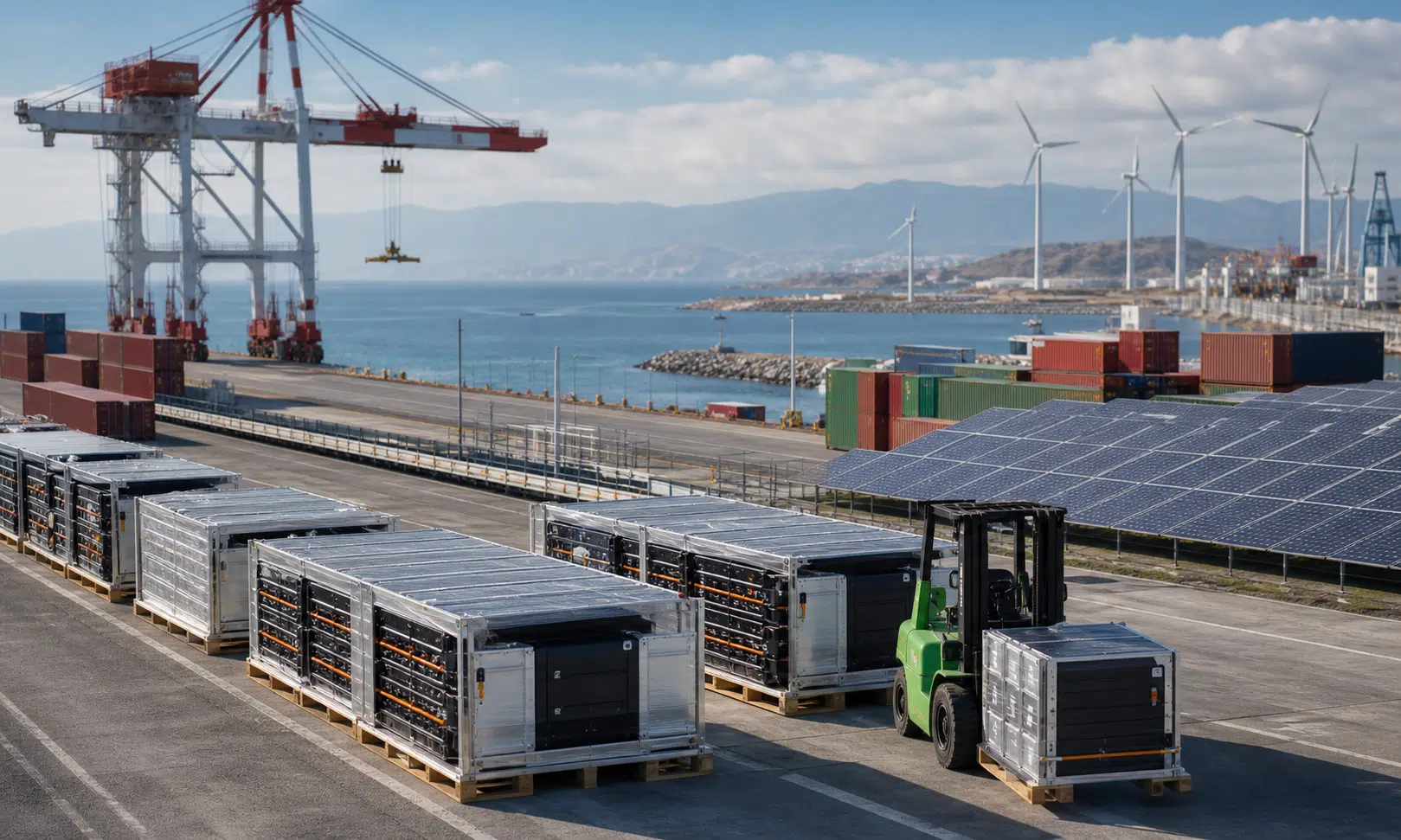

Morocco is drawing closer attention from companies and policymakers looking at China’s green industrial expansion, particularly in renewable energy, battery materials and electric vehicle supply chains. A recent Stimson Centre analysis frames the country as a potentially important platform for Chinese clean-tech activity, although several of the investment claims around specific projects and long-term strategic outcomes remain difficult to independently verify from the supplied source alone.
For buyers, suppliers and investors, the important question is not whether Morocco has suddenly become the single answer to China’s green manufacturing ambitions. It is whether the country offers enough practical advantages to justify closer supply-chain evaluation: location, port access, industrial capacity, minerals, trade links and relative political stability.
Why Morocco Is Being Watched
The commercial case starts with geography. Morocco sits close to Europe, has established export routes and is connected to major logistics infrastructure, including the Tanger Med port area. For manufacturers trying to serve European markets without relying only on production in East Asia, that proximity can matter.
The country is also widely associated with phosphate resources and has an automotive manufacturing base, both of which are relevant to the broader clean-tech economy. Phosphates matter to battery and fertiliser supply chains, while automotive capacity can make it easier for component suppliers to cluster near existing assembly and export operations.
Chinese companies have reportedly shown interest in Moroccan renewable energy, battery and EV-related operations since Morocco joined China’s Belt and Road Initiative in 2017. However, the scale and pace of that increase should be treated carefully unless confirmed by project-level disclosures, company filings or government investment data.
Buyer Decision Factors
For companies assessing Morocco as a sourcing, manufacturing or investment option, the appeal is strongest where location and diversification matter as much as direct production cost.
| Decision factor | Why it matters | Practical caution |
|---|---|---|
| Access to Europe | Shorter routes may support faster export cycles into nearby markets. | Trade-rule compliance and local-content requirements still need careful review. |
| Industrial zones | Areas near major ports may offer logistics and supplier clustering advantages. | Capacity, utilities and permitting conditions can vary by site. |
| Energy transition | Renewable energy ambitions may help clean-tech manufacturers reduce exposure to carbon rules. | Grid capacity and transmission constraints remain key due-diligence questions. |
| Battery and EV supply chains | Morocco may fit companies seeking production closer to European customers. | Specific supplier claims should be verified before procurement decisions. |

Logistics and Supply Chain Management
For teams comparing Morocco against other sourcing or manufacturing locations, this logistics reference can help frame route design, sourcing, resilience and customer-service tradeoffs. It is best suited to readers who want a broader operating model rather than country-specific market data.
As an Amazon Associate I earn from qualifying purchases.
A useful buying-guide lens is to separate strategic potential from operational readiness. Morocco may be attractive on paper because it combines location, minerals and industrial policy. But buyers still need to test whether a specific facility, supplier or industrial zone can meet delivery timelines, quality standards, energy needs and export documentation requirements.
Where the Risks Sit
The supplied article points to energy security and infrastructure as the main caveats. Morocco still depends on imported energy, which can expose manufacturers to fuel price swings and regional disruption. Renewable capacity may be expanding, but the supplied material says transmission infrastructure remains a constraint; that should be treated as a risk area for buyers rather than a settled conclusion without further verification.
Middle East conflict and wider geopolitical uncertainty are also part of the discussion. Some companies are looking for ways to diversify production and reduce exposure to vulnerable shipping lanes or concentrated manufacturing hubs. Morocco could fit that strategy for certain sectors, but it should not be treated as a risk-free substitute for existing Asian, European or Middle Eastern supply chains.
Who Should Pay Attention
Morocco is most relevant for companies that need a North African or near-Europe manufacturing option tied to clean energy, EV components, battery inputs, automotive parts or export logistics.
- Procurement teams should use Morocco as a comparison market when evaluating supplier diversification.
- Battery and EV companies should verify project claims, ownership structures and local processing capacity before committing.
- Investors should look closely at grid access, port connectivity, incentives and political-risk protections.
- Manufacturers serving Europe should examine rules of origin, customs treatment and carbon-reporting exposure.

The Handbook of Lithium-Ion Battery Pack Design
Readers assessing battery-related supplier claims may benefit from a technical grounding in lithium-ion pack components, terminology and design constraints. This is most useful for engineering, procurement or investment teams that need to ask sharper supplier due-diligence questions.
As an Amazon Associate I earn from qualifying purchases.
The practical verdict: Morocco looks like a credible market to study for green manufacturing diversification, especially for companies with European exposure. But the strongest claims around China’s strategy, specific project stakes and the pace of investment should be handled as reported analysis rather than confirmed operating reality. For buyer decisions, the next step is not broad enthusiasm; it is supplier-level due diligence, infrastructure checks and contract-by-contract risk assessment.