

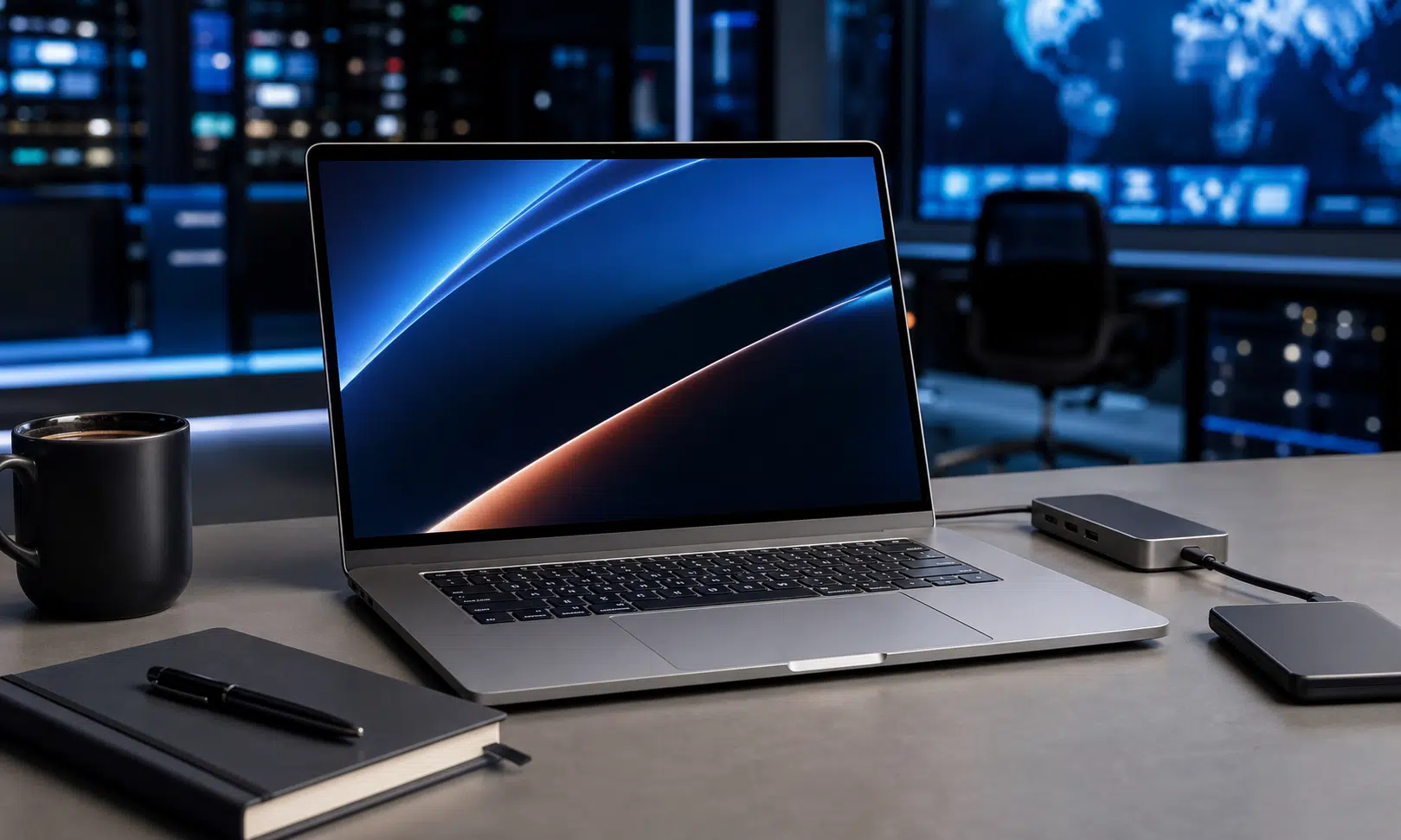

Apple has not announced a MacBook Ultra, and there is no confirmed launch date, price, or specification sheet. Still, the idea of an “Ultra” MacBook has become a useful way to think about where Apple could take its laptop lineup next: not as a simple replacement for the MacBook Pro, but as a possible higher-end tier for people who want new hardware ideas before they reach the mainstream.
That distinction matters. MacBook Pro buyers are usually not shopping for a concept device. They need predictable performance, strong battery life, dependable ports, a high-quality display, and a machine that can sit at the center of a serious work setup for years. A rumored MacBook Ultra, if Apple ever chooses to build one, would likely be judged by a different standard. It would need to offer something meaningfully new without repeating the mistakes that made some past MacBook changes controversial.
For now, the practical question is not whether you should wait for a MacBook Ultra. A firm timeline has not been publicly confirmed. The better question is what these rumors suggest about Apple’s laptop direction, and whether any of the rumored features are important enough to affect your next MacBook purchase.
What a MacBook Ultra Could Mean
The “Ultra” name already carries a specific meaning inside Apple’s product family. Apple uses it for products that sit above the standard line and are aimed at buyers who want a more specialized, premium device. That does not prove a MacBook Ultra is coming, but it explains why the rumor is getting attention.
If Apple applied that approach to the MacBook, the MacBook Pro would likely remain the familiar professional laptop: powerful, practical, and designed around work that benefits from sustained performance. A separate Ultra model could give Apple room to test more ambitious hardware ideas without forcing every professional user into the same changes.
That would be important because MacBook Pro customers tend to be cautious for good reasons. Many use their laptops for software development, video editing, design, audio production, business travel, or other work where stability matters more than novelty. A new tier could, in theory, let Apple separate experimental features from the machine many people buy because it is proven.
This is also why MacBook Pro users are watching the rumor closely. They are not necessarily eager to abandon the Pro line. They want to know whether a future Ultra model would introduce features that later become standard across Apple laptops, or whether it would remain a premium niche product for early adopters.
Why Apple Might Keep It Separate From the MacBook Pro
Apple has already lived through the risk of moving too aggressively with the MacBook Pro. The 2016 MacBook Pro redesign removed several familiar features and leaned into a thinner, more streamlined direction. Many users objected to the loss of ports, the keyboard direction, and the feeling that the machine had become less practical for professional workflows.
Apple later changed course with MacBook Pro models that brought back several work-focused features, including more useful built-in ports and a keyboard design that users broadly preferred. That history is relevant because it shows how sensitive the Pro audience can be when Apple changes the fundamentals of a work machine.
A separate MacBook Ultra would give Apple a cleaner path. Instead of turning the MacBook Pro into a test platform for every new idea, Apple could keep the Pro line focused on established needs while placing riskier design choices in a more expensive, more clearly experimental model. That would make the buying decision easier: choose the Pro if you want a known professional tool, or consider the Ultra if you want the newest hardware ideas and accept the trade-offs that may come with them.
Rumored Features Worth Watching
None of the widely discussed MacBook Ultra features have been confirmed by Apple. They should be treated as possibilities, not promises. Even so, they point to the kinds of changes that would make an Ultra model feel different from the current MacBook Pro.
- OLED display: An OLED screen could bring deeper blacks, higher contrast, and a more modern visual experience. For creative users, the appeal would depend on Apple’s calibration, brightness, longevity, and how the panel handles professional color work.
- Touchscreen support: A touchscreen MacBook remains one of the biggest open questions. It could help with sketching, quick controls, and direct interaction, but it would also challenge long-standing assumptions about how macOS is meant to be used.
- A new camera or display cutout design: Some rumors have pointed to interface changes inspired by Apple’s other devices. Until Apple shows hardware, this is best understood as speculation about how the company might rethink the top edge of the display.
- Cellular connectivity: Built-in mobile data would be genuinely useful for frequent travelers, field workers, and anyone who does not want to rely on tethering. The real value would depend on battery impact, carrier support, and pricing.
- Thinner and lighter hardware: A slimmer premium MacBook could be appealing, but only if it does not compromise cooling, ports, keyboard comfort, or battery life in ways that professional users would notice.

Apple 14-inch MacBook Pro
For buyers who need a dependable work laptop now, the current 14-inch MacBook Pro is the closest practical reference point. It fits the article’s focus on sustained performance, a strong display, ports, and long-term professional use.
As an Amazon Associate I earn from qualifying purchases.
The most interesting point is not any single feature. It is the mix. A MacBook Ultra would need to feel like a coherent product, not a MacBook Pro with a few expensive experiments attached. Apple would have to decide whether the device is for creative professionals, executives and frequent travelers, developers who want the best screen and connectivity, or enthusiasts who want the most advanced Mac regardless of cost.
MacBook Pro vs. Rumored MacBook Ultra
Because Apple has not confirmed the Ultra model, any comparison has to stay cautious. The MacBook Pro is a real product line with a clear role. The MacBook Ultra is still a rumored concept. That said, the difference in buyer mindset is easy to outline.
| Buyer priority | MacBook Pro | Rumored MacBook Ultra |
|---|---|---|
| Reliability | Established choice for demanding work | Unconfirmed, likely more experimental if released |
| Performance expectations | Built around professional workloads | Would need to justify a higher position with more than design changes |
| New hardware ideas | Usually adopts mature features | Could be used for newer display, connectivity, or form-factor ideas |
| Price sensitivity | Already premium, but available in multiple configurations | Rumored to be positioned above the Pro line, though pricing is not confirmed |
| Best fit | Users who need a dependable main work machine | Early adopters willing to pay for new features and accept unknown trade-offs |
That comparison also explains why a MacBook Ultra would not have to replace the MacBook Pro to matter. It could influence the Pro line over time. If Apple tests OLED, cellular connectivity, or a new physical design in a premium model and the response is strong, some of those ideas could eventually move into broader MacBook models.
The Price Question
Pricing is one of the least certain parts of the rumor cycle. Some speculation has pointed to a very expensive starting price, but Apple has not confirmed a MacBook Ultra or any official pricing. Buyers should be careful with exact numbers until there is a public announcement.
Still, an Ultra-branded MacBook would almost certainly be positioned as a premium device. That means the value case would need to be stronger than “newest and thinnest.” A high price would be easier to justify if the machine delivered a better display, better mobility, premium materials, longer battery life, or a feature set that solves real problems for people who work away from a desk.
For most buyers, that makes the current MacBook Pro the safer reference point. If you need a machine now, it is better to evaluate the models Apple actually sells than to delay a purchase around an unconfirmed product. If your current MacBook still handles your workload and you are specifically interested in OLED, touch, or built-in cellular, then watching the next product cycle may make sense.
The Trade-Offs Apple Would Have to Solve
A thinner, more futuristic MacBook sounds attractive, but laptop design is always a negotiation. Smaller bodies can make heat harder to manage. New displays can affect battery life. Cellular hardware adds convenience but also introduces carrier complexity and power demands. Touchscreens can be useful, but only if the operating system and app experience make them feel natural rather than bolted on.
These are not reasons a MacBook Ultra could not work. They are the reasons Apple would need to be precise about who it is for. A frequent traveler may accept fewer ports if the device is lighter and has cellular connectivity. A video editor may care more about sustained performance and display accuracy than thinness. A developer may prefer battery life, keyboard comfort, and external monitor support over a more experimental design.

Anker 555 USB-C Hub
A compact USB-C hub can make a MacBook setup easier to use with HDMI displays, USB accessories, Ethernet, and memory cards. It is most useful for readers who move between a desk setup and travel bag.
As an Amazon Associate I earn from qualifying purchases.
That is where the MacBook Pro has an advantage. Its role is already clear. A MacBook Ultra would need to earn its place by solving problems that the Pro does not, rather than simply looking more advanced.
Should MacBook Pro Users Wait?
For most people, the answer is no: do not delay a needed laptop purchase based only on MacBook Ultra rumors. Apple has not publicly confirmed the product, the launch window, the specifications, or the price. If your current machine is slowing down paid work or daily productivity, a current MacBook Pro is the more practical decision.
The case for waiting is narrower. It may be reasonable if your current laptop is still fine, you are not under pressure to upgrade, and the rumored features directly match what you want from your next Mac. Built-in cellular, a possible OLED display, or a radically lighter design could be worth monitoring if those features would change how you work.
The MacBook Ultra idea is compelling because it suggests Apple may be looking for a way to separate bold laptop experiments from the dependable MacBook Pro formula. That would be good for buyers. Pro users could keep choosing the stable workhorse, while early adopters could choose a more ambitious model if Apple decides to build one.
Until Apple says more, the MacBook Ultra should be treated as a rumor with interesting implications, not a product to plan a purchase around. The smart move is to watch the direction of the rumors, understand the trade-offs, and buy based on the work you actually need your MacBook to handle.

Twelve South Curve Flex Laptop Stand
An adjustable laptop stand helps align a MacBook screen with an external monitor or camera height during longer work sessions. It is a practical add-on for readers using a MacBook as the center of a desk setup.
As an Amazon Associate I earn from qualifying purchases.