


ASUS positioned the ROG Equalizer cable as a safer 12V-2×6 PCIe power option for high-power graphics cards, but an early burn report has complicated that pitch before the cable has reached every market as a standalone product.
The report, said to originate from a Chiphell post and later shared by UNIKO’s Hardware, appears to show a damaged ROG Equalizer connector. That visual claim has not been independently verified, and the available report does not include the full set of details needed to diagnose the failure with confidence: the GPU model, power supply model, load conditions, installation history, cable routing, connector seating, or confirmation from ASUS.
That makes this a buyer-relevant warning, not a confirmed product verdict. A burned connector is exactly the kind of failure the ROG Equalizer is meant to help avoid, but one incomplete report cannot prove a design defect on its own.
What ASUS Says The Cable Is Designed To Do
ASUS markets the ROG Equalizer as a 600W-rated GPU power cable with increased wire capacity. The company lists 17A per line compared with 9.2A for conventional cables, though that figure has not been independently verified in the available report.
The company also says the design is meant to reduce uneven current distribution across the connector and lower GPU power connector temperatures under heavy load. ASUS claims the cable can keep connector temperatures below the 105C material limit in its own imbalance test, but that testing claim should be treated as a manufacturer claim unless independently reproduced.
The basic idea is straightforward: if the load is spread more evenly across the connector, individual pins and wires should be less likely to run unusually hot. That matters because high-power GPU connectors can be sensitive to poor seating, uneven contact, cable strain, and heavy sustained loads.
For buyers, the important distinction is that a safety-focused cable is not a license to ignore the rest of the power chain. The GPU, PSU, connector seating, cable compatibility, and sustained power draw still matter.
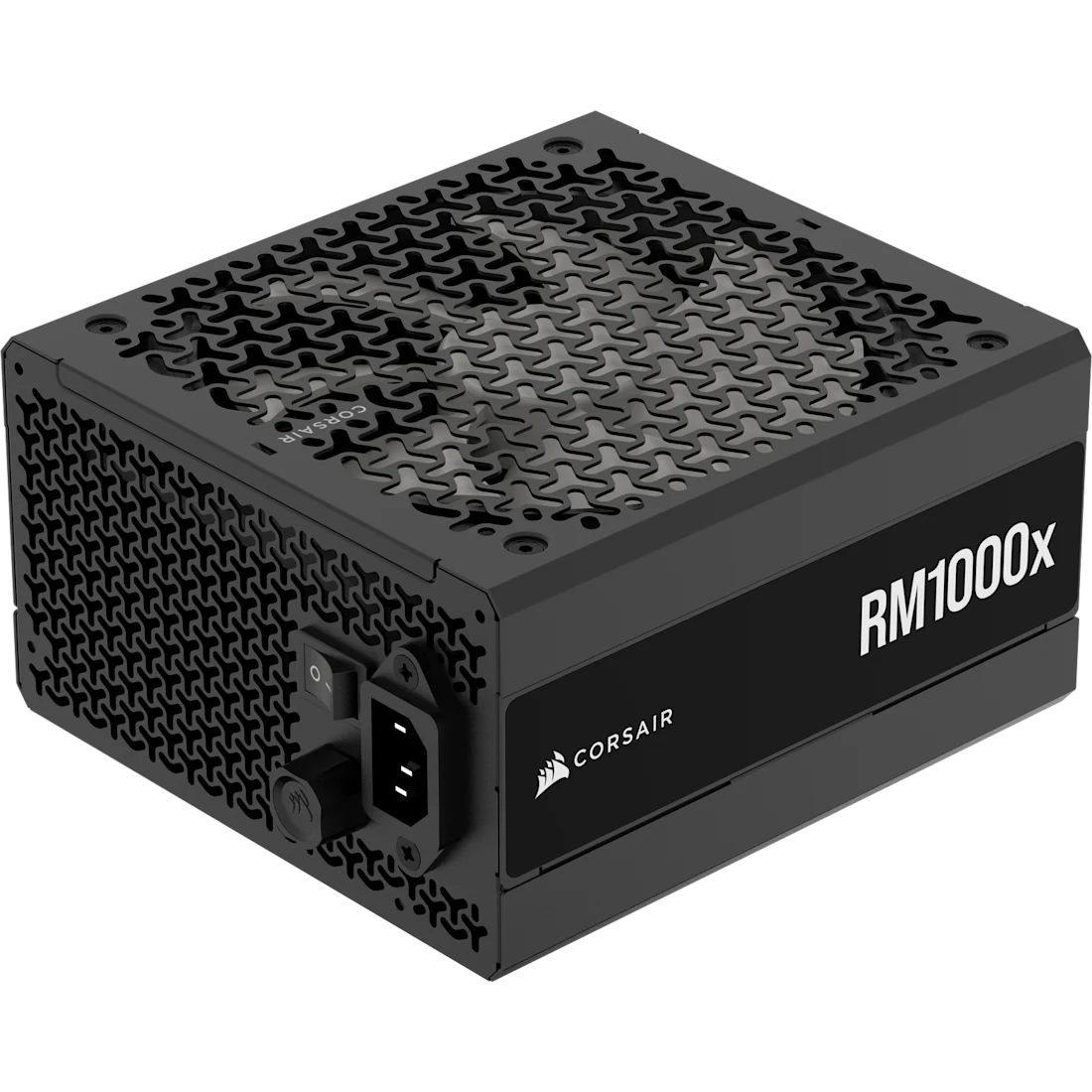
Corsair RM1000x ATX 3.1 1000W PSU
A modern ATX 3.1 power supply with a native 12V-2×6 GPU cable can reduce adapter clutter and make compatibility checks simpler. Confirm wattage needs, GPU requirements, and cable support before installing any high-power graphics card.
As an Amazon Associate I earn from qualifying purchases.
What The Burn Report Does And Does Not Show
The reported incident is concerning because it involves the exact category of failure the cable is supposed to reduce. But the public information is too thin to assign blame cleanly.
| Question | What is known from the report | Why it matters |
|---|---|---|
| Was the cable damaged? | The shared image appears to show connector damage, but it has not been independently verified. | The visual is relevant, but the source chain is incomplete. |
| Which GPU was used? | Not clearly provided in the available report. | Different cards can place very different demands on the power cable. |
| Which PSU was used? | Not clearly provided in the available report. | PSU-side compatibility and cable matching are critical for modular power cables. |
| What load was applied? | Not clearly provided in the available report. | Sustained load, transient load, or abnormal testing could change the diagnosis. |
| Did ASUS confirm the failure? | No confirmation from ASUS is included in the available material. | Without inspection, the root cause remains uncertain. |
Possible explanations include a severe overload, a problem elsewhere in the power path, incomplete connector insertion, PSU-side or GPU-side failure, cable damage before use, or intentional abuse. None of those possibilities has been verified, so they should not be treated as conclusions.
Availability And Price Matter For Buyers
The timing is awkward for ASUS because the ROG Equalizer has been described as being in a staged rollout rather than universally available as a standalone cable. ASUS has also indicated that distribution can vary by region, while selected ROG Thor III and ROG Strix Platinum power supplies are expected to bundle the cable in select markets from Q2 2026. A firm retail timeline for every region has not been publicly confirmed in the provided material.
The cable is described as officially priced at $50 in the US, but that pricing claim has not been independently verified here. Even at that price, the decision is not simply whether the cable sounds technically better than a conventional lead. Buyers need to know whether it is compatible with their exact PSU, whether it is available in their region, and whether ASUS has responded to the reported failure.
Practical Buyer Takeaway
The ROG Equalizer remains an interesting answer to a real problem: high-power GPU connectors can fail badly when current distribution, contact quality, or installation conditions go wrong. ASUS’ claimed 600W rating, higher per-line capacity, and lower-temperature imbalance testing all speak directly to that concern.
But the first reported burn case, even if incomplete, is enough reason for buyers to slow down. Until there is more information, the careful position is simple: do not treat the ROG Equalizer as a guaranteed fix for every 12V-2×6 risk, and do not treat this single report as proof that the cable design is defective.
Anyone considering the cable should check three things before buying or using it:
- Confirm that the cable is intended for the exact ASUS PSU or bundle being used.
- Inspect connector seating carefully at both ends, especially on high-power GPUs.
- Watch for an ASUS response or additional verified reports before drawing a firm conclusion.
For now, the report is best read as an unresolved warning sign. The cable may still prove useful if ASUS’ design claims hold up, but buyers should wait for clearer evidence before assuming it eliminates the connector-burning risk it was built to reduce.