


A motion sensor that never needs a battery sounds like a small thing until you imagine installing hundreds of them. Doors, drawers, toilet seats, faucets, gym equipment, storage shelves, public bins, and industrial cabinets all become harder to monitor when each sensing point needs wiring, charging, pairing, or periodic maintenance.
Georgia Tech researchers are exploring a much simpler approach: a passive metal tag that makes a distinctive ultrasonic sound when it is struck. The tag has no battery, no radio, no electronics, and no active power source. Instead, its shape does the work.
The research project, called SoundOff, uses small metal rings with carefully designed cutouts. When one of these tags is hit by a matching tab, it rings at ultrasonic frequencies above normal human hearing. A nearby microphone, such as one in a wearable device or phone-class hardware, can listen for that brief sound and identify which tag produced it.
That makes the idea less like a conventional smart sensor and more like an acoustic barcode for physical motion.
How the Passive Ultrasonic Tag Works
The core device is described as a small, flat metal tag shaped somewhat like a washer, with a hole in the center and cut patterns around its outer edge. According to the researchers, those geometric details affect the frequencies the tag emits when it is struck.
That is the useful trick. Many objects make sound when hit, but the SoundOff approach uses geometry to make that sound identifiable. Two tags made from the same material can produce different ultrasonic signatures if their shapes are different enough.
The team used modeling and simulation tools to generate tag designs associated with particular ultrasonic frequency patterns. In the research description, they report identifying more than a thousand possible tag geometries and fabricating a smaller set for testing. The New Atlas source article says 15 distinct metal tags were built, each with its own ultrasonic fingerprint.
In practical terms, the system is meant to work as a contact sensor. A tag sits on a base attached to one side of an object, such as a cabinet frame or door frame. A small tab is attached to the moving part, such as the cabinet door or drawer. When the object opens or closes, the tab hits the tag. The tag emits a short ultrasonic pulse, and software classifies the sound.
That means the tag does not have to sense motion continuously. It only has to make a recognizable sound at the moment of contact.
Why This Matters for Smart Homes
Most smart home sensors still come with maintenance attached. Wired sensors need a place to connect. Battery-powered sensors are easier to place, but eventually they need charging or replacement cells. That is manageable for a few devices. It becomes irritating when a home, rental property, care facility, workshop, or warehouse needs dozens or hundreds of sensing points.
A passive tag changes the economics. The research team describes the tags as small, low-cost, and easy to manufacture. They are also inherently quiet to people because the useful signal is ultrasonic rather than audible.
That does not mean the system is magic. It still needs a microphone and software somewhere nearby. The listening device supplies the computation and power. But moving the expensive, powered part away from each individual sensing point is the value. Instead of putting a smart electronic module on every door or drawer, a space could use many cheap passive tags and a smaller number of listening devices.
For a buyer or product planner, that distinction matters. The tag itself is not a complete consumer sensor in the way a packaged contact sensor from a smart home brand is. It is a component-level idea that could feed into future smart home systems, assisted living products, building automation, or inventory tracking setups.

Aqara Door and Window Sensor
Passive ultrasonic tags are still a research concept, but a Zigbee contact sensor can monitor doors, windows, cabinets, or drawers today. It is the closer retail equivalent when the goal is logging open and closed events rather than detecting general room motion.
Potential Uses Around the Home and Beyond
The clearest uses are places where two parts already come together with repeatable contact. Doors and drawers are obvious examples. A tag could identify that a specific cabinet opened, a particular room door closed, or a storage drawer was accessed.
The researchers also point to faucets, toilet lids, windows, and exercise equipment. In an elder-care setting, for example, a system could log routine household interactions without using cameras. In a gym, a tag-based setup could count repetitions when equipment makes repeatable contact. In an archive or warehouse, opening a particular shelf, bin, cabinet, or box location could create an identifiable event.
The key limitation is that this is not a general-purpose motion detector like a PIR sensor watching a room. It is better understood as a contact-triggered acoustic marker. It works best when the monitored action reliably causes a tab or moving surface to strike the tag.
That makes it especially interesting for objects that already move in predictable ways. It is less suited to tracking free-form motion unless the system is designed around repeatable contact points.
For related context, see Microsoft Copilot Is Showing Up on LG TVs After Updates.
Privacy and Maintenance Advantages
One practical appeal of passive ultrasonic sensing is that it can avoid some of the privacy concerns tied to cameras and always-on environmental monitoring. The system is not trying to visually interpret a room. It is listening for short ultrasonic signatures from known tags.
That does not remove every privacy question. Any microphone-based system deserves careful design, clear local processing rules, and limits on what is recorded or transmitted. But the concept is narrower than camera-based activity recognition, and that narrowness may be useful in homes, care environments, and shared buildings.
The maintenance story is also strong. A passive metal tag has no firmware, no battery chemistry, and no charging cycle. The moving tab and mounting base would still need to survive repeated use, and real products would need to prove durability in dusty, humid, noisy, and high-traffic settings. Even so, taking batteries out of each sensor point is a meaningful advantage.
There is also an environmental angle. Large sensor deployments can create a steady stream of small batteries and discarded electronics. A sensing architecture built around passive tags could reduce that burden if it reaches commercial form.
What Still Needs to Be Proven
The research is promising, but it should not be treated as a finished retail product. The source article describes a research prototype, not a boxed smart home kit that buyers can install today.
Several practical questions would matter before this becomes a mainstream product. How far can the listening device be from the tag in normal homes? How many tags can be used in one room before identification gets messy? How well does the system handle overlapping events, soft contact, loose mounting, pets, HVAC noise, music, or appliances? How often do tabs miss the tag after months of use?
The researchers report that the ultrasonic signals remain distinguishable in noisy environments, and their project materials describe evaluations of the tags and recognition system. That is encouraging. Still, commercial buyers would need installation guidance, accuracy guarantees, enclosure options, app support, and compatibility with platforms such as Home Assistant or larger building systems.
The manufacturing side also matters. If these tags can truly be produced at very low cost, the concept could scale well. If precise fabrication drives costs higher, the appeal narrows. The best use cases may be the ones where replacing batteries is especially expensive, inconvenient, or risky.
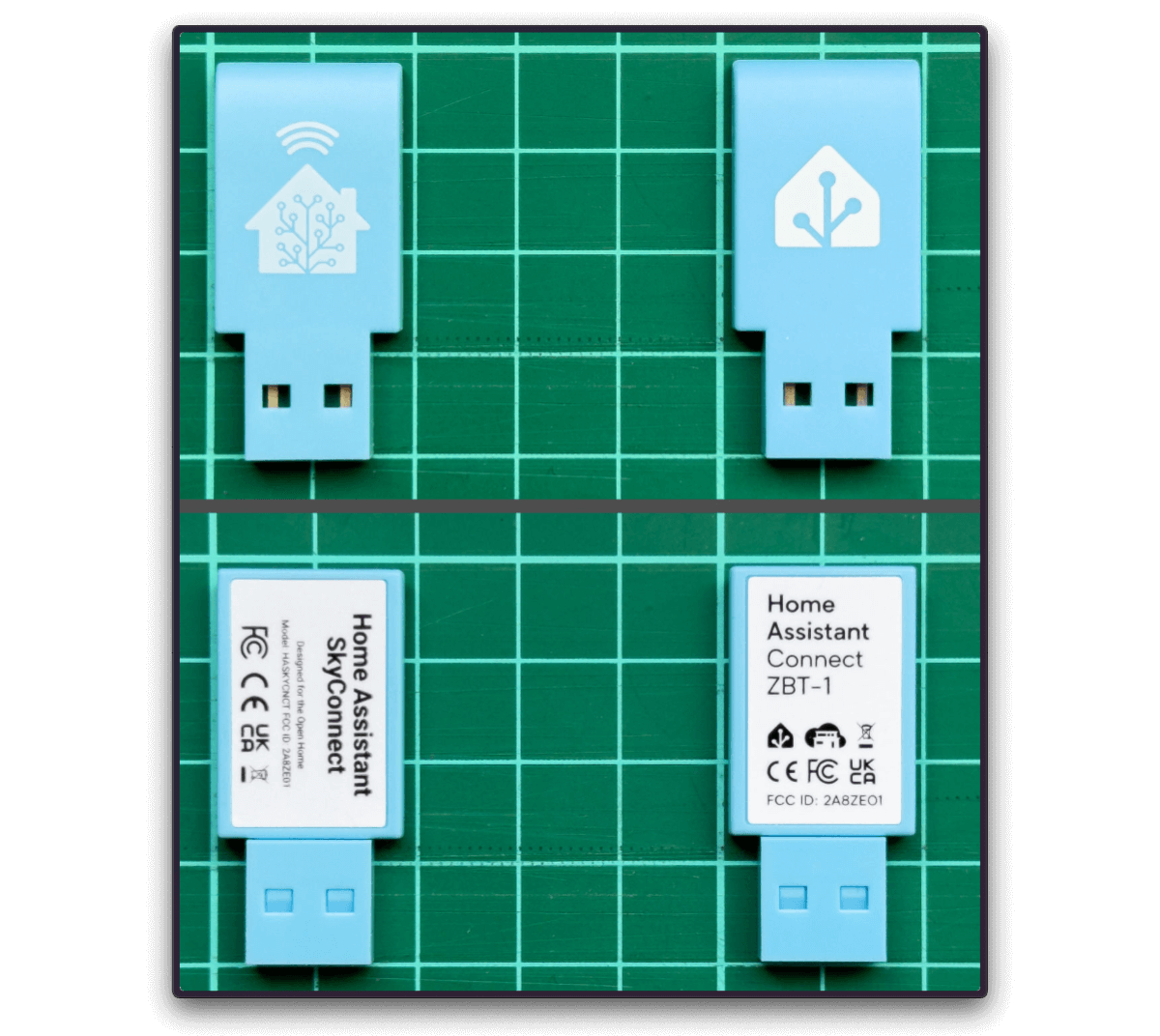
Home Assistant Connect ZBT-1
Readers experimenting with current smart home sensors may need a compatible radio adapter before adding Zigbee or Thread devices to Home Assistant. This does not replace passive ultrasonic tags, but it supports the kind of hub-based sensor network discussed in the article.
The Bottom Line
SoundOff is a clever reminder that not every smart sensor needs to be electronic at the edge. Sometimes the simplest sensing element can be mechanical, passive, and cheap, with the intelligence handled elsewhere.
For now, this is best viewed as a research-stage sensing method with strong commercial potential. It could be useful anywhere a repeated physical action needs to be logged without putting a powered sensor on every object. Smart homes are the easy example, but care facilities, gyms, warehouses, archives, and public infrastructure may be just as relevant.
If the system proves reliable outside the lab, tiny ultrasonic tags could become a practical way to make ordinary objects report what happened without asking each one to carry a battery.