


smart home sensors are useful because they quietly handle small household decisions in the background. They can help lights respond to occupancy, thermostats react to conditions, and routines trigger when doors, cabinets, or fixtures are used.
The tradeoff is maintenance. A connected home can end up with a long list of battery-powered sensors, and each one eventually needs charging or replacement. That is a nuisance for a few devices and a real chore when sensors are scattered across doors, drawers, rooms, and appliances.
A research project from a Georgia Institute of Technology-led team points to a different approach. The system, called SoundOff, uses passive ultrasonic tags that can identify everyday interactions without batteries, radios, or onboard electronics.
How SoundOff Works
SoundOff tags are tiny mechanical structures designed to make ultrasonic sound when they are disturbed through ordinary use. The sound is above 20 kHz, outside the normal range of human hearing, and each tag is shaped to produce its own acoustic signature.
That means a tagged object can announce itself mechanically. Opening a cabinet, lifting a toilet lid, turning a faucet handle, or swinging a door could cause a tag to vibrate in a way that a nearby receiver can recognize.
Unlike a conventional smart home sensor, the tag itself does not need a circuit board, battery, wireless radio, or firmware. It is closer in spirit to a carefully engineered metal washer than to a small computer.
The receiver or hub listens for these narrow ultrasonic signatures and matches them to known objects. Instead of asking a smart sensor to measure, process, and transmit data, SoundOff moves much of the intelligence into the physical design of the tag and the signal processing used to identify it.
Why It Matters for Existing Homes
The most obvious advantage is maintenance. A passive tag does not need to be charged, paired like a typical wireless accessory, or periodically opened to replace a battery. Once attached to an object, it could keep working as long as the mechanical structure remains intact.
That could make retrofitting a home much simpler. Rather than replacing ordinary items with smart versions, a homeowner or installer could add tags to the things already in place.
- Cabinets and drawers could report when they are opened.
- Doors could trigger routines without a powered contact sensor.
- Fixtures such as faucets or toilet lids could become detectable without embedded electronics.
- Furniture and household objects could be identified through normal movement.

Aqara Door and Window Sensor P2
For a current off-the-shelf option, a contact sensor can detect when a door, window, cabinet, or drawer opens and use that event to trigger routines. This type of sensor still uses electronics and a battery, so it is best viewed as today’s practical alternative rather than the passive approach described in the research.
As an Amazon Associate I earn from qualifying purchases.
The source research also points to a low potential cost per tag because the hardware is passive and simple. That does not mean SoundOff is ready to replace commercial smart home gear today, but it does show why passive sensing is attractive: the cheaper and simpler each sensor becomes, the easier it is to put sensing in more places.
A More Private Kind of Sensing
SoundOff also takes a different path on privacy. Many smart home systems rely on cameras, microphones, or cloud-connected devices that can collect sensitive information about people and their routines.
This system is narrower. Its detector listens for specific ultrasonic patterns produced by the tags, rather than trying to interpret speech, images, or general room audio. That does not remove every possible privacy concern from a connected home, but it reduces the amount of personal data the sensing system needs in order to work.
The approach may also avoid some of the complexity found in modern sensing platforms. Instead of depending heavily on machine learning models, large training datasets, and cloud processing, SoundOff is built around engineered acoustic fingerprints that can be recognized with more direct signal-processing methods.
The Design Challenge
The clever part is not just that the tags make sound. It is that many tags can be made distinct enough for a receiver to tell them apart.
To support that, the researchers developed a physics-based simulation and modeling pipeline. The goal is to predict how different tag shapes will sound before they are fabricated, making it possible to test large numbers of potential designs digitally and choose combinations with reliable, separate signatures.
That matters because a practical home system would need more than one or two tags. It would need to recognize many objects in the same environment without confusing a cabinet for a door or a faucet for a drawer.
Still Research, Not a Product
SoundOff is still a research project, so it should not be treated as a drop-in replacement for the smart home sensors people can buy now. Questions such as receiver placement, background noise, tag durability, installation, and real-world reliability would all matter before a system like this could become a consumer product.
Still, the idea is compelling. If smart homes are going to spread beyond a handful of powered sensors, the sensors themselves need to become cheaper, less intrusive, and easier to maintain. Passive ultrasonic tags suggest one possible route: replace some of the tiny electronics in the home with simple physical objects that identify themselves when used.
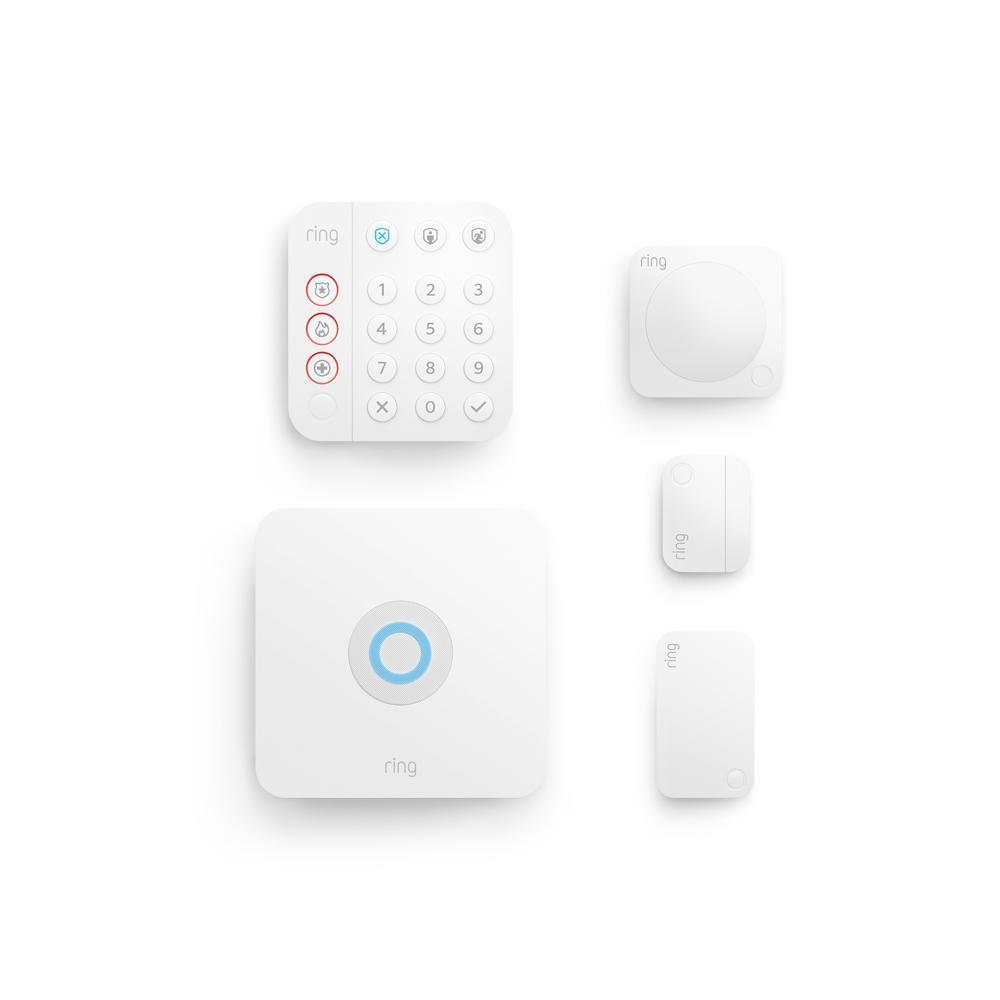
Ring Alarm 5-Piece Security Kit
A starter kit is a more complete option if the goal is to monitor a few entry points and add motion detection in one purchase. It is more hardware-heavy than passive tags, but it is available now and designed for everyday home installation.
As an Amazon Associate I earn from qualifying purchases.