

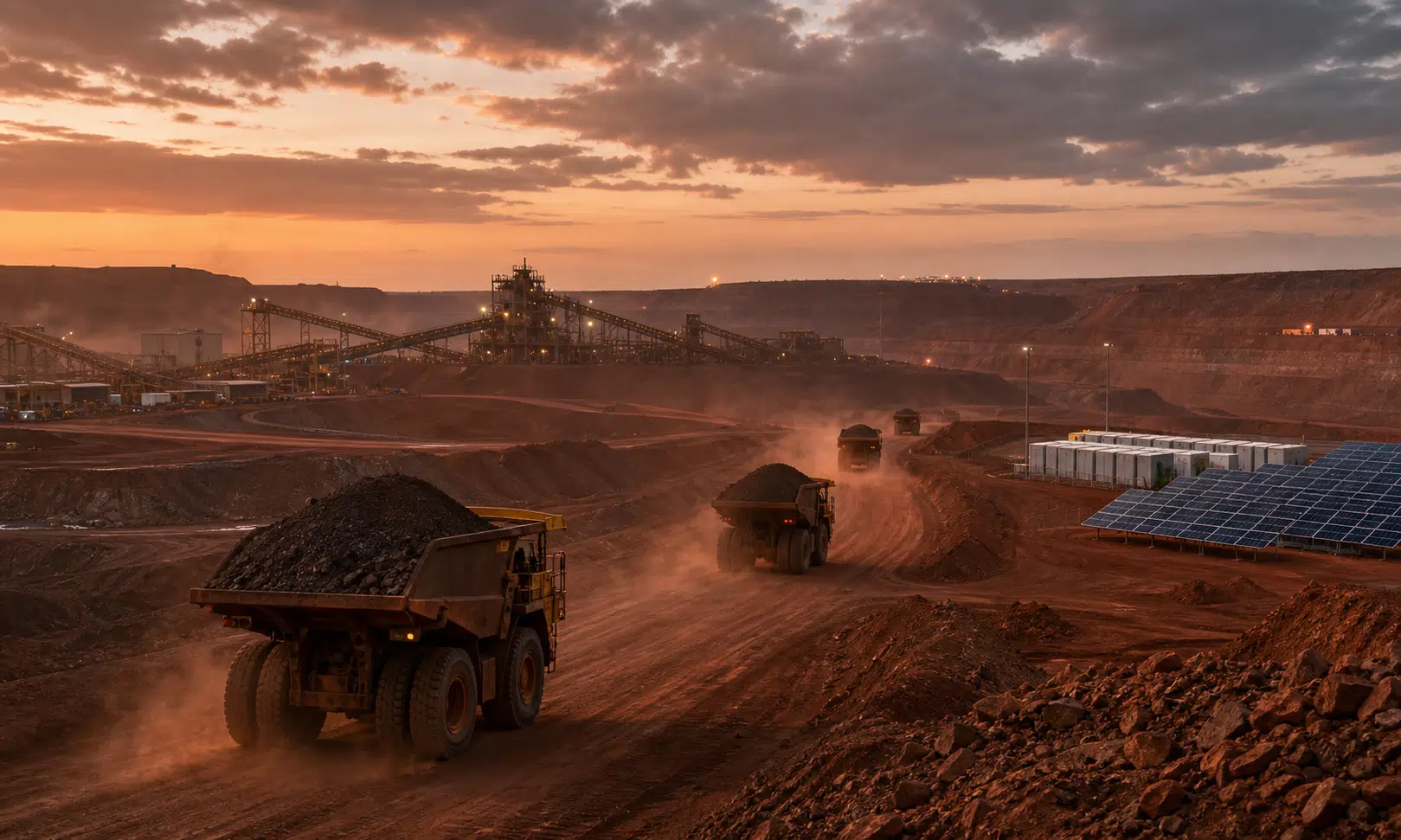

Leaked internal BHP documents suggest the world’s largest miner has slowed or shelved several major decarbonisation projects in Western Australia, creating a sharper gap between its public climate commitments and the timing of investment in its iron ore operations.
The documents, reported from a cache of internal files, indicate that BHP considered ways to delay major climate spending in the Pilbara well into the 2030s and possibly beyond. They also show internal concern that delays could create reputational risk and affect the company’s licence to operate.
For investors, procurement teams and customers exposed to steel and mining supply chains, the issue is not simply whether BHP still has a net zero target. The practical question is whether its near-term capital spending, truck purchases and energy projects are moving quickly enough to support that target.
Verdict: A Climate Strategy That Now Looks More Conditional
BHP says it remains focused on its emissions goals and has cut operational emissions by 36% from 2020 levels. It also says several technologies needed by the mining industry, including large battery-electric haul trucks, are not yet ready to deploy at scale.
That defence matters. Mining decarbonisation is not a simple equipment swap, especially in the Pilbara, where haulage, rail, power and processing systems operate at enormous scale. But the leaked files point to a more difficult buyer-side conclusion: BHP’s climate pathway appears increasingly dependent on future technology readiness, later capital allocation and delayed fleet transition.
For a buyer, investor or lender assessing BHP exposure, the company still has major climate commitments on paper. The risk is that the delivery schedule now looks less certain, especially for its Western Australian iron ore business.
What The Leaked Files Say Was Delayed Or Shelved
The documents describe several projects that had been part of BHP’s Pilbara decarbonisation effort. The most immediate was a planned 50MW solar farm and 20MW battery at the Jimblebar mine. According to the leaked material, the project had been approved and funded by the board in mid-2023, then was effectively shelved soon afterwards.
Another larger renewables plan, involving almost 500MW of solar, wind and battery capacity, appears to have been pushed much further out. The documents say the project would not progress in its existing form and had no capital funding allocated until 2031 at the earliest. Earlier planning had pointed to first power from December 2027.
BHP also reportedly dropped an iron ore processing plant that could have reduced annual emissions by 1.7m tonnes. The company had previously described the plant as aligned with its climate transition plan and stated decarbonisation goals.
The leaked records also raise questions about haulage. Diesel trucks are among the biggest sources of emissions in BHP’s mining operations. The company had planned to begin replacing diesel haul trucks with electric alternatives from 2027-28, but the documents indicate it has continued buying diesel trucks for long-term use, including more than $500m of new diesel haulage equipment for Jimblebar.
| Area | Original climate relevance | Status described in leaked files | Why buyers and investors should care |
|---|---|---|---|
| Jimblebar solar and battery | 50MW solar farm and 20MW battery for mine power | Reportedly shelved after board approval and funding | Raises governance questions around approved climate capital |
| Pilbara renewables system | Almost 500MW of solar, wind and battery capacity | No capital funding until 2031 at the earliest | Delays lower-emissions power for iron ore operations |
| Iron ore processing plant | Potential reduction of 1.7m tonnes of emissions a year | Reportedly dumped | Removes one of the more material near-term abatement options |
| Diesel haul trucks | Fleet electrification expected to begin from 2027-28 | New long-term diesel purchases reported | May lock in emissions and delay operational change |
The Buyer Decision: Is BHP Still A Lower-Risk Climate Supplier?
This is where the story moves from corporate controversy into procurement and investment decision-making. BHP remains a dominant supplier of iron ore and other commodities. Many customers cannot easily replace exposure to a company of its scale. But buyers with emissions targets, responsible sourcing policies or climate-linked financing now have more specific questions to ask.
The first question is whether BHP’s reported emissions reductions are durable. A 36% reduction from 2020 levels is material, but buyers need to understand how much of that progress comes from structural operational change, how much depends on power procurement, and how much remains vulnerable to production growth or delayed fleet electrification.
The second question is whether BHP’s 2030 target is supported by capital spending. A company can keep a target while moving the required projects into a later decade. That distinction matters for buyers that must report Scope 3 emissions, assess supplier transition plans or satisfy climate clauses in lending and procurement frameworks.
The third question is whether delay in the Pilbara affects steel supply chain claims. Iron ore is a key input into global steelmaking. Buyers trying to lower the embedded emissions of construction, infrastructure, autos or machinery need credible upstream data, not only long-term ambition.
BHP’s Explanation: Technology Is Not Ready At Scale
BHP’s response centres on technology readiness. The company says many of the technologies needed for net zero in resources are not yet ready for broad deployment. It points in particular to 240-tonne battery-electric haul trucks, saying no Australian mining operation currently uses them at fleet scale.
That is a serious constraint. Mining haulage in the Pilbara involves extreme loads, heat, distance, charging infrastructure and operational uptime requirements. A failed transition could disrupt production and increase costs. From that perspective, BHP’s caution is not automatically irrational.
However, the leaked documents suggest the company was considering more than a modest sequencing adjustment. A May 2025 memo reportedly said the existing decarbonisation plan had a low probability of success and that the urgency of securing renewables generation and storage services by 2030 had diminished. The memo also considered options that could delay truck and rail electrification until 2035 or 2040, as well as an option to take no action.
That makes the distinction between technical realism and strategic delay important. Technology constraints may explain part of the slowdown. They do not fully resolve the concern that projects already approved, scoped or aligned with transition plans were pushed out before they could start delivering emissions cuts.
Investor Risk: Governance, Capex And Credibility
For shareholders, the leaked files create three linked risks.
- Governance risk: the Jimblebar solar and battery project was reportedly board-approved and funded before being effectively shelved, prompting internal concern.
- Capital allocation risk: major emissions-reduction projects appear to have been pushed beyond the current decade, even as diesel truck spending continued.
- Credibility risk: public climate targets may lose value if the near-term project pipeline no longer supports them.
The documents also suggest BHP understood the reputational stakes. Internal language reportedly connected urgent decarbonisation with the company’s licence to operate. That phrase matters because it indicates the concern was not only environmental. It was commercial, regulatory and social.
Climate-focused investors and advocacy groups have argued that large miners have unusual influence over the speed of the transition because their purchasing power can shape equipment markets. That argument has not been independently tested in this article, but it captures the practical pressure on BHP: a company of its size is not only waiting for suppliers to move; it can also affect supplier incentives.
How To Assess BHP Exposure Now
For a buyer, investor or analyst, the leaked files do not automatically make BHP uninvestable or unusable as a supplier. They do make generic climate claims less useful. The better approach is to ask for project-level evidence.
Useful due diligence questions include:
- Which Pilbara decarbonisation projects are funded through 2030?
- What emissions reductions are expected from each funded project?
- How much diesel fleet investment is still being made, and what is the expected asset life?
- What assumptions does BHP use for electric truck availability, charging infrastructure and rail electrification?
- How would delayed renewables affect the company’s 2030 emissions target?
- What third-party assurance is available for operational emissions data?
These questions are especially important for companies that use supplier climate performance in tenders, financing, sustainability reporting or customer commitments. A supplier with a credible long-term target may still create short-term reporting risk if the pathway depends on projects that have been deferred.
Bottom Line
The leaked BHP files point to a company still publicly committed to emissions reductions but increasingly cautious, and possibly slower, in funding the projects needed to deliver them in the Pilbara.
The strongest version of BHP’s case is that heavy mining equipment is not ready for full electrification at the required scale. The strongest concern is that the company appears to have delayed or shelved practical emissions-cutting projects while continuing to invest in long-lived diesel equipment.
For buyers and investors, the decision is not whether to accept or reject BHP’s climate position outright. The more useful conclusion is that BHP now deserves closer project-level scrutiny. Climate targets, by themselves, are not enough. The real test is funded renewables, fleet transition timing, processing changes and whether emissions start falling in the places where the company’s iron ore operations actually run.