



Cloud Hypervisor 52 is a notable release for teams looking at confidential computing on AMD EPYC systems. The headline change is support for launching AMD SEV-SNP confidential virtual machines through Linux KVM, bringing that path alongside the project’s existing Microsoft MSHV support for these protected VM workloads.
That matters because Cloud Hypervisor is aimed at modern cloud workloads, not general desktop virtualization. For infrastructure teams, the question is less whether the release sounds technically interesting and more whether it reduces friction in building or testing confidential VM platforms on hardware they may already be buying.
SEV-SNP, short for Secure Encrypted Virtualization with Secure Nested Paging, is AMD’s more advanced confidential VM technology. It is designed to help protect guest memory and improve isolation against some classes of host-side risk. Cloud Hypervisor 52 does not turn every deployment into a finished confidential computing product by itself, but it does add an important VMM option for operators working with SEV-SNP-capable EPYC processors and KVM.
What Changed in Cloud Hypervisor 52
The most important addition is KVM support for AMD SEV-SNP confidential VM launch. Before this release, Cloud Hypervisor already had SEV-SNP support through Microsoft’s MSHV hypervisor path. Version 52 extends that confidential VM support to Linux KVM, which is the more relevant route for many Linux-based cloud hosts, private cloud platforms, and lab environments.
The SEV-SNP work also includes measured boot support as part of the confidential VM feature set. For buyers and platform engineers, measured boot is one of the details worth tracking because it can help support attestation-oriented workflows, where a relying party wants evidence about how a VM was started.
Cloud Hypervisor 52 also includes several operational changes beyond confidential computing. The release adds or improves support in areas that matter to real deployments, including device passthrough, live migration, disk image handling, and CPU scheduling.
Key items in the release include:
- AMD SEV-SNP confidential VM launch support when using Linux KVM on supported EPYC processors.
- Measured boot support tied to the SEV-SNP confidential VM path.
- A fix for a use-after-free vulnerability in the VirtIO-Block async I/O path.
- VFIO device passthrough support through iommufd and vfio-cdev.
- Multi-connection TCP live migration.
- An async QCOW2 backend using IO_uring.
- A new core scheduling option for vCPU threads.
That combination makes version 52 more than a narrow feature release. The confidential VM support will get most of the attention, but the storage, migration, passthrough, and scheduling changes are the kind of improvements that can affect whether a VMM is comfortable to operate at scale.
Quick Comparison
| Image | Product | Best fit | Link |
|---|---|---|---|
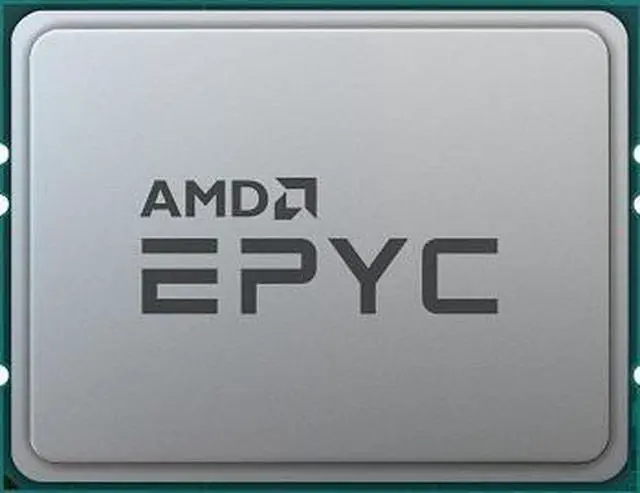 |
AMD EPYC 7313P Server Processor | A compatible AMD EPYC platform is the starting point for testing SEV-SNP confidential VMs on KVM. Check motherboard BIOS support, firmware settings, kernel requirements, and memory compatibility before buying parts for a lab build. | Check Price on Amazon |
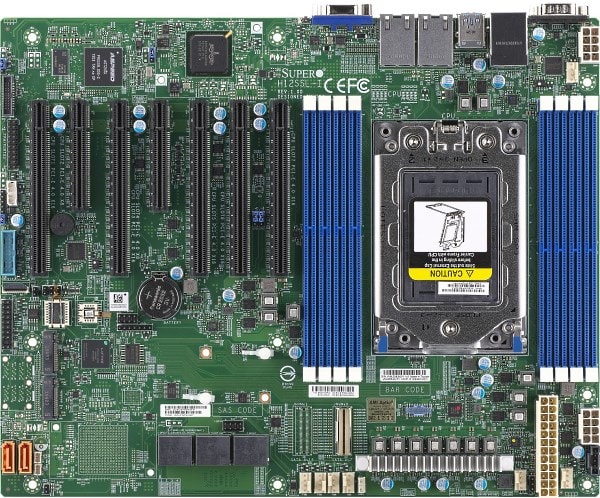 |
Supermicro H12SSL-i EPYC Server Motherboard | For an on-prem test host, an SP3 server board gives engineers access to EPYC CPUs, ECC memory, PCIe expansion, and management features. Confirm CPU generation, BIOS version, TPM needs, and IOMMU/VFIO behavior against your test plan. | Check Price on Amazon |
 |
Kingston Server Premier 64GB DDR4 ECC RDIMM | Confidential VM testing can become memory-heavy quickly, especially when running multiple guests and storage workloads. Match RDIMM capacity and rank to the motherboard qualified memory list before ordering. | Check Price on Amazon |
 |
Samsung PM9A3 U.2 NVMe SSD | A U.2 enterprise NVMe SSD is useful when testing VM image handling, QCOW2 behavior, and storage-heavy guest workloads. Verify U.2 cabling, PCIe lanes, backplane support, and cooling before using one in a lab server. | Check Price on Amazon |
As an Amazon Associate I earn from qualifying purchases.
Why KVM SEV-SNP Support Matters
For Linux infrastructure teams, KVM is the practical center of gravity. Adding SEV-SNP launch support there means Cloud Hypervisor can now be considered in more AMD confidential computing scenarios without requiring the Microsoft hypervisor path.
That does not mean every organization should immediately switch VMMs or rebuild its virtualization stack. Cloud Hypervisor is a focused virtual machine monitor written in Rust and aimed at cloud-style workloads. It is not trying to be a drop-in replacement for every QEMU use case, and its value depends heavily on the workload, host platform, orchestration layer, and operational model.
The buyer-aware way to read this release is simple: if your team is evaluating confidential VMs on AMD EPYC with Linux hosts, Cloud Hypervisor 52 expands the list of tools worth testing. If you are not deploying SEV-SNP or planning for confidential computing, the release still has relevant improvements, but the urgency is lower.
Release Highlights for Operators
The security fix in the VirtIO-Block async I/O path deserves attention. A use-after-free issue in a block device path is not just a release-note detail for cloud operators. Storage I/O sits in a sensitive part of the virtualization stack, and fixes in that area should be reviewed by anyone already running or testing Cloud Hypervisor.
The new VFIO passthrough support through iommufd and vfio-cdev is also important. Device passthrough remains a major requirement for workloads involving accelerators, specialized networking, storage devices, and other hardware-backed performance needs. Moving through newer kernel interfaces can matter for long-term maintainability, depending on the host kernel and deployment model.
Multi-connection TCP live migration is another practical addition. Live migration is one of the places where small implementation details can affect maintenance windows, load balancing, and upgrade workflows. Multiple TCP connections may help some environments move VM state more effectively, though operators still need to validate behavior under their own network and workload conditions.
The async QCOW2 backend with IO_uring support is relevant for teams that use QCOW2 images and want more modern Linux asynchronous I/O behavior. QCOW2 remains useful because of its flexibility, but disk-image performance and latency need testing in context. IO_uring support gives Cloud Hypervisor another path for improving asynchronous storage operations on capable Linux kernels.
The new core scheduling option for vCPU threads may also be relevant in dense multi-tenant environments. CPU scheduling choices can influence isolation, performance consistency, and host utilization. As usual, the right setting depends on the workload mix and the host policy.
Decision Table: Who Should Care About Version 52?
| Reader or team | Why Cloud Hypervisor 52 matters | What to validate first |
|---|---|---|
| Confidential computing evaluators | KVM can now launch AMD SEV-SNP confidential VMs through Cloud Hypervisor. | Host firmware, EPYC CPU support, kernel support, guest images, and attestation flow. |
| Linux cloud platform teams | The release adds KVM-focused confidential VM support plus migration, passthrough, and storage updates. | Integration with orchestration, monitoring, lifecycle management, and existing VM tooling. |
| Security-sensitive infrastructure teams | The VirtIO-Block use-after-free fix should be reviewed by current users. | Upgrade path, exposure, regression risk, and test coverage for storage-heavy workloads. |
| Hardware passthrough users | iommufd and vfio-cdev support may improve alignment with newer Linux VFIO paths. | Device compatibility, kernel version, reset behavior, and operational recovery. |
| General virtualization users | The release may still be useful, but the biggest value is tied to cloud and confidential VM scenarios. | Whether Cloud Hypervisor’s scope matches the workload better than existing VMM choices. |
Buyer-Aware Verdict
Cloud Hypervisor 52 is most compelling for organizations already testing or planning AMD SEV-SNP confidential VM deployments on Linux KVM. It gives those teams a clearer path to evaluate Cloud Hypervisor as part of an AMD confidential computing stack, especially where a leaner cloud-focused VMM is desirable.
It is also worth a look for current Cloud Hypervisor users because the release includes a security fix, new passthrough plumbing, migration work, QCOW2 async I/O improvements, and scheduling options. Those changes are not all equally important to every deployment, but they are operationally relevant.
The cautious takeaway is that version 52 broadens Cloud Hypervisor’s usefulness rather than settling every confidential computing question. SEV-SNP deployments still depend on CPU generation, platform firmware, kernel support, guest configuration, image handling, and the surrounding attestation and management stack. Teams buying AMD EPYC systems for confidential computing should treat Cloud Hypervisor 52 as a candidate to test, not as a shortcut around platform validation.
Bottom Line
Cloud Hypervisor 52 brings AMD SEV-SNP confidential VM launch support to Linux KVM and adds several practical improvements around storage, migration, passthrough, scheduling, and security. For AMD EPYC cloud deployments, that makes the release especially relevant. For everyone else, it is still a meaningful update, but the strongest reason to evaluate it is a serious interest in confidential VMs on KVM.