

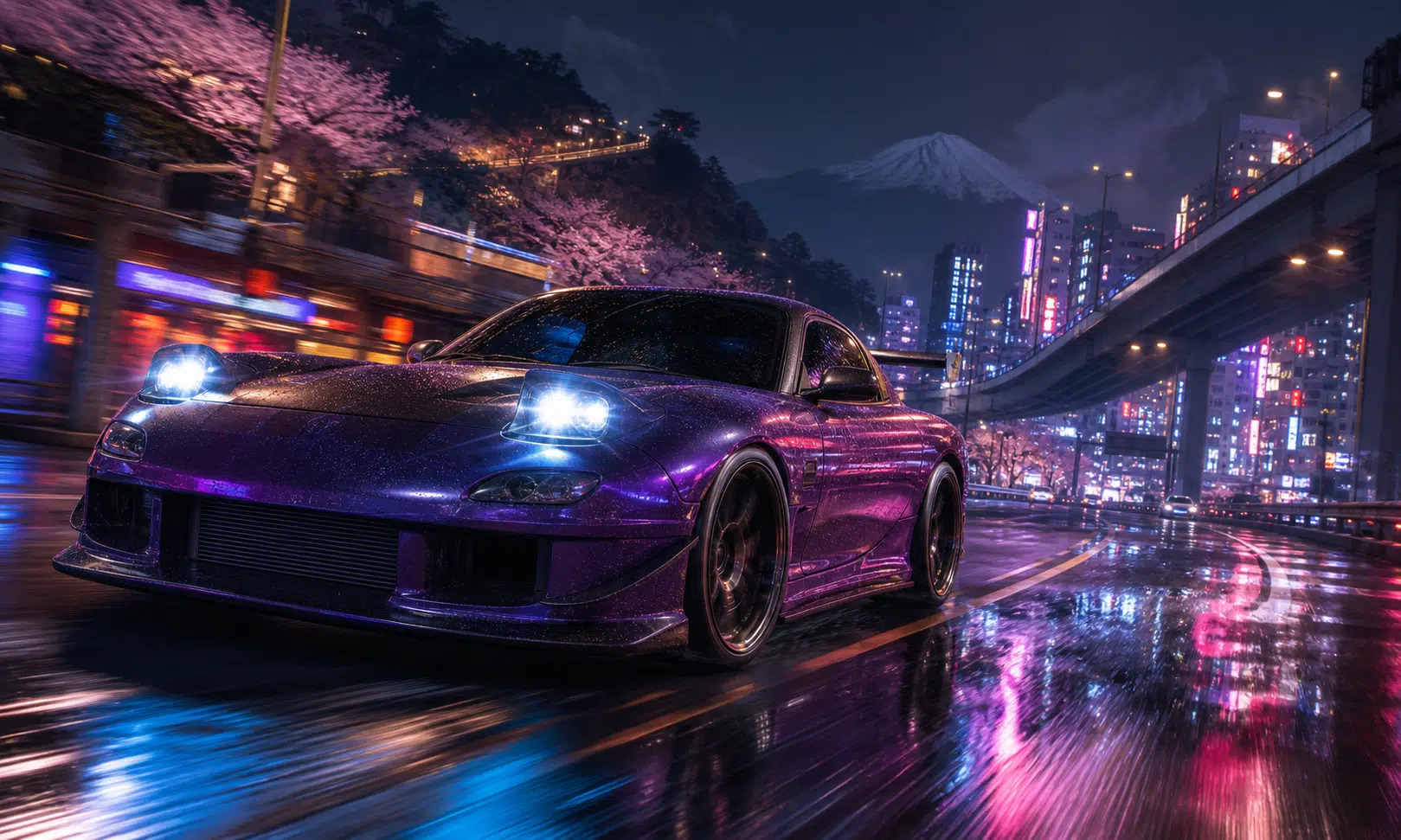

Forza Horizon 6 gives the long-running open-world racing series a setting fans have asked about for years: Japan. That choice matters because the Horizon formula has always depended on place as much as speed. The best entries are not only about winning events; they are about finding a road, a view, a shortcut, or a stretch of pavement that makes the world feel worth driving through.
This entry, developed by Playground Games and published by Xbox Game Studios, builds its pitch around that idea. The source material points to a Japan-inspired open world, a major Tokyo area, a large launch garage, seasonal changes, and a stronger emphasis on car culture and social play. Some promotional claims around scale and cultural detail should be treated as publisher framing rather than neutral fact, but the core direction is clear enough: Forza Horizon 6 is trying to make its location feel like the reason to keep driving.
Below are five grounded reasons the game stands out, based on the details presented in the source while avoiding unsupported hype.
Japan Gives the Series a Strong New Center
The biggest shift is the setting. Forza Horizon 6 moves the festival to a fictionalized version of Japan, bringing together city roads, mountain routes, rural scenery, and seasonal landscapes in one open-world racing map.
That is a natural fit for Horizon. Japan has a deep car culture that touches several kinds of driving: city cruising, mountain roads, tuning scenes, compact performance cars, off-road routes, and high-speed expressway fantasy. The setting also gives the game a wider visual range than a simple urban racing map would allow.
The source describes the map as a designed interpretation rather than a strict one-to-one recreation. That distinction is important. A Horizon map is built for flow, variety, and quick movement between activities, so the goal is not geographic accuracy in the documentary sense. It is a condensed driving playground shaped around recognizable ideas of place.
Tokyo appears to be the anchor. The city area is presented as a dense, layered driving space with neon-lit roads, verticality, industrial zones, and tight urban routes. Even if some of the size comparisons in the source should be read cautiously, the direction is useful: Tokyo is not just scenery in the background. It is positioned as one of the main reasons to explore.
The more interesting promise is contrast. A good Horizon map needs roads that feel different from one another. Urban grids, mountain passes, coastal or dockside stretches, countryside lanes, and snow-covered routes all ask for different cars and different driving habits. Japan gives the developers a believable reason to put those contrasts close together.
The Map Is Built Around Driving Variety
The source repeatedly emphasizes scale, but size alone is not what makes an open-world racing game work. A huge map can feel empty if the roads all ask the same thing from the player. What matters more is whether the world creates different rhythms.
Forza Horizon 6 appears to lean into that variety. Tokyo-style city driving can support sharp turns, traffic-dense visual design, and technical routes. Mountain roads can support drifting, downhill control, and high-risk cornering. Rural roads can open the pace, while off-road paths give SUVs and rally builds a reason to exist.
That range also helps the car list matter. A racing game with hundreds of vehicles needs places where those vehicles feel meaningfully different. A Nissan Skyline GT-R, a Honda Civic Type R, a Toyota Land Cruiser, and a modern prototype-style performance car should not all feel like different skins for the same activity. The map has to give them distinct jobs.
This is where the Japan setting can do real work. A mountain pass invites tuning and drift builds. A wide expressway suits high-speed cars. Narrow urban roads reward control and acceleration. Dirt and rougher terrain give off-road vehicles a purpose. If the game delivers on that structure, the setting becomes more than a theme.
The Car List Is Broad Enough for Different Kinds of Players
The source says Forza Horizon 6 features more than 550 cars. That figure is central to the game’s pitch, and it matters because Horizon attracts more than one kind of player.
Some players come to tune, compare, and collect. Others want an accessible arcade racer where they can jump into a favorite car and drive without studying every setting. A large roster helps both groups, as long as the cars are supported by meaningful customization and events that make them useful.
The source highlights a mix of Japanese performance icons, practical off-road vehicles, and modern showcase cars. It mentions vehicles such as the Nissan Skyline GT-R R34, Honda Civic Type R, Toyota Land Cruiser, and 2025 Toyota GR GT Prototype. Those examples point toward a garage built around both fantasy and familiarity.
The Japanese Domestic Market angle is especially relevant. A Japan-set Horizon game would feel incomplete without cars tied closely to the country’s tuning and motorsport culture. The appeal is not only nostalgia. These cars carry associations with street racing media, enthusiast communities, drift culture, and decades of performance tuning.
Customization also appears to remain a major part of the experience. The source refers to liveries, body kits, and visual changes, which fit the series’ established strengths. For many Horizon players, building the car is part of the game’s identity. The race begins before the starting line, in the garage, with paint, stance, parts, and tuning choices.
Seasonal Weather Could Make the Setting Feel Less Static
Forza Horizon has used seasons before, but Japan gives seasonal change a particularly clear visual and cultural frame. The source points to cherry blossoms in spring, rain-soaked roads in summer, and snowy mountain routes in winter.
Those details are useful because they affect more than postcard scenery. Weather and surface conditions can change how a road feels. Wet asphalt asks for restraint. Snow and ice make mountain routes more technical. A dry city road at night creates a different mood from the same road under heavy rain.
The source also mentions improved lighting, reflections, and audio. Those are technical claims that should not be overstated without hands-on testing, but they fit the basic expectation for a current-generation Horizon game. Wet pavement, neon signage, reflective car paint, and engine sound are all especially important in a racing game built around urban night driving and car culture.
The important point is not that every surface will feel perfectly realistic. Horizon is still an accessible open-world racer. The point is that seasonal shifts can keep familiar roads from becoming stale. A route that feels easy in dry daylight can become more demanding in rain or snow, and that gives players a reason to return.
It Treats Car Culture as More Than a Race Menu
The source frames Forza Horizon 6 as more than a sequence of events, and that is consistent with where the series has been heading. Modern Horizon games are part racer, part collector loop, part social space, and part driving sandbox.
In this version, the player’s journey is described as starting from a tourist perspective before moving deeper into the Horizon Festival. That framing fits the setting. Instead of dropping players in as if they already own the world, the game can make discovery part of the progression.
The Collection Journal idea also supports that structure. A journal gives exploration a simple purpose beyond clearing icons from a map. It can turn landmarks, regions, murals, roads, and events into a record of where the player has been. For a game built around a culturally specific setting, that kind of progression makes more sense than only chasing bigger races.
The source also points to properties, garages, car meets, drag events, and custom event creation. Those systems matter because Horizon’s audience often plays socially even when not racing seriously. Showing a livery, parking at a meet, testing a build, or creating a route can be as important as winning a championship.
User-created events are especially important for longevity. If players can build routes across the map, the world lasts longer than the official event list. A flexible creation tool can turn a favorite road into a drift challenge, a rally route, a time trial, or a casual cruise.
The Art Direction Adds Another Layer to the World
The source says the game includes work connected to Japanese artists and regional visual identity. Because several specific artist descriptions in the source are promotional and not independently verified here, it is better to describe this carefully: the article presents the art program as part of the game’s attempt to make regions feel distinct, not just visually decorated.
That idea is worthwhile. Open-world maps can blur together when every district uses the same visual language. Murals, signage, regional motifs, festival references, and street art can help players remember where they are. They can also make exploration feel less mechanical.
If these works are discoverable within the world, they may give players another reason to slow down. Racing games often ask players to move through environments at high speed, which can turn carefully built places into background texture. Collectible or journal-linked art can encourage a different pace: drive, stop, look, and move on.
The key is restraint. Cultural detail works best when it is integrated into the world rather than treated as a checklist. The source suggests that Playground Games wants the setting to feel shaped by Japanese car culture and visual culture. How well that works depends on the final execution, but the ambition is clear.
Why These Five Points Matter
Forza Horizon 6 stands out because its strongest ideas support one another. Japan gives the game a recognizable identity. Tokyo and the surrounding regions give it road variety. The car list gives players reasons to experiment. Seasonal weather changes how the world feels. Social tools and customization give the game life beyond campaign progress.
That combination is why the game is easy to understand even without inflated language. It does not need to be called the new crown of the genre or the most anticipated racing game of the year. The more useful claim is simpler: Forza Horizon 6 has a setting and feature set that fit the series unusually well.
For players who mainly want structured racing, the appeal will likely be the map, vehicle roster, and event variety. For players who treat Horizon as a car culture sandbox, the appeal is broader: builds, liveries, meets, garages, custom events, and the pleasure of finding a road that suits a particular car.
That is the real promise of a Japan-set Forza Horizon game. It gives the series a place where speed, style, tuning, scenery, and exploration can all feel connected. If the finished experience matches that pitch, Forza Horizon 6 should have plenty to offer beyond another lap around the festival map.