

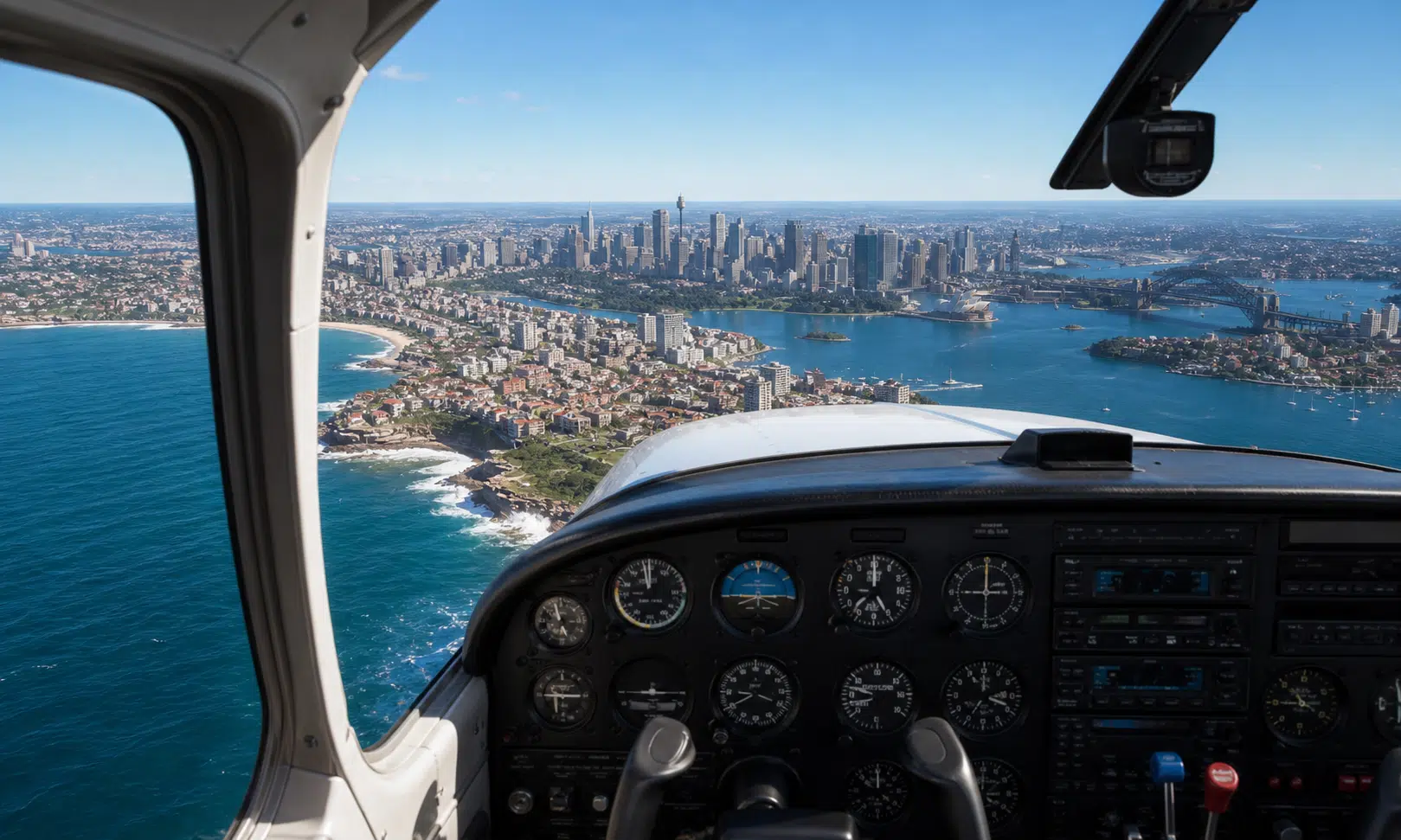

Microsoft Flight Simulator has received a fresh World Update focused on Australia, giving pilots a larger set of upgraded cities, landmarks, airports, and regional flying locations to explore. The release, listed as World Update 21, follows the previous World Update for Japan and shifts the spotlight to one of the simulator’s most varied flying regions.
Australia is a natural fit for a scenery update. It gives virtual pilots dense city skylines, long coastlines, desert interiors, rainforest areas, island approaches, mountain terrain, and recognizable architecture within the same country-scale package. For players who use the simulator as a sightseeing tool as much as a flying platform, this update is built around that mix.
Microsoft and the development team are positioning the update as a major visual step for the region, describing it as a new standard in realism for pilots. The work is tied to collaboration across Bing Maps, Vexcel, Gaya, and Asobo, with the goal of improving the way Australian terrain, cities, and points of interest appear from the cockpit.
What World Update 21 changes in Australia
World Update 21 is mainly a scenery and content update. It is not framed as a complete overhaul of the core flight model or aircraft systems. Instead, the focus is on making Australia more convincing from the air, especially in places where photogrammetry, surface data, and handcrafted objects can make a clear difference.
The update adds 40 real-world areas of interest recreated for the simulator. These are spread across Australia’s six states and self-governing territories, which means the upgrade is not limited to a single city or coastline. Players can expect the refreshed content to cover major metropolitan areas, regional destinations, and natural landmarks.
The headline cities include Sydney, Melbourne, Brisbane, Perth, Adelaide, Hobart, Darwin, and Canberra. That list matters because those locations give pilots a broad set of routes to build around, whether they prefer short city hops, coastal approaches, or longer cross-country flights.
The update also highlights well-known Australian sights such as the Sydney Opera House and the Twelve Apostles, along with desert regions, rainforests, coastlines, and mountain areas. For players who enjoy flying low and slow, the value is in having more recognizable visual references along the route instead of relying on generic scenery alone.
New points of interest and airport content
The 40 upgraded areas of interest are the main attraction, especially for pilots who like discovery flights or visual navigation. Photogrammetry and triangulated irregular network surface texturing are used for the newly recreated locations, aiming to make terrain and structures look more lifelike when viewed from realistic altitudes.
Microsoft’s update materials also describe six handcrafted airports as part of the release. The listed airports are:
- Broken Hill Airport (YBHI)
- Broome International Airport (YBRM)
- Coober Pedy Airport (YCBP)
- Bathurst Airport (YBTH)
- RAAF Base Tindal / Katherine Tindal (YPTN)
- Lord Howe Island Airport (YLHI)
Because airport quality can make or break a regional route in Microsoft Flight Simulator, handcrafted additions are usually more useful than they first sound. A better airport model gives pilots more credible departures, approaches, taxi routes, and screenshots, particularly at locations that have distinctive terrain or operational character.
Lord Howe Island is an obvious example of a destination where scenery and airport detail can work together. Island airports tend to reward careful approach planning, and they are often popular among sim pilots because the landscape is part of the challenge. Broome, Coober Pedy, Broken Hill, Bathurst, and Tindal also give the update a wider regional spread instead of concentrating only on the east-coast capital cities.
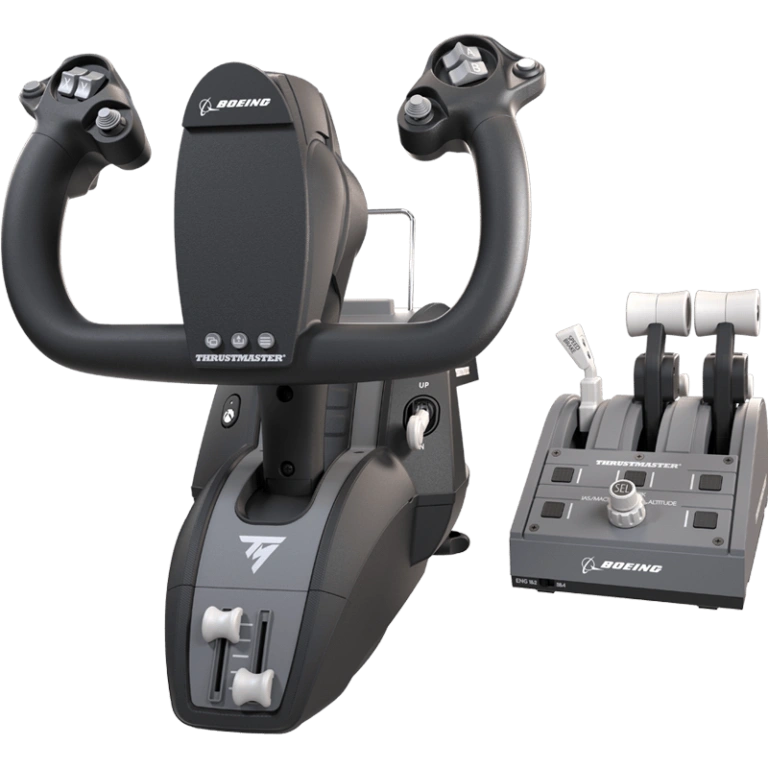
Thrustmaster TCA Yoke Pack Boeing Edition
A yoke and throttle quadrant can make takeoffs, approaches, and sightseeing routes feel more deliberate than using a standard gamepad. This Boeing-style set is a fitting option for players who spend time in airliners or larger GA aircraft.
As an Amazon Associate I earn from qualifying purchases.
Activities in Microsoft Flight Simulator 2024
Players using Microsoft Flight Simulator 2024 get additional activities built around the updated region. The release includes three discovery flights, five precision landings, two low-altitude challenges, and two rally race challenges for the newer version of the simulator.
That split is important for anyone deciding where to spend their time. The scenery update is available across Microsoft Flight Simulator and Microsoft Flight Simulator 2024, but the activity set is more complete in the 2024 release. Players on the older 2020 version should not expect every activity option to carry over in the same way.
The activity mix also shows how Microsoft is using World Updates as more than scenery packs. Discovery flights are useful for relaxed sightseeing, precision landings give players a focused flying test, low-altitude challenges push terrain awareness, and rally races add a more structured reason to revisit the upgraded areas.
For casual players, those activities provide a simple way into the new content without needing to plan a custom flight. For more committed sim pilots, the upgraded airports and scenery are more likely to become building blocks for custom routes, bush trips, and repeated practice flights.
Why Australia is a strong fit for a visual update
Australia gives Microsoft Flight Simulator a wide range of flying conditions within one update. A pilot can move from dense city scenery to remote airfields, from dry inland terrain to dramatic coastlines, and from major airports to more isolated regional destinations. That variety makes the update useful even for players who do not normally fly in the region.
The appeal is also practical. In a simulator, visual detail is not only decorative. It helps with VFR flying, route planning, approach recognition, and the sense of scale during longer trips. When landmarks, coastlines, and city layouts are more accurate, flights feel less interchangeable.
That matters for Australia in particular because so much of the country’s visual identity comes from large-scale geography. The distance between cities, the shape of the coastline, the spread of the interior, and the contrast between urban and remote areas are all part of the flying experience.

TrackIR 5 Head Tracker
Head tracking is useful when flying low over landmarks, checking runway alignment, or scanning scenery without relying on keyboard view controls. It is especially relevant for PC sim pilots who prefer a monitor over a VR headset.
As an Amazon Associate I earn from qualifying purchases.
Availability and who should download it
Microsoft Flight Simulator World Update 21: Australia is available as a free optional download through the in-game marketplace. It is offered for Microsoft Flight Simulator as well as Microsoft Flight Simulator 2024.
As with earlier World Updates, players should check the in-game marketplace rather than expecting the content to appear automatically in every installation. These updates are often optional so players can manage storage space and install only the regions they want.
The update is an easy recommendation for players who fly in Australia, enjoy sightseeing, or want more varied long-distance routes across the southern hemisphere. It is also worth downloading for anyone who mainly uses Microsoft Flight Simulator 2024’s activity-driven content, since that version gets the fuller set of discovery flights, landing challenges, low-altitude runs, and rally races.
Players who are tight on storage and rarely fly outside North America or Europe may want to be more selective. But for anyone building a broader world map inside the simulator, Australia’s refreshed cities, landmarks, and regional airports make World Update 21 one of the more geographically interesting free additions to keep installed.