



The Four Phases of Competence is one of those learning frameworks that works because it is almost bluntly simple. It does not promise talent, shortcuts, or a secret operating system for mastery. It gives you a map: first you do not know what you do not know, then you notice how much you are missing, then you can perform with effort, and eventually the skill starts to feel automatic.
That makes it useful for anyone trying to get better at a real skill, whether that is a sport, writing, leadership, public speaking, coding, sales, or running better meetings. The value is not in making learning feel easy. It is in making the discomfort less confusing.
Verdict: useful, low-cost, and best for self-diagnosis
As a learning system, the Four Phases of Competence is worth using because it helps separate the problem from the emotion around the problem. Being awkward at the start of a skill can feel like evidence that you are not built for it. In this model, that awkwardness is simply a stage.
That distinction matters. A beginner who is still trying to understand the landscape needs exposure, examples, coaching, and humility. Someone who already understands the basics but keeps making mistakes needs repetitions and feedback. A competent performer needs structure, measurement, and deliberate refinement. A more fluent performer may need fewer systems, not more, because too much tracking can interfere with rhythm.
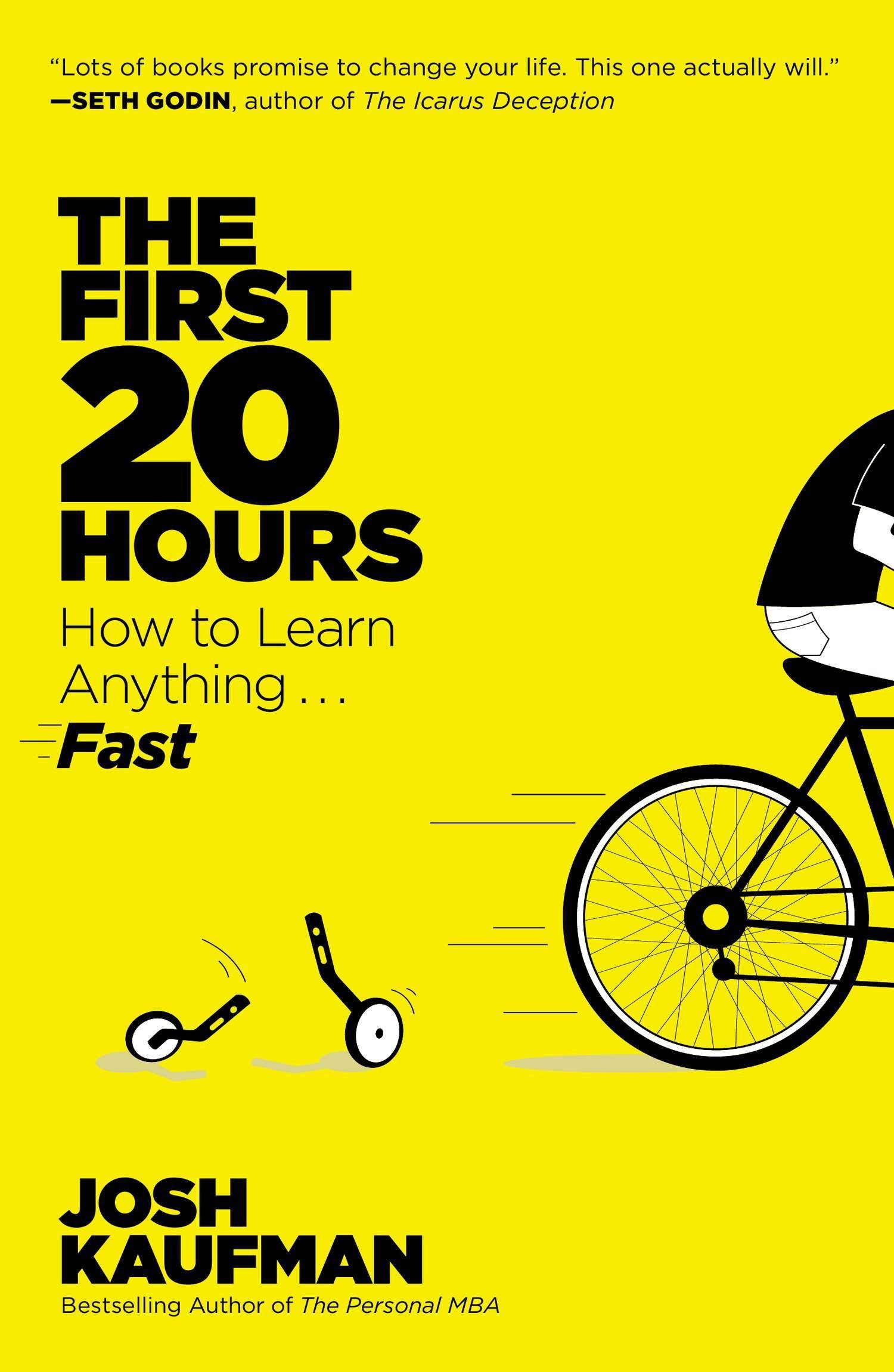
The First 20 Hours
Josh Kaufman’s The First 20 Hours focuses on breaking a skill into manageable parts and getting into focused practice quickly. It pairs well with the early phases of competence, where the next step is often clearer exposure and structured repetition.
As an Amazon Associate I earn from qualifying purchases.
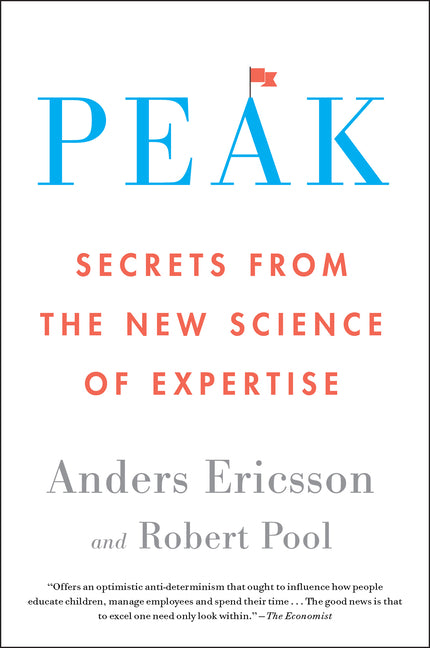
Peak: Secrets from the New Science of Expertise
Peak explains how expert performance develops through focused practice, feedback, and refinement. It is a strong match for readers who already know the basics and want a better structure for improving deliberately.
As an Amazon Associate I earn from qualifying purchases.
The framework is strongest as a decision tool. It helps answer a practical question: what kind of help do you actually need next?
The four phases, in plain English
- Unconscious incompetence: You are new to the skill and do not yet understand the landscape. The useful move is to learn the basics, observe people who are better, and stay open to feedback.
- Conscious incompetence: You are practicing and can feel the mistakes as they happen. This is uncomfortable, but it is also where feedback and repetition start to matter most.
- Conscious competence: You can perform, but only with attention and effort. Checklists, routines, data, and review loops are useful here because consistency still needs support.
- Unconscious competence: The skill begins to feel more natural. At this stage, the goal is often to reduce friction and protect flow instead of adding more process.
The important point is that these phases are not a permanent identity. You can be highly competent in one area and back at the beginning in another. You can also move backward temporarily when the context changes, the difficulty rises, or you add a new layer to the skill.
Where the framework helps most
The Four Phases of Competence is especially helpful when a learner is stuck between too much studying and not enough doing. Phase 1 benefits from study because the map is still blank. Phase 2 usually requires practice because the mistakes only become visible in motion.
That makes the framework a useful filter for courses, coaching programs, books, and productivity tools. A good learning product should make it clearer which phase you are in and what action fits that phase. If it only keeps you consuming information when you need repetitions, it may feel productive while delaying progress.
It is also useful for managers and team leads. Someone struggling with a task may not need motivation. They may need clearer examples, tighter feedback loops, a checklist, or room to practice without being treated as if early mistakes are permanent failures.
Where it falls short
The model is not a complete theory of expertise. It does not tell you which coach to trust, which feedback is good, how much practice is enough, or how to handle motivation when progress slows. It also can make learning look cleaner than it feels in real life. Skills overlap, plateaus happen, and confidence often rises and falls unevenly.
The framework works best when treated as a diagnostic, not a personality test. If you use it to ask better questions, it is helpful. If you use it to label yourself as bad, average, or naturally gifted, you are missing the point.
Who should use it
This is a strong fit for readers who are actively trying to improve at a concrete skill and want a simple way to choose the next step. It is also useful for anyone buying a learning resource, because it gives you a sharper way to evaluate whether that resource matches your actual stage.
If you are in Phase 1, look for orientation. If you are in Phase 2, look for feedback and practice. If you are in Phase 3, look for structure and measurement. If you are in Phase 4, protect the conditions that let the skill feel fluid.
The best use of the Four Phases of Competence is not to make learning feel glamorous. It is to make the next move obvious enough that you can stop overthinking and keep practicing.