


Google is adding a new set of measurement tools aimed at one of advertisers’ hardest problems: understanding what is actually driving results when customer journeys are fragmented across channels, devices and data systems.
The updates focus on three areas: cleaner data connections, stronger experimentation and easier marketing mix modeling. Together, they point to a broader shift in Google’s advertising stack. As AI takes on more campaign execution, Google is putting more emphasis on the measurement layer that tells marketers whether that execution is working.
For advertisers, the practical question is not whether automation can launch campaigns faster. It is whether teams can connect enough reliable signals to make budget decisions with confidence.
What Google Is Rolling Out
Google’s latest measurement updates center on Data Manager, Meridian GeoX and Meridian Studio.
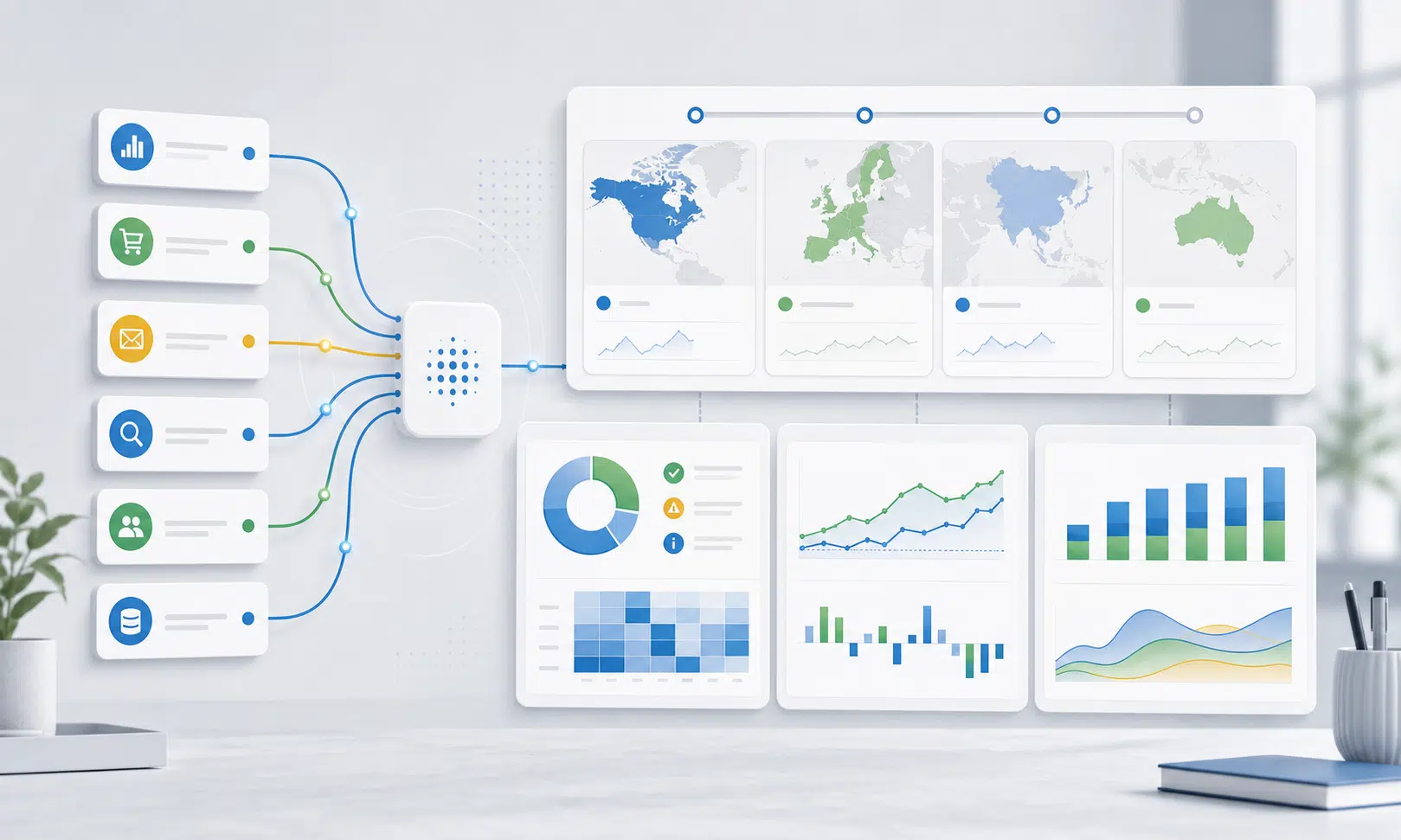
Data Manager is getting a more visual way to understand how data moves between sources and destinations. The goal is to make it easier for advertisers to see where their first-party data is coming from, where it is being activated and where tracking or configuration gaps may exist.
Meridian GeoX is a new geo-experimentation tool designed to help advertisers measure incremental impact across regions. It is built to work with Meridian, Google’s open-source marketing mix model framework.
Meridian Studio is a Google Cloud-powered platform intended to help larger teams build, customize and scale marketing mix models with less operational friction.
Those updates are not simply feature additions. They reflect a growing reality for paid media teams: performance marketing is becoming less about pushing buttons inside one platform and more about managing data quality, causal measurement and budget allocation across a messy media mix.
Why Measurement Is Becoming More Important
Automation has made campaign management easier in some ways. Marketers can launch more creative variations, rely on algorithmic bidding and let platforms make more targeting decisions in real time.
But that convenience has created a tradeoff. The more execution moves into automated systems, the harder it can be to explain which inputs, channels or audience signals are actually producing profitable outcomes.
That matters for teams that need to justify spend beyond the marketing department. A media buyer may care about conversions inside Google Ads. A finance team may care more about incrementality, profit and whether a budget increase would still make sense if some reported conversions would have happened anyway.
Google’s updates are aimed at that gap. They are designed to help advertisers move from platform-level reporting toward measurement that can support bigger business decisions.
Data Manager Gets a Clearer View of Data Flows
Google is expanding Data Manager with a map-style interface that shows how data connects across sources and Google destinations. Examples include platforms such as BigQuery, HubSpot and Shopify.
For advertisers, this is meant to make data setup less opaque. Instead of treating data connections as a collection of separate technical tasks, teams should be able to see a more connected view of how signals flow through the measurement system.
That can be useful for spotting issues such as incomplete connections, missing data sources or configurations that do not support the use cases a team is trying to run.
Google is also simplifying parts of the Google tag experience. Advertisers with existing tags are expected to get a way to upgrade those tags with fewer technical steps, without having to deploy a completely new tag from scratch.
That matters because tagging remains one of the most common weak points in ad measurement. A campaign can have a strong strategy and still produce poor reporting if conversion signals, consent settings or data destinations are misconfigured.

Data-Driven Marketing
Data-Driven Marketing is a practical fit for teams trying to turn cleaner data into better budget and performance conversations. It focuses on the marketing metrics leaders need before measurement tools can produce useful decisions.
As an Amazon Associate I earn from qualifying purchases.
For buyers evaluating analytics, customer data or tag management tools, the key need is not more dashboards. It is a cleaner path from first-party data to reliable activation and reporting.
Why Data Quality Affects Campaign Performance
Google’s AI-driven campaign products depend heavily on the signals advertisers provide. If conversion data is incomplete, delayed or poorly structured, automated systems have less useful information to optimize against.
That is why data integration is not just an analytics concern. It directly affects campaign learning, audience quality and the accuracy of performance reporting.
A cleaner measurement setup can help advertisers:
- Connect first-party customer data to advertising use cases more consistently.
- Reduce gaps between online and offline conversion signals.
- Identify tagging or destination issues before they distort reporting.
- Give automated campaigns better signals for optimization.
- Build stronger reporting for budget and planning discussions.
The practical takeaway is straightforward: before advertisers can expect better decisions from AI, they need to make sure the system is receiving useful data in the first place.
Meridian GeoX Brings Geo-Experimentation Into the Mix
Google is also introducing Meridian GeoX, a geographic incrementality tool designed to measure the causal impact of media activity across regions.
Geo-experiments work by comparing performance in test and control regions. Instead of relying only on attributed conversions, marketers can look at whether a campaign produced a measurable lift in the places where media pressure changed.
That distinction matters. Attribution models can help explain how conversions are assigned across touchpoints, but they do not always prove whether the advertising caused the outcome. Incrementality testing is meant to get closer to that question.
Google says Meridian GeoX will be built on an open-source codebase and connected to Meridian, its marketing mix model framework. GeoX is expected to begin testing later in 2026.
For advertisers, the appeal is especially clear in situations where platform attribution is under pressure from privacy changes, cookie loss, consent requirements or long customer journeys.
Why GeoX Matters for Budget Decisions
Incrementality measurement is often most valuable when the stakes are high. If a brand is deciding whether to increase spend on YouTube, paid search, retail media or another channel, attributed conversions alone may not settle the debate.
A geo-experiment can help answer a different question: what happened in markets where spend changed compared with similar markets where it did not?
That type of evidence can be more useful when marketers need to defend budget increases, shift spend across channels or explain results to executives who are skeptical of platform-reported performance.
It will not remove every measurement challenge. Geo-experiments still require careful design, clean data and enough market variation to produce useful results. But they can add a stronger layer of evidence than correlation-based reporting alone.
Meridian Studio Aims to Make MMM Easier to Operate
Google is also launching Meridian Studio, a Google Cloud-powered platform for teams that need to build and manage marketing mix models at scale.
Marketing mix modeling has become more attractive as privacy changes limit user-level tracking. MMMs use aggregated data to estimate how different marketing and non-marketing factors contribute to business outcomes over time.
The challenge is that MMMs can be hard to run well. They require data preparation, modeling expertise, validation, interpretation and ongoing updates. For many marketing teams, the problem is not interest in MMM. It is the operational cost of making MMM a regular planning tool rather than a one-off analysis.
Meridian Studio appears aimed at that gap. The platform is designed for teams managing large datasets and more complex modeling needs, with customization and scaling as central use cases.
Marketing Analytics
Marketing Analytics gives practitioners a structured way to think about consumer insights, modeling and campaign measurement. It fits readers evaluating MMM workflows who also need to strengthen internal analytical literacy.
As an Amazon Associate I earn from qualifying purchases.
For enterprise buyers, the relevant product category is MMM and measurement operations software: tools that help teams prepare data, model channel impact, compare scenarios and turn analysis into budget decisions.
What MMM Can and Cannot Solve
Marketing mix modeling can help marketers understand performance across channels, including media that is difficult to measure with click-based attribution. It can also account for outside variables such as seasonality, pricing, promotions or broader market changes when the model is designed to include them.
But MMM is not magic. Models depend on the quality of the data, the assumptions behind the methodology and the way results are interpreted.
That is why Google’s pairing of Meridian, GeoX and Studio is notable. MMM can provide a broad view of channel contribution, while experiments can help validate whether a specific change in media investment caused incremental lift.
Used together, those approaches can give advertisers a more defensible measurement system than relying on a single dashboard or attribution model.
What Advertisers Should Watch Next
The announcements are useful, but several practical questions remain.
Advertisers should watch for:
- When each Data Manager update becomes available to their accounts.
- How broadly Meridian GeoX testing is opened later in 2026.
- Which teams will have access to Meridian Studio and under what commercial model.
- How much technical support advertisers need to use the tools well.
- Whether the new workflows reduce setup complexity in real accounts, not just in product demos.
The biggest test will be adoption. Many advertisers already understand that better measurement matters. The harder part is finding the time, technical support and organizational alignment to improve it.
If Google can make data integration, incrementality testing and MMM easier to operate, these tools could help more teams move beyond surface-level reporting.
The Bottom Line
Google’s new measurement updates make the company’s direction clear. In an AI-heavy advertising environment, performance depends less on manual campaign tweaks and more on the quality of the measurement system underneath them.
Data Manager is meant to make first-party data connections easier to see and manage. Meridian GeoX adds a causal testing layer for geographic incrementality. Meridian Studio is designed to make marketing mix modeling more practical for larger organizations.
For advertisers, the message is practical: better automation is only useful if the data, experiments and models behind it are strong enough to guide real budget decisions.