

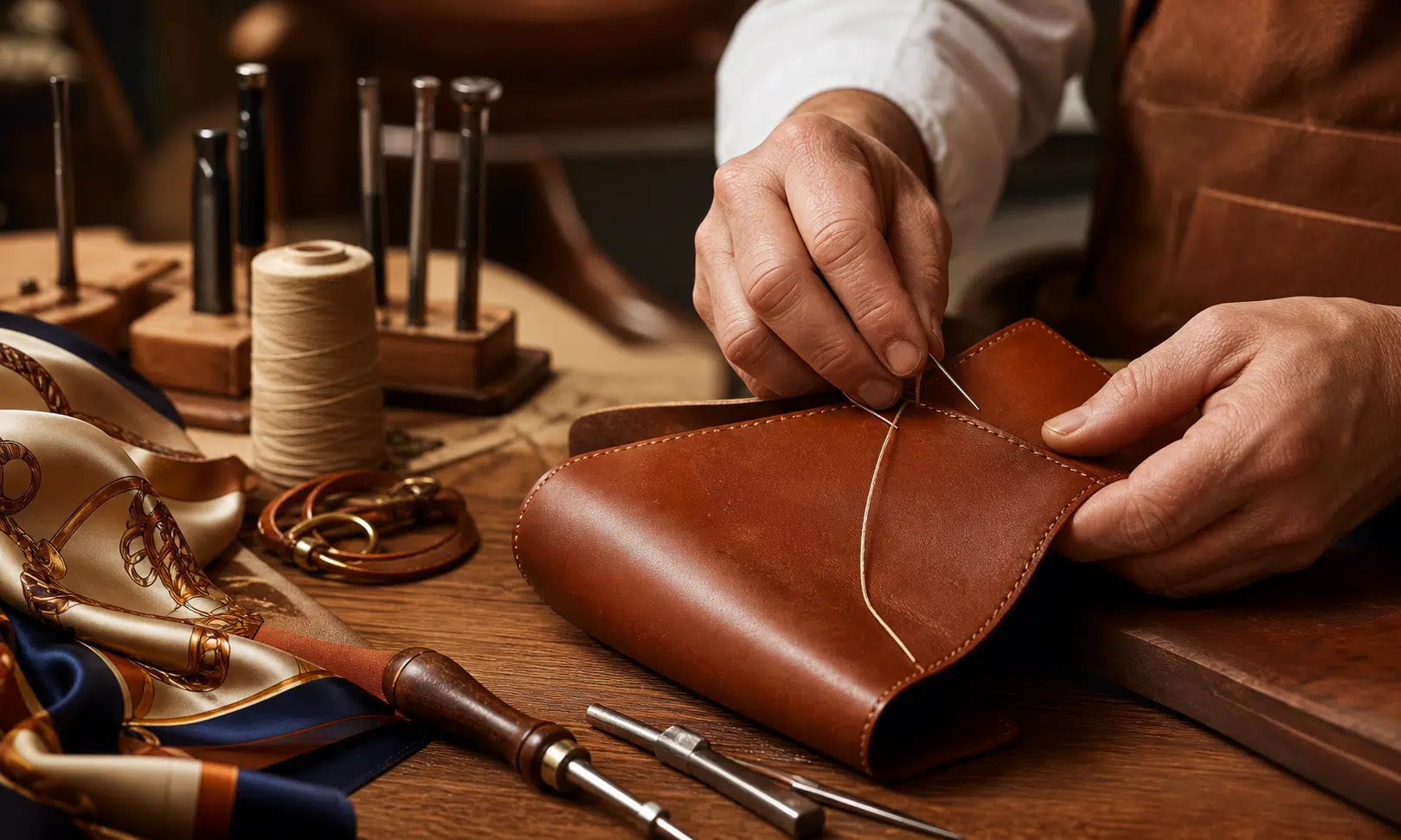

Hermès is often discussed as a luxury house built less on speed than on control: control of craft, control of supply and control of the story around its most desirable products.
The company’s origin story is usually traced to Thierry Hermès, a leatherworker whose early Paris workshop is described in brand histories as serving the carriage trade before the business expanded into broader leather goods. Some biographical details often repeated about Thierry Hermès, including parts of his early family history and attributed personal quotations, are not independently verified in the supplied material and should be treated cautiously rather than as settled fact.
That distinction matters because Hermès is a brand whose commercial power depends heavily on trust. The more useful story is not a dramatic founder myth, but the pattern that followed: a company associated with careful making, slow expansion and a willingness to protect demand rather than chase every available sale.
From Leather Workshop to Luxury House
The source account presents Hermès as beginning with harnesses and bridles before adapting as horse-drawn transport gave way to cars. That transition is central to the brand’s business lesson. A company tied to one way of life had to move without losing the qualities customers associated with it.
Later generations of the Hermès family are described as moving the business further into leather accessories, handbags, watches, scarves and other luxury categories. Specific dates and quotations attached to some of those milestones were not verified in the supplied fact-checking, so they should not be repeated as hard facts. What can be preserved is the broader arc: Hermès shifted from equestrian craft into a wider luxury business while keeping craftsmanship at the center of its image.
That slow shift is also what makes Hermès relevant to buyers today. Customers are not only paying for leather, silk or hardware. They are buying into a reputation for restraint, durability and status, even when the details of that reputation are shaped by decades of brand storytelling.

Apple Brand Leather Care Kit
For readers maintaining leather handbags, a dedicated cleaner and conditioner kit can help with routine care between professional services. Always check the care guidance for the specific leather and test products on a hidden area first.
As an Amazon Associate I earn from qualifying purchases.
Why Scarcity Became Part of the Product
The source frames scarcity as one of Hermès’ defining strategies, especially around famous handbags such as the Kelly and Birkin. Some stronger claims, including investment comparisons with gold and direct executive quotations, were not verified and should be avoided. Still, the underlying idea is clear: limited availability can make a luxury product feel more desirable.
For a buyer, that has practical consequences. A hard-to-get Hermès bag is not simply a purchase; it can involve timing, store relationships, availability and expectations around price. That does not make every purchase sensible, but it explains why the brand’s controlled distribution is part of the appeal rather than a side effect.
The Real Business Lesson
The cleanest lesson from the Hermès story is patience. The source repeatedly points to long-term thinking: products developed carefully, categories expanded gradually and brand value protected over generations. Several quoted lines attached to that theme were not independently verified, so the safer conclusion is editorial rather than biographical.
Hermès has endured because it gives buyers a consistent reason to believe the product will still matter later. In luxury, that kind of confidence is commercially powerful. Trends can create attention, but restraint can create value. Hermès’ reputation rests on making customers wait, making products feel scarce and making the wait seem like part of the luxury experience.