

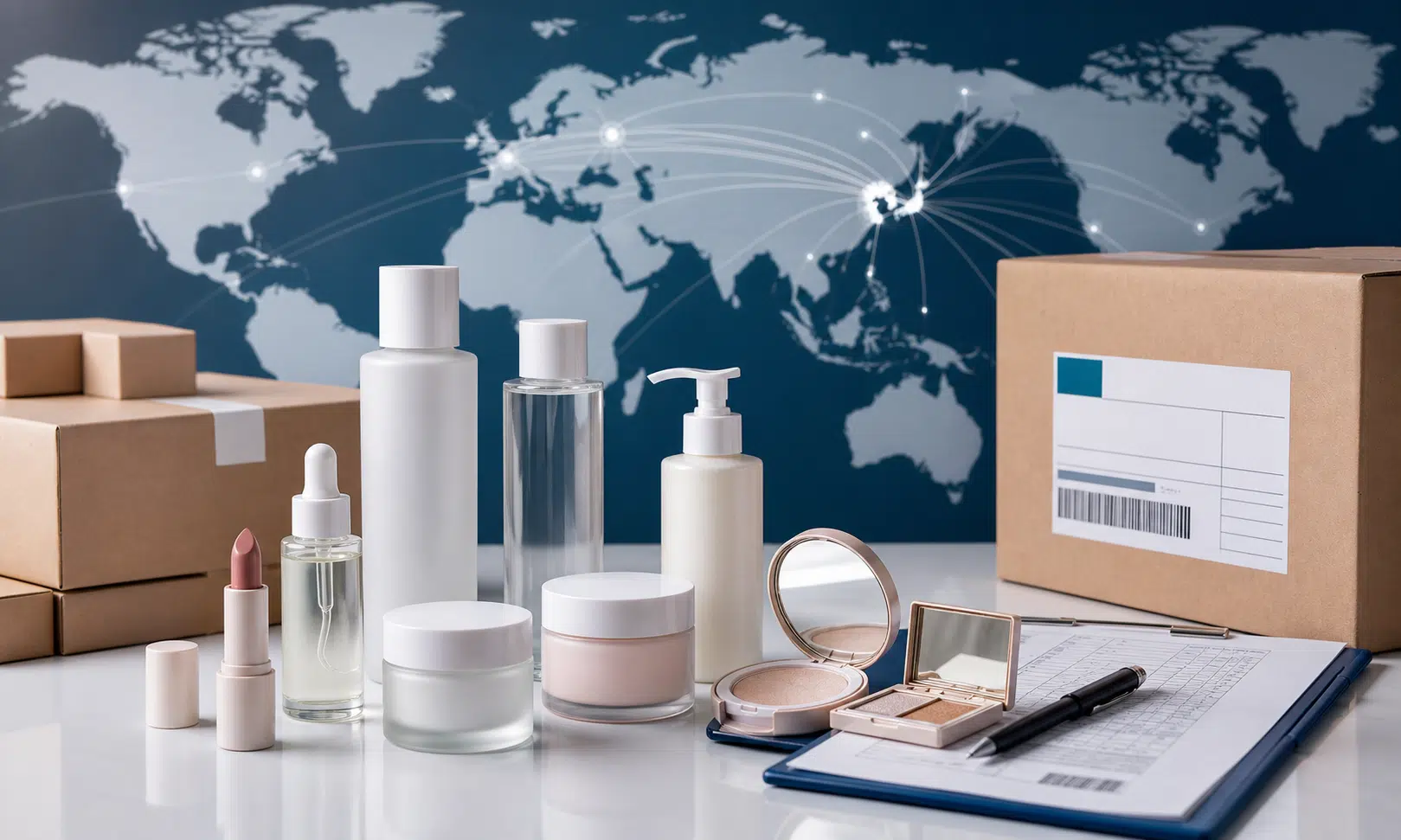

Korea’s cosmetics industry reached a new trade milestone in 2025, with its cosmetics trade surplus rising above $10 billion for the first time.
According to figures from the Ministry of Food and Drug Safety cited in the report, the country recorded a cosmetics trade surplus of $10.1 billion last year. That was up 13.5 percent from 2024 and came as exports continued to outpace imports by a wide margin.
Cosmetics exports reached a record $11.4 billion, an 11.8 percent year-on-year increase. Imports edged down 2.3 percent to $1.29 billion.
The export total put Korea second in the world for cosmetics exports in 2025, behind France and ahead of the United States. France remained the clear leader at $24.3 billion, while Korea reached $11.4 billion and the United States followed at $10.8 billion.
Cosmetics Became a Larger Piece of Korea’s Trade Balance
The cosmetics sector’s $10.1 billion surplus accounted for 12.9 percent of Korea’s overall trade surplus of $78 billion in 2025. That makes beauty products one of the more visible contributors to the country’s trade performance, rather than a niche consumer-goods category.
The figures also show how concentrated Korea’s cosmetics export strength remains. Skin care products were by far the largest category, generating $8.53 billion in exports, or 74.7 percent of total cosmetics exports. Color cosmetics followed at $1.51 billion, or 13.2 percent.
Together, skin care and color cosmetics accounted for 87.9 percent of Korea’s cosmetics exports.
| Category | 2025 Export Value | Share of Cosmetics Exports |
|---|---|---|
| Skin care products | $8.53 billion | 74.7% |
| Color cosmetics | $1.51 billion | 13.2% |
| Skin care and color cosmetics combined | $10.04 billion | 87.9% |
That mix reflects the global pull of Korean skin care, where brands have built strong recognition around sunscreens, serums, cleansing products, moisturizers and treatment-focused routines.
The U.S. Took the Top Market Spot
The United States ranked as Korea’s largest individual cosmetics export market in 2025, with shipments reaching $2.2 billion. The report said this was the first time the U.S. topped China as Korea’s biggest cosmetics destination.
The report also said, though not independently verified here, that China ranked second at $2 billion after a 19 percent year-on-year decline, while Japan ranked third at $1.1 billion.
Market growth was not limited to the biggest destinations. The report said Korea exported cosmetics to 202 countries in 2025, up from 172 in 2024; that country-count claim has not been independently verified here.
Among faster-growing destinations, Poland and the United Arab Emirates stood out in the ministry figures cited by the report. Poland was reported to have climbed 115 percent to rank ninth, while the United Arab Emirates rose 70.6 percent to rank eighth.
Those shifts point to a broader export pattern for K-beauty: the sector is still deeply tied to major markets such as the U.S., China and Japan, but growth is increasingly coming from a wider set of regions.
Production Also Reached a Record
Domestic cosmetics production reached 17.94 trillion won in 2025, up 2.3 percent from the previous year and the highest level cited in the report.
Among sales companies, LG H&H led with 3.92 trillion won in production, followed by Amorepacific at 3.03 trillion won. Among original design manufacturers, Cosmax ranked first at 1.61 trillion won, followed by Kolmar Korea at 1.3 trillion won.
| Company Type | Leader | Reported Production | Second | Reported Production |
|---|---|---|---|---|
| Sales companies | LG H&H | 3.92 trillion won | Amorepacific | 3.03 trillion won |
| Original design manufacturers | Cosmax | 1.61 trillion won | Kolmar Korea | 1.3 trillion won |
The production data highlights the split structure behind Korea’s beauty industry. Large brand owners remain central to sales and global visibility, while manufacturers such as Cosmax and Kolmar Korea play an important role in product development and contract production for domestic and overseas brands.
Regulatory Support Is Becoming Part of the Export Push
The ministry said it plans to hold the inaugural Global Cosmetics Regulatory Authority Summit in September, expanding an existing Asia-focused regulatory forum to include the Middle East and South America. That event plan has not been independently verified here.
The agency is also described as launching a halal cosmetics certification support program to help Korean brands reach Muslim consumer markets worldwide; that program detail has not been independently verified here.
Even with those caveats, the direction is clear from the reported data: Korean cosmetics are no longer growing only through brand popularity. The sector is also becoming more tied to trade policy, certification, market access and regulatory alignment.
For exporters, that matters because beauty products face different ingredient rules, labeling standards, testing requirements and certification expectations depending on the market. As Korean brands push into more countries, compliance may become as important as marketing in sustaining growth.
Korea’s 2025 cosmetics results show a sector with strong export momentum, a dominant skin care base and growing reach beyond its traditional Asian markets. The question now is whether the industry can keep that pace as competition rises and regulatory demands become more complex.