



Stocks rallied Wednesday as investors stepped back into risk assets after several sessions dominated by anxiety over oil prices, Treasury yields and the possibility that inflation pressures could force the Federal Reserve into a tougher stance.
The live market report described a broad rebound across the major U.S. averages, with the Dow Jones Industrial Average, S&P 500 and Nasdaq Composite all moving higher. The exact index gains cited in the original live update were not independently verified, but the market tone shifted clearly from defensive to more constructive as oil and yields pulled back from recent pressure points.
The move came as traders watched two immediate catalysts: signs that Middle East tensions might cool, and Nvidia’s upcoming quarterly earnings report. Together, those two issues framed the day for investors. Lower oil prices would ease one source of inflation pressure, while Nvidia’s results were expected to test confidence in the artificial intelligence trade that has carried a large share of market enthusiasm.
Oil and Bond Yields Drive the Market Mood
The day’s rally followed a sharp change in two markets that had been unsettling equities: crude oil and longer-dated U.S. government bonds. West Texas Intermediate and Brent crude were both reported lower in the live update, though the precise closing figures were not independently verified. The broader point for investors was more important than the exact tick: energy prices moved lower after a period in which rising oil had fed concerns about another inflation shock.
Treasury yields also cooled after a stretch of pressure in the bond market. The live update said the 10-year and 30-year Treasury yields eased on Wednesday, following recent moves that had pushed long-term borrowing costs into territory investors were watching closely.
Those yield moves matter because higher long-term rates can pressure stocks in several ways. They raise discount rates for future earnings, make bonds more competitive against equities and increase financing costs for companies and consumers. That is especially important in a market where growth stocks and AI-linked names remain highly sensitive to expectations around rates.
The bond market had already been spooking investors. The original report said the 30-year Treasury yield had recently reached its highest level since 2007 and that the 10-year yield was near multi-year highs. That specific comparison was not independently verified here, but the concern was clear: investors were worried that rising energy prices and sticky inflation could limit the Fed’s ability to cut rates, or even put rate hikes back into the conversation.
Minutes from the latest Fed meeting added to that concern. The report said a majority of Fed officials saw additional policy firming as likely to become appropriate if inflation continued to run persistently above the central bank’s 2% target. That language gave investors another reason to watch oil prices closely, since energy can move quickly through inflation expectations even when core inflation measures are slower to change.
For portfolio decisions, the immediate takeaway was practical. The equity rally was not simply about optimism. It was also a reaction to pressure easing in two places that had been threatening valuations: oil and yields.
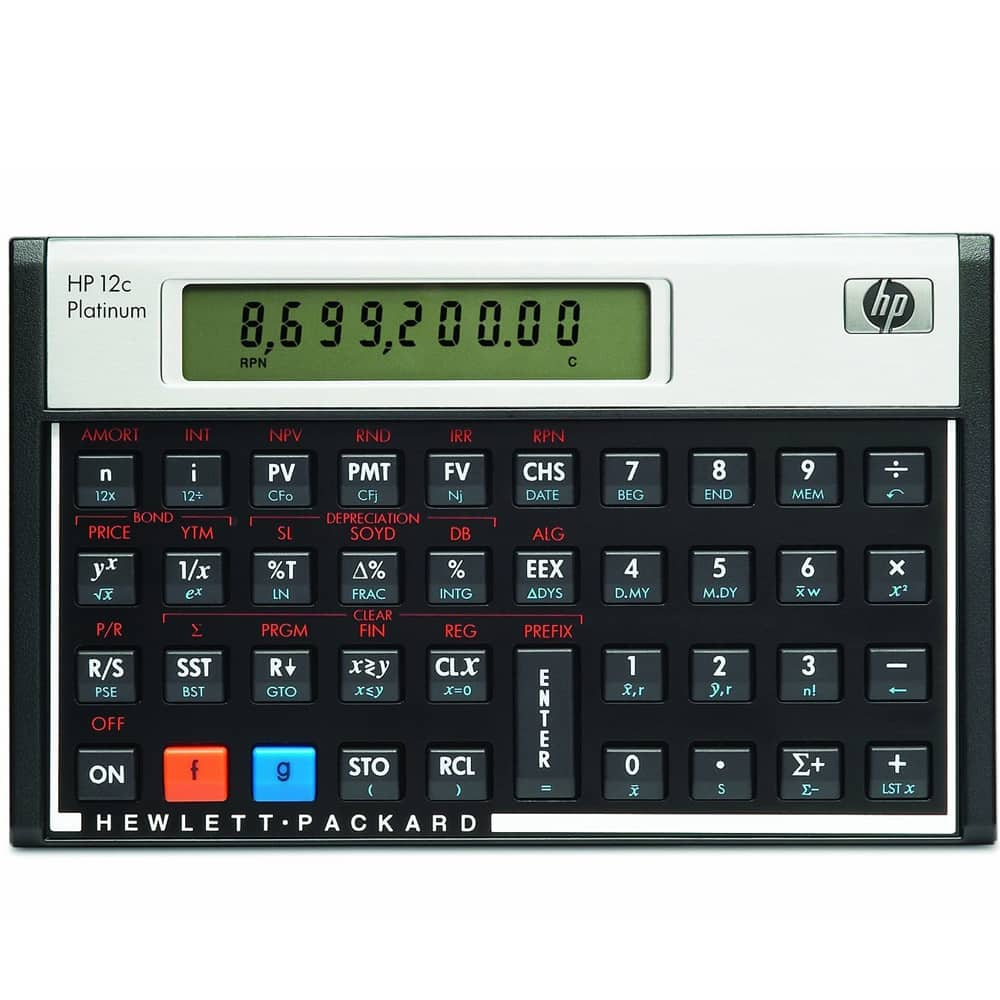
HP 12C Financial Calculator
A financial calculator can help investors work through yield, cash-flow and valuation scenarios when rates are moving quickly. The HP 12C is a compact option for bond, TVM, IRR and NPV calculations.
As an Amazon Associate I earn from qualifying purchases.
Nvidia Earnings Remain the Main AI Test
Nvidia was one of the day’s central focal points, with the chipmaker scheduled to report first-quarter earnings after the close. The company’s results were expected to carry weight beyond a single stock because Nvidia remains closely tied to the market’s view of AI infrastructure spending.
The live update said Nvidia shares were higher during the session, though that intraday move was not independently verified. What mattered for investors was the setup. Nvidia had already posted a strong year-to-date move, and the stock’s longer-term gains had made expectations difficult to separate from fundamentals.
Investors were watching several areas: demand for AI chips, margins, China-related sales exposure and the pace at which new systems are being adopted by major customers. Margin pressure was a particular focus because higher memory costs can affect profitability even when demand remains strong.
Analysts at William Blair were described as watching Nvidia’s performance across CPUs, accelerators, optics, networking, storage and China sales. Those categories point to the broader question facing investors: whether Nvidia’s growth is still broadening across the AI hardware stack, or whether the market is already pricing in too much perfection.
What Investors Were Watching in Nvidia
- CPU-related revenue, including rack-level demand discussed at Nvidia’s GTC conference.
- Accelerator demand and attach rates following Nvidia’s acquisition activity.
- Optics integration, which matters for easing congestion in large AI systems.
- Networking and storage demand, both of which are tied to full AI infrastructure buildouts.
- China sales, where restrictions and demand visibility remain important for chipmakers.
- Margins, especially if component costs continue to rise.
The report did not need to be spectacular to matter. Even a modest beat or cautious guidance could influence the broader AI trade, especially after a rally that has left many investors exposed to a narrow group of megacap technology names.
Fed Minutes Keep Rate Risk in View
The Fed minutes gave the market another reason to stay focused on inflation. The update said most officials expected that tighter policy could become appropriate if inflation stayed persistently above target, particularly if Middle East tensions continued to feed price pressure.
That is a notable backdrop for equities because the market’s preferred scenario has been lower inflation, eventual rate relief and steady growth. A renewed inflation impulse from energy would challenge that setup. It could force investors to reprice not only bond yields but also the earnings multiples they are willing to pay for growth stocks.
The original text also included a claim about future Fed leadership that was not independently verified and should not be treated as established fact. For investors, the more relevant confirmed policy issue is simpler: the Fed remains data-dependent, and any sustained rise in inflation would make an easier rate path harder to justify.
This is why oil mattered so much to Wednesday’s stock action. Lower crude prices reduce one immediate source of inflation anxiety. Higher crude prices would likely do the opposite, especially if they persisted long enough to influence consumer expectations, transportation costs and corporate margins.
Retail, Restaurants and Consumer Stocks Move on Earnings
Several consumer-facing companies moved after earnings updates or analyst commentary. Those moves gave investors a more granular look at how businesses are handling demand, costs and guidance in a still-sensitive consumer environment.
Cava shares rose in premarket trading after the company reported first-quarter results above analyst expectations and raised its full-year adjusted EBITDA outlook. The Mediterranean fast-casual chain reported earnings of 20 cents per share on revenue of $438 million, compared with analyst expectations of 18 cents per share and $411 million in revenue. Cava also lifted its full-year adjusted EBITDA forecast to a range of $181 million to $191 million, up from a prior range of $176 million to $184 million.
Target shares also moved higher after the retailer reported better-than-expected first-quarter results and raised its full-year sales outlook. The company earned $1.71 per share on revenue of $25.44 billion, ahead of expectations for $1.46 per share and $24.64 billion in revenue. Target said it expected net sales growth of 4% for the year, an increase from its prior forecast.
TJX Companies gained after reporting first-quarter earnings and revenue ahead of estimates. The off-price retailer posted $1.19 in earnings per share and $14.32 billion in revenue, compared with expectations for $1.02 per share and $14.02 billion. Its guidance for the current quarter was slightly weaker, but investors still responded to the earnings beat.
Lowe’s, by contrast, slipped even after reporting results that topped expectations and reaffirming its full-year outlook. The home improvement retailer earned an adjusted $3.03 per share on revenue of $23.08 billion, compared with expectations for $2.97 per share and $22.97 billion. The market reaction suggested that investors wanted more than a modest beat from the home improvement category.
Selected Earnings and Stock Moves
| Company | Reported Catalyst | Investor Takeaway |
|---|---|---|
| Cava | Beat first-quarter estimates and raised full-year adjusted EBITDA guidance | Restaurant demand and margin outlook looked stronger than expected |
| Target | Beat earnings and revenue expectations, lifted sales outlook | Retail demand appeared firmer than feared |
| TJX Companies | Reported earnings and revenue above estimates | Off-price retail remained a relative bright spot |
| Lowe’s | Beat estimates and reaffirmed guidance | Results were solid, but not enough to excite investors |
| Analog Devices | Beat adjusted earnings and revenue estimates | Semiconductor expectations remained demanding |
Stock Trader’s Almanac 2026
For readers following earnings, sector moves and recurring market patterns, a printed market almanac can serve as a desk reference alongside brokerage tools and news feeds.
As an Amazon Associate I earn from qualifying purchases.
Analyst Calls Highlight AI, Packaging and Transport
Analyst notes also shaped individual stock moves. Piper Sandler was described as constructive on Warby Parker after the eyeglass company discussed artificial-intelligence glasses. However, the timing, pricing and final product details around those AI glasses were not independently verified, and a firm rollout timeline should not be treated as publicly confirmed based on the information provided.
The broader investor question around Warby Parker is whether AI eyewear can become a meaningful consumer category rather than a short-lived product story. For now, the report framed Warby Parker as a consumer AI name under watch, but buyers and investors would still need clearer details on pricing, prescription options, device features, battery life, privacy controls and distribution before making a confident judgment.
UBS upgraded Packaging Corporation of America to buy from neutral, citing improved demand, tight supply and higher costs as factors that could support a June price increase. The firm also raised its price target to $248, which it said represented about 22% upside from Tuesday’s trading level. The report said PKG’s volumes had been outperforming and that the company had seen stronger bookings in April.
Jefferies upgraded C.H. Robinson to buy from hold, pointing to the company’s technology and productivity transformation. The firm raised its price target to $200 from $195, implying about 16% upside from Tuesday’s close. C.H. Robinson had been under pressure in recent months as higher truckload spot rates weighed on margins, but Jefferies viewed the selloff as a more attractive entry point.
Loop Capital looked at how higher gasoline prices can affect discount retailers. The firm’s analysis suggested that Five Below and National Vision had relatively strong positive correlations with gasoline prices, while Ollie’s Bargain Outlet and Grocery Outlet appeared to have stronger negative correlations. The logic is that higher fuel prices can hurt lower-income shoppers while also encouraging some higher-income shoppers to trade down.
For investors comparing these analyst calls, the useful distinction is whether the call is based on a near-term catalyst, a structural shift or valuation. Warby Parker’s AI eyewear story is still product-dependent. Packaging Corporation of America is tied to pricing and demand in containerboard. C.H. Robinson is a transformation and margin recovery story. Discount retailers are more directly tied to consumer pressure and trade-down behavior.
Dollar Signal and Treasury Stress Stay on the Radar
The live update also discussed a bullish technical setup in the U.S. dollar. Bank of America Securities was cited as saying the dollar had formed a golden cross pattern, a technical signal that occurs when a short-term moving average moves above a longer-term moving average. The specific signal date, index level and historical hit rates cited in the original report were not independently verified, so they should be treated as analyst commentary rather than confirmed market evidence.
Still, the dollar matters in this environment. A stronger dollar can pressure multinational earnings, weigh on commodities priced in dollars and tighten global financial conditions. It can also reflect relative confidence in U.S. rates or growth compared with other major economies.
Treasury strategists were also watching long-term yields closely. The original report described U.S. Treasurys as entering a danger zone, with strategists warning that further yield increases could spill into equities and other risk assets. That framing fits the broader market tension: stocks had been resilient, but bond yields were sending a less comfortable message.
The divergence between strong equity performance and rising long-term yields was one of the more important themes in the report. Stocks can absorb higher yields for a while if earnings growth is strong enough. The risk is that yields rise too far or too quickly, forcing investors to reduce the valuation multiples they are willing to pay.
Midday Movers Include Intuit, Hasbro, AMC and GameStop
Several single-stock moves stood out during the session.
Intuit fell after Reuters reported that the TurboTax maker planned to cut about 17% of its workforce, or roughly 3,000 employees. Workforce reductions can sometimes support margins, but they can also raise questions about growth priorities and execution risk.
Hasbro dropped after reaffirming its full-year adjusted EBITDA outlook of $1.40 billion to $1.45 billion, compared with a consensus estimate of $1.44 billion. The company also said it had started incurring costs tied to a cybersecurity breach during the second quarter of 2026.
AMC Entertainment jumped after CEO Adam Aron disclosed the purchase of 250,000 shares, valued at about $344,000. Insider purchases can be read as a confidence signal, though they do not change the underlying business fundamentals by themselves.
GameStop increased its stake in eBay to 6.55% from about 5%, according to a regulatory filing described in the report. The move came after eBay rejected GameStop’s proposed takeover offer. eBay called the bid unattractive and raised concerns about financing uncertainty, operational challenges and debt burden.
The eBay situation stands out because of the scale mismatch. The report noted that eBay’s market value was far larger than GameStop’s, making any takeover attempt unusually complex. For investors, the main issue is whether GameStop’s push represents a serious strategic plan, a capital markets maneuver or a distraction from its core business.
Global Markets Remain Uneven
Outside the U.S., global markets were mixed to weaker. European stocks struggled for direction as investors watched elevated bond yields and a lower-than-expected U.K. inflation print. The pan-European Stoxx 600 hovered near the flatline, with sectors and regional markets split.
Asia-Pacific markets closed lower as investors weighed bond-market pressure and geopolitical risk. Japan’s Nikkei 225 and Topix declined, while South Korea’s Kospi and Kosdaq also fell. Australia’s S&P/ASX 200 lost ground, and Hong Kong’s Hang Seng index slid. Mainland China’s CSI 300 was little changed in one part of the report and lower in another, reflecting the live-update nature of the source.
Japanese government bond yields were another focus. The report said Japan’s super-long yields eased after reaching record highs earlier in the week, while shorter-dated debt remained under pressure. State Street’s Masahiko Loo was cited as saying Japan’s yield moves were part of a broader global duration reset rather than a Japan-specific funding shock.
That distinction matters. If rising yields are viewed as a gradual repricing of inflation and rate expectations, markets may be able to adjust. If they are viewed as a funding shock, the risk to global assets becomes more acute.
What This Rally Means for Investors
Wednesday’s rebound was encouraging, but it did not remove the main risks facing the market. It showed that investors are willing to buy equities when oil and yields cool, especially with major AI earnings still ahead. It did not prove that inflation risk has disappeared or that bond-market pressure is finished.
For buyers, the most useful way to read the session is through three linked questions.
- Can oil prices stay contained long enough to ease inflation concerns?
- Can Treasury yields stabilize without forcing a broader reset in equity valuations?
- Can Nvidia and other AI leaders deliver results strong enough to justify their market weight?
If the answer to all three is yes, the rally has a stronger foundation. If oil or yields turn higher again, the market could quickly return to the defensive posture seen earlier in the week.
The day’s corporate updates also showed that stock selection still matters. Retailers, restaurants, chipmakers, transport companies and packaging names were moving for different reasons. Some were reacting to earnings beats. Others were responding to analyst upgrades, margin concerns, strategic moves or management signals.
That is the practical takeaway from the session. The market’s headline move was broad, but the reasons underneath it were specific. Investors were not simply buying everything. They were reassessing inflation risk, rate risk, AI demand and company-level execution all at once.