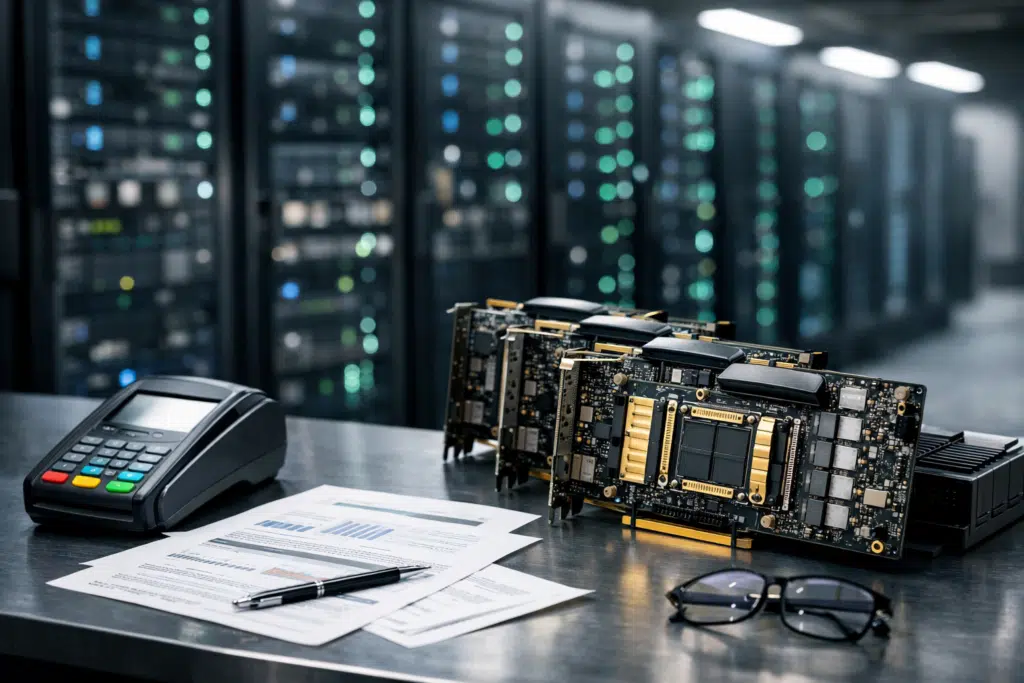
Nvidia said on December 10, 2025, that it had seen no substantiation for an alleged chip-smuggling scheme linked to claims that Chinese AI startup DeepSeek was developing its next model with Blackwell processors. U.S. export controls prohibited shipments of Blackwell chips to China.
The company’s response addressed a specific scenario involving data centers allegedly built to deceive Nvidia and its equipment-manufacturing partners before being dismantled and moved elsewhere.
“We haven’t seen any substantiation or received tips of ‘phantom data centers’ constructed to deceive us and our [original equipment manufacturer] partners, then deconstructed, smuggled and reconstructed somewhere else,” an Nvidia spokesperson said in a statement.
“While such smuggling seems far-fetched, we pursue any tip we receive,” the spokesperson added.
Nvidia’s statement did not establish which hardware DeepSeek was using for its upcoming model or resolve the allegations about its access to Blackwell chips.
H200 announcement excluded Blackwell
The response followed President Donald Trump’s December 8 announcement that the United States would allow Nvidia to ship its older H200 chips to “approved customers” in China and elsewhere. Trump said the U.S. government would receive a 25% cut of sales to China and that the Department of Commerce was finalizing the details.
Trump said Blackwell and the forthcoming Rubin chips were excluded from the arrangement. He also said he had informed Chinese President Xi Jinping of the decision and that Xi had responded positively.
The Biden and Trump administrations restricted exports of advanced chip technology to China. The Commerce Department said its controls addressed national security concerns, including the use of advanced computing chips for military applications of artificial intelligence.
DeepSeek’s earlier models
DeepSeek released its R1 reasoning model in January 2025. Nvidia and other chipmakers fell sharply during a technology-stock sell-off on January 27.
DeepSeek’s V3.1 release notes specified that the model used UE8M0 FP8 Scale parameter precision. Those notes did not substantiate the claim that the format was optimized for forthcoming domestic chips.