


What NVIDIA SANA-WM Is Trying to Solve
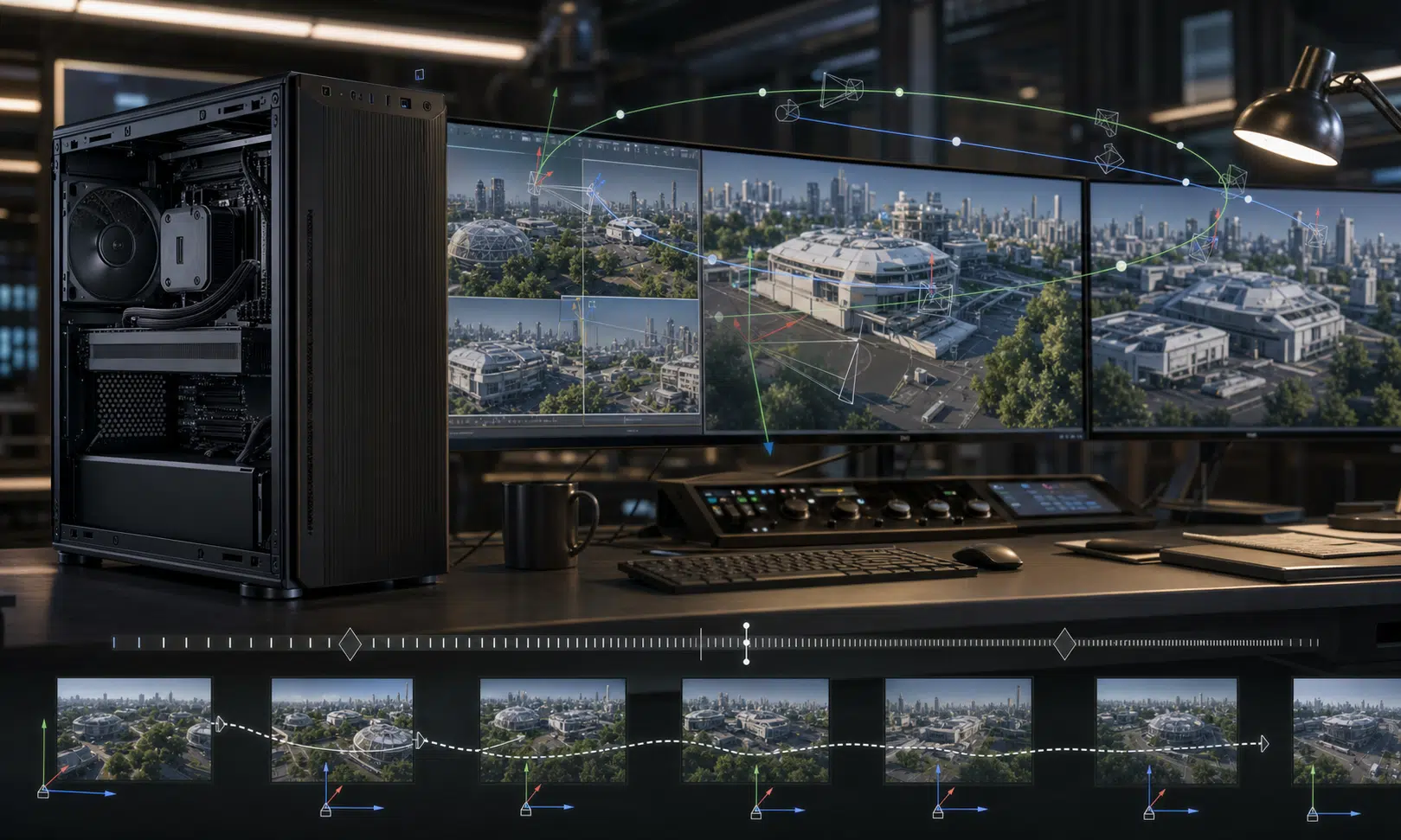
NVIDIA SANA-WM is a 2.6-billion-parameter open-source world model designed to generate minute-scale 720p video from an initial image and a controlled camera trajectory. In practical terms, it is aimed at a difficult class of AI video generation: not just making a short clip that looks plausible, but extending a scene for roughly 60 seconds while following a specified 6-DoF camera path.
That makes SANA-WM relevant beyond ordinary text-to-video demos. World models are being studied for embodied AI, robotics simulation, synthetic data generation, game-like environments, and camera-controlled scene exploration. In those settings, the model has to maintain spatial consistency over time, respond to motion controls, and avoid falling apart as the sequence grows longer.
The problem is compute. Long video sequences are expensive because standard transformer attention becomes increasingly costly as sequence length grows. For a 60-second 720p clip, the model has to reason across hundreds of latent frames. Many competitive systems either need multi-GPU inference or reduce resolution and duration to stay within memory limits.
SANA-WM is NVIDIA’s attempt to make this workload more practical. According to the project materials, the model is trained for one-minute 720p generation and offers single-GPU inference variants, including a high-quality bidirectional mode, an autoregressive chunk-causal mode, and a distilled autoregressive mode intended for faster deployment.
The Practical Pitch: Minute-Scale Video on One GPU
The headline claim is straightforward: SANA-WM can generate 60-second 720p camera-controlled videos while fitting inference on a single high-memory GPU. That does not mean the model is lightweight in a consumer-app sense. Training still involves a serious cluster, and the full pipeline can require high-end hardware. But compared with models that rely on multi-GPU inference for each generated clip, the design is notable.
The project describes three inference paths:
- Bidirectional generation: intended for higher-quality offline synthesis where the full sequence can be generated with access to broader temporal context.
- Chunk-causal autoregressive generation: designed for sequential rollout, where the video is generated chunk by chunk.
- Distilled autoregressive generation: a faster variant that reduces the number of denoising steps and is described as suitable for more deployment-oriented use cases.
The distilled variant is especially interesting for researchers and builders watching the economics of AI video. NVIDIA reports that with NVFP4 quantization, it can denoise a 60-second 720p clip in 34 seconds on a single RTX 5090. That figure should be read carefully: it describes denoising under a specific setup, not necessarily the total end-user latency of every possible workflow. Still, it points to the direction of travel: longer AI video generation is moving from large-cluster-only demos toward workflows that smaller labs can at least experiment with.

MSI GeForce RTX 5090 32G SUPRIM SOC Graphics Card
A GeForce RTX 5090-class card is relevant for readers testing local AI video workflows where GPU memory and FP4-capable performance matter. Check model requirements carefully, since full research pipelines may still exceed consumer-card memory limits.
As an Amazon Associate I earn from qualifying purchases.
Why Long Video Generation Breaks Standard Attention
The central technical barrier is attention cost. Standard softmax attention compares tokens against other tokens, and its compute and memory requirements grow sharply as the sequence gets longer. In short clips, this is manageable. At minute scale, it becomes a practical bottleneck.
SANA-Video, the predecessor system, used linear attention to reduce that burden. The SANA-WM paper describes one limitation of that earlier approach: because past information accumulates without a decay mechanism, long sequences can suffer from drift. That specific explanation comes from the model’s research materials, and it is best understood as the authors’ diagnosis of a long-horizon failure mode rather than an independently measured industry-wide rule.
SANA-WM replaces most of the attention blocks with frame-wise Gated DeltaNet blocks. Instead of processing one token at each recurrent step, the frame-wise version processes an entire latent frame. The stated goal is to keep the recurrent state constant in size as the video gets longer, while still allowing the model to update its internal representation as the camera moves through the scene.
The architecture also keeps some conventional softmax attention. The reported backbone uses 20 transformer blocks in total: 15 frame-wise GDN blocks and 5 softmax attention blocks. The softmax layers are placed at intervals to preserve exact long-range recall where recurrence alone may not be enough.
The Four Main Design Ideas Behind SANA-WM
SANA-WM is not built around a single trick. The system combines a hybrid attention backbone, camera-control conditioning, a two-stage refinement pipeline, and a data annotation process for metric-scale camera poses.
1. Hybrid Linear Attention with Gated DeltaNet
The first design choice is the hybrid attention structure. SANA-WM uses frame-wise Gated DeltaNet blocks for most of the network, with conventional softmax attention inserted at selected layers.
The paper describes two mechanisms inside the GDN update: a decay gate that can reduce the influence of stale past information, and a delta-rule correction that updates the state based on residual error rather than simply accumulating everything. The intended effect is to support long rollouts without letting early-frame information dominate indefinitely.
The authors also describe a key-scaling approach meant to stabilize training. In their formulation, keys are scaled by a factor based on both the head dimension and the number of spatial tokens per frame. The paper reports that this helps avoid NaN divergence events seen with other scaling choices. Since those exact failure-step numbers come from the training study, they should be treated as reported experimental results rather than a general guarantee for every implementation.
2. Dual-Branch Camera Control
Camera control is what separates SANA-WM from a simpler video generator. The model is designed to follow a continuous 6-DoF trajectory, not merely infer motion from a prompt.
The project describes two camera-control branches:
- Coarse branch: operates at the latent-frame rate and uses Unified Camera Positional Encoding to represent the broader camera trajectory.
- Fine branch: addresses the fact that each latent token compresses multiple raw frames, each with its own camera pose. The paper says this branch uses Plucker raymaps from the raw frames inside a VAE temporal stride and injects that information into the model through a projection layer.
This dual approach is meant to preserve both global trajectory structure and smaller within-stride motion details. NVIDIA’s reported ablations on OmniWorld suggest that combining UCPE with Plucker mixing improves camera motion consistency compared with UCPE alone. Those figures are useful as paper-reported evidence, but they should not be treated as independently audited benchmarks.
3. Two-Stage Generation and Refinement
SANA-WM uses a second-stage refiner to improve the first-stage output. The first model is responsible for producing a temporally consistent long video. The refiner is then used to reduce artifacts and improve fidelity.
The source materials describe this refiner as being initialized from a 17B LTX-2 model with rank-384 LoRA adapters. The refiner uses a truncated-sigma flow-matching setup, where stage-one latents are perturbed with substantial noise and the model learns to move them toward a higher-quality target. At inference, the reported setup uses only three Euler denoising steps.
This matters commercially because refinement can be the difference between a technically impressive research output and something usable in a production-like visual pipeline. Long videos often fail gradually: structures warp, details soften, and the final seconds look less coherent than the opening. NVIDIA reports that the refiner substantially reduces long-horizon visual drift on its benchmark splits.
4. Camera-Pose Annotation at Scale
Training a camera-controlled world model requires camera pose labels. Ordinary video datasets usually do not provide accurate metric-scale 6-DoF camera trajectories. SANA-WM therefore relies on an annotation pipeline that estimates or constructs that information.
The research team modified a camera-pose annotation system by replacing its depth backend and improving how intrinsics are handled. The paper describes a combination of long-sequence-consistent depth and per-frame metric scale estimation, along with bundle adjustment that treats focal length and principal point as per-frame variables. That is important for internet video, where camera properties can vary across clips and frames.
The resulting training corpus is reported to include 212,975 clips with metric-scale pose annotations, drawn from a mix of real and synthetic sources. For some data, such as DL3DV scene captures, the team generated longer camera-path videos by fitting 3D Gaussian Splatting reconstructions, rendering one-minute trajectories, and refining the renders to reduce artifacts.
Training Strategy and Hardware Requirements
SANA-WM is more efficient than many large video systems at inference, but it is still expensive to train. The reported training setup uses 64 H100 GPUs.
The training process has two broad phases. First, the team adapts the LTX2 VAE to the SANA-Video supervised fine-tuning data. Then the main diffusion transformer training follows a progressive schedule.
| Training Phase | Purpose | Reported Duration |
|---|---|---|
| VAE adaptation | Adapt LTX2 VAE to the SANA-Video training data | About 3.5 days |
| Stage 1 | Adapt SANA-Video to frame-wise GDN on short clips | About 2.75 days |
| Stage 2 | Add hybrid attention by replacing selected GDN layers with softmax attention | About 2 days |
| Stage 3 | Scale to 60-second sequences and add dual-branch camera control | About 8 days |
| Stage 4 | Fine-tune chunk-causal rollout and apply distillation | About 2.5 days |
This progressive schedule is practical engineering. Instead of jumping straight into full one-minute training, the team first adapts the architecture on shorter clips, then adds hybrid attention, then scales up the sequence length and camera conditioning. That makes failure modes easier to isolate before the most expensive stage begins.
The model also uses context parallelism during long-sequence training. The paper describes a method for distributing the latent sequence across GPUs using prefix-sum composition of GDN transition matrices. In simpler terms, the recurrent computation is arranged so multiple GPUs can work on different parts of the sequence without changing the mathematical result.
Custom fused Triton kernels are also reported to improve the efficiency of GDN scan and gate operations. For teams considering implementation cost, that detail matters: the paper’s throughput depends not only on the model design, but also on low-level kernel work.

NVIDIA RTX 6000 Ada Generation 48GB Workstation GPU
A professional 48GB GPU is more appropriate than a gaming card for some AI research workflows that need larger local memory budgets. It is still not a substitute for the multi-GPU H100 training setup described in the article.
As an Amazon Associate I earn from qualifying purchases.
Reported Benchmark Results
NVIDIA introduces a 60-second world-model benchmark built around 80 initial scenes across four scene categories: game, indoor, outdoor-city, and outdoor-nature. Each scene is paired with simple and hard camera trajectory splits.
The main comparison uses multi-step, undistilled autoregressive settings. SANA-WM with its second-stage refiner is reported to achieve strong camera-control accuracy while maintaining competitive visual quality against larger multi-GPU systems.
| Metric | SANA-WM Reported Result | Why It Matters |
|---|---|---|
| Resolution and duration | 60-second video at 720p | Targets longer and higher-resolution generation than many practical baselines |
| Inference footprint | Single-GPU generation, depending on variant and hardware | Reduces the barrier for research and experimentation |
| Full pipeline memory | Reported at 74.7 GB | Fits within an 80 GB H100 budget |
| Stage-one memory | Reported at 51.1 GB | Shows the base generation model is lighter than the full refined pipeline |
| Throughput | Reported at 22.0 videos per hour on 8 H100s with refiner | Suggests materially higher throughput than some larger compared systems |
| Distilled deployment | Reported 34-second denoising for a 60-second 720p clip on RTX 5090 with NVFP4 | Points toward faster experimentation on high-end single-GPU machines |
The benchmark claims are promising, but they should be read in the right context. This is a new benchmark from the team behind the model, so independent evaluation will matter. The most useful next step for practitioners is to test SANA-WM on scenes, camera paths, and content types that resemble their actual workload.
What Makes SANA-WM Commercially Interesting
SANA-WM is still a research model, but it speaks to several practical markets.
For robotics teams, the appeal is controlled visual rollout. A model that can extend a scene under specified camera motion could support simulation, pretraining, data generation, and inspection workflows. It is not a physics engine, and the source materials note limitations around explicit 3D scene memory and difficult dynamic scenes, but the direction is relevant.
For game and virtual production teams, the value is rapid environment exploration. A single image plus a camera path could become a way to preview scene movement, test visual directions, or generate rough synthetic footage before committing to heavier 3D production.
For AI video tooling companies, the most important lesson may be architectural rather than product-level. SANA-WM shows one route to longer video: reduce attention cost, preserve camera conditioning, use a refiner for quality, and invest heavily in pose-labeled data.
For individual creators, the near-term story is more limited. A 74.7 GB full pipeline memory figure still points to workstation-class or cloud hardware. The distilled RTX 5090 result is encouraging, but that does not automatically translate into a polished consumer app. The model is more immediately relevant to researchers, infrastructure teams, and advanced builders than casual video editors.
Important Limitations
SANA-WM should not be confused with a complete simulation engine. The model generates video that follows camera trajectories, but the source materials indicate that it does not maintain explicit 3D scene memory. That matters when scenes include moving objects, unusual viewpoints, or interactions that require persistent object-level reasoning.
Several limitations follow from that:
- Dynamic scenes can still drift over long rollouts.
- Rare camera viewpoints may expose weak geometry.
- Objects may not remain physically consistent across the full minute.
- Generated video may look plausible without being reliable enough for safety-critical robotics use.
- Reported benchmark wins need independent reproduction before buyers treat them as settled performance claims.
For commercial evaluation, the right question is not whether SANA-WM is impressive in general. It is whether the model holds up on the exact distribution of scenes, camera paths, motion patterns, and quality thresholds a team needs.
How to Think About SANA-WM Against Other World Models
The most useful comparison is not simply parameter count. SANA-WM is smaller than some competing systems but is designed around efficiency at minute-scale generation. That makes the comparison multidimensional.
| Decision Factor | Why It Matters | SANA-WM Position |
|---|---|---|
| Video length | Short clips can hide drift; one-minute clips expose it | Designed for 60-second generation |
| Resolution | 720p is more useful for inspection and downstream use than low-resolution previews | Targets 720p output |
| Camera control | Trajectory following is essential for simulation-like use cases | Uses dual-branch 6-DoF camera conditioning |
| Inference hardware | Single-GPU inference changes experimentation cost | Reported to support several single-GPU variants |
| Visual refinement | Long clips often need a quality pass after coarse generation | Uses a second-stage refiner |
| Openness | Researchers need access to code, weights, and licensing details | Presented as open source, with code and model resources available through the SANA project; users should review specific weight and dataset licenses |
That last point is important. “Open source” can mean different things across code, weights, datasets, and commercial rights. The code license may be permissive while individual weights or datasets have separate terms. Any company considering production use should review the model, dataset, and weight licenses directly before building a product around it.
Who Should Pay Attention
SANA-WM is most relevant for groups that need long, controlled video generation and have the technical capacity to evaluate research code.
- Robotics researchers: for studying visual rollouts, camera-conditioned scene continuation, and synthetic data workflows.
- Embodied AI teams: for exploring how video world models can support planning and environmental understanding.
- AI video companies: for architectural ideas around long-context video generation and refinement.
- Game technology teams: for early experiments in camera-guided environment generation.
- Compute buyers: for understanding where high-memory GPUs still matter in AI media workloads.
It is less immediately useful for users who want a turnkey creative tool. The model’s significance is in capability and efficiency research, not in a polished consumer workflow.
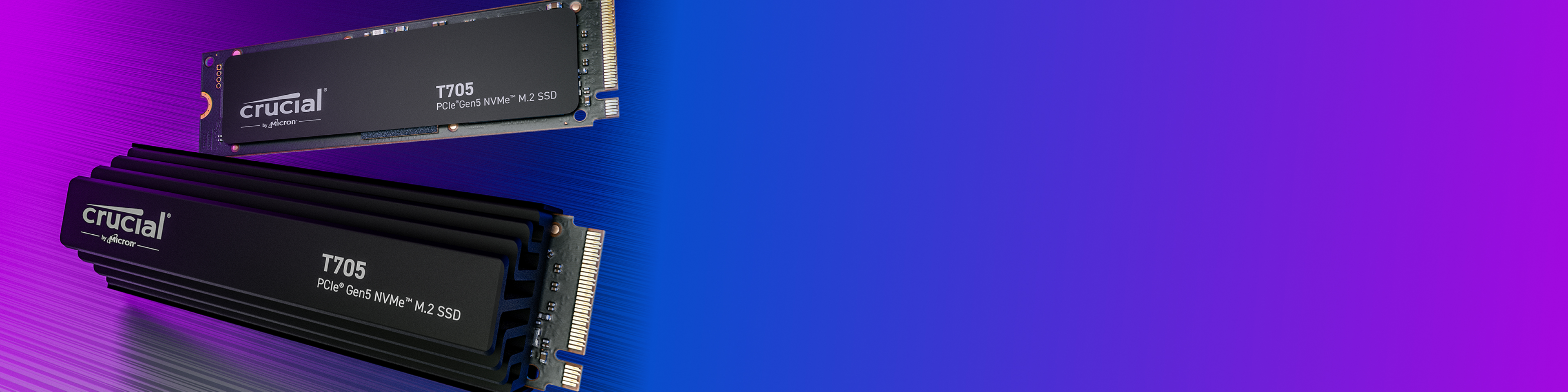
Crucial T705 4TB Gen5 NVMe SSD
AI video experiments can generate large datasets, checkpoints, and output folders quickly. A high-capacity Gen5 NVMe SSD helps keep active project files on fast local storage, especially when working with repeated video runs.
As an Amazon Associate I earn from qualifying purchases.
Bottom Line
NVIDIA SANA-WM is a serious step toward practical long-horizon, camera-controlled AI video generation. Its main contribution is not only that it generates 60-second 720p clips, but that it does so with an architecture designed around single-GPU inference, hybrid attention, camera-pose conditioning, and refinement.
The model still has the usual caveats of frontier video generation: dynamic scenes can drift, geometry can be fragile, and benchmark results need outside testing. But for researchers and technically capable teams, SANA-WM is worth watching because it moves world models closer to a usable compute envelope.
The commercial takeaway is clear: long-form AI video will not be solved by bigger models alone. The winners will likely combine efficient sequence modeling, better control signals, stronger data annotation, and hardware-aware inference paths. SANA-WM is one of the clearest examples of that direction so far.