


Billet Labs has built another unusual water-cooled PC, this time chasing a harder target than visual drama: a powerful gaming system with no fans. The London-based cooling firm’s latest project uses a passive radiator layout intended to move heat upward through a convection chimney effect, but the result is less a finished buyer template than a useful warning about modern high-end hardware.
The build is based around enthusiast-class parts, with Billet Labs presenting it as using an AMD Ryzen 7 9800X3D, an Nvidia GeForce RTX 5080, 32GB of memory, 2TB of storage, and a B850 Aorus Pro motherboard. Those component details come from the project presentation rather than independent teardown verification, but the broader point is clear enough: this is not a low-power silent PC built around compromise silicon. It is trying to cool a serious gaming system passively.
What Billet Labs Was Trying To Solve
The project follows earlier Billet Labs showcase systems, including the wall-mounted Walley build and the Victorian-radiator-inspired Raddy PC. Both helped establish the company’s taste for exposed metalwork, custom plumbing, and cooling hardware that looks closer to industrial design than a standard desktop case.
The problem, according to Billet Labs’ own explanation, was noise. Walley could move plenty of air with multiple fans, but fan noise became part of the experience when the system was pushed. Reducing fan speed made temperatures less comfortable. Raddy was also not the silent living-room answer the team wanted, partly because it still used fans and partly because pump behavior reportedly introduced its own maintenance and noise issues.
That context matters for buyers because “water-cooled” and “silent” are often treated as if they naturally belong together. They do not. A water loop moves heat away from the CPU and GPU, but the system still has to dump that heat into the room. Most gaming PCs do that with radiator fans. Billet Labs’ new build tries to remove that final noisy step.
How The Passive Cooling Layout Works
Instead of using fans to force air through radiator fins, the build places multiple large radiators above the heat-generating hardware. Billet Labs describes the layout as relying on a convection chimney effect: warm air rises through the radiator stack, encouraging cooler air to enter from below.
That principle is sound in general, but the execution is demanding. Passive radiators need far more surface area than fan-assisted radiators because natural airflow is weak compared with even a slow 120mm fan. The build appears to address that with three radiators in different large sizes, along with a copper-heavy visual style and a substantial aluminum mounting platform.
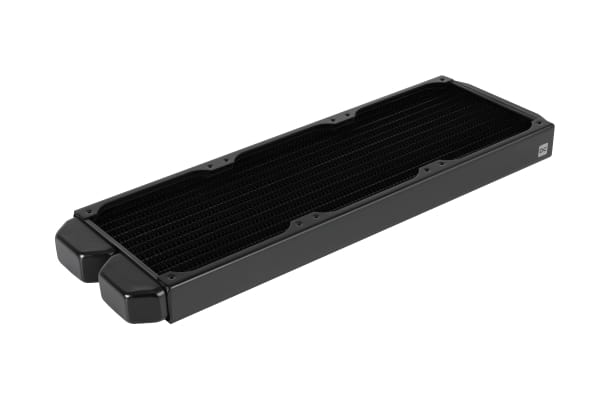
Alphacool NexXxoS ST30 360mm Radiator
A 360mm radiator gives a custom loop more heat-exchange surface before fans need to ramp up. It is most useful in roomy cases where low fan speed matters more than compact packaging.
As an Amazon Associate I earn from qualifying purchases.
For practical PC builders, the design highlights several tradeoffs:
- Passive cooling can reduce fan noise, but it does not remove heat output.
- Large radiators help, but they need open airflow and physical space.
- The pump can still be audible, so “fanless” is not always the same as silent.
- High-end CPUs and GPUs can overwhelm passive radiator capacity under sustained load.
Thermal Results: Impressive, But Not Comfortable
Billet Labs’ presentation shows the PC being tested across idle use, light games, heavier games, and synthetic workloads. Some specific test details, including exact timings and the full stress-test table mentioned in the original discussion, have not been independently verified here, so they are best treated as reported project results rather than lab-confirmed benchmarks.
Even with that caveat, the pattern is useful. In gaming, the system reportedly avoided GPU thermal throttling, while the CPU could reach the mid-90s Celsius range and throttle lightly in some scenarios. In heavier combined workloads, Billet Labs reported power draw above 450W and coolant temperatures around or above 60C, which was described as near the pump’s rated limit.
That is the core lesson. The build can function, and it can look spectacular doing it, but passive water cooling alone appears stretched by a Ryzen 7 9800X3D and RTX 5080-class configuration. The radiator chimney concept helps, but it cannot create the pressure and airflow that a fan supplies.
| Area | What the build shows | Buyer takeaway |
|---|---|---|
| Noise | No radiator fans are used in the passive configuration. | Fan noise can be reduced, but pump and component noise still matter. |
| Cooling | The GPU reportedly stayed under control in gaming, while the CPU could throttle. | CPU thermals may be the limiting factor in a passive high-end build. |
| Size | The system depends on multiple large radiators mounted above the hardware. | This is not a compact cooling approach. |
| Practicality | Billet Labs suggests adding a single top fan could make a major difference. | A near-silent fan-assisted setup may be more sensible than fully passive cooling. |
Verdict: A Showcase Build, Not A Sensible Template
As a custom project, the Billet Labs fanless PC is compelling. The copper, exposed plumbing, stacked radiators, and chimney layout make it feel like a piece of functional industrial art. It also proves that passive cooling can do more than many builders might expect when given enough radiator area and careful layout.
As a buying idea, though, it is harder to recommend. A conventional high-quality water loop with very slow fans would likely be smaller, safer, easier to maintain, and more thermally comfortable. Even Billet Labs’ own conclusion points in that direction, with the team expecting that one 120mm fan pulling air upward through the radiator stack could substantially improve results.
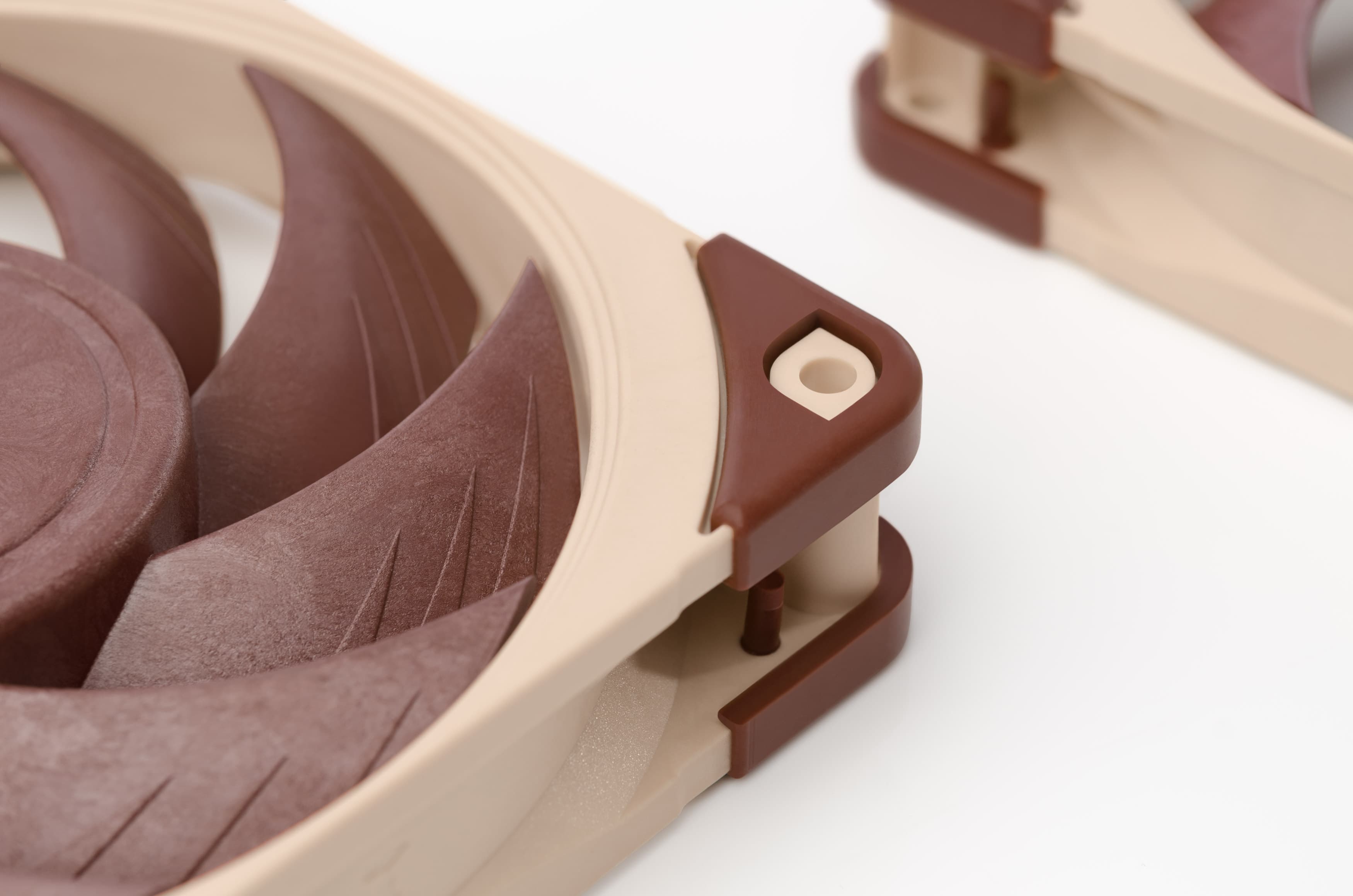
Noctua NF-A12x25 PWM 120mm Fan
A premium PWM fan can add controlled airflow through a radiator stack without turning a quiet build into a loud one. It is a practical option for builders who want near-silent cooling instead of fully passive cooling.
As an Amazon Associate I earn from qualifying purchases.
For buyers chasing a quiet gaming PC, the smarter target is not absolute fanlessness. It is controlled airflow: oversized radiators, efficient fans running at low RPM, sensible pump tuning, and components chosen with realistic heat output in mind. This Billet Labs build is valuable because it makes that tradeoff visible. Silence is possible, but with an RTX 5080-class GPU and a top-end gaming CPU, fully passive cooling still asks a lot from physics.