

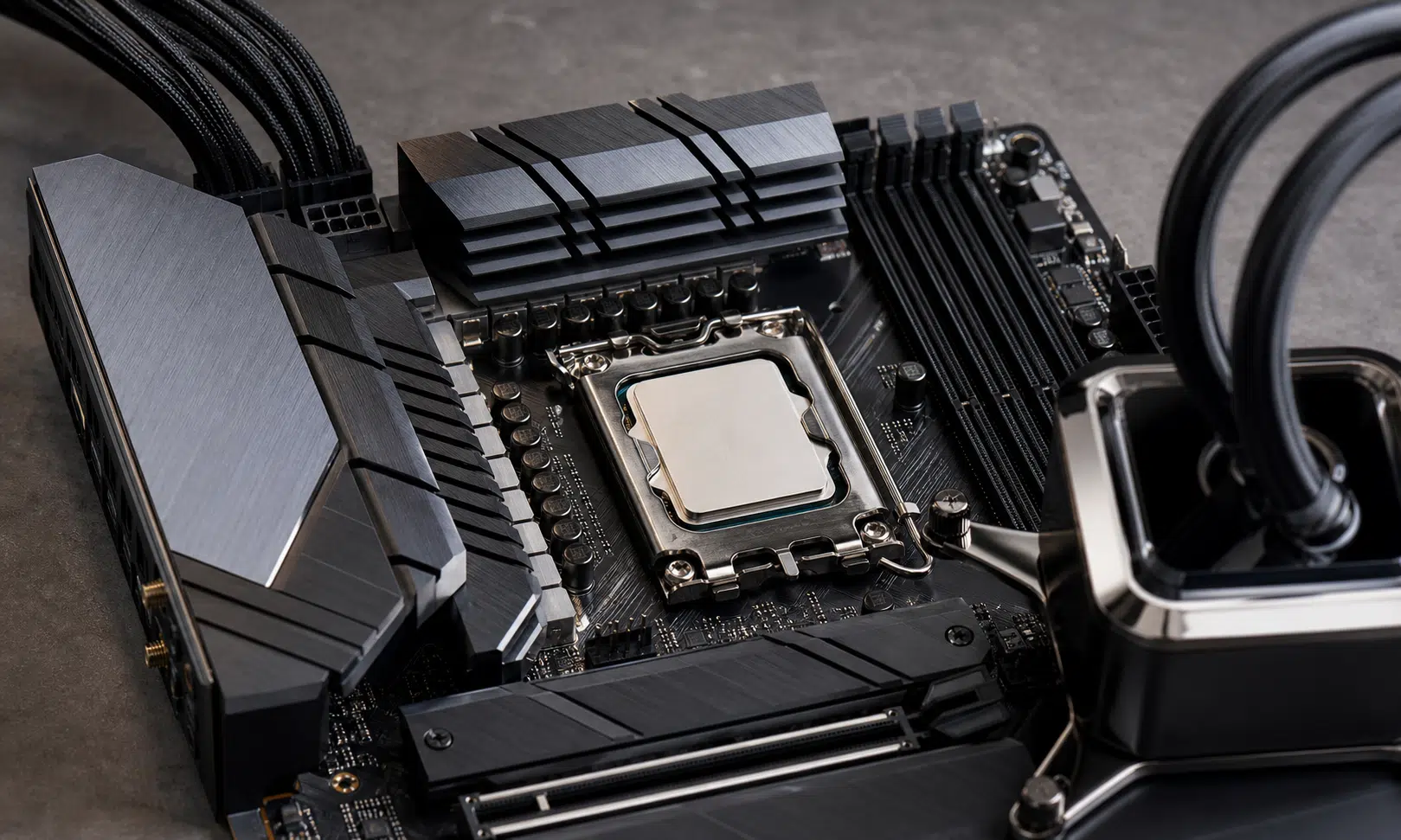

Intel’s next major desktop CPU platform is starting to look less like a routine refresh and more like a full reset for high-end PC builders. The latest Nova Lake rumors point to a flagship desktop chip with as many as 52 cores, a new LGA1954 socket, and a short-term boost power target that could reach 474W on the most extreme configuration.
That number should not be treated as a confirmed retail specification. Intel has not publicly confirmed the final Nova Lake-S lineup, branding, socket details, motherboard requirements, or launch timing. But even as an unverified platform rumor, the shape of the information is useful for buyers because it suggests the next high-end Intel desktop upgrade may involve more than simply swapping in a faster processor.
If the rumored specs hold, Nova Lake could push Intel’s mainstream desktop platform into territory where motherboard power delivery, cooling capacity, case airflow, and power supply headroom matter even more than they already do on today’s enthusiast systems.
The headline number is 52 cores, but the power target matters more
The rumored flagship Nova Lake desktop configuration is said to use a dual-compute-tile design and top out at 52 total cores. The expected split is 16 performance cores and 32 efficiency cores, with the remaining count likely tied to additional low-power or auxiliary cores depending on Intel’s final architecture naming and layout.
For buyers, the core count is only half the story. The more important detail is the reported 474W PL2 target. In Intel desktop tuning, PL2 is generally understood as a short-duration boost power ceiling rather than the processor’s continuous rated draw. That distinction matters, but it does not make the number trivial. A CPU that can briefly approach that level still demands a motherboard and cooling setup designed for heavy transient loads.
The rumored power behavior may only apply to top-end dual-tile models. Lower-end Nova Lake-S chips, if the lineup follows the leaked configuration range, would likely sit in much more conventional power classes. That makes the 474W figure less of a warning about every Nova Lake system and more of a signal about where Intel may be willing to take its halo desktop part.
There is also chatter around an even higher emergency power state, sometimes described as PL4, potentially above 700W. That should be treated cautiously. Emergency or transient limits are not the same thing as normal sustained power consumption, and they are not a useful way to estimate everyday gaming or productivity draw. Still, the presence of those numbers in the rumor cycle reinforces the same basic point: the highest-end Nova Lake configuration could be built for aggressive boosting, not quiet efficiency.
A new socket could make this a platform upgrade, not a drop-in CPU
Nova Lake-S is expected to require a new generation of motherboards built around the rumored LGA1954 socket. That would make sense for a platform with a different package, higher-end power delivery expectations, and updated I/O, though Intel has not confirmed the socket publicly.
The motherboard side may be split by sustained power class. Rumored board guidance includes support tiers for 35W, 65W, 125W, and 175W CPUs, which would give vendors a clearer way to segment entry-level, mainstream, and enthusiast boards. For anyone building a system, that kind of segmentation would be worth watching closely. A board that technically supports the socket may not be the board you want under a high-end unlocked CPU.
The most eye-catching platform rumor is that some enthusiast boards, likely in a future high-end chipset class, may include three EPS 8-pin CPU power connectors instead of the two commonly seen on premium boards today. That does not necessarily mean every user would need all three connected for normal operation. The third connector may be aimed at extreme overclocking and sustained stress scenarios rather than stock use.
Even so, it is a clear buyer signal. If board makers are preparing designs with three CPU power connectors, the top of the Nova Lake stack is probably not being optimized around small coolers, compact cases, or budget power supplies.

Corsair RM1000x SHIFT 1000W Power Supply
A quality 1000W ATX 3.x power supply is a sensible match for builders planning around a high-end CPU and modern graphics card. The RM1000x SHIFT is fully modular and designed for cleaner cable access in compatible cases.
As an Amazon Associate I earn from qualifying purchases.
What the rumored Nova Lake-S lineup looks like
The expected desktop lineup is rumored to range from 6-core models to a 52-core flagship. The chips may arrive under Core Ultra 400S branding, positioning them as a more substantial desktop generation than a simple refresh. That branding and the exact model names remain unconfirmed.
The flagship configuration is expected to pair its high core count with a new Big Last Level Cache design. The intent appears to be more competitive gaming performance, especially against AMD’s 3D V-Cache desktop CPUs, though no benchmark data is available yet. Without performance numbers, the cache rumor is best treated as a sign of design direction rather than evidence of a gaming win.
Other rumored platform features include DDR5-8000 memory support, integrated Xe3 graphics, Thunderbolt 5, PCIe 5.0 connectivity, and an upgraded NPU for AI workloads. Those are plausible directions for a new premium desktop platform, but they are not confirmed retail features. Buyers should wait for motherboard specifications and Intel’s final platform disclosures before planning a build around any one feature.
| Rumored Nova Lake-S detail | What it could mean for buyers |
|---|---|
| Up to 52 cores | Better suited to heavy multi-threaded work than typical gaming-only builds, if performance scales well. |
| Up to 474W PL2 on the flagship | Cooling, motherboard VRM quality, and PSU headroom may become major buying considerations. |
| New LGA1954 socket | A new motherboard would likely be required. |
| Possible three EPS 8-pin connectors on high-end boards | Mostly relevant to extreme boards and overclocking-focused systems. |
| DDR5-8000 support | Could raise the value of faster DDR5 kits, depending on final memory compatibility. |
Gaming buyers should not overread the core count
A 52-core desktop CPU sounds dramatic, but most gaming PCs do not need anything close to that many cores. Games have become better at using modern multi-core CPUs, but high frame rates are still often limited by GPU performance, game engine behavior, cache, memory latency, and clock speed rather than raw core count.
That is why the rumored Big Last Level Cache may be more interesting for gamers than the headline 52-core figure. AMD’s 3D V-Cache chips have shown that cache-heavy designs can be extremely effective in gaming workloads. If Intel is building a similar counterweight into Nova Lake, the gaming story may come down to cache behavior and latency as much as core count.
For a gaming-focused buyer, the practical question is not whether Intel can ship a huge flagship chip. It is whether the best gaming model in the family delivers strong frame rates without requiring expensive cooling and a premium motherboard. The fastest gaming CPU in a lineup is not always the one with the highest core count.
Workstation users may have a stronger case
The rumored flagship makes more sense for users who compile code, render, encode video, run heavy simulation tools, or keep many demanding workloads active at once. Those workloads can benefit from a large number of cores, especially when the software scales cleanly across performance and efficiency cores.
That does not automatically make a 52-core Nova Lake chip a good buy. Sustained performance will depend on power limits, cooling, motherboard behavior, and how Intel schedules work across the architecture. A CPU with a very high boost ceiling can still settle into a lower sustained state if thermals or board limits get in the way.
The buyer-aware version is simple: if your work earns money or saves meaningful time from more cores, the high-end Nova Lake rumors are worth watching. If your PC is mainly for gaming, browsing, and occasional creative work, the flagship may be overbuilt even before pricing enters the picture.
Cooling and power supply planning could get complicated
A rumored 474W boost target does not mean a Nova Lake system will constantly dump that much heat into a room. It does mean that the highest-end configurations may require serious cooling to maintain boost behavior under heavy load. Large liquid coolers, strong case airflow, and carefully tuned motherboard limits could become part of the normal conversation for flagship builds.
Power supply sizing also becomes less straightforward when the CPU and GPU can both create large transient spikes. A high-end graphics card already dominates many gaming system power budgets. Add a flagship CPU with aggressive boost behavior, and the safe PSU choice may shift upward, especially for builders who want quiet operation or overclocking headroom.
Motherboards will matter too. If the platform really does segment boards by sustained power class, buyers should avoid pairing an expensive unlocked CPU with the cheapest compatible board. VRM quality, firmware tuning, connector layout, and cooling around the socket could have real performance implications.
Verdict: wait for confirmed specs before planning a build
Nova Lake is shaping up to be one of Intel’s more interesting desktop platform changes, but the current details are still rumors. The safest read is that Intel appears to be preparing a much broader desktop stack, potentially with a very aggressive flagship, a new socket, and a platform designed to support higher power delivery than today’s mainstream boards.
That is not enough to justify holding off every CPU purchase. It is enough to make high-end Intel buyers cautious. Anyone planning an expensive gaming or workstation build should avoid buying supporting hardware around unconfirmed Nova Lake assumptions. Socket, memory support, board power classes, and final CPU behavior all need official confirmation.
For now, the most practical takeaway is that Nova Lake may not be a casual upgrade. If the rumored 52-core flagship and high power targets are close to reality, the full cost of the platform will include the motherboard, cooling, power supply, and case airflow needed to keep it performing properly.