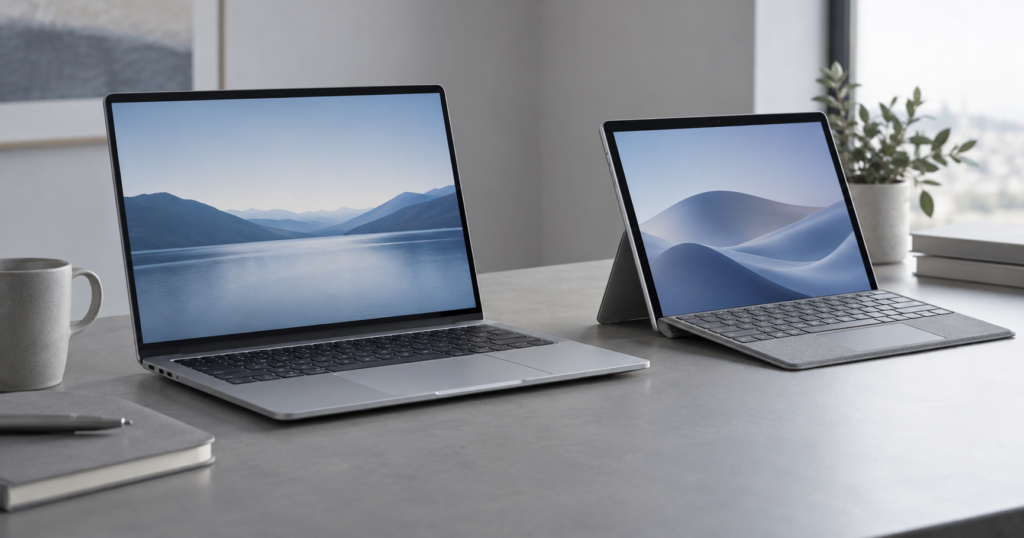
Microsoft’s Surface Laptop and Surface Pro refresh is less about a dramatic redesign and more about what buyers are being asked to pay for the next wave of Windows hardware.
The company is presenting the Surface Laptop 8th Edition and Surface Pro 12th Edition as its latest premium Surface updates, with Qualcomm Snapdragon X2 chips at the center of the pitch. Microsoft claims the new chips can deliver up to 53 percent faster graphics performance than the prior generation, along with battery life rated at up to 15.5 hours. Those numbers should be treated as manufacturer claims until independent testing shows how the machines behave in real use.
The more immediate change is pricing. The Surface Laptop 8th Edition is listed from $1,599 in the US, while the Surface Pro 12th Edition starts at $1,499 before adding the detachable keyboard. For buyers who have been watching Surface devices as premium but still mainstream Windows machines, those entry prices move the line noticeably upward.
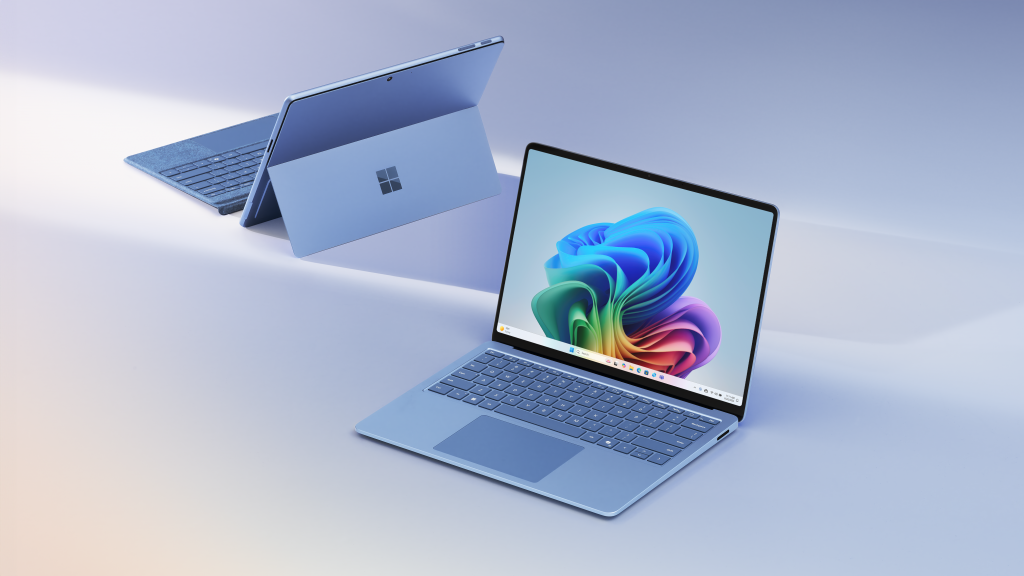
Microsoft Surface Copilot+ PC
Compare current Surface Laptop and Surface Pro configurations carefully, especially memory, storage, keyboard inclusion, and processor generation before choosing a model.
As an Amazon Associate I earn from qualifying purchases.
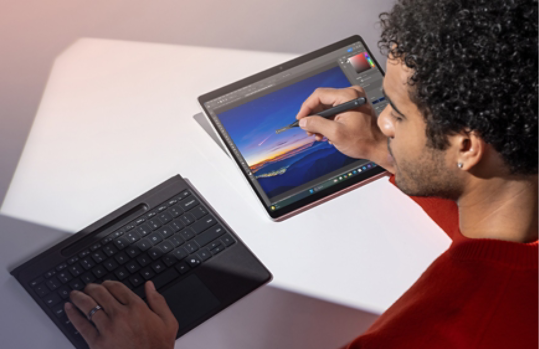
Microsoft Surface Pro Flex Keyboard
A Surface Pro keyboard is an important part of the total cost if you plan to use the tablet as a laptop replacement. Check compatibility with the exact Surface Pro generation before buying.
As an Amazon Associate I earn from qualifying purchases.
The Surface Laptop Starts Much Higher
The Surface Laptop 8th Edition keeps the familiar Surface Laptop formula: a clean clamshell design, a tall 3:2 display shape, and a spec sheet built around Microsoft’s push into Arm-based Windows PCs. The US starting configuration is listed with 16GB of RAM and 512GB of storage.
That matters because the starting price is no longer sitting near the old $999 entry point associated with the previous Surface Laptop generation at launch. Microsoft later moved that prior starting price higher, but the new $1,599 figure still makes the Surface Laptop 8th Edition feel less like a straightforward annual refresh and more like a premium repricing.
| Device | Starting price | Base details noted |
|---|---|---|
| Surface Laptop 8th Edition | $1,599 | 16GB RAM, 512GB storage in the US starting configuration |
| Surface Pro 12th Edition | $1,499 | Detachable keyboard sold separately |
| Surface Laptop 13 | $1,150 | Uses the base Snapdragon X chip |
A correction around storage is important for US shoppers. Microsoft’s materials initially showed a 256GB Surface Laptop 8th Edition starting configuration, but that was later described as an error for the US market. The 256GB version is an international SKU, while the US model starts at 512GB.
That makes the base spec stronger than some lower-cost laptops, but it also reduces the room for shoppers who simply want the cheapest way into a new Surface Laptop. Anyone comparing Windows laptops on price will need to weigh the Surface design and display against the fact that last-generation machines may remain available through retailers at lower prices.
The Surface Pro Still Needs Its Keyboard
The Surface Pro 12th Edition follows a similar pattern. Microsoft is tying the update to Snapdragon X2 silicon, but the starting price is the part most buyers will feel first. The tablet starts at $1,499, and that does not include the detachable keyboard.
That keyboard caveat is not new for Surface Pro, but it becomes more noticeable as the base price climbs. A Surface Pro without its keyboard can still work as a tablet-first Windows device, but many people buy the Pro because it can stand in for a laptop. Once the keyboard is added, the real entry cost is higher than the number attached to the device itself.
The practical question is whether the Surface Pro’s flexibility is worth the premium over a traditional laptop. Buyers who want a thin Windows tablet, pen-friendly design, and detachable form factor may still find the Pro compelling. Buyers who mostly type, browse, work in documents, and sit in video calls may get better value from a clamshell machine, especially if discounted older models are still on shelves.
New Colors, Familiar Surface Tradeoffs
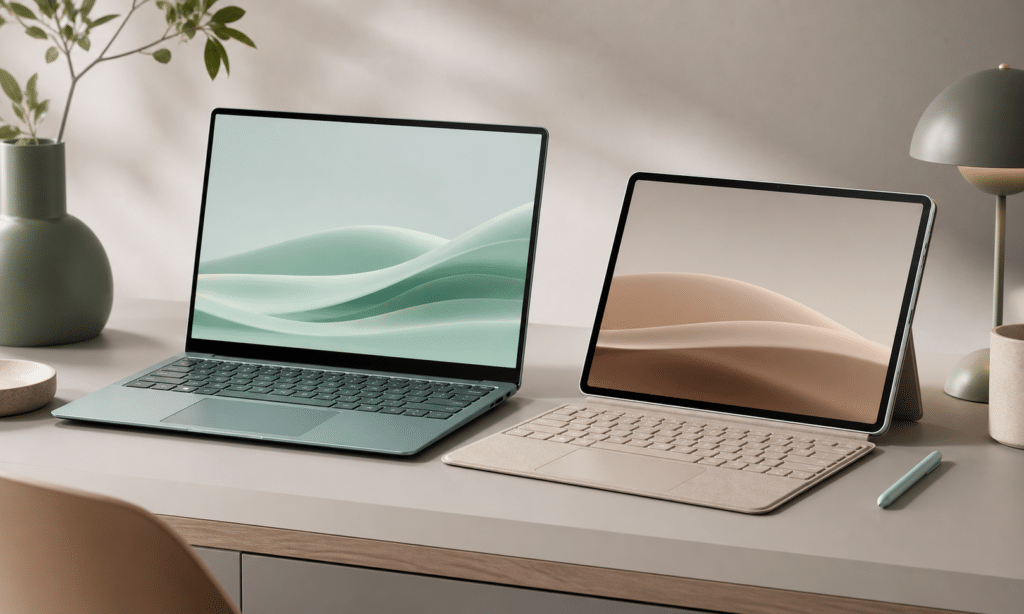
The visible design changes appear modest. Microsoft is adding a Jade color option for the 13.8-inch Surface Laptop, described as a greenish finish, while the Surface Pro gets a Dune option with a gold-toned look.
Those color additions give the lineup a bit of freshness, but they do not change the core buying decision. The Surface Laptop remains the more conventional pick for people who want a premium Windows notebook. The Surface Pro remains the more flexible, more accessory-dependent option for people who value tablet use and detachable typing.
The higher prices also land at a moment when premium Windows laptops with newer Intel and Qualcomm chips have been trending expensive, while previous-generation models continue to sit in retail channels. Microsoft’s Surface pricing fits that broader pattern, but shoppers do not have to treat the newest model as the automatic default.
Who Should Consider Them
The Surface Laptop 8th Edition makes the most sense for buyers who already prefer the Surface Laptop design and want the newer Qualcomm platform, a 3:2 screen, and a base US configuration that does not start with minimal memory or storage. It is a cleaner fit for people who want a premium Windows notebook and are less price-sensitive.
The Surface Pro 12th Edition is a more specific purchase. Its appeal depends on how much the detachable design matters. If the keyboard, kickstand, tablet mode, and pen-friendly setup are central to the way someone works, the Pro’s premium may be easier to justify. If not, the added keyboard cost should be part of the comparison from the beginning.
The Surface Laptop 13 also remains relevant for price-conscious Surface shoppers, since it is listed at $1,150 and uses the base Snapdragon X chip rather than the newer Snapdragon X2 parts. That lower price does not make it a direct substitute for the refreshed premium models, but it gives buyers a less expensive Surface route if the new starting prices feel too steep.
The Bottom Line
Microsoft’s latest Surface Laptop and Surface Pro update is a classic premium-PC refresh: faster chip claims, a few new finishes, and familiar hardware identities. The difference is that the entry prices are harder to ignore.
For shoppers, the smarter move is to treat these as premium configurations rather than automatic upgrades. The Snapdragon X2 claims may prove meaningful, but the value case depends on independent performance, battery life, and how much the Surface design matters compared with discounted previous-generation Windows laptops. The new Surface machines may be attractive, but they are not priced like easy impulse upgrades.