


Anyone who used a Windows PC in the late 1990s or early 2000s probably remembers 3D Pinball for Windows – Space Cadet. It was the kind of bundled game that looked like a time-waster at first, then somehow turned into a regular habit. For many Windows users, especially through the Windows XP years, Space Cadet was their first familiar pinball table.
The funny part is that Space Cadet always felt like a real machine, even though it was not based on one. The table came from Full Tilt! Pinball, a software collection sold by Maxis in the mid-1990s, and Microsoft later included the Space Cadet table with Windows. Its layout, ramps, targets, bumpers, missions, and sound effects were convincing enough that a lot of players remember it less as a PC game and more as a pinball machine they happened to play with a keyboard.
Now one hobbyist is trying to close that gap for real.
A Virtual Table Becomes a Physical Build
A maker known as CNCDan has started building a physical Space Cadet-inspired pinball table, documenting the process in a video that shows several working pieces already taking shape. The project is still early, but it has moved well beyond a simple concept sketch.
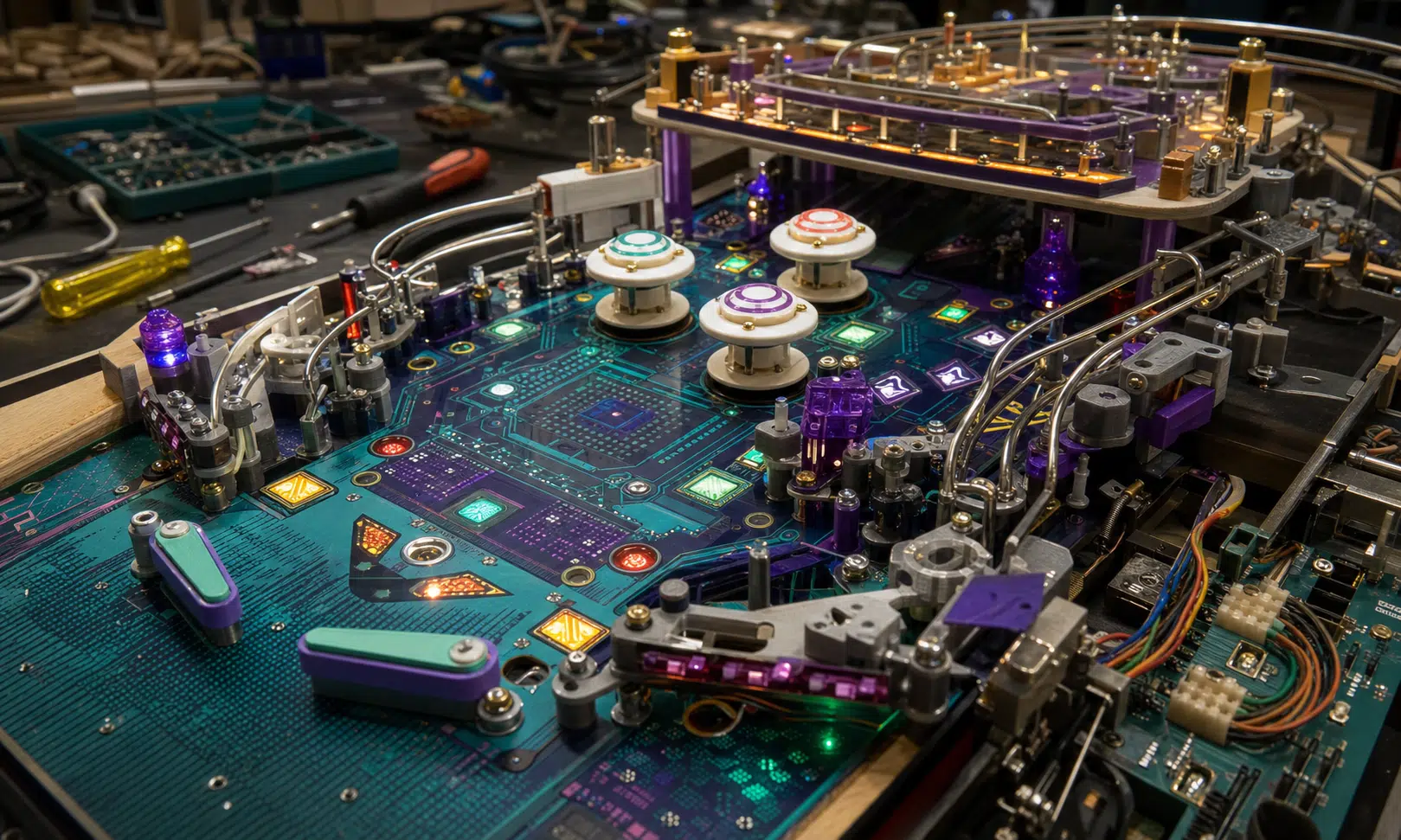
The build already includes 3D-printed mechanical flippers, pop bumpers with embedded LEDs, slingshots, and a raised playfield meant to echo the original Windows table. Those are not small details. Space Cadet’s identity comes from the way its playfield stacks targets, rollovers, kickbacks, and that elevated upper section into a compact but busy layout.
For retro PC fans, that is the appeal. The project is not just about making a generic pinball machine with Space Cadet artwork. It is about translating a familiar digital table into something with real switches, wiring, ball paths, and mechanical timing.
Quick Comparison
| Image | Product | Best fit | Link |
|---|---|---|---|
 |
Arduino-Compatible Electronics Starter Kit | An Arduino-compatible starter kit gives hobbyists a practical way to test LEDs, switches, sensors, relays, and control logic before committing parts to a cabinet build. | Check Price on Amazon |
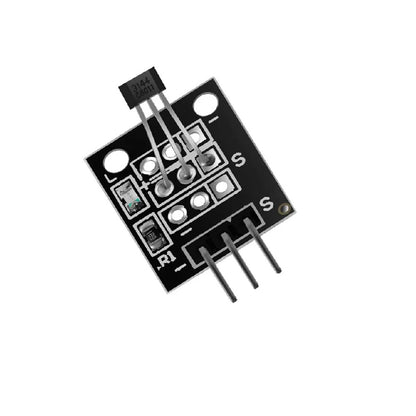 |
Hall Effect Magnetic Sensor Modules | Hall effect sensor modules are useful for non-contact detection experiments where a tiny switch may be too fragile or inconsistent for fast-moving mechanical parts. | Check Price on Amazon |
 |
PLA+ 3D Printer Filament | PLA+ filament is a practical material for printing test parts, brackets, mockups, and early mechanical prototypes before moving to more durable materials. | Check Price on Amazon |
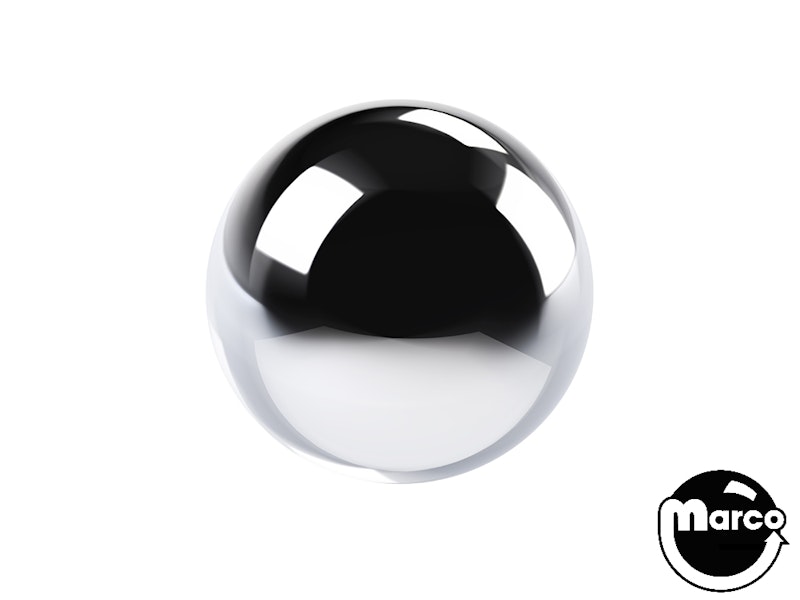 |
Standard Steel Pinballs | Standard steel pinballs help builders test whether ramps, guides, switches, and returns behave correctly under the weight and speed of a real ball. | Check Price on Amazon |
As an Amazon Associate I earn from qualifying purchases.
The Hard Part: Real Pinball Has Real Constraints
The biggest challenge is that the original Space Cadet table never had to obey the rules of a physical cabinet. Its designers could arrange the playfield for the camera angle, the software physics, and the screen, without worrying about whether a real bumper would fit or whether wires would block a return lane.
CNCDan has already run into that problem. After scaling and skewing the on-screen, perspective-shifted Space Cadet playfield into a roughly 1-meter-tall table, the resulting playfield was only about 56 cm wide. That is narrow compared with many commercial pinball tables, and it created a much more specific issue: the pop bumpers scaled down to roughly 53 mm wide.
That size matters because off-the-shelf pinball parts are not designed around those dimensions. Prebuilt bumpers are too large for the layout, so the project has required custom parts rather than a straightforward assembly from existing pinball hardware.
Small Parts, Switches, and Timing Problems
The miniature bumpers created their own engineering work. CNCDan initially had trouble with unreliable plastic microswitches in the tiny bumper assemblies, and Hall effect magnets appeared to improve the sensing. That is the kind of detail that makes the project interesting: copying the look of Space Cadet is only one layer, but making the table register hits consistently is what turns it into pinball.
The raised playfield adds another complication. Its smaller bumper area needs wiring, but that wiring has to avoid interfering with the kickback return alley underneath. In software, the ball can vanish, reappear, pause, or travel through hidden paths without needing room for mechanisms. In a cabinet, every one of those behaviors has to be accounted for in wood, plastic, metal, wiring, and clearance.
CNCDan also added a physical mechanism to mimic one of Space Cadet’s memorable little delays: the moment when the ball drops from the raised playfield and returns to the lower flippers. In the PC game, that timing was just part of the simulation. On a real table, it needs a physical explanation.
Artwork Is Still an Open Piece
The table is not close to finished yet. One major missing piece is the playfield art, and CNCDan has said he is looking for artists to help create a hand-drawn recreation of the original Space Cadet design. He specifically does not want to use AI for that part, preferring to give the work to a human artist.
That makes sense for a project built on nostalgia. Space Cadet’s look is not just a background texture. The blue field, colored inserts, military-space theme, and dense labeling are part of why people recognize it immediately.
There is no finished machine to buy right now, and this should not be treated like a commercial product announcement. It is a maker project with a long path ahead. But the progress so far is tangible, and it shows why a physical Space Cadet table is harder than simply printing the old layout onto wood.
For anyone who remembers chasing missions on a Windows desktop, the appeal is obvious: one of the most familiar virtual pinball tables may finally become something you can play with a real steel ball.