

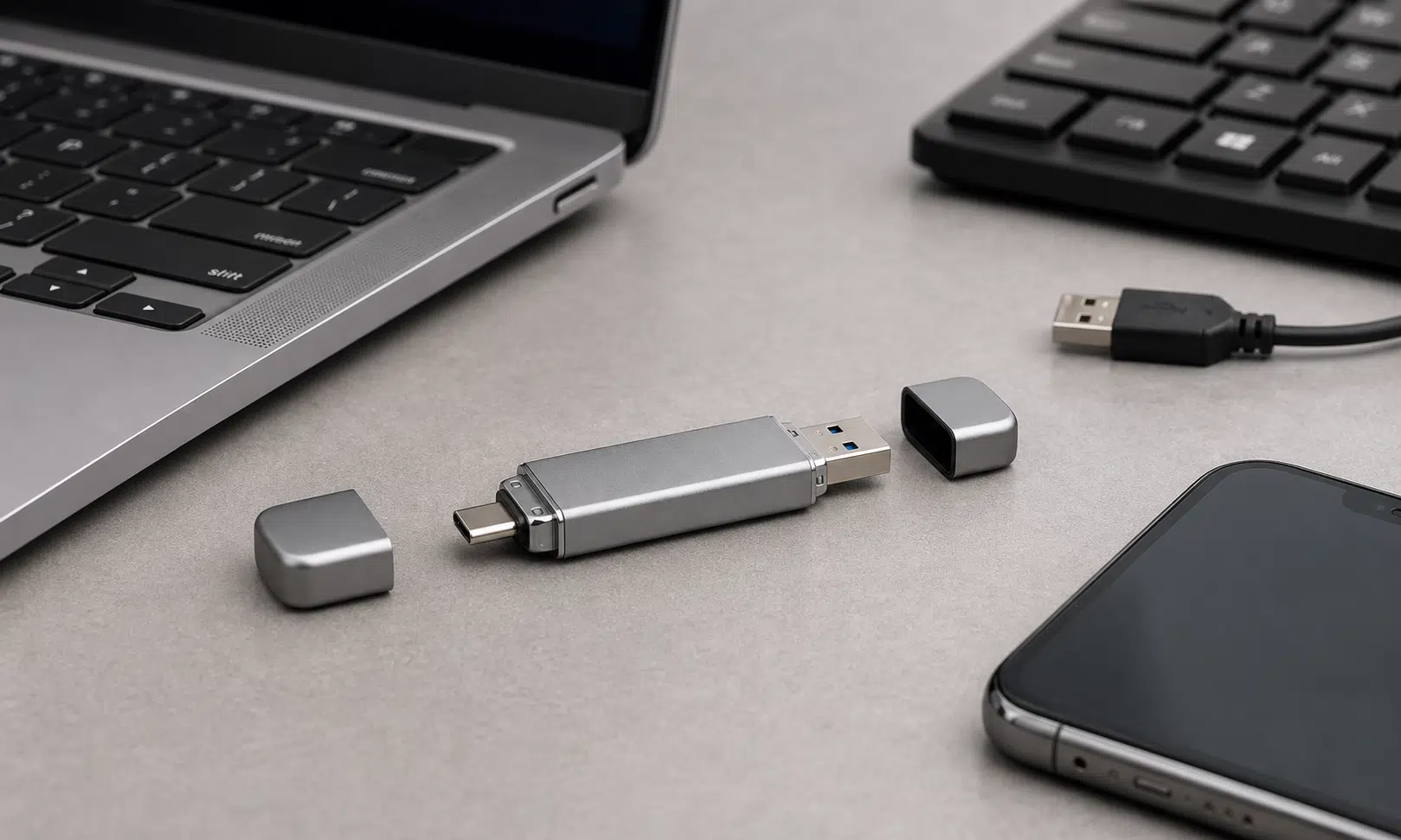

Lexar has introduced the D70E, a compact storage device that the company calls a portable SSD, though many buyers will immediately recognize the form factor as closer to a high-end thumb drive. The small dual-ended drive includes both USB-C and USB-A connectors and is available in capacities up to 2TB.
The pitch is straightforward: one pocketable drive that can move files between newer USB-C devices and older USB-A machines without a cable, dongle, or card reader. For photographers, videographers, and anyone regularly handing off large folders, that combination is more useful than it first sounds.
A Tiny Drive Built for Mixed USB Setups
The D70E is designed around direct connection. One end handles USB-C, while the other handles USB-A, which should make it easier to move files between laptops, desktops, phones, tablets, and older workstations that are still part of many real-world workflows.
Lexar says the drive works with Windows PCs, Macs, iOS devices, and Android devices. The body uses a metal housing with protective port covers and a built-in lanyard loop, so the design is clearly aimed at everyday carry rather than a desk-only backup drive.
That dual-connector layout may be the D70E’s most practical feature. Many compact SSDs are fast, but still depend on a separate cable. Many thumb drives are convenient, but slow or limited in capacity. Lexar is trying to sit between those categories: small enough to keep on a keychain or in a camera bag, but with capacities and quoted speeds that look more like portable SSD territory.
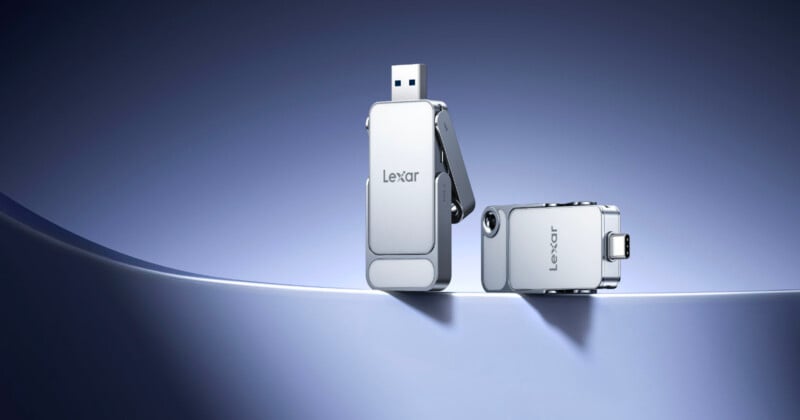
Lexar D70E Dual Drive Portable SSD
The Lexar D70E is the natural recommendation here because it matches the article’s core use case: moving files between USB-C and USB-A devices without carrying a cable or adapter. It is best positioned as a travel or client-delivery drive rather than the only place a project lives.
As an Amazon Associate I earn from qualifying purchases.
Lexar D70E Specs and Pricing
Lexar lists faster performance from the USB-C side than the USB-A side. As always with storage products, real-world transfer rates will depend on the host device, port type, file sizes, thermal behavior, and workload, but the advertised numbers are notably high for something this small.
| Connection | Claimed Read Speed | Claimed Write Speed |
|---|---|---|
| USB-C | Up to 2,000 MB/s | Up to 1,800 MB/s |
| USB-A | Up to 1,000 MB/s | Up to 900 MB/s |
The announced pricing is also aggressive for the capacity range:
| Capacity | Price |
|---|---|
| 512GB | $120 |
| 1TB | $200 |
| 2TB | $300 |
Those prices make the D70E easy to consider for file delivery, travel, and cross-device transfer. They also make it worth thinking carefully about the job you expect it to do. Broader storage pricing has been volatile, and some high-capacity SSDs cost much more than this, but pricing varies widely by model, durability rating, interface, and intended workload.
Where It Makes Sense, and Where to Be Careful
For creative work, the D70E looks most compelling as a shuttle drive. If you need to send a large video project, deliver a folder of RAW files, or move finished exports between machines, a small 1TB or 2TB drive with both USB-C and USB-A can be very convenient.
It is a different question whether buyers should treat it like a primary working drive. Compact thumb-drive-style storage can be excellent for transport, but demanding use such as editing video directly from the drive, repeatedly writing large project files, or relying on it as the only backup deserves caution. Reliability and sustained performance can vary by design, and failure behavior for small removable drives is not something most buyers can judge from headline speed claims alone.
A more sensible workflow would be to use the D70E as one part of a broader storage setup: copy files to it for delivery or travel, keep your main working media on a proven external SSD or internal drive, and maintain a separate backup before handing anything off.

SanDisk Extreme Portable SSD
For editing projects, backups, or heavier repeated transfers, a larger rugged portable SSD such as the SanDisk Extreme is a better companion to a file-shuttle drive. It still stays compact, but is built more like a conventional external SSD for ongoing use.
As an Amazon Associate I earn from qualifying purchases.
Bottom Line
The Lexar D70E is interesting because it solves a practical problem in a very compact package. The dual USB-C and USB-A design makes it easier to move large files across mixed devices, the capacities reach a useful 2TB, and the announced prices are low enough that creative professionals may consider buying more than one.
The buyer-aware takeaway is simple: the D70E looks like a strong candidate for file transfers and client delivery, especially when cloud uploads are slow or impractical. For active editing, archival backup, or mission-critical storage, it should be treated more cautiously than a larger portable SSD built specifically for heavy sustained workloads.