

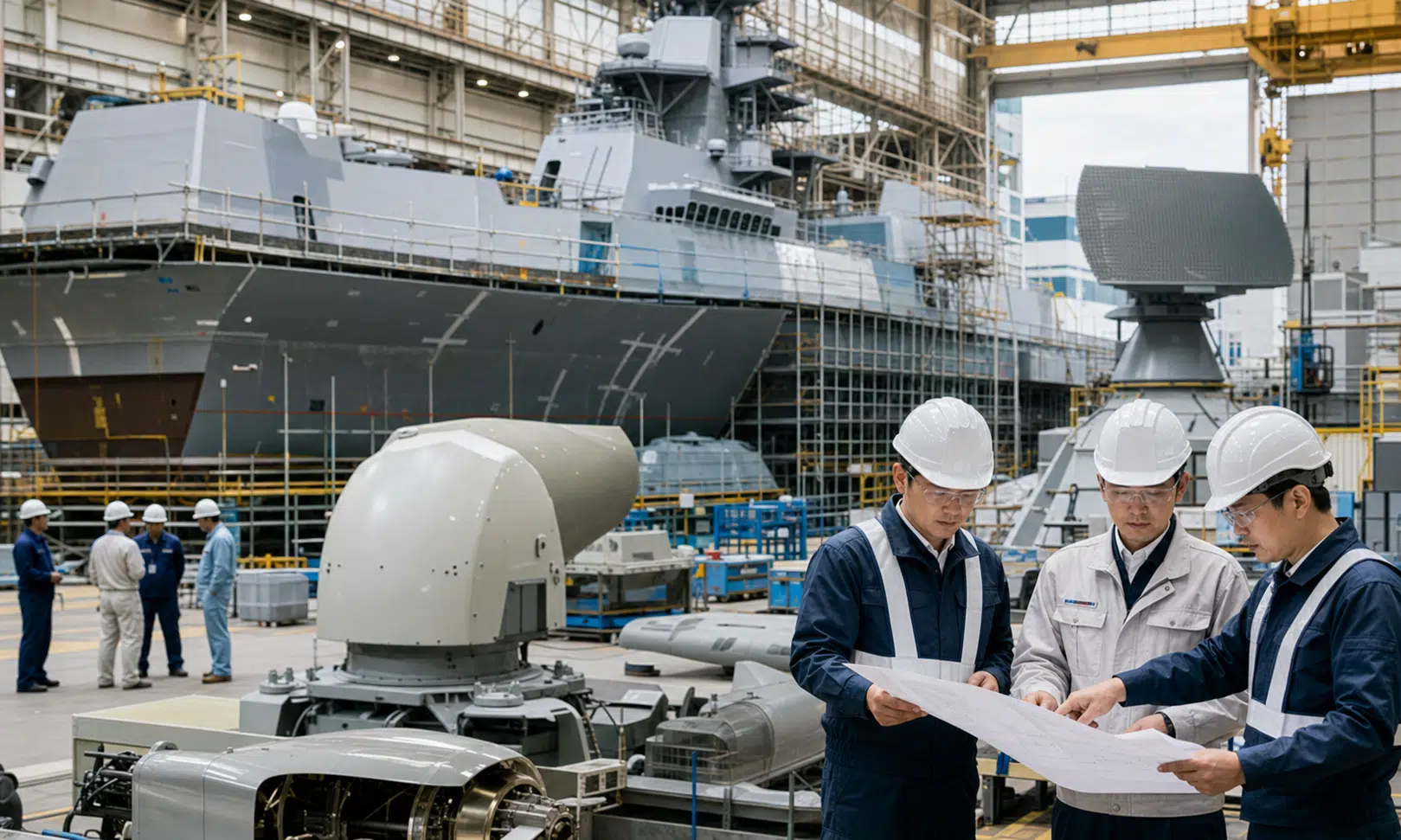

Japan’s defense industry is moving into a more commercial phase, but the opportunity is more selective than the headline suggests.
After decades of tight limits on arms exports, Japan is trying to turn domestic engineering strength into a larger international defense business. The timing is favorable. Global military expenditure reached about $2.89 trillion in 2025, according to SIPRI’s latest figures, marking an 11th straight annual increase.
That does not automatically make Japan the next South Korea. For buyers, the practical question is narrower: where can Japanese suppliers provide credible equipment, reliable support and political alignment at a price and delivery schedule that compete with established exporters?
For investors, the question is different but related. Japan’s defense groups may benefit from higher domestic budgets and overseas orders, yet the sector still has to prove it can scale production and sell internationally without relying almost entirely on the Self-Defense Forces.
Where Japan Looks Most Competitive
Japan’s strongest early export prospects are likely to sit in areas where the country already has deep industrial capability: naval platforms, radar, air defense components, sensors and maritime surveillance.
That makes the market less about mass-produced battlefield equipment and more about high-end systems for allied and partner countries. Japan has long experience building ships, aircraft components, electronics and precision industrial systems. The commercial challenge is converting that expertise into export packages that foreign ministries of defense can buy, maintain and integrate.
The clearest recent example is Australia’s decision to move forward with upgraded Mogami-class frigates. Mitsubishi Heavy Industries is set to build the first three ships in Japan, with Australia planning a broader frigate program around the design. That order matters because it gives Japan a reference customer outside its home market and puts Japanese naval systems into a serious allied procurement program.
Other reported areas of interest include patrol vessels and possible equipment transfers in Southeast Asia and the Pacific, but those should be treated as prospects rather than booked business unless contracts are signed.

Japan Rearmed
For readers who want more context on Japan’s changing security posture, this book examines the politics behind Japan’s military role and defense policy choices.
As an Amazon Associate I earn from qualifying purchases.
| Export area | Why it fits Japan | Buyer watchpoint |
|---|---|---|
| Naval platforms | Strong shipbuilding base and recent Australian frigate contract | Delivery schedule, local-build terms and lifecycle support |
| Radar and sensors | Electronics and surveillance systems match Japan’s industrial strengths | Integration with existing command systems |
| Air defense components | Demand is rising among countries worried about missiles and drones | Export approvals, production capacity and interoperability |
| Patrol vessels | Useful for maritime security buyers in the Indo-Pacific | Cost versus Korean, European and domestic options |
How Japan Compares With South Korea
South Korea is the obvious comparison, but it is not a perfect template. Korean defense companies have gained ground by offering buyers a mix of speed, price, acceptable quality and willingness to localize production. That formula has been especially attractive to countries trying to refill inventories or modernize quickly.
Japan starts from a different position. Its reputation is built more on engineering quality and advanced manufacturing than on fast, export-oriented defense production. That can help in high-value programs where buyers care about long service life and trusted political relationships. It can hurt when customers want quick delivery, aggressive financing or large-scale production from day one.
A careful buyer should treat Japan as a potential premium or strategic supplier, not yet as a broad substitute for the United States, South Korea or Europe across every category.
Key Buying Criteria
Defense procurement is rarely just about the equipment. Countries considering Japanese systems will need to assess the whole package.
- Export approval risk: Japan has eased restrictions, but defense transfers still carry political and regulatory scrutiny.
- Production capacity: Many Japanese defense manufacturers were built around domestic demand, not large export pipelines.
- Cost competitiveness: Japanese systems may need to justify premium pricing through reliability, capability or strategic value.
- Support and sustainment: Buyers will want spare parts, training, maintenance and upgrade commitments over decades.
- Interoperability: Allied buyers will need equipment that works with U.S., NATO or regional command-and-control systems.
For now, Japan looks strongest where the buyer values a trusted strategic partner and advanced systems more than the lowest upfront price.
What Could Slow the Breakout
The biggest constraint is capacity. For years, Japanese defense companies largely served one core customer: Japan’s Self-Defense Forces. That limited the incentive to build export sales teams, global maintenance networks and spare production capacity.
A Japanese government report earlier this year also noted that defense work has often been less attractive than civilian business because of lower margins and limited growth prospects. That helps explain why some companies have reduced their exposure to the sector over time.
The recent policy shift could change the economics. If exports become a credible source of recurring demand, manufacturers may have more reason to invest in production lines, specialized labor and supplier networks during peacetime. But that is a medium-term process, not an instant fix.
Investors should be especially cautious about assuming that policy changes immediately translate into revenue. Signed contracts, margin disclosure, backlog growth and capital spending plans will matter more than broad talk about rearmament.

The Economics of the Global Defence Industry
This reference is useful for readers evaluating how defense industries scale, compete, and respond to government procurement demand across countries.
As an Amazon Associate I earn from qualifying purchases.
Companies and Investors to Watch
The most obvious listed names are Japan’s established industrial and defense suppliers. Mitsubishi Heavy Industries is central because of its role in shipbuilding, aerospace and major defense programs. Kawasaki Heavy Industries, IHI and Mitsubishi Electric also have scale and technical exposure relevant to international procurement.
The long-term case rests on three ideas: Japan is spending more on defense, allied countries are looking for additional suppliers, and Japanese companies have credible technology in specific high-end categories. The risk is that export growth arrives slowly, margins remain constrained, or international buyers choose faster and cheaper alternatives.
Verdict: A Selective Opportunity, Not a Guaranteed Boom
Japan can become a more important defense supplier, especially in naval systems, sensors and air-defense-related technologies. The Australia frigate contract gives the industry a meaningful reference point, and rising global military spending creates a friendlier market backdrop.
But buyers should not treat Japan as a plug-and-play replacement for established exporters. The country still has to prove its export machinery: pricing, marketing, delivery, sustainment and political approvals.
For procurement teams, Japan belongs on the shortlist when the requirement is high-end, maritime-focused or closely tied to allied security relationships. For investors, the better approach is to track confirmed contracts and capacity expansion rather than buying the theme on policy headlines alone.

Geopolitical Alpha
For readers assessing defense stocks through a macro lens, this book offers a framework for connecting political constraints, policy shifts, and market expectations.
As an Amazon Associate I earn from qualifying purchases.